
In the world of finance, numbers are the language of progress. Whether you are tracking the growth of a retirement portfolio, determining the profitability of a business venture, or simply trying to figure out how much of your monthly income is being consumed by rent, percentages are the most vital metric at your disposal. Understanding how to find the percentage of two numbers is not merely a middle-school math requirement; it is a fundamental pillar of financial literacy that empowers individuals to make informed, data-driven decisions.
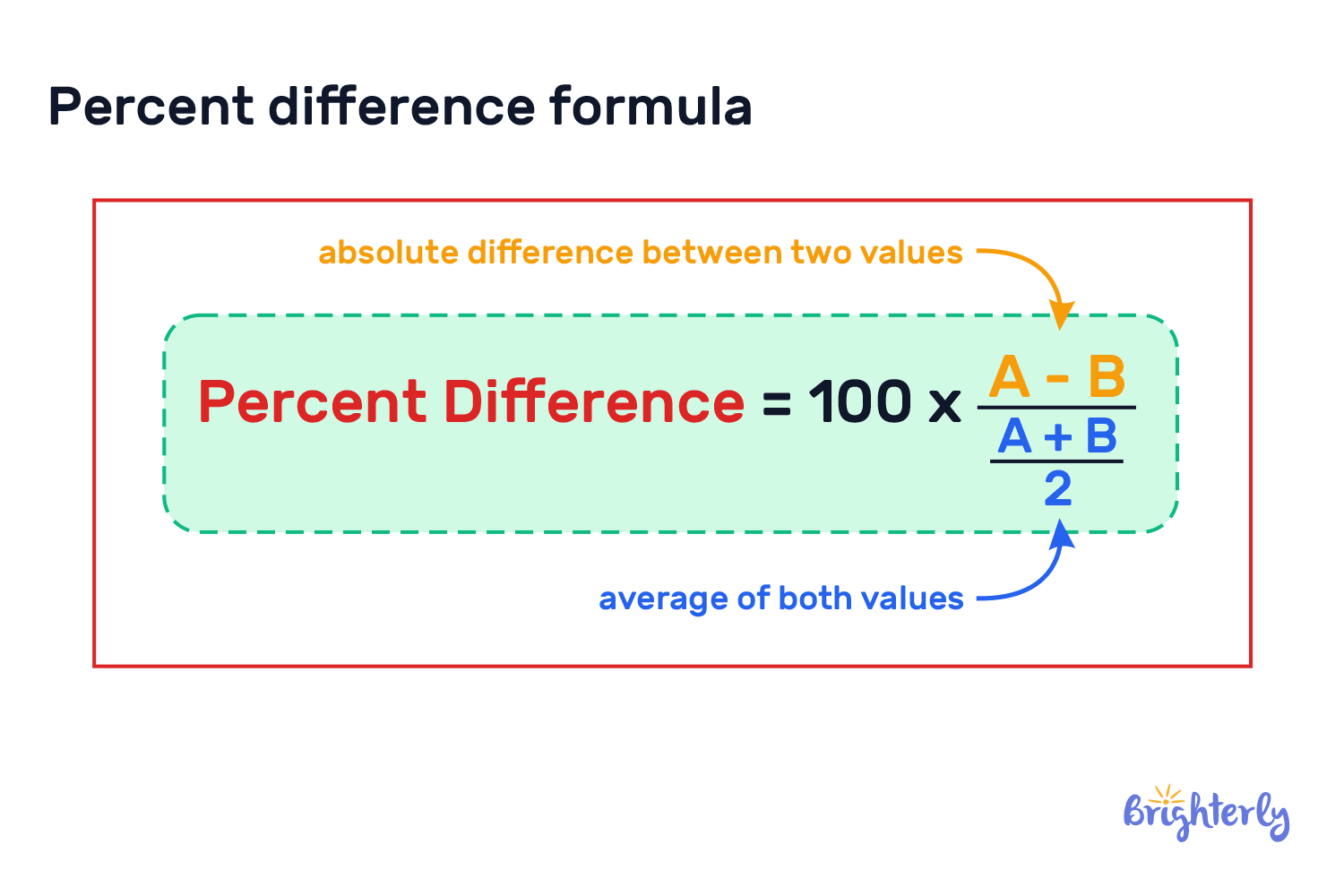
To calculate the percentage of one number relative to another, the basic formula is straightforward: divide the “part” by the “whole” and multiply the result by 100. However, in a professional and financial context, this calculation takes on various forms—ranging from yield analysis to margin compression. This guide explores the practical application of percentage calculations within the realm of personal and business finance.
The Fundamental Formula: Understanding Percentages in Personal Finance
At its core, a percentage is a way to express a number as a fraction of 100. In personal finance, this is the primary tool used for budgeting and cash flow analysis. Without the ability to quickly determine percentages, it is nearly impossible to gauge the health of your financial life.
The Basic Equation: Part Over Whole
The most common question is: “What percent of X is Y?” In a financial setting, this often translates to: “What percentage of my total income is being spent on debt?”
To find this, you use the formula:
** (Amount / Total) × 100 = Percentage **
For example, if your take-home pay is $5,000 per month and your mortgage payment is $1,500, you divide 1,500 by 5,000 to get 0.3. Multiplying by 100 gives you 30%. Knowing this number is critical because most financial advisors suggest keeping housing costs below 30% of your gross income. By mastering this simple calculation, you can immediately identify whether your lifestyle is sustainable or if you are “house poor.”
Converting Decimals to Percentages for Quick Budgeting
Financial professionals often work with decimals to speed up calculations. Understanding that 0.05 is 5% and 0.25 is 25% allows for rapid mental math. When building a “50/30/20” budget—where 50% goes to needs, 30% to wants, and 20% to savings—the ability to toggle between raw currency and percentages is essential. If you receive a year-end bonus of $2,500, a quick calculation (2,500 × 0.20) tells you that $500 should go straight into your high-yield savings account to maintain your financial strategy.
Percentages in Investing: Measuring Growth and Risk
In the investment world, percentages are the universal yardstick. Raw dollar gains are secondary to percentage returns because percentages allow you to compare the performance of different assets regardless of their price. A $10 gain on a $100 stock is far more impressive than a $10 gain on a $1,000 stock.
Calculating Return on Investment (ROI)
ROI is perhaps the most important percentage calculation an investor will ever use. It measures the gain or loss generated on an investment relative to the amount of money invested.
The formula for ROI is:
** [(Current Value – Initial Value) / Initial Value] × 100 **
If you bought shares in a tech company for $2,000 and sold them a year later for $2,600, your net profit is $600. Dividing $600 by your original $2,000 investment gives you 0.3, or a 30% ROI. This percentage allows you to compare that investment against other benchmarks, such as the S&P 500’s average annual return, to determine if your capital is being deployed efficiently.

Understanding Percentage Changes in Stock Performance
Volatility is often measured in percentage points. When a news anchor says the market is “down 2%,” it provides an immediate sense of scale that a point-drop does not. For investors, understanding the “percentage recovery” is also vital. A common financial trap is failing to realize that if an asset drops by 50%, it requires a 100% gain just to get back to the original “break-even” point. This mathematical reality highlights the importance of risk management and capital preservation.
The Rule of 72 and Compound Interest
While not a direct “percentage of two numbers” calculation in the static sense, the Rule of 72 uses percentages to project the future value of money. By dividing 72 by your annual percentage rate of return, you can estimate how many years it will take for your investment to double. For instance, at a 6% interest rate, your money will double in roughly 12 years (72 / 6 = 12). This illustrates why even a 1% difference in management fees or interest rates can have a massive impact on long-term wealth.
Business Finance: Margin vs. Markup
For entrepreneurs and business professionals, percentages are the key to sustainability. Businesses do not survive on revenue alone; they survive on margins. Distinguishing between margin and markup is one of the most common areas where percentage calculations are misapplied.
Determining Gross Profit Margin
Gross profit margin represents the percentage of total sales revenue that a company retains after incurring the direct costs associated with producing the goods it sells.
The formula is:
** [(Total Revenue – Cost of Goods Sold) / Total Revenue] × 100 **
If a business sells a product for $100 and it costs $60 to manufacture, the gross profit is $40. The gross margin is 40% (40 / 100). Monitoring this percentage is crucial for businesses to ensure they are pricing their products high enough to cover operating expenses like rent, payroll, and marketing.
How to Calculate Sales Tax and Gratuities Effortlessly
On the consumer side of business finance, calculating percentages is a daily necessity. Whether you are a business traveler calculating a 15% tip on a client dinner or a purchasing manager accounting for a 7% state sales tax, the math remains the same. To find the tax or tip, multiply the base amount by the percentage in decimal form ($85 meal × 0.15 = $12.75 tip). To find the total including the percentage, multiply by 1 plus the decimal ($85 × 1.15 = $97.75).
Advanced Financial Tools and Automation
While manual calculations are vital for conceptual understanding, the modern financial landscape utilizes technology to handle complex percentage-based allocations. However, the logic remains rooted in the “percentage of two numbers” principle.
Using Spreadsheets for Percentage-Based Allocation
Programs like Microsoft Excel and Google Sheets are designed around percentage logic. In financial modeling, professionals use the “Percentage Style” format to track debt-to-equity ratios and liquidity ratios. For example, a “current ratio” (current assets divided by current liabilities) is essentially a percentage calculation that tells a creditor how well-positioned a company is to meet its short-term obligations. Setting up a spreadsheet to automatically calculate these percentages allows for real-time monitoring of financial health.
Financial Calculators and Digital Wealth Management
Robo-advisors and fintech apps use percentage-based algorithms to rebalance portfolios. If your target allocation is 60% stocks and 40% bonds, and a market rally pushes your stocks to 70%, the software calculates the percentage variance and automatically sells the excess to buy more bonds. Understanding the math behind these tools allows you to better audit your financial advisors and ensure that your digital tools are performing as expected.

Conclusion: The Power of Proportional Thinking
Finding the percentage of two numbers is more than a calculation; it is a way of viewing the world through the lens of proportionality. In the realm of money, absolute numbers often tell a deceptive story. A $10,000 raise sounds substantial, but if it only represents a 2% increase in a high-inflation environment, your purchasing power may actually be shrinking.
By mastering the formulas for ROI, profit margins, and budget allocations, you move from being a passive observer of your finances to an active manager of your wealth. Whether you are evaluating a side hustle, investing in the stock market, or simply managing a household budget, the ability to calculate and interpret percentages is the ultimate financial superpower. It allows you to cut through the noise, compare “apples to oranges,” and make decisions based on the objective reality of the numbers.
aViewFromTheCave is a participant in the Amazon Services LLC Associates Program, an affiliate advertising program designed to provide a means for sites to earn advertising fees by advertising and linking to Amazon.com. Amazon, the Amazon logo, AmazonSupply, and the AmazonSupply logo are trademarks of Amazon.com, Inc. or its affiliates. As an Amazon Associate we earn affiliate commissions from qualifying purchases.