
In the world of finance, whether you are managing a household budget, running a multinational corporation, or dipping your toes into the stock market, the most powerful tool at your disposal isn’t a complex algorithm—it is the humble percentage. Understanding how to figure out percentages is the foundational skill that separates passive observers from active wealth builders.
Percentages provide a universal language for comparison. They allow us to strip away the “noise” of raw numbers and look at the underlying health of an investment, the efficiency of a business, or the progress of a savings goal. If you tell an investor you made $1,000, they don’t know if that’s a success; if you tell them you made a 25% return, they know exactly how well you performed. This guide will walk you through the essential mechanics of percentage calculations specifically through the lens of personal and business finance.
1. The Core Mechanics: Percentage in Personal Budgeting and Debt Management
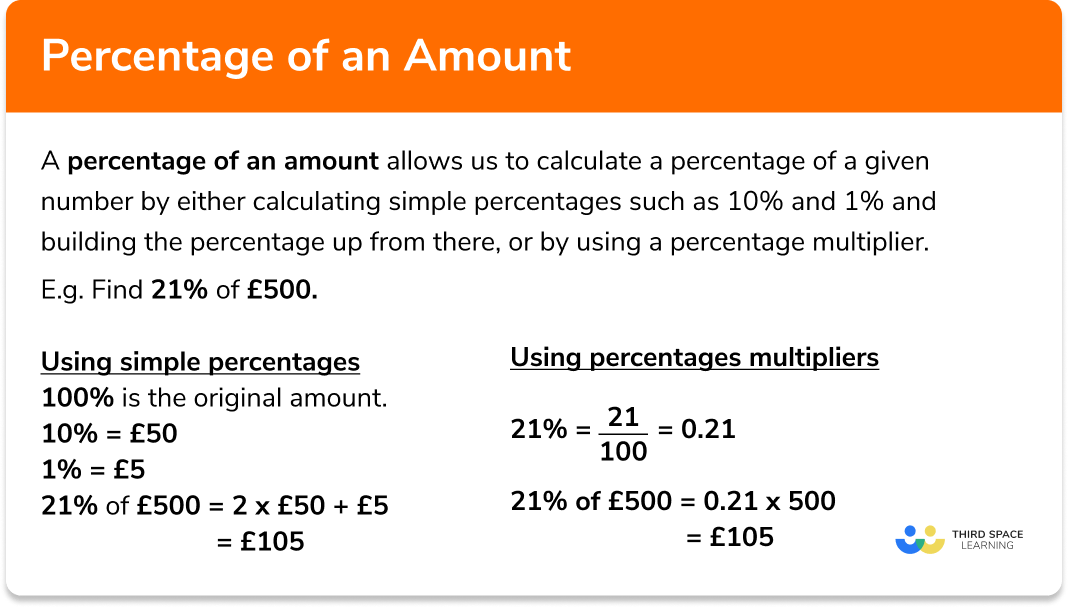
At its simplest level, a percentage is a way of expressing a number as a fraction of 100. To figure out a percentage, the basic formula is: (Part / Whole) × 100 = Percentage. While this seems elementary, its application in personal finance is what allows for disciplined wealth management.
The 50/30/20 Rule: Percentage-Based Budgeting
One of the most effective ways to manage personal income is through percentage-based allocation. The 50/30/20 rule suggests that 50% of your after-tax income should go to “needs,” 30% to “wants,” and 20% to savings and debt repayment. To figure this out, you take your total monthly take-home pay (the “whole”) and multiply it by the decimal version of the percentage (0.50, 0.30, or 0.20). This method ensures that as your income grows, your lifestyle doesn’t inflate at a rate that outpaces your savings.
Calculating Your Debt-to-Income (DTI) Ratio
Lenders use percentages to determine your creditworthiness, specifically the Debt-to-Income ratio. To figure this out, you add up all your monthly debt obligations (the “part”) and divide them by your gross monthly income (the “whole”). For example, if your total debt is $2,000 and your income is $6,000, your DTI is 33.3%. In the financial world, keeping this percentage below 36% is often the threshold for qualifying for the best mortgage rates.
Understanding the Impact of Interest Rates
Interest is simply the “cost” of money expressed as a percentage. When you take out a loan, you aren’t just paying back the principal; you are paying a percentage of the remaining balance. Conversely, when you save, the bank pays you a percentage. Understanding the difference between Simple Interest and Compound Interest—where you earn a percentage on your previous percentage gains—is the key to long-term wealth accumulation.
2. Business Finance: Using Percentages to Measure Profitability and Growth
In a business context, looking at raw revenue can be deceptive. A company making $10 million in revenue might actually be failing if its expenses are $11 million. This is why business owners and analysts rely on percentage-based metrics to determine the viability of a venture.
Gross vs. Net Profit Margin
Profit margin is perhaps the most critical percentage in business finance.
- Gross Profit Margin is calculated by taking (Revenue – Cost of Goods Sold) / Revenue. This tells you the percentage of each dollar that remains after the direct costs of producing the product are covered.
- Net Profit Margin is the “bottom line” percentage: (Net Income / Total Revenue) × 100. This reveals how much actual profit is generated from every dollar earned after taxes, interest, and operating expenses. A high net margin indicates a highly efficient, “lean” business model.
Markup vs. Margin: Avoiding the Common Pitfall
Many entrepreneurs confuse markup with margin, which can lead to disastrous pricing errors. Markup is the percentage added to the cost to get the selling price. Margin is the percentage of the selling price that is profit.
- To calculate a 25% margin on an item that costs $75, you don’t just add 25% to $75 (which is a markup). You must divide the cost by (1 – desired margin). In this case: $75 / 0.75 = $100. While the markup was 33%, the margin is 25%. Understanding this distinction ensures that your business remains solvent.
Year-Over-Year (YoY) Growth Metrics
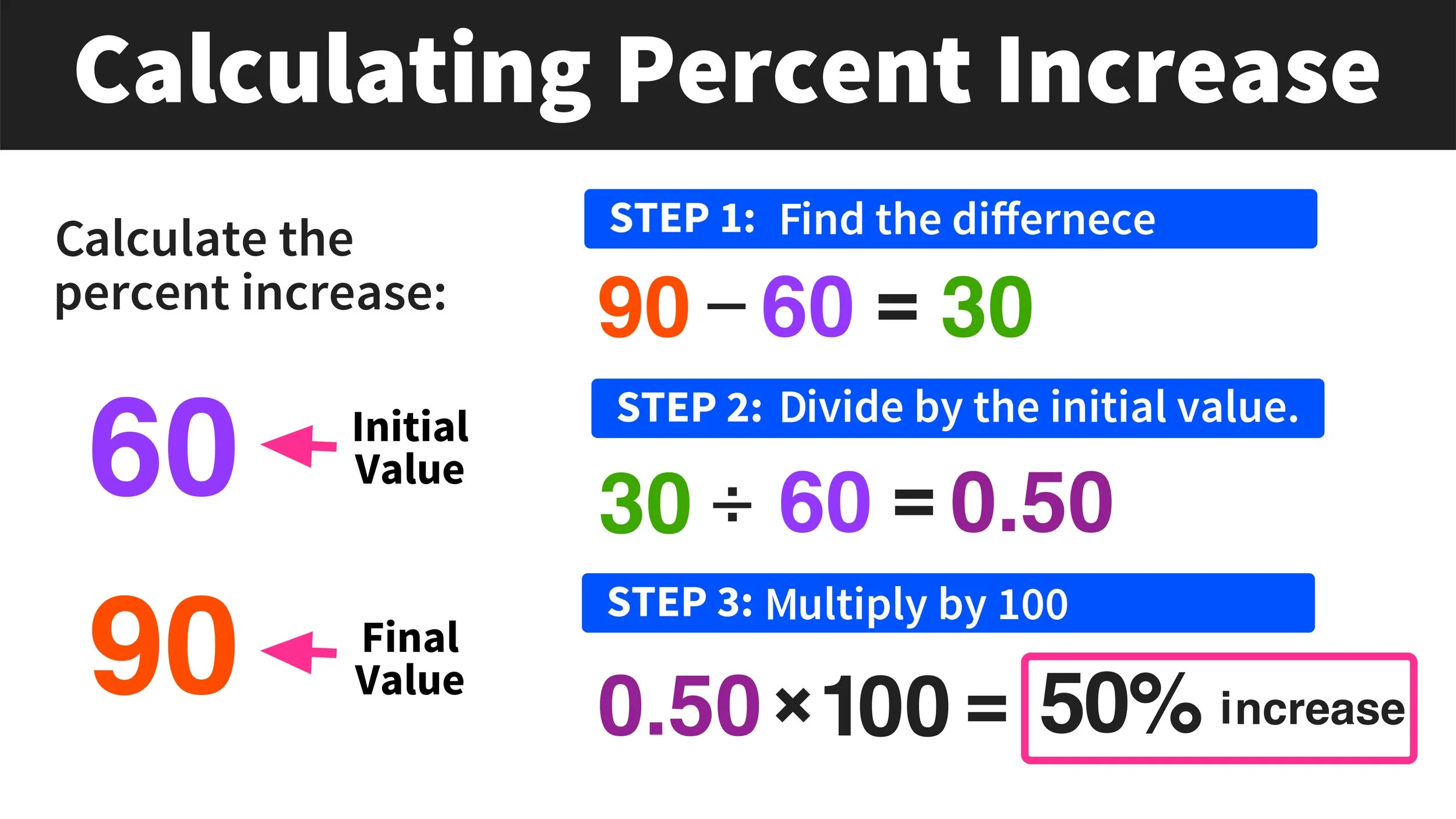
To measure success, businesses look at percentage change over time. The formula for percentage increase or decrease is: [(New Value – Old Value) / Old Value] × 100. If your business earned $100,000 last year and $120,000 this year, your YoY growth is 20%. This percentage allows you to compare your performance against industry benchmarks and competitors, regardless of their size.
3. Investment Strategies: Calculating Risk and Reward
For the individual investor, percentages are the primary tool for evaluating performance and managing risk. Without the ability to figure out these figures, an investor is essentially flying blind.

Return on Investment (ROI)
The most common question in investing is: “What was the return?” ROI is a percentage that tells you how much you earned or lost relative to the amount you invested. The formula is: (Current Value of Investment – Cost of Investment) / Cost of Investment. If you bought a stock for $1,000 and sold it for $1,250, your ROI is 25%. This allows you to compare the performance of a stock purchase against the performance of a real estate deal or a high-yield savings account.
The Compound Annual Growth Rate (CAGR)
Because markets fluctuate, looking at a single year’s ROI can be misleading. CAGR provides a “smoothed” annual percentage rate of return over a specified period longer than one year. It represents the geometric mean of your returns, providing a more accurate picture of how your wealth is growing over time. For serious financial planning, such as retirement forecasting, CAGR is the gold standard percentage.
Asset Allocation and Diversification Percentages
Risk management is almost entirely a game of percentages. Portfolio diversification involves deciding what percentage of your total capital should be in different asset classes (e.g., 60% stocks, 30% bonds, 10% cash). During a market downturn, if one sector drops by 20%, but it only represents 5% of your total portfolio, your “total hit” is a manageable 1%. Using percentages to rebalance your portfolio ensures that you aren’t overexposed to any single risk factor.
4. The Psychology of Percentages and Common Financial Pitfalls
While the math of percentages is objective, our human reaction to them is often subjective. Modern financial marketing often exploits our misunderstanding of how percentages work.
Percentage Points vs. Percentage Change
A common point of confusion in financial news is the difference between a “percentage point” and a “percentage.” If an interest rate moves from 3% to 4%, it has increased by one percentage point, but the interest cost has actually increased by 33.3% (the change from 3 to 4). In the context of a mortgage, a one-percentage-point increase can result in tens of thousands of dollars in additional interest over the life of the loan.
The “Base Effect” and Small Number Bias
Percentages can be used to make growth look more impressive than it is. If a startup has $1 in revenue and grows to $10, it has achieved a staggering 900% growth. However, in real terms, they only made $9. This is known as the “base effect.” When evaluating an investment or a business’s claims, always look at the base number the percentage is derived from to ensure the growth is meaningful.
Inflation: The Invisible Percentage
Inflation is the percentage rate at which the general level of prices for goods and services is rising. If you have a savings account paying 2% interest, but inflation is at 3%, your “real” rate of return is actually -1%. You are losing purchasing power despite seeing your balance go up. Figuring out your “real” return (Nominal Rate – Inflation Rate) is the only way to ensure your wealth is actually growing in terms of what it can buy.
5. Modern Tools for Mastering Financial Percentages
In the digital age, you don’t need to do long division on a napkin to manage your finances. However, you do need to know how to leverage technology to do the heavy lifting for you.
Spreadsheet Automation (Excel and Google Sheets)
For any business owner or serious personal financier, the spreadsheet is the ultimate tool. By using the formula = (B1-A1)/A1 and setting the cell format to “Percentage,” you can track growth automatically. Understanding the syntax of percentage formulas allows you to create complex financial models that can predict future wealth based on different interest rate scenarios.
Using Financial Calculators for Amortization
When dealing with complex loans, a standard percentage calculation isn’t enough because the “base” (the principal) changes every month. Amortization calculators use percentages to show you how much of each payment goes toward interest versus principal. High-interest debt, like credit cards, often uses “Daily Periodic Rates,” which is the Annual Percentage Rate (APR) divided by 365. Knowing how these percentages accrue daily can be a powerful motivator to pay off debt faster.
Conclusion: The Language of Financial Literacy
Figuring out a percentage is more than a mathematical exercise; it is the cornerstone of financial literacy. By moving beyond raw numbers and looking at the percentages, you gain the ability to compare apples to oranges—comparing a side hustle’s profitability to a stock’s dividend yield, or a car loan’s interest rate to the potential returns of an index fund.
Whether you are calculating a simple discount at a retail store or performing a complex discounted cash flow analysis for a business acquisition, the logic remains the same. Mastering these calculations empowers you to make informed, unemotional decisions about your money, ensuring that every dollar you earn is working as efficiently as possible toward your long-term goals.
aViewFromTheCave is a participant in the Amazon Services LLC Associates Program, an affiliate advertising program designed to provide a means for sites to earn advertising fees by advertising and linking to Amazon.com. Amazon, the Amazon logo, AmazonSupply, and the AmazonSupply logo are trademarks of Amazon.com, Inc. or its affiliates. As an Amazon Associate we earn affiliate commissions from qualifying purchases.