
For the modern investor, the stock market often feels like the heartbeat of the global economy. In an era defined by 24/7 digital connectivity, cryptocurrency markets that never sleep, and instant access to global news, it can be jarring to log into a brokerage account only to find the “Closed” sign prominently displayed. While the digital infrastructure of the New York Stock Exchange (NYSE) and the Nasdaq is capable of running indefinitely, the traditional financial world still adheres to a strictly regulated calendar.
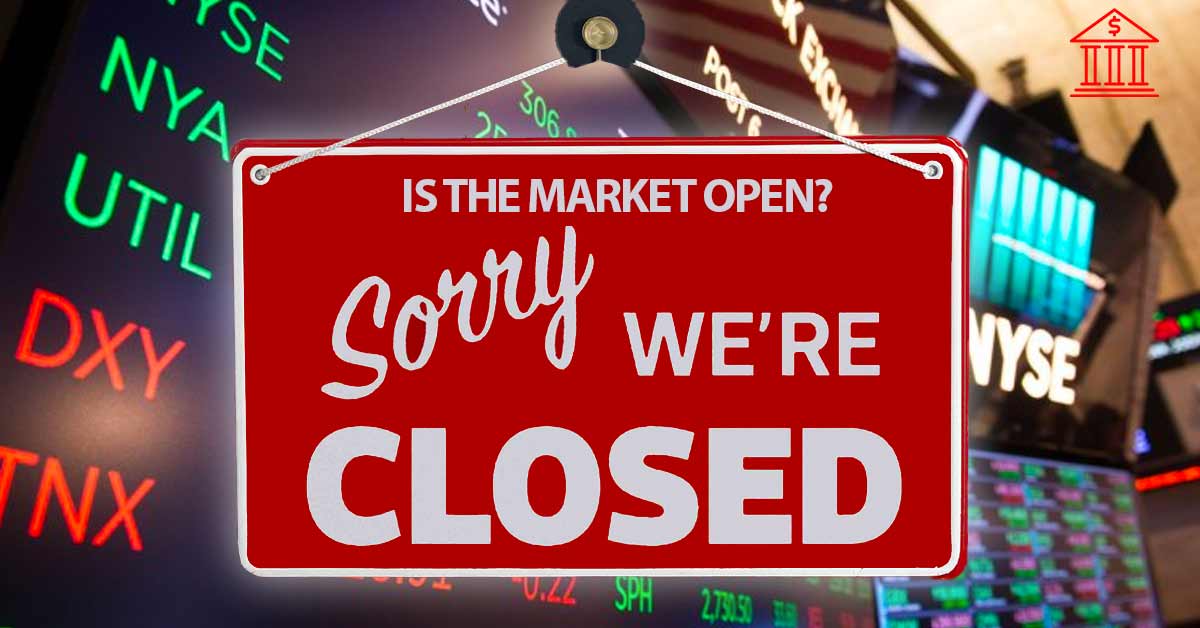
Understanding why the stock market is closed today requires more than just looking at a calendar; it requires an appreciation for the structural, historical, and strategic reasons that govern financial liquidity. For individual investors and institutional traders alike, these scheduled pauses are essential components of a healthy financial ecosystem.
The Standardized Holiday Schedule: Why the Exchanges Take a Break
The most common reason the stock market is closed on a weekday is the observance of a federal or exchange-specific holiday. In the United States, major exchanges like the NYSE and Nasdaq generally follow the federal holiday schedule set by the U.S. government, though there are occasional nuances.
The Major US Market Holidays
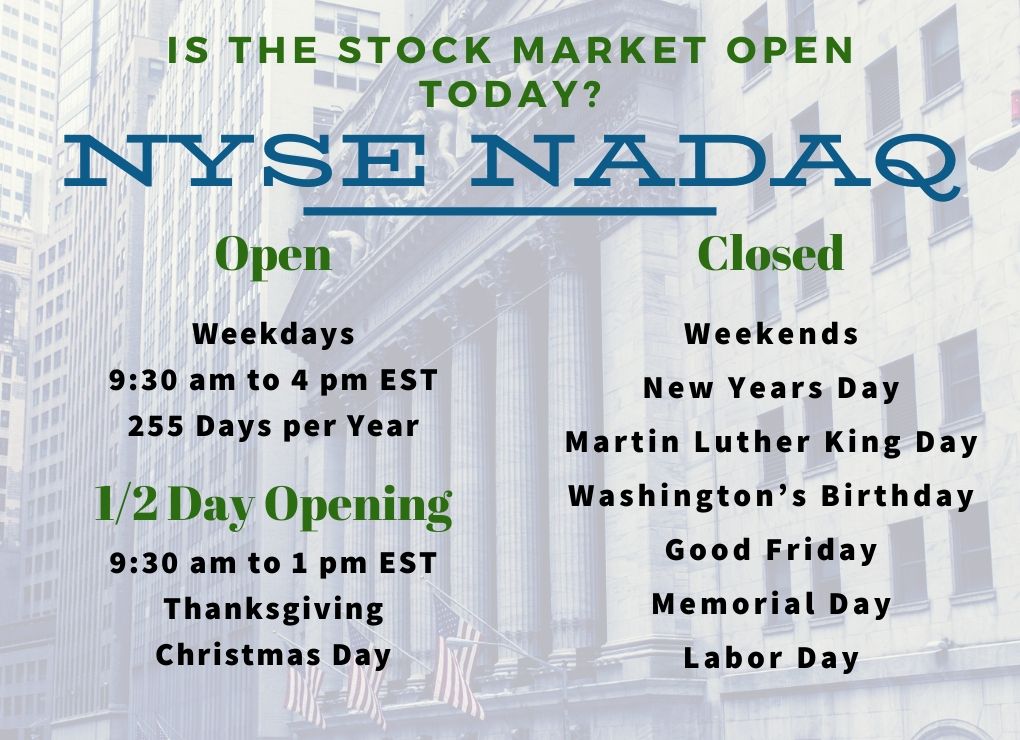
The U.S. stock market observes nine to eleven major holidays per year where the exchange is closed for the full day. These typically include:
- New Year’s Day: Celebrating the start of the fiscal and calendar year.
- Martin Luther King, Jr. Day: Observed on the third Monday of January.
- Presidents’ Day: Observed on the third Monday of February.
- Good Friday: A notable exception where the market closes even though it is not a federal government holiday.
- Memorial Day: The last Monday in May.
- Juneteenth National Independence Day: A recent and vital addition to the trading calendar.
- Independence Day (July 4th): Celebrating the founding of the nation.
- Labor Day: The first Monday in September.
- Thanksgiving Day: The fourth Thursday in November.
- Christmas Day: Observed on December 25th.
The Weekend Rule and Early Closures
To maintain consistency, the markets employ specific rules for holidays that fall on weekends. If a holiday falls on a Saturday, the market usually closes on the preceding Friday. If it falls on a Sunday, the market is typically closed on the following Monday.
Furthermore, “early closures” are a strategic part of the money management cycle. For example, the day after Thanksgiving (Black Friday) and sometimes the day before or after July 4th often see the market close at 1:00 PM ET. These shortened sessions typically experience lower liquidity and trading volume, as many institutional “market makers” are away, which can lead to increased volatility if significant news breaks.
Beyond the Calendar: Extraordinary Market Closures and Halts
While the holiday schedule is predictable, there are instances where the stock market closes unexpectedly. These “extraordinary” closures are governed by the Securities and Exchange Commission (SEC) and the exchanges themselves to protect the integrity of the financial system.
National Days of Mourning and Emergencies
Historically, the stock market has closed to honor the passing of a U.S. President. More critically, the markets close during periods of national crisis or extreme physical infrastructure failure. The most prominent modern example was the four-day closure following the attacks on September 11, 2001. More recently, weather events like Hurricane Sandy in 2012 forced a multi-day closure due to the physical risk to the Wall Street area and the potential for disconnected communication lines.
Regulatory “Circuit Breakers”
Sometimes, the market isn’t closed for the day, but it is “halted.” These are referred to as circuit breakers. Designed after the “Black Monday” crash of 1987, these mechanisms automatically pause trading when the S&P 500 drops by certain percentages (7%, 13%, and 20%) relative to the previous day’s close.
- Level 1 and 2: These triggers result in a 15-minute halt, allowing investors to digest information and preventing a “flash crash” driven by algorithmic panic selling.
- Level 3: If the market drops 20%, trading is suspended for the remainder of the day. This is a “Money” niche safeguard intended to prevent the total evaporation of capital in a single session.
The Impact of Market Closures on the Individual Investor
For many, a closed market represents a missed opportunity to execute a trade. However, from a professional financial perspective, these closures serve a vital purpose in stabilizing volatility and allowing for the orderly settlement of funds.

Order Execution and “Good ‘Til Canceled” Logic
If you place a trade while the market is closed, your brokerage will typically hold that order in a queue. It is vital to understand the difference between a Market Order and a Limit Order during these times. A market order placed on a holiday will execute at the “opening bell” price the next business day—which could be significantly higher or lower than the price you saw when you clicked “buy.” Professional investors often prefer limit orders during closures to ensure they don’t get “gapped” by a sudden price movement at the open.
The Role of After-Hours and Pre-Market Trading
Just because the “main floor” is closed doesn’t mean all trading stops. Electronic Communication Networks (ECNs) allow for pre-market and after-hours trading. However, these sessions are characterized by thin liquidity and wide “bid-ask spreads.” For the average person focusing on personal finance and long-term wealth building, trading during these periods is often discouraged because the lack of volume can lead to unfavorable pricing.
Settlement Cycles and Clearinghouses
Market holidays also affect the “T+1” or “T+2” settlement cycle. When you sell a stock, the cash doesn’t technically become “settled” (available for withdrawal to a bank) for one to two business days. Holidays do not count as settlement days. If you sell a stock on a Thursday before a long holiday weekend, your funds might not be fully cleared until the following Tuesday or Wednesday. This is a crucial consideration for business finance and liquidity management.
Strategic Planning: Using Market Holidays to Your Advantage
Instead of viewing a closed market as an inconvenience, sophisticated investors treat these breaks as a “strategic reset.” When the ticker tape stops moving, it provides the psychological distance necessary to make rational, data-driven decisions.
Portfolio Rebalancing and Research
Market hours are often chaotic, filled with the “noise” of daily price fluctuations. When the market is closed, it is the ideal time to perform a deep dive into company fundamentals. Investors can review quarterly earnings reports (10-Qs), annual filings (10-Ks), and macroeconomic trends without the pressure of a fluctuating P&L (Profit and Loss) statement staring them in the face.
Risk Assessment and Goal Setting
High-frequency trading and the gamification of investing have led many to over-trade. A closed market enforces a “cooling-off” period. This is the time to ask:
- Is my asset allocation still aligned with my long-term goals?
- Did I panic-sell during the last dip, or did I stick to my strategy?
- What is my “exit price” for my current positions?
Strategic wealth management is 10% execution and 90% preparation. The days the market is closed are the days the 90% happens.
The Global Interconnectivity of Money
We live in a globalized economy where “the market” is always open somewhere. While the NYSE might be closed for Thanksgiving, the London Stock Exchange (LSE), the Tokyo Stock Exchange (TSE), and the Hong Kong Stock Exchange (HKEX) are likely operational.
Cross-Border Influence
Developments in foreign markets during a U.S. holiday can create significant “gap ups” or “gap downs” when the U.S. market reopens. For example, if the European Central Bank makes a major interest rate announcement while U.S. markets are closed for Memorial Day, the first few minutes of trading on Tuesday morning will likely be incredibly volatile as the American market “prices in” the international news.
The Rise of 24/7 Financial Assets
The frustration of a “closed” stock market has been one of the primary drivers behind the popularity of the Foreign Exchange (Forex) market and the Cryptocurrency market. Forex trades 24 hours a day, five days a week, while Crypto trades 24/7/365. While these offer constant liquidity, they also lack the “safety valves” (like circuit breakers and holiday pauses) that the traditional stock market provides. For many institutional investors, the “closed” status of the stock market is a welcomed feature of a regulated, mature financial system rather than a bug.
Conclusion: The Value of the Pause
The question “Why is the stock market closed today?” usually has a simple answer found on a calendar. However, the importance of that closure is profound. These breaks ensure that the human and technical components of the global financial system can reset, that settlement can occur in an orderly fashion, and that investors are protected from the dangers of continuous, unmediated volatility.
For the savvy investor, market holidays are not a barrier to wealth—they are a tool. They provide the quiet required for analysis, the time required for settlement, and the discipline required for long-term success. So, if the market is closed today, use the time to step back, look at the big picture of your financial journey, and prepare for the opening bell of the next session.
aViewFromTheCave is a participant in the Amazon Services LLC Associates Program, an affiliate advertising program designed to provide a means for sites to earn advertising fees by advertising and linking to Amazon.com. Amazon, the Amazon logo, AmazonSupply, and the AmazonSupply logo are trademarks of Amazon.com, Inc. or its affiliates. As an Amazon Associate we earn affiliate commissions from qualifying purchases.