
In the fast-paced world of finance, the question “When will the market close?” is rarely just about a specific time on a clock. For the day trader, it represents the final deadline to square off positions. For the long-term investor, it might refer to the end of a fiscal year or the conclusion of a historic bull run. Understanding the operational hours of global exchanges, the mechanics of extended-market sessions, and the broader cyclicality of financial “seasons” is essential for anyone looking to master their personal finances and investment strategy.

Understanding Standard Operating Hours and Exchange Schedules
To navigate the financial world effectively, one must first master the literal schedule of the primary exchanges. In the United States, the two dominant pillars of equity trading are the New York Stock Exchange (NYSE) and the NASDAQ.
The Core Trading Session: NYSE and NASDAQ
The standard trading session for the U.S. stock market begins at 9:30 AM Eastern Time (ET) and concludes at 4:00 PM ET. This six-and-a-half-hour window is when the highest volume of liquidity occurs. When the “closing bell” rings at 4:00 PM, it signifies the end of the official trading day, triggering the “Closing Cross”—a process where the exchange matches buy and sell orders to determine the official closing price for each security. This price is vital because it serves as the benchmark for mutual fund valuations, index calculations, and historical data.
Global Markets: Navigating Time Zones
For the modern investor, the market doesn’t just “close” at 4:00 PM in New York; it merely shifts its focus. As the U.S. markets wind down, investors must look toward the Pacific and Europe.
- The Tokyo Stock Exchange (TSE): Typically opens at 9:00 AM JST and closes at 3:00 PM JST, with a lunch break in between—a rarity in Western markets.
- The London Stock Exchange (LSE): Operates from 8:00 AM to 4:30 PM GMT.
Understanding these shifts is crucial for those involved in international ETFs or foreign exchange (Forex) markets, which technically operate 24 hours a day during the work week, closing only on Friday evening and reopening on Sunday afternoon (ET).
Market Holidays: When the Lights Go Out
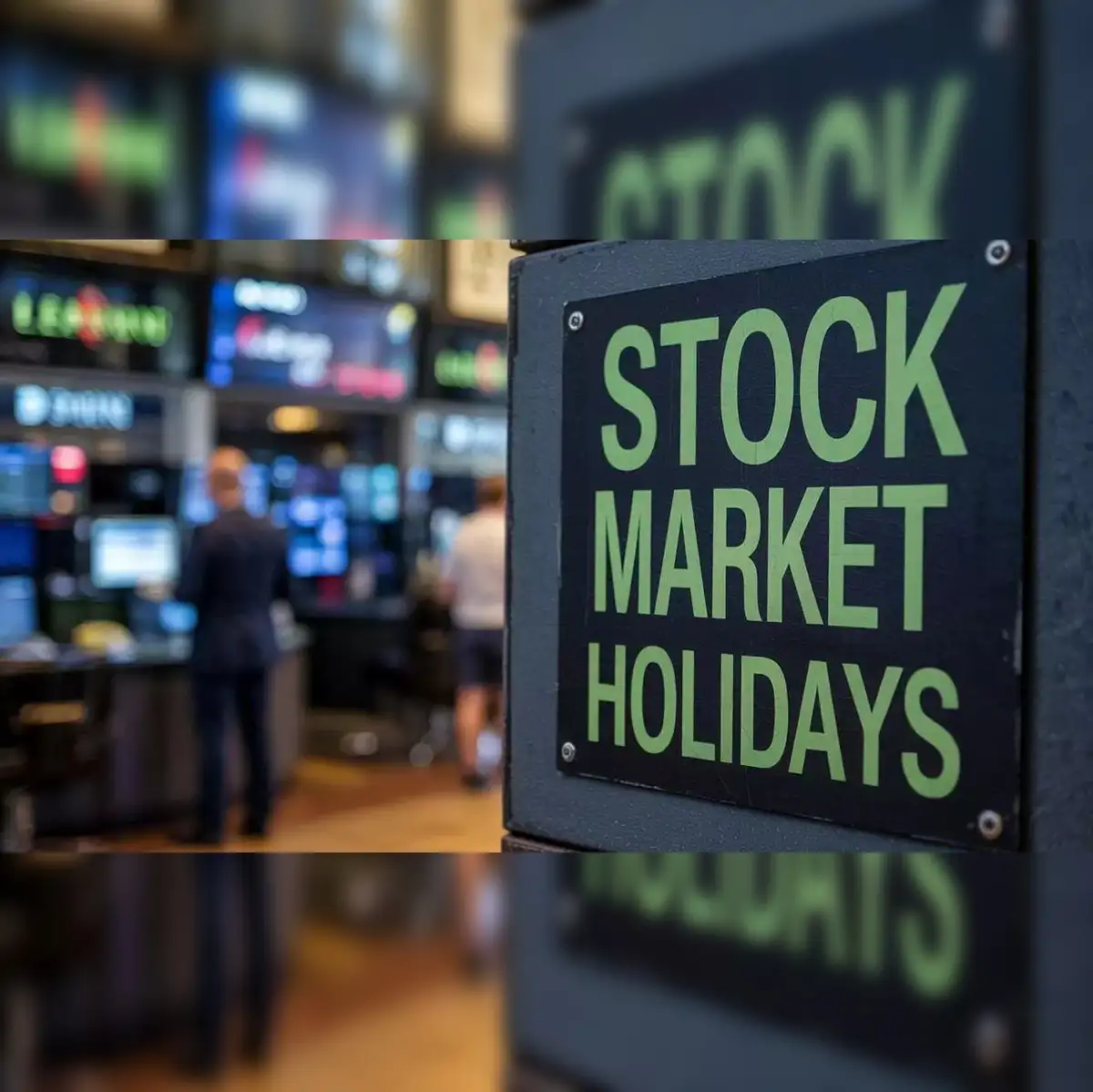
Beyond the daily clock, the market closes entirely for federally recognized holidays in the United States. These include New Year’s Day, Martin Luther King Jr. Day, Presidents’ Day, Good Friday, Memorial Day, Juneteenth, Independence Day, Labor Day, Thanksgiving, and Christmas. It is also common for the market to have “early close” days, typically at 1:00 PM ET, on the day after Thanksgiving (Black Friday) and sometimes on Christmas Eve. Investors must account for these “hard closes” as they can impact liquidity and increase volatility in the days leading up to the break.
Beyond the Closing Bell: Extended Hours and After-Market Trading
The 4:00 PM bell is no longer the absolute barrier it once was. With the advent of Electronic Communication Networks (ECNs), “when the market closes” has become a more nuanced concept.
Pre-Market and After-Hours Sessions
Most major brokerage platforms now offer access to extended-hours trading. Pre-market trading typically occurs from 4:00 AM to 9:30 AM ET, while after-hours trading runs from 4:00 PM to 8:00 PM ET. These sessions allow investors to react immediately to news that breaks outside of standard hours, such as quarterly earnings reports, geopolitical events, or unexpected economic data releases.
The Risks and Rewards of Extended Trading
While the ability to trade after the official close offers flexibility, it comes with significant caveats. The primary risk is low liquidity. Because there are fewer participants, the “bid-ask spread”—the difference between what a buyer is willing to pay and what a seller is willing to accept—can widen dramatically. This means you might pay a significantly higher price to buy or receive a much lower price to sell than you would during the standard session. Furthermore, price movements in the after-hours market can be deceptive; a stock may jump 5% on an earnings beat at 5:00 PM, only to open flat or even negative the following morning once the full weight of institutional volume enters the fray.

The Macro View: Identifying When the “Bull Market” Might Close
In the context of wealth building, “when will the market close” often refers to the end of a specific economic cycle. Financial history is defined by the oscillation between “Bull Markets” (periods of rising prices and optimism) and “Bear Markets” (periods of decline and pessimism).
Economic Indicators and Market Sentiment
Professional investors spend their careers trying to predict the “close” of a bull market. They look at several key indicators:
- Yield Curve Inversion: Historically, when short-term interest rates become higher than long-term rates, it signals that investors are losing confidence in the near-term economy, often preceding a market downturn.
- Inflation and Interest Rates: When the Federal Reserve raises interest rates to combat inflation, borrowing becomes more expensive for businesses, which can “close” the window of rapid corporate growth.
- Valuation Metrics: High Price-to-Earnings (P/E) ratios across the S&P 500 can suggest that the market is “overbought” and due for a correction or a “close” to the current upward trend.
Recognizing the Signs of a Market Peak
Markets rarely crash when everyone is worried; they often “close” their growth phase when euphoria is at its highest. This is known as “irrational exuberance.” When retail participation reaches a fever pitch and speculative assets (like meme stocks or high-risk crypto) dominate the headlines, seasoned investors begin to look for the exit. Identifying the close of a cycle is not about timing the exact top—which is nearly impossible—but about adjusting one’s risk profile to ensure that capital is preserved when the inevitable downturn arrives.
Strategic Portfolio Management Around Market Closures
Understanding the timing of the market is a fundamental component of sophisticated personal finance management. It informs how you handle everything from tax obligations to weekend risk.
Friday Closures and Weekend Risk
The period between the Friday close and the Monday open is known as “weekend risk.” Significant news—political upheaval, natural disasters, or banking crises—can occur while the markets are closed, leading to a “gap” in prices on Monday morning. For short-term traders or those using significant leverage, the Friday close is a critical decision point: do you hold through the weekend or “close” your position to mitigate the risk of an unfavorable Monday opening?
Tax-Loss Harvesting and Year-End Deadlines
On a larger scale, the “market close” of the calendar year (December 31st) is the most important deadline for personal finance. This is the final opportunity for tax-loss harvesting—selling losing investments to offset capital gains and reduce your overall tax liability. Furthermore, for those looking to maximize their “online income” or business finance strategies, the year-end close dictates the deadlines for 401(k) contributions and other tax-advantaged moves that can significantly impact long-term wealth accumulation.
The Transition to T+1 Settlement
It is also worth noting the technical evolution of the market “close.” As of 2024, the U.S. market transitioned to a “T+1” settlement cycle. This means that when the market closes and you execute a trade, the transaction officially settles one business day later. This shift reduces systemic risk and increases liquidity, allowing investors to access their cash faster after a sale. Understanding these backend “closing” mechanics ensures you aren’t caught off guard when trying to move money between accounts.
Conclusion: Mastery of Time in Financial Success
Whether you are asking “When will the market close?” to ensure your last trade of the day is executed or to gauge the end of a decade-long economic expansion, the answer is central to your financial health. Time is the most valuable asset in the world of money. Knowing when the exchanges operate allows you to trade with maximum liquidity; understanding after-hours sessions allows you to hedge against news; and recognizing the broader “closing” of economic cycles allows you to protect your portfolio from devastating losses.
In the end, the market never truly stops moving; it merely changes phases. By respecting the clock and the calendar, you transition from being a passive participant to a strategic investor who understands that in finance, timing isn’t just everything—it’s the only thing that separates the disciplined from the lucky. Keep your eyes on the bell, but keep your mind on the cycle.
aViewFromTheCave is a participant in the Amazon Services LLC Associates Program, an affiliate advertising program designed to provide a means for sites to earn advertising fees by advertising and linking to Amazon.com. Amazon, the Amazon logo, AmazonSupply, and the AmazonSupply logo are trademarks of Amazon.com, Inc. or its affiliates. As an Amazon Associate we earn affiliate commissions from qualifying purchases.