
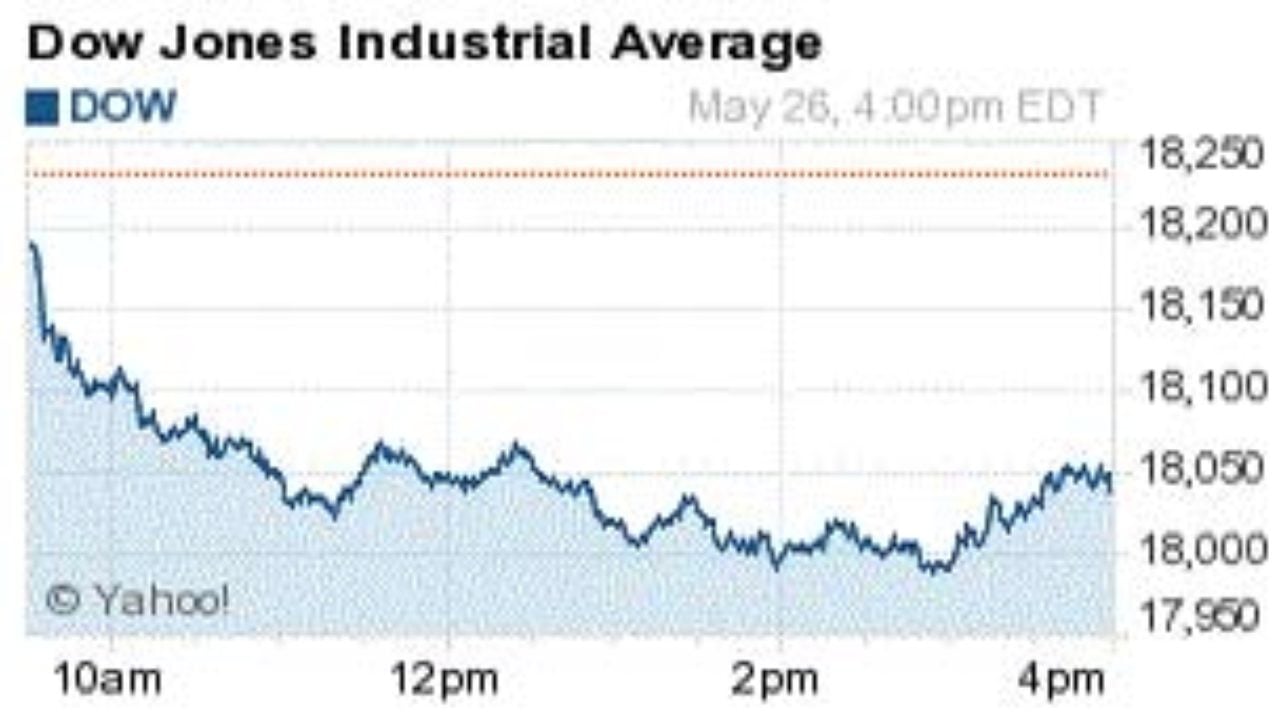
For over a century, the phrase “How is the Dow doing today?” has served as the shorthand inquiry for the health of the American economy. Whether whispered on the floor of the New York Stock Exchange or checked via a smartphone app during a morning commute, the Dow Jones Industrial Average (DJIA) remains the most recognizable barometer of financial sentiment in the world. However, understanding how the Dow is performing requires more than just looking at a green or red number on a screen. It requires an appreciation of the underlying economic engines, the psychology of investors, and the structural mechanics of the index itself.
In this exploration, we will dive deep into the world of the “Blue Chips,” examining what drives the daily fluctuations of the Dow, why it matters to your personal finance journey, and how to interpret its movements in an increasingly complex global market.
Understanding the Dow Jones Industrial Average (DJIA)
Before analyzing today’s performance, it is essential to understand exactly what the Dow represents. Established by Charles Dow and Edward Jones in 1896, the index was originally a simple average of 12 industrial companies. Today, it has evolved into a curated list of 30 large, publicly owned companies based in the United States, representing a cross-section of the modern economy—from technology and healthcare to retail and finance.
The History and Heritage of the Index
The Dow is more than a financial metric; it is a historical record of American industrial evolution. In its infancy, the index was dominated by railroads, sugar, and oil. Today, its components include “Blue Chip” titans like Apple, Microsoft, UnitedHealth Group, and Goldman Sachs. The term “Blue Chip” itself refers to high-quality, reliable companies that have a long history of stable earnings and dividend payments. When people ask how the Dow is doing, they are essentially asking how the most established leaders of American industry are weathering the current economic climate.
How the Dow is Calculated: The Role of the Dow Divisor
Unlike many other indices, such as the S&P 500 or the Nasdaq, the Dow is a price-weighted index. This means that companies with higher share prices have a greater impact on the index’s movements than those with lower share prices, regardless of the company’s total market valuation.
To maintain consistency when companies undergo stock splits or spin-offs, the index uses a mathematical constant known as the “Dow Divisor.” This divisor is adjusted periodically to ensure that a 1-point move in any of the 30 stocks results in the same movement in the index, regardless of corporate structural changes. Understanding this quirk is vital; it explains why a massive percentage gain in a lower-priced stock like Verizon might move the needle less than a smaller percentage move in a high-priced stock like UnitedHealth.
Factors Influencing the Dow’s Daily Performance
When the Dow opens every morning at 9:30 AM Eastern Time, a multitude of global forces begin to push and pull on those 30 stocks. To understand why the Dow is up or down today, one must look at three primary pillars: monetary policy, corporate health, and external geopolitical shocks.
Federal Reserve Policy and Interest Rates
Perhaps the most significant driver of the Dow in the current era is the Federal Reserve. Investors hang on every word from the Fed Chair regarding interest rate hikes or cuts. When interest rates are low, borrowing costs for corporations decrease, and the present value of future earnings increases, typically driving the Dow higher. Conversely, when the Fed raises rates to combat inflation, it can dampen corporate profits and lead to market pullbacks. Daily volatility in the Dow is often a reaction to “Fed speak” or the release of economic data like the Consumer Price Index (CPI), which signals what the Fed’s next move might be.
Corporate Earnings and the “Blue Chip” Influence
Because the Dow consists of only 30 companies, a single earnings report can have a disproportionate effect on the index. “Earnings Season”—the period when companies release their quarterly financial results—is a high-stakes time for the Dow. If a heavyweight like Microsoft or JPMorgan Chase reports record-breaking profits and optimistic guidance, it can lift the entire index. However, if a major component warns of slowing consumer demand or supply chain disruptions, the Dow can see a sharp decline even if the broader economy seems stable.
Geopolitical Events and Global Stability
The 30 companies in the Dow are global entities; they sell products and services in every corner of the earth. Consequently, the Dow is highly sensitive to international news. Trade tensions, military conflicts, or shifts in foreign energy policies can create ripples that affect the cost of goods and the stability of international markets. When global uncertainty rises, investors often retreat from equities, causing the Dow to dip as “safe-haven” assets like gold or treasury bonds become more attractive.
Why “How the Dow is Doing” Matters to Your Personal Finance
Even if you do not directly own shares in the 30 companies that make up the Dow, its daily performance affects your financial life in profound ways. It acts as a mirror reflecting the general economic confidence of the nation.
The Psychological Impact of Market Volatility
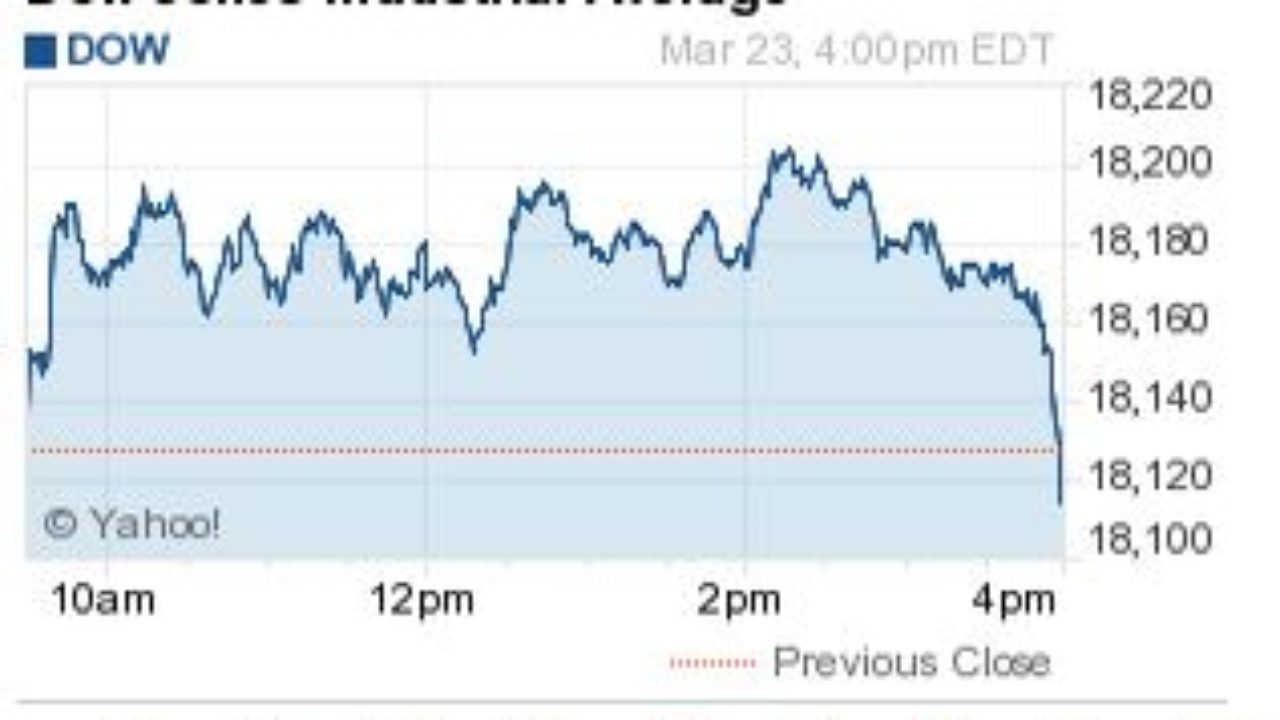
For the average person, the Dow is the primary source of financial “sentiment.” When the Dow hits a new all-time high, consumer confidence often rises. People feel wealthier—a phenomenon known as the “wealth effect”—and are more likely to spend money, which in turn fuels the economy. On the flip side, a “correction” (a 10% drop) or a “bear market” (a 20% drop) can trigger anxiety, leading to reduced spending and a potential economic slowdown. Tracking the Dow helps you understand the prevailing mood of the market, which can prevent you from making emotional decisions with your own savings.
Benchmarking Your Portfolio Against the Index
If you have a 401(k), an IRA, or a brokerage account, your investments are likely compared to benchmarks. While the Dow is not the only benchmark, it is a crucial one for those holding large-cap value stocks. By observing how the Dow is doing relative to your own portfolio, you can gauge whether your investment strategy is keeping pace with the “Blue Chips.” If the Dow is soaring while your portfolio is stagnant, it may be time to re-evaluate your asset allocation or diversification strategy.
Common Pitfalls and Limitations of Tracking the Dow
While the Dow is an iconic index, it is important for savvy investors to recognize its limitations. Relying solely on the Dow to judge the “economy” can sometimes provide a skewed perspective.
Why the Dow Isn’t the Entire Economy
The Dow represents 30 massive companies, but the U.S. economy is comprised of millions of small and medium-sized businesses. There are times when the Dow may be performing exceptionally well because large corporations are optimizing their balance sheets, while the “Main Street” economy—represented by small-cap stocks—is struggling. To get a holistic view of the market, investors should also look at the S&P 500 (representing 500 large companies) and the Russell 2000 (representing small-cap companies).
The Concentration Risk of 30 Stocks
Because the index is so small, it lacks the diversification found in broader market indices. For instance, the Dow does not have a high exposure to the burgeoning world of mid-cap growth or certain emerging tech sectors that haven’t yet reached “Blue Chip” status. Furthermore, because it is price-weighted, it can sometimes be “distorted” by a single high-priced stock. If one company with a $500 share price has a bad day, it can drag the Dow down even if the other 29 companies are performing well.
Looking Forward: Navigating a Changing Economic Landscape
As we look at how the Dow is doing today, we must also consider where it is going. The transition toward a digital and green economy is beginning to reflect in the Dow’s components. In recent years, we have seen the removal of traditional energy and industrial giants in favor of tech-centric and service-oriented firms.

Long-term Investment Strategies Amidst Short-term Noise
The most important lesson for any investor checking the Dow today is to maintain perspective. The Dow is famous for its “daily noise”—the 100-point swings that seem dramatic on a news crawl but are often insignificant in the grand scheme of a decades-long investment horizon. Historically, despite wars, recessions, and pandemics, the Dow has trended upward over the long term.
Successful personal finance management isn’t about reacting to how the Dow is doing today; it’s about understanding how those daily movements fit into the larger narrative of economic growth. By focusing on a diversified portfolio, understanding the impact of interest rates, and keeping an eye on corporate earnings, you can move beyond simply asking “How is the Dow doing?” and start asking “How can I make the market’s growth work for me?”
In conclusion, the Dow Jones Industrial Average remains a vital pulse-check for the financial world. It distills the complex movements of the global economy into a single, digestible number. Whether it’s climbing toward new heights or retreating in the face of uncertainty, the Dow provides a roadmap for understanding the challenges and opportunities within the world of money. By looking past the surface-level numbers and understanding the “why” behind the “what,” you can become a more informed, confident, and successful participant in the modern financial landscape.
aViewFromTheCave is a participant in the Amazon Services LLC Associates Program, an affiliate advertising program designed to provide a means for sites to earn advertising fees by advertising and linking to Amazon.com. Amazon, the Amazon logo, AmazonSupply, and the AmazonSupply logo are trademarks of Amazon.com, Inc. or its affiliates. As an Amazon Associate we earn affiliate commissions from qualifying purchases.