
A business plan is much more than a mandatory document required by banks or venture capitalists; it is the strategic roadmap that defines the financial viability of an entrepreneurial venture. In the “Money” niche—encompassing personal finance, investing, and business finance—the business plan serves as the primary tool for risk assessment and capital allocation. Whether you are launching a side hustle or scaling a high-growth startup, drafting a plan requires a meticulous focus on fiscal health, revenue sustainability, and investor appeal.
The following guide outlines the essential components of a business plan, viewed through the lens of financial mastery and long-term wealth creation.

1. Establishing the Financial Foundation
The initial phase of drafting a business plan involves moving beyond a simple idea and into the realm of fiscal reality. This section determines whether a concept is merely a passion project or a legitimate vehicle for generating income.
Defining the Executive Summary and Value Proposition
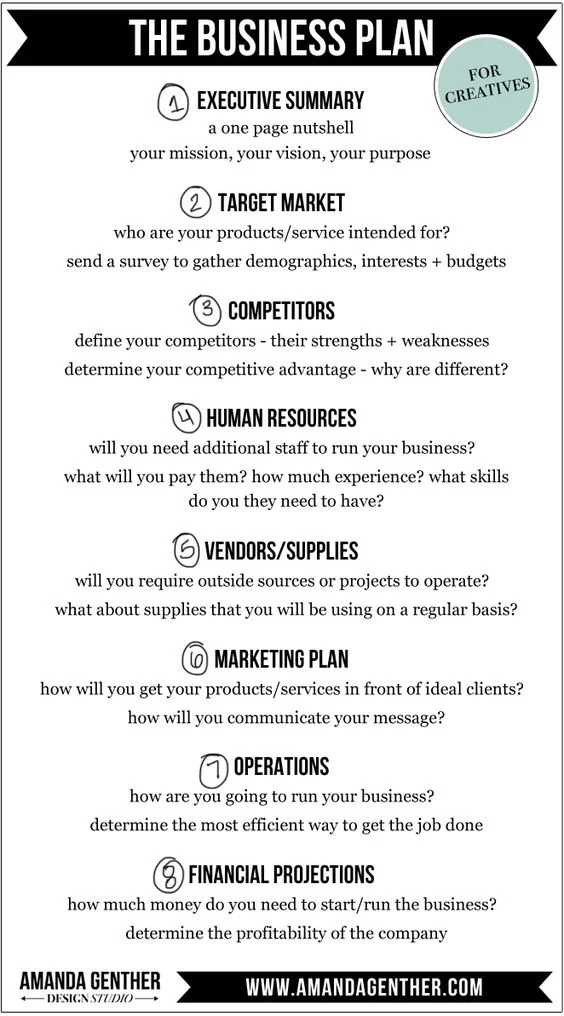
The Executive Summary is arguably the most critical part of your document. For an investor or a lender, this is the “hook.” It must clearly articulate the problem your business solves and why it is a profitable opportunity. From a financial perspective, your value proposition should explain how your product or service creates a competitive advantage that translates into market share. You are not just selling a product; you are selling a mechanism for ROI (Return on Investment). A strong executive summary summarizes the funding requirements and the projected milestones, giving the reader a snapshot of the business’s financial trajectory.
Market Analysis: Identifying Profitability and Revenue Streams
A deep dive into market analysis is required to validate the demand for your business. In this subsection, you must quantify the Total Addressable Market (TAM) and the Serviceable Obtainable Market (SOM). Understanding these figures allows you to project realistic revenue. You must also identify your primary and secondary revenue streams. Will you rely on one-time sales, recurring subscriptions, or a freemium model? Analyzing the pricing strategies of competitors is essential to ensure your margins are healthy enough to cover operational costs while remaining attractive to consumers.
2. Strategic Operational Planning for Scalability
While operations may seem administrative, in the world of business finance, they are about efficiency and cost management. How you structure your company directly impacts your overhead and, consequently, your bottom line.
Organizational Structure and Resource Allocation
Your business plan must detail the legal structure of the entity—whether it is an LLC, a C-Corp, or a S-Corp—as this has significant tax implications and affects how you can raise capital. Beyond legalities, you must outline the management team and their expertise. Investors look for “skin in the game” and a team capable of executing the financial goals. Resource allocation is equally vital; you must justify every dollar spent on human capital, technology, and physical assets. The goal is to demonstrate a lean approach where capital is utilized to drive growth rather than being swallowed by unnecessary administrative bloat.
Product or Service Development: From MVP to Profit
Developing a product involves research and development (R&D) costs that must be carefully managed. Your business plan should outline the lifecycle of your product, starting from the Minimum Viable Product (MVP). By focusing on an MVP, you reduce the initial capital outlay and test the market with minimal financial risk. This section should also detail any intellectual property (IP) or proprietary technology that adds value to the company’s valuation. In the context of business finance, a patent or a unique software algorithm is an asset that can be leveraged for future funding rounds or used as collateral.
3. Mastering Financial Projections and Funding Requests
This is the core of the “Money” niche application. If the previous sections are the narrative, this section is the math that proves the narrative is possible. Precision here is the difference between securing an investment and being rejected.
Detailed Financial Forecasts: Income Statements and Cash Flow
Professional business plans require at least three to five years of financial projections. This includes three essential documents:
- The Income Statement (P&L): This shows your projected revenues, expenses, and profits over a specific period. It demonstrates the business’s ability to generate a net profit.
- The Cash Flow Statement: This is perhaps the most important document for a new business. It tracks the movement of cash in and out. Many businesses fail not because they aren’t profitable on paper, but because they run out of liquid cash to pay their bills.
- The Balance Sheet: This provides a snapshot of the business’s financial health at a specific point in time, detailing assets, liabilities, and equity.
When drafting these, it is crucial to remain conservative. Overestimating growth or underestimating expenses can damage your credibility with financial institutions.
Formulating the Funding Request: Debt vs. Equity
If you are seeking external capital, you must be explicit about how much money you need and exactly how it will be used. Will the funds go toward marketing, inventory, or R&D? You also need to decide between debt and equity financing.
- Debt Financing (Loans): You retain full ownership but must pay back the principal with interest. This is ideal for businesses with steady cash flow.
- Equity Financing (Investors): You trade a percentage of ownership for capital. This is common for high-growth startups that may not be profitable immediately but have high exit potential.
Your business plan should articulate why you chose one over the other and how the infusion of capital will accelerate the company’s financial milestones.
4. Risk Mitigation and Exit Strategies
A sophisticated investor wants to know two things: what happens if things go wrong, and how do they eventually get their money back? Addressing these questions demonstrates a high level of financial literacy.
Contingency Planning for Financial Volatility
Every business faces risks, whether they are economic downturns, supply chain disruptions, or shifts in consumer behavior. A robust business plan includes a sensitivity analysis—a “what-if” scenario that shows how the business would perform if sales were 20% lower than expected or if the cost of goods rose significantly. By identifying these risks and presenting a mitigation strategy (such as maintaining a cash reserve or diversifying suppliers), you prove to lenders and investors that you are a responsible steward of capital.

Long-term Financial Goals and Exit Strategies
Finally, your business plan should look toward the “end game.” In the world of investing and business finance, an exit strategy is the method by which an entrepreneur and the investors “cash out.” Common exit strategies include:
- Acquisition: Being bought by a larger company in the same industry.
- Initial Public Offering (IPO): Taking the company public on a stock exchange.
- Management Buyout: Selling the business to the current management team.
- Lifestyle Business Sustainability: If you aren’t looking for an exit, your plan should focus on how the business will provide a consistent dividend or income stream for the owners.
By clearly defining the exit strategy, you align your interests with those of your investors, showing that you are focused on the ultimate goal: the realization of financial value.
Drafting a business plan is an exercise in discipline. It forces the entrepreneur to confront the hard numbers and the competitive realities of the marketplace. By focusing on these four pillars—financial foundation, operational efficiency, rigorous projections, and risk management—you create more than just a document; you create a blueprint for financial success and a compelling case for investment. In the realm of money and business finance, a well-drafted plan is the most valuable asset you can own before the first dollar is even earned.
aViewFromTheCave is a participant in the Amazon Services LLC Associates Program, an affiliate advertising program designed to provide a means for sites to earn advertising fees by advertising and linking to Amazon.com. Amazon, the Amazon logo, AmazonSupply, and the AmazonSupply logo are trademarks of Amazon.com, Inc. or its affiliates. As an Amazon Associate we earn affiliate commissions from qualifying purchases.