
The transition from an aspiring entrepreneur to a business owner is often romanticized as a journey of passion and creativity. However, beneath the surface of every successful enterprise lies a rigorous financial framework. Starting a business is, at its core, an exercise in capital allocation, risk management, and value capture. Without a robust financial roadmap, even the most innovative ideas can succumb to the pressures of liquidity crises and unsustainable burn rates. To build a business that lasts, one must think like a Chief Financial Officer from day one.
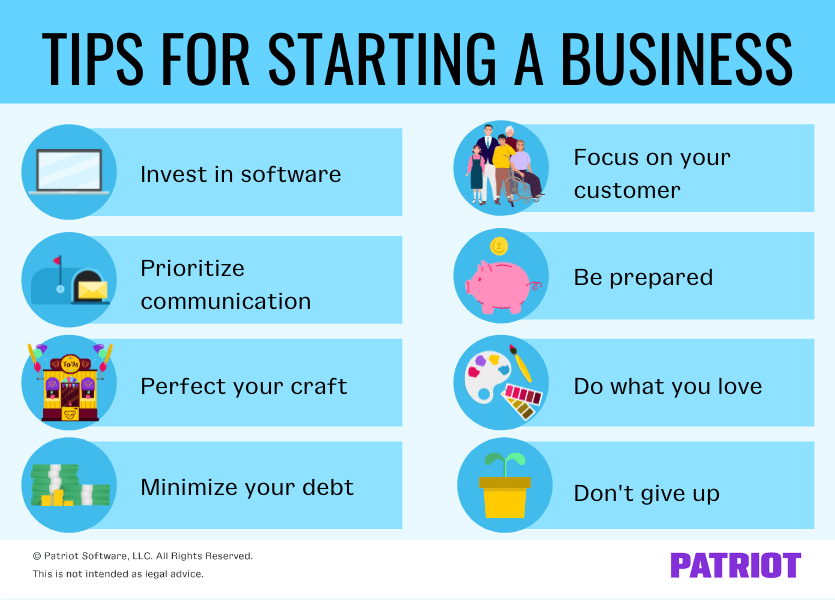
This guide explores the essential financial pillars of starting a business, focusing on capital requirements, revenue modeling, funding strategies, and long-term fiscal management.
Building the Financial Foundation: Budgeting and Capital Requirements
The primary reason new businesses fail is not a lack of effort, but a lack of cash. Understanding your “runway”—the amount of time your business can operate before it needs to turn a profit or secure more funding—is the first step in any entrepreneurial venture.
Identifying Initial Startup Costs
Before the first sale is made, expenses will accrue. These are generally categorized into capital expenditures (CapEx) and operating expenses (OpEx). CapEx includes one-time purchases like equipment, specialized software licenses, or office furniture. OpEx includes the recurring costs required to keep the lights on, such as rent, insurance, and initial inventory.
A thorough startup budget should also account for “hidden” costs, such as legal fees for incorporation, licensing permits, and the initial deposit for utility services. By meticulously listing these expenses, an entrepreneur can determine the minimum viable capital required to launch without the constant threat of insolvency.
Creating a Realistic Cash Flow Forecast
Profit is not the same as cash flow. A business can be profitable on paper but still run out of money if its clients take 90 days to pay while its suppliers demand payment in 15. A cash flow forecast is a living document that predicts the timing of money entering and leaving your bank account.
For a new business, this forecast should be conservative. Overestimating sales and underestimating the time it takes to collect payments are common pitfalls. By modeling various scenarios—including a “worst-case” scenario—you can determine how much of a financial cushion you truly need.
The Role of an Emergency Fund in Business Longevity
Just as individuals need personal emergency funds, businesses require a liquidity reserve. Market volatility, supply chain disruptions, or sudden regulatory changes can halt operations overnight. A common financial benchmark is to maintain a reserve that covers three to six months of operating expenses. This fund acts as a shock absorber, allowing the business to pivot or weather a downturn without resorting to high-interest debt or desperate equity sales.
Revenue Models and Monetization Strategies for New Founders
A business is defined by its ability to generate sustainable income. Choosing the right revenue model is a strategic decision that dictates how you interact with your customers and how predictably your business will grow.
Subscription vs. Transactional Models
The modern economy has seen a massive shift toward subscription-based models (Recurring Revenue). This model is highly attractive to investors because of its predictability and the “compounding” effect of building a loyal customer base. However, subscriptions require high customer retention rates to be profitable.
On the other hand, the transactional model—where a customer makes a one-time purchase—offers immediate cash flow and typically has lower barriers to the first sale. For many new businesses, a hybrid approach provides the best of both worlds: high-volume transactional sales to generate immediate capital, paired with a recurring service or maintenance fee to ensure long-term stability.
Scaling Through Diversified Income Streams
Relying on a single product or a single client is a significant financial risk. As a business matures, diversifying income streams becomes essential. This could involve “upselling” existing clients on premium features, “cross-selling” complementary products, or even monetizing data or intellectual property. Diversification reduces the impact of a decline in any single market segment and increases the overall valuation of the company.
Pricing Strategy: Finding the Sweet Spot Between Value and Profit
Pricing is often treated as a marketing decision, but it is fundamentally a financial one. A “cost-plus” pricing strategy (adding a margin to your costs) ensures you don’t lose money on a sale but may leave money on the table if the customer perceives high value.
Conversely, “value-based” pricing focuses on the economic benefit provided to the customer. To maximize margins, entrepreneurs must analyze the “Lifetime Value” (LTV) of a customer against the “Customer Acquisition Cost” (CAC). A healthy business usually maintains an LTV to CAC ratio of at least 3:1, ensuring that the profit generated from a customer far outweighs the cost of winning their business.

Navigating Funding Options and Investment Opportunities
Once the financial plan is in place, the question becomes: where will the money come from? The source of your capital will significantly influence your control over the company and your long-term financial obligations.
Bootstrapping: The Power of Self-Funding
Bootstrapping involves starting a business using only personal savings and the revenue generated by the business itself. The primary advantage is total control; you retain 100% equity and answer to no one but your customers.
However, bootstrapping often limits the speed of growth. In capital-intensive industries, it may be impossible. For service-based businesses or low-overhead digital ventures, bootstrapping is a disciplined way to prove a concept before seeking outside investment.
Exploring Debt Financing and Business Loans
Debt financing involves borrowing money that must be repaid with interest. This can come from traditional bank loans, Small Business Administration (SBA) loans, or lines of credit. The benefit of debt is that it does not require giving up ownership.
The risk, of course, is the obligation to make payments regardless of whether the business is currently profitable. For businesses with steady, predictable cash flows and tangible assets to use as collateral, debt can be a powerful tool for leveraging growth without diluting equity.
Attracting Venture Capital and Angel Investors
For high-growth startups, equity financing is often the preferred route. Angel investors (typically wealthy individuals) provide seed capital in exchange for a stake in the company. Venture Capital (VC) firms provide larger sums for businesses that have already shown significant traction.
While VC funding can provide the “rocket fuel” needed to dominate a market, it comes with high expectations for a “liquidity event”—meaning the investors expect the company to eventually be sold or go public so they can realize their gains. This path requires a clear exit strategy and a willingness to share decision-making power.
Financial Management and Tax Optimization for Long-Term Growth
Launching the business is only the beginning. Sustaining it requires ongoing financial vigilance and a commitment to optimization.
Setting Up Efficient Accounting Systems
Manual spreadsheets may work for the first month, but they quickly become a liability. Implementing professional cloud-based accounting software is non-negotiable. These tools provide real-time insights into your balance sheet, income statement, and accounts receivable.
An efficient system allows you to monitor your “burn rate” (the rate at which you spend capital) and identify inefficiencies before they become catastrophic. Moreover, clean books are essential if you ever decide to sell the business or apply for a loan.
Understanding Tax Obligations and Deductions
Taxes are one of the largest expenses a business will face. Choosing the right legal structure—whether a Sole Proprietorship, LLC, S-Corp, or C-Corp—has profound implications for how your income is taxed.
Smart financial management involves maximizing legitimate deductions, such as home office expenses, travel, equipment depreciation, and employee benefits. Working with a tax professional early on can help you implement a “tax-efficient” strategy that keeps more money within the business for reinvestment.
Reinvesting Profits for Sustainable Scaling
When a business begins to show a surplus, the temptation is to increase the founder’s draw. However, the most successful entrepreneurs understand the power of compounding within their own business.
Strategic reinvestment—whether in better technology, talent acquisition, or market expansion—is what separates a “lifestyle business” from a scalable enterprise. By analyzing the Return on Investment (ROI) for each internal project, you can ensure that every dollar of profit is working toward the next stage of the company’s evolution.
In conclusion, starting a business is an intricate financial puzzle. By focusing on capital preservation, diverse revenue streams, smart funding, and rigorous accounting, you transform an idea into a resilient financial asset. Entrepreneurship is a marathon of fiscal discipline; those who master the money will find themselves in the best position to achieve their ultimate vision.
aViewFromTheCave is a participant in the Amazon Services LLC Associates Program, an affiliate advertising program designed to provide a means for sites to earn advertising fees by advertising and linking to Amazon.com. Amazon, the Amazon logo, AmazonSupply, and the AmazonSupply logo are trademarks of Amazon.com, Inc. or its affiliates. As an Amazon Associate we earn affiliate commissions from qualifying purchases.