
In the modern economic landscape, the transition from traditional employment to digital entrepreneurship has become a primary vehicle for wealth creation. Setting up an online store is no longer merely a technical project; it is a strategic financial move designed to generate scalable, long-term income. Whether you are looking to build a side hustle or establish a primary revenue stream, the process requires a deep understanding of business finance, market positioning, and capital allocation.
This guide explores the essential components of launching an e-commerce venture, focusing strictly on the financial and business frameworks necessary to ensure your store is not just functional, but profitable.
Choosing a Business Model for Sustainable Online Income
Before investing a single dollar into a digital storefront, an entrepreneur must decide on a business model that aligns with their risk tolerance and capital availability. Your choice of model dictates your profit margins, your overhead costs, and your long-term financial scalability.
Dropshipping vs. Private Labeling: Assessing the Risk-Reward Ratio
Dropshipping is often touted as the ultimate low-barrier-to-entry side hustle. From a financial perspective, its primary advantage is the elimination of inventory costs. You act as a middleman, collecting payment from the customer and passing the order to a supplier who fulfills it. However, the trade-off is often lower profit margins—frequently between 10% and 20%—and a lack of control over product quality.
Conversely, private labeling involves sourcing products, often overseas, and branding them as your own. This requires a higher upfront capital investment for bulk inventory and storage. However, the financial rewards are significantly greater. Private labeling allows for higher markups, better brand equity (which becomes a sellable asset), and higher customer retention rates. For those focused on building a high-valuation business, private labeling is the superior financial strategy.
Digital Products and Subscription Models
For those seeking the highest possible profit margins, digital products—such as software, e-books, or online courses—are unparalleled. Because the “cost of goods sold” (COGS) is virtually zero after the initial creation, every sale represents nearly 100% profit.
Furthermore, integrating a subscription model (Software as a Service or Monthly Boxes) provides the “Holy Grail” of business finance: Monthly Recurring Revenue (MRR). MRR creates a predictable cash flow, making it easier to plan for future investments and increasing the overall valuation of the company should you decide to exit or sell the business.
Budgeting and Financial Planning for Your Storefront
A common mistake among new e-commerce entrepreneurs is underestimating the true cost of doing business. A professional storefront requires a clear budget that accounts for both “burn rate” (monthly expenses) and “customer acquisition costs.”
Calculating Startup Costs and Lean Launching
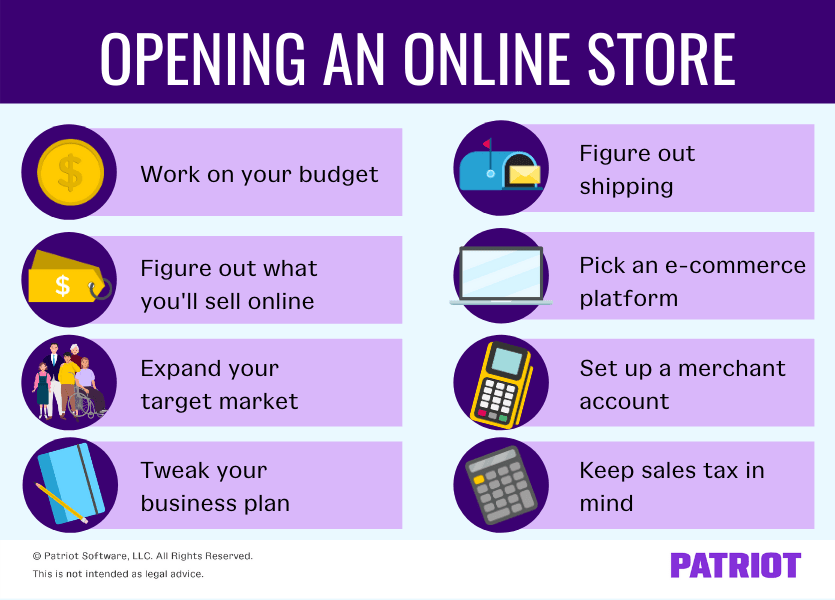
While you can technically start an online store for a few hundred dollars, a competitive business requires a more robust financial plan. Your initial budget should cover:
- Platform Fees: Monthly costs for SaaS platforms like Shopify or hosting for WooCommerce.
- Inventory/Production: The initial capital required to secure your first batch of goods.
- Marketing Capital: A dedicated fund for testing advertisements (Facebook, Google, or TikTok).
- Legal and Administrative: Costs for business registration (LLC), trademarks, and sales tax compliance software.
Adopting a “lean” approach means spending money only on things that directly contribute to revenue. For example, prioritize a high-converting product page over an expensive custom-designed logo in the early stages.
Managing Cash Flow and Merchant Processing Fees
Cash flow is the lifeblood of any online store. Many entrepreneurs are surprised by the delay between a customer making a purchase and the funds arriving in their bank account. Most payment gateways (Stripe, PayPal, Shopify Payments) hold funds for 2-7 days and charge a transaction fee—typically around 2.9% + $0.30 per sale.
When calculating your margins, these fees must be baked into your pricing strategy. If your margins are too thin, these small percentages can erode your net profit, leaving you with a high-revenue business that is actually losing money.
Selecting a High-ROI Platform and Tech Stack
The technology you use to run your store is an investment in your business’s infrastructure. Choosing the wrong platform can lead to “technical debt”—where the cost of fixing or migrating your store later outweighs the initial savings.

Evaluating SaaS vs. Open Source for Long-term Growth
From a financial perspective, the choice between a Software-as-a-Service (SaaS) platform like Shopify and an open-source solution like WooCommerce depends on your “Total Cost of Ownership.”
Shopify offers a predictable monthly expense and handles security and hosting, allowing you to focus your time (which has a monetary value) on sales. WooCommerce is “free” but requires paid hosting, security plugins, and often developer fees to maintain. For most entrepreneurs, paying a premium for a managed platform is a better financial move because it reduces the risk of downtime, which can lead to thousands of dollars in lost revenue.
Integrating Payment Gateways for Seamless Transactions
The checkout process is the most critical point in your financial funnel. Friction here leads to “cart abandonment,” which is essentially lost income. Your tech stack must include reliable, diverse payment options.
Offering “Buy Now, Pay Later” (BNPL) services like Klarna or Affirm has been shown to increase average order value (AOV) by as much as 20-30%. While these services charge the merchant a higher fee (often 5-6%), the increase in total revenue often justifies the cost. Always view your tech stack through the lens of ROI: does this tool help me make more money than it costs?
Marketing Strategies to Drive Revenue and Customer Lifetime Value
You can have the best product in the world, but if nobody sees it, you have a hobby, not a business. E-commerce marketing is a game of mathematics, specifically balancing Customer Acquisition Cost (CAC) against Customer Lifetime Value (LTV).
Cost-Effective Customer Acquisition (SEO and Social)
In the early days, you must decide between “buying” traffic (Ads) or “earning” traffic (SEO and Content). Paid advertising offers immediate results but requires a constant infusion of cash. Search Engine Optimization (SEO), while slow, builds an organic asset that provides “free” traffic over time.
To maximize profitability, a hybrid approach is best. Use paid ads to validate your product and generate immediate cash flow, while simultaneously building an SEO foundation to lower your average CAC over the long term. Monitoring your “Return on Ad Spend” (ROAS) daily is essential; if your ROAS falls below your “break-even” point, you are effectively paying customers to take your products.
Retention Finance: The Power of Email and SMS Marketing
The most expensive sale is the first one. True wealth in e-commerce is built on the second, third, and fourth purchases. This is where Email and SMS marketing become your most profitable channels.
Unlike Facebook or Google ads, where you pay for every click, your email list is an “owned asset.” Sending a promotional email to 10,000 subscribers costs nearly nothing but can generate massive spikes in revenue. Focusing on LTV ensures that even if your initial acquisition cost is high, the long-term profitability of each customer remains healthy.
Scaling Your Operations and Diversifying Income Streams
Once your store is consistently profitable, the focus shifts from “survival” to “scaling.” Scaling is the process of increasing revenue faster than you increase expenses, thereby widening your profit margins.
Automation and Outsourcing to Increase Profit Margins
As revenue grows, the entrepreneur’s role must shift from “doing” to “managing.” Investing in automation software for inventory management, customer service (AI chatbots), and order fulfillment allows the business to handle more volume without a linear increase in payroll costs.
Outsourcing tasks to virtual assistants or using a Third-Party Logistics (3PL) provider can turn fixed costs into variable costs. This financial flexibility is crucial during market downturns or seasonal fluctuations, ensuring the business remains lean and agile.
Expansion into Multi-Channel Selling
To protect your income, you should never rely on a single source of traffic or a single sales channel. Diversifying into marketplaces like Amazon, eBay, or Walmart Marketplace can significantly increase your reach.
While these platforms take a commission, they provide access to an existing pool of buyers, lowering your marketing costs. A multi-channel strategy not only boosts your monthly income but also makes your business more attractive to investors or buyers, as it reduces the “platform risk” associated with being tied to a single ecosystem.
In conclusion, setting up an online store is a sophisticated financial endeavor. By carefully choosing your business model, managing your cash flow with precision, and focusing on high-ROI marketing and technology, you can transform a simple digital storefront into a robust engine for wealth creation. Success in e-commerce is not about the products you sell, but the financial systems you build around them.
aViewFromTheCave is a participant in the Amazon Services LLC Associates Program, an affiliate advertising program designed to provide a means for sites to earn advertising fees by advertising and linking to Amazon.com. Amazon, the Amazon logo, AmazonSupply, and the AmazonSupply logo are trademarks of Amazon.com, Inc. or its affiliates. As an Amazon Associate we earn affiliate commissions from qualifying purchases.