
In an era of economic volatility and fluctuating market conditions, the ability to mobilize capital quickly is a critical financial skill. Whether you are building an emergency fund, preparing for a major purchase, or seeking to clear high-interest debt, the objective remains the same: maximizing the gap between your income and your expenditures in the shortest timeframe possible. Saving money “quickly” is rarely about minor tweaks; it is about a concentrated effort to audit your lifestyle, leverage modern financial tools, and adopt a mindset of aggressive optimization.
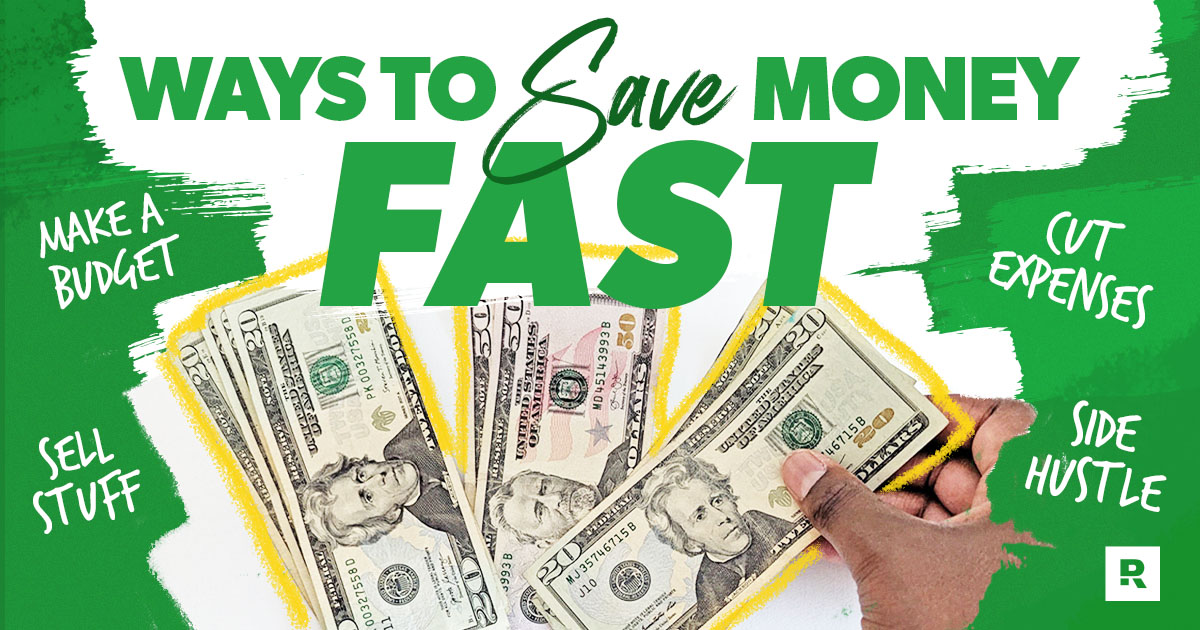
This guide explores the structural shifts and tactical maneuvers required to accelerate your savings rate. By focusing on high-impact areas—such as recurring expenses, behavioral psychology, and income diversification—you can transform your financial balance sheet within a matter of weeks.
1. The Financial Audit: Identifying and Plugging Cash Leaks
The first step toward saving money quickly is a comprehensive “financial MRI.” You cannot optimize what you do not measure. Most individuals lose significant portions of their disposable income to “phantom expenses”—recurring costs that provide little value relative to their price tag.
Analyzing Recurring Subscriptions and Digital Leaks
In the digital economy, “subscription creep” is a primary obstacle to rapid saving. Small monthly charges for streaming services, software, gym memberships, and premium apps often go unnoticed but can aggregate to hundreds of dollars per month. To save quickly, conduct a “slash and burn” audit. Use a financial tracking app or manually review three months of bank statements. If you haven’t used a service in the last 30 days, cancel it immediately. You can always resubscribe later, but the immediate cessation of these outflows provides instant liquidity.
Implementing the “Zero-Based” Budgeting Strategy
Generic budgeting often fails because it allows for “miscellaneous” spending. To save quickly, transition to zero-based budgeting. In this model, every dollar is assigned a specific job—whether it’s for rent, groceries, or the savings account—before the month begins. When your total income minus your expenses equals zero, you have eliminated the “slack” that usually disappears into impulse purchases.
Leveraging Automation for Instant Discipline
One of the most effective ways to save rapidly is to remove the human element from the equation. Set up an automated transfer that moves a predetermined amount of money from your checking account to a high-yield savings account (HYSA) the moment your paycheck hits. This “pay yourself first” mentality ensures that your savings goal is prioritized over your consumption, preventing the “end-of-month” scramble where little money remains.
2. High-Impact Lifestyle Adjustments for Immediate Results
To see a significant change in your bank balance within 30 to 60 days, you must address the three largest categories of household spending: housing, transportation, and food. While housing is often fixed in the short term, the other two offer substantial room for rapid optimization.
The Art of Strategic Meal Planning and Groceries
Food is often the most flexible “big” expense in a budget. Saving money quickly requires a shift from convenience-based eating (takeout, delivery, and restaurant dining) to a commodity-based approach. By committing to a “pantry challenge”—using what you already have—and strictly shopping with a list for bulk staples, you can often cut your food costs by 50% or more. Avoid “premium” grocery stores and opt for discount retailers; the price difference for identical goods is often staggering when viewed through the lens of a monthly total.
Renegotiating Fixed Contracts and Utilities
Many consumers assume that their monthly bills for internet, insurance, and cell phone service are non-negotiable. This is a misconception. To save money quickly, spend one afternoon calling your service providers. Ask for the retention department and inquire about current promotions or competitor matching. Often, a 15-minute phone call can result in a $20–$50 reduction in monthly costs. Aggregated across multiple services, this can result in thousands of dollars in annual savings with zero change in your standard of living.
Optimizing Transportation and Energy Consumption
If you are aiming for rapid savings, consider “utility hygiene.” Lowering your thermostat by a few degrees in winter, unplugging “vampire electronics,” and being mindful of peak electricity hours can shave significant amounts off your utility bills. Regarding transportation, if you live in an urban environment, challenge yourself to use public transit or carpool for a month. The savings on fuel, parking, and vehicle wear-and-tear add up immediately.
3. Accelerating Capital via Income Supplementation and Asset Liquidation

While cutting expenses is the foundation of saving, there is a floor to how much you can cut. There is no ceiling, however, to how much you can earn. To save money quickly, you must attack the problem from both sides of the ledger.
Converting Underutilized Assets into Cash
Most households sit on thousands of dollars of “dead capital” in the form of unused electronics, clothing, furniture, and equipment. Platforms like Facebook Marketplace, eBay, and specialized resale sites allow you to convert these items into cash within days. A weekend spent decluttering can often yield an immediate $500 to $2,000 “savings boost” that can be moved directly into an emergency fund or used to pay down debt.
Strategic Side Hustles and Skill Arbitrage
In the gig economy, the barrier to entry for earning extra income has never been lower. If you have a specific professional skill—such as copywriting, graphic design, or data analysis—freelancing on platforms like Upwork or Fiverr can provide a rapid influx of cash. For those seeking lower-barrier options, ride-sharing or delivery services offer the ability to trade time for immediate liquidity. The key is to direct 100% of this supplemental income toward your savings goal, rather than allowing it to inflate your lifestyle.
Maximizing Employer Benefits and Tax Efficiencies
Ensure you are not leaving money on the table. If your employer offers a 401(k) match, contribute at least enough to get the full match; this is essentially a 100% return on your investment. Additionally, look into Health Savings Accounts (HSAs) or Flexible Spending Accounts (FSAs) if you have predictable medical expenses. These tools allow you to use pre-tax dollars, effectively saving you 20–30% (depending on your tax bracket) on necessary costs.
4. Behavioral Finance: Overcoming the Psychology of Spending
Saving money quickly is as much a psychological challenge as it is a mathematical one. Our brains are hardwired for instant gratification, which runs counter to the goal of capital accumulation.
Implementing the 24-Hour (or 30-Day) Rule
Impulse spending is the enemy of rapid savings. To combat this, implement a mandatory waiting period for any non-essential purchase over a certain dollar amount (e.g., $50). Often, the “dopamine hit” associated with the desire to buy fades within 24 hours, and you realize the purchase was unnecessary. For larger items, a 30-day rule is even more effective at ensuring your spending aligns with your long-term values.
The “Cash-Only” Experiment for Discretionary Spending
Digital payments are designed to be “frictionless,” which makes it easier to overspend. To save quickly, try a “cash envelope” system for discretionary categories like entertainment and dining out. Physically seeing the money leave your wallet creates a psychological “pain of paying” that naturally curbs excessive spending. Once the envelope is empty, spending in that category stops for the month.
Redefining Your Relationship with “Value”
Quickly saving money often requires a temporary shift in social habits. Instead of expensive dinners or outings, suggest “low-cost” alternatives to friends, such as hiking, potluck dinners, or free local events. Professional networking can also be shifted to coffee meetings rather than expensive lunches. This isn’t about social isolation; it’s about being intentional with your “social capital” to protect your financial capital.
5. Protecting Your Progress: Financial Tools and Long-Term Stability
Once you have generated rapid savings through audits, cuts, and extra income, the final step is to ensure that money is working for you and is protected from being spent prematurely.
Utilizing High-Yield Savings Accounts (HYSA)
Traditional savings accounts at major banks often offer negligible interest rates (often 0.01%). To maximize your quick savings, move your funds to a High-Yield Savings Account. These are typically offered by online-only banks and currently provide significantly higher annual percentage yields (APY). This ensures that while you are saving, your money is at least keeping pace with—or exceeding—inflation.
The Role of an Emergency Fund in Financial Agility
The primary reason people fail to save quickly is that an unexpected expense (a car repair or medical bill) wipes out their progress. Establishing an “intermediate” emergency fund of $1,000 to $2,000 should be your first priority. This buffer prevents you from reaching for high-interest credit cards when life happens, keeping your savings trajectory on track.

Transitioning from Saving to Strategic Investing
Once you have mastered the art of saving money quickly and have established a safety net, the focus should shift toward wealth preservation and growth. The discipline learned during a “sprint” of rapid saving can be applied to long-term investing. By maintaining a lower cost of living and a high savings rate, you can begin to allocate funds toward diversified index funds, real estate, or retirement accounts, turning your short-term “save” into long-term financial independence.
In conclusion, saving money quickly is a high-intensity exercise in prioritization. By auditing your outflows, aggressively reducing major expenses, supplementing your income, and mastering your psychological triggers, you can effect significant change in your financial status in a remarkably short period. The momentum gained from these quick wins often serves as the catalyst for a lifetime of financial health and professional freedom.
aViewFromTheCave is a participant in the Amazon Services LLC Associates Program, an affiliate advertising program designed to provide a means for sites to earn advertising fees by advertising and linking to Amazon.com. Amazon, the Amazon logo, AmazonSupply, and the AmazonSupply logo are trademarks of Amazon.com, Inc. or its affiliates. As an Amazon Associate we earn affiliate commissions from qualifying purchases.