
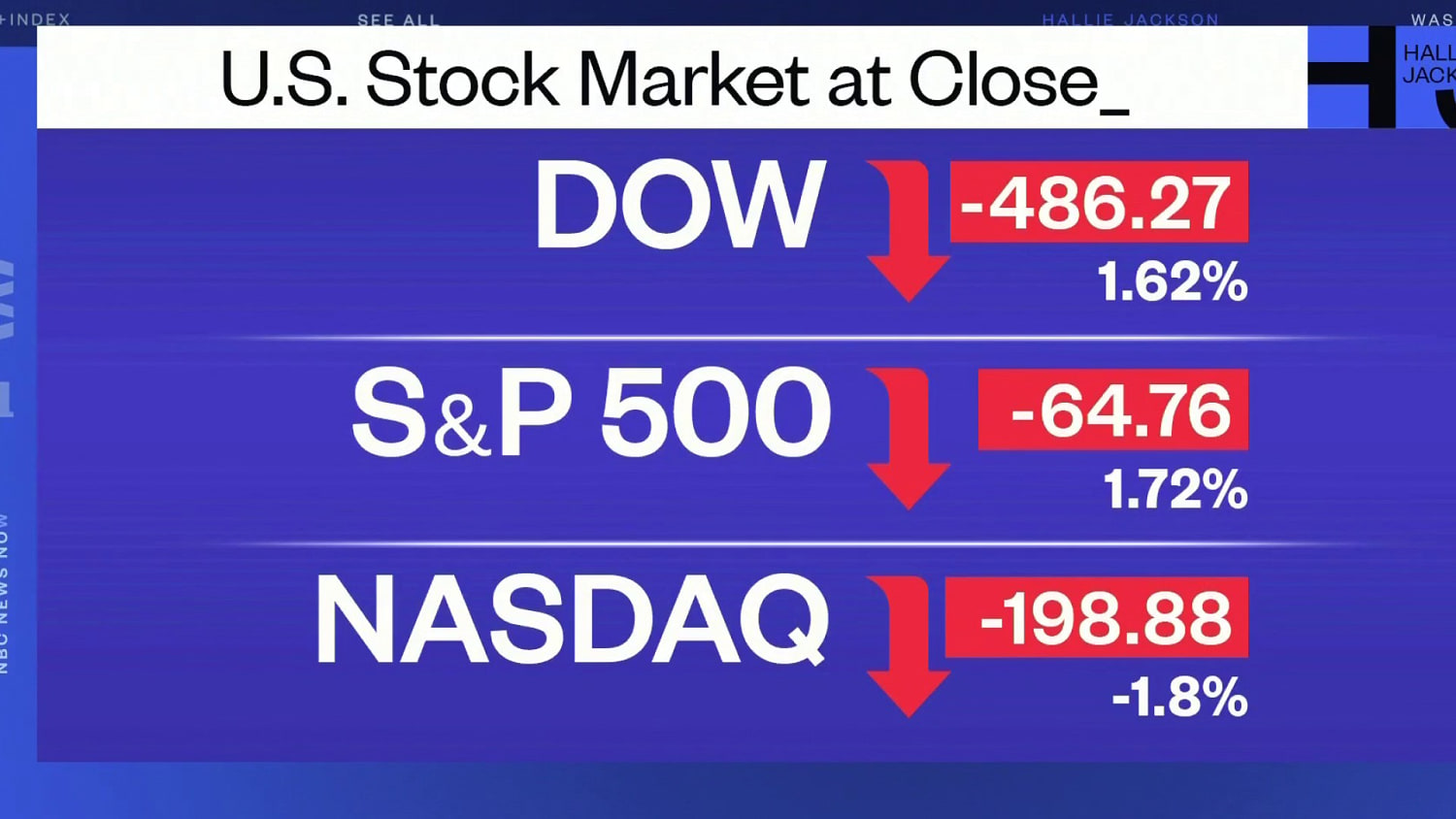
The question “where did the Dow Jones close today?” is perhaps one of the most frequently asked queries in the world of finance. It is the evening ritual of the seasoned investor and the morning headline for the global business community. While the specific numerical value changes by the second until the closing bell rings at 4:00 PM Eastern Time, the significance of that number extends far beyond a simple digit on a screen.
The Dow Jones Industrial Average (DJIA), often referred to simply as “the Dow,” serves as a vital barometer for the health of the American economy and, by extension, the global financial landscape. To understand where the Dow closed today is to understand the collective sentiment of millions of investors, the performance of thirty of the world’s most influential corporations, and the broader macroeconomic forces at play.

Decoding the Dow Jones: What the Closing Number Really Tells You
When you look at the closing figure of the Dow Jones, you are looking at a price-weighted index of 30 significant stocks traded on the New York Stock Exchange (NYSE) and the Nasdaq. Unlike the S&P 500, which is market-capitalization-weighted, the Dow’s movement is dictated by the share prices of its constituent companies. This unique structure means that a company with a higher stock price has a greater influence on the index’s daily fluctuation than a company with a lower stock price, regardless of the company’s actual size.
The Mechanics of the Index and the “Dow Divisor”
The closing number isn’t a simple average of the 30 stock prices. Instead, it is calculated using the “Dow Divisor.” This is a predetermined constant that accounts for stock splits, dividends, and other structural changes in the constituent companies. Without this divisor, the index would drop every time a company like Apple or Microsoft underwent a stock split. By applying this mathematical adjustment, the Dow maintains historical continuity, allowing investors to compare today’s close with data from decades ago.
Price-Weighted vs. Market-Cap Weighted Realities
Understanding where the Dow closed requires an appreciation of its quirks. Because it is price-weighted, a $5 move in a high-priced stock like UnitedHealth Group will move the Dow much more than a $5 move in a lower-priced stock like Verizon. This leads to frequent debates among financial professionals about whether the Dow is a “true” representation of the market. However, despite its narrow scope, the Dow remains the most iconic index because it represents “Blue Chip” companies—stable, profitable, and industry-leading giants that often dictate the pace of the broader economy.
Factors Influencing Today’s Market Performance
A closing number does not exist in a vacuum. Whether the Dow closed up 500 points or down 200, the movement is driven by a complex interplay of internal and external catalysts. When investors ask where the Dow closed, they are often implicitly asking why it moved in that direction.
Macroeconomic Indicators and Federal Reserve Policy
The most potent driver of the Dow’s closing price in the current era is the Federal Reserve’s monetary policy. Interest rate decisions, inflation data (CPI), and employment reports are the primary fuel for market volatility. If the “close” was in the green, it may have been due to cooling inflation data that suggests the Fed might pause rate hikes. Conversely, a sharp drop at the close often signals anxiety over “higher-for-longer” interest rates, which increase borrowing costs for the very corporations that make up the index.
Corporate Earnings and the “Blue Chip” Influence
As an index composed of only 30 companies, individual corporate earnings reports have an outsized impact on the Dow’s daily finish. During “earnings season,” the closing bell reflects the market’s reaction to the quarterly health of giants like JPMorgan Chase, Boeing, and Caterpillar. A disappointing outlook from a single industrial titan can drag the entire index down, even if the rest of the market is performing well. When the Dow closes today, it is essentially a report card on the immediate profitability and future guidance of the leaders of American industry.
Geopolitical Events and Sentiment
The market hates uncertainty. Geopolitical tensions, trade negotiations, or unexpected political shifts can cause the Dow to swing wildly before the close. The closing price represents the “settled” sentiment after a day of digesting news. It reflects the equilibrium point where buyers and sellers finally agreed on value before the markets went dark for the night.
Why Tracking Daily Closures Matters for Your Personal Portfolio
For the individual investor, obsessing over the daily close can sometimes lead to “market noise” fatigue. However, understanding the context of the Dow’s daily performance is a crucial skill for long-term financial health. The daily close is more than just a data point; it is a psychological marker.
Emotional Discipline vs. Market Noise
The danger of checking where the Dow closed every day is the temptation to react emotionally. Professional investing requires a distinction between a “correction” (a healthy pullback) and a “crash.” By observing the Dow’s closing trends over weeks rather than just hours, investors can identify whether a downward close is a localized event or part of a broader bearish trend. Successful wealth management involves using the daily close as a heartbeat monitor—not a signal to perform emergency surgery on your portfolio every time there is a dip.
Long-Term Trends vs. Daily Fluctuations
While the daily close captures the headlines, the “moving average” of those closes tells the real story. Financial tools often look at the 50-day or 200-day moving average of the Dow Jones. If the Dow closes today above its 200-day moving average, it is generally considered to be in a bullish (upward) phase. If it consistently closes below that mark, caution is warranted. For those looking to build side hustles or invest online income, these trends help determine the “market climate”—whether it is a time to be aggressive or a time to preserve capital.
The Role of “The Close” in Setting Tomorrow’s Tone
The closing price of the Dow often sets the “momentum” for the following day’s opening. A “strong close”—where the index finishes at its high for the day—often suggests that buying pressure will continue into the next session. Conversely, a “weak close” can trigger a sell-off in Asian and European markets overnight, creating a feedback loop that affects your investments globally.
Strategic Investing: Moving Beyond the Daily Headline
To truly master personal finance and investing, one must look beyond the simple question of where the Dow closed and begin to analyze the internal dynamics of the market. Professional traders and wealthy individuals use the Dow as a starting point, not a finish line.
Diversification Beyond the 30 Industrial Giants
While the Dow is a great snapshot, it is heavy on industrials and financials and relatively light on high-growth tech compared to the Nasdaq. A savvy investor knows that even if the Dow closed “down” today, their personal portfolio might be “up” if they have diversified into mid-cap stocks, international markets, or emerging technologies. The Dow tells you how the “Old Guard” of the economy is doing, but your financial strategy should also account for the innovators of tomorrow.
Leveraging Financial Tools for Real-Time Analysis
In the modern era, you don’t have to wait for the evening news to know where the Dow closed. Digital financial tools, AI-driven stock screeners, and real-time trackers allow you to see the “heat map” of the Dow. These tools can show you which specific sectors—such as Healthcare, Technology, or Energy—contributed most to the day’s closing figure. Using these tools transforms a passive observation (“the Dow is up”) into an active insight (“the Dow is up because energy stocks surged on supply concerns”).
The Importance of Closing “Breadth”
A professional insight often overlooked by casual observers is “market breadth.” This refers to how many stocks within the index actually finished higher. If the Dow closed up 200 points, but only 5 of the 30 stocks were in the green, it indicates a “top-heavy” move driven by one or two outliers. A healthy, sustainable market rally is characterized by “broad-based” participation, where the majority of the 30 companies contribute to the positive close.

Conclusion: The Closing Bell as a Financial Compass
So, where did the Dow Jones close today? The answer is a number, but the meaning is a narrative of global commerce, human psychology, and economic policy. For the personal financier, the daily close of the Dow is a compass. It doesn’t tell you exactly where your individual stocks will go, but it tells you which way the wind is blowing.
By understanding the mechanics of the Dow, the factors that drive its volatility, and how to interpret its movements without emotional bias, you position yourself as a more sophisticated participant in the financial markets. Whether you are managing a simple savings account, building a complex investment portfolio, or seeking to turn a side hustle into a business empire, the Dow Jones Industrial Average remains the most enduring symbol of the market’s daily pulse. Pay attention to the close, but invest for the horizon.
aViewFromTheCave is a participant in the Amazon Services LLC Associates Program, an affiliate advertising program designed to provide a means for sites to earn advertising fees by advertising and linking to Amazon.com. Amazon, the Amazon logo, AmazonSupply, and the AmazonSupply logo are trademarks of Amazon.com, Inc. or its affiliates. As an Amazon Associate we earn affiliate commissions from qualifying purchases.