
When investors, journalists, and casual observers ask, “What is today’s Dow Jones Industrial Average?” they are seeking more than just a five-digit number. They are checking the pulse of the American economy. The Dow Jones Industrial Average (DJIA), often simply called “the Dow,” is the oldest and most recognized stock market index in the world. While modern traders may look to the S&P 500 or the Nasdaq for a broader or more tech-heavy view, the Dow remains the definitive “blue-chip” barometer.
Understanding today’s Dow requires an appreciation of its unique construction, its historical significance, and the macroeconomic forces that cause it to fluctuate from one bell-ring to the next. In this guide, we will explore the inner workings of the Dow, why its daily movement matters to your personal finance, and how you can interpret its performance to make better investing decisions.

The Mechanics of the Market: Understanding the Dow Jones Industrial Average
To understand what today’s Dow represents, one must first understand what it is composed of. Unlike many other indices that track thousands of companies, the DJIA tracks only 30 large, publicly owned companies based in the United States. These companies are considered “blue-chip” leaders in their respective industries, ranging from technology and healthcare to retail and finance.
The Price-Weighted Methodology
The most distinctive—and sometimes controversial—feature of the Dow is that it is a price-weighted index. Most modern indices, like the S&P 500, are market-capitalization-weighted, meaning the larger the company’s total market value, the more influence it has on the index. In contrast, the Dow is influenced strictly by the share price of its components.
If a company like UnitedHealth Group has a share price of $500, a 1% move in its stock will have a much larger impact on the Dow’s daily point total than a 1% move in a company like Coca-Cola, which might trade at $60. This methodology is a relic of the late 19th century when the index was founded by Charles Dow. While some critics argue this doesn’t reflect the “true” market, the Dow remains remarkably correlated with broader market indices over long periods.
The Role of the Dow Divisor
You might notice that if the 30 stocks in the Dow go up by an average of $1, the index does not simply go up by 30 points. This is due to the “Dow Divisor.” Over the decades, companies undergo stock splits, spin-offs, and substitutions. To ensure that these corporate actions don’t cause a massive, artificial drop or spike in the index, the Wall Street Journal (which manages the index via S&P Dow Jones Indices) uses a mathematical constant called the divisor.
Currently, the divisor is a fraction much less than one. This means that a $1 change in any single stock’s price actually translates to a much larger move in the overall index points. This continuity allows investors to compare “today’s Dow” to the Dow of 1980 or 1950 with a degree of historical accuracy.
Why the Dow Remains the Primary Pulse of the American Economy
Despite only containing 30 stocks, the Dow is often the first thing mentioned on evening news broadcasts and financial websites. Its longevity has turned it into a psychological benchmark for the “average” investor. When the Dow is “up,” the general public feels a sense of economic prosperity; when it is “down,” it often triggers concerns about a recession or market instability.
The Prestige of the Blue-Chip 30
The companies within the Dow are not chosen by a rigid formula but by a committee. The goal is to select companies that have an excellent reputation, demonstrate sustained growth, and are of interest to a large number of investors. Because these companies—such as Apple, Microsoft, Walmart, and JPMorgan Chase—are household names, their collective performance serves as a proxy for the health of the American consumer and corporate sector.
When you look at today’s Dow Jones Industrial Average, you are essentially looking at a snapshot of the titans of industry. If these 30 giants are struggling, it is usually an indicator that the broader economy is facing headwinds, such as supply chain issues, declining consumer spending, or rising operational costs.
Perception vs. Reality: Dow vs. S&P 500
For many personal finance enthusiasts, the question is often: “Should I watch the Dow or the S&P 500?” While the S&P 500 is technically a more diverse representation of the market (covering 500 stocks), the Dow provides a “quality” filter.
Because the Dow excludes smaller, more volatile companies, it often shows less drastic swings than the Nasdaq, which is heavy on speculative tech stocks. Therefore, the Dow is frequently viewed as the “steady hand” of the market. During times of economic uncertainty, investors often flee to the safety of Dow components, which are known for their strong balance sheets and consistent dividend payments.

Decoding Today’s Fluctuations: What Moves the Needle?
If you check the Dow in the morning and again in the afternoon, you will likely see a different number. These fluctuations are rarely random. They are the result of millions of participants processing new information and adjusting their valuation of those 30 core companies.
Interest Rates and Federal Reserve Policy
In the current financial landscape, the single biggest driver of today’s Dow is the Federal Reserve. When the “Fed” raises interest rates to combat inflation, it becomes more expensive for companies to borrow money and expand. Additionally, higher interest rates make bonds more attractive compared to stocks.
Consequently, a hint from the Fed that rates will stay “higher for longer” can cause the Dow to drop hundreds of points in a single session. Conversely, when the Fed signals a “pivot” toward lowering rates, the Dow often rallies as investors anticipate cheaper capital and higher corporate profits.
Corporate Earnings and Global Stability
Because the Dow is composed of global conglomerates, it is highly sensitive to international news. Geopolitical tensions, trade wars, or fluctuations in the value of the U.S. dollar can all impact the bottom line of Dow components.
Furthermore, “Earnings Season”—the period every quarter when companies report their profits—is a high-volatility time for the index. If a heavy hitter like Goldman Sachs or Boeing reports earnings that miss analyst expectations, their individual price drop can pull the entire 30-stock index down, regardless of how the other 29 stocks are performing.
Strategic Investing: How to Leverage the Dow in Your Portfolio
Knowing “what today’s Dow is” is only useful if you know how to apply that information to your own financial goals. For many individual investors, the Dow represents a philosophy of “slow and steady” wealth accumulation.
Passive Investing through Index Funds and ETFs
You cannot “buy” the Dow Jones Industrial Average directly, as it is just a mathematical index. However, you can invest in financial products that track it. The most famous is the SPDR Dow Jones Industrial Average ETF Trust, known by its ticker symbol “DIA” (often called “Diamonds”).
By owning an ETF like DIA, an investor gains exposure to all 30 blue-chip stocks in one transaction. This is a popular strategy for those who want to participate in the growth of the U.S. economy without the stress of picking individual winners and losers. It is a cornerstone of many retirement portfolios because it offers diversification among the most stable companies in the world.
Dividend Growth and Stability
A significant portion of the companies in the Dow are “Dividend Aristocrats” or “Dividend Kings”—companies that have paid and increased their dividends for decades. For income-focused investors, today’s Dow value is less important than the “dividend yield” it provides.
When the market is volatile, the dividends provided by Dow companies offer a cushion. While a tech startup’s stock might plummet 50% in a year, a Dow component like Procter & Gamble or Johnson & Johnson is likely to continue sending checks to its shareholders. For this reason, the Dow is often the preferred index for retirees or those looking for a “Side Hustle” through passive dividend income.
Conclusion: The Enduring Relevance of the Dow
While the financial world has become increasingly complex with the advent of high-frequency trading, crypto-assets, and AI-driven algorithms, the Dow Jones Industrial Average remains a vital touchstone. It simplifies the chaos of the market into a single, digestible number that tells a story about where we have been and where we are going.
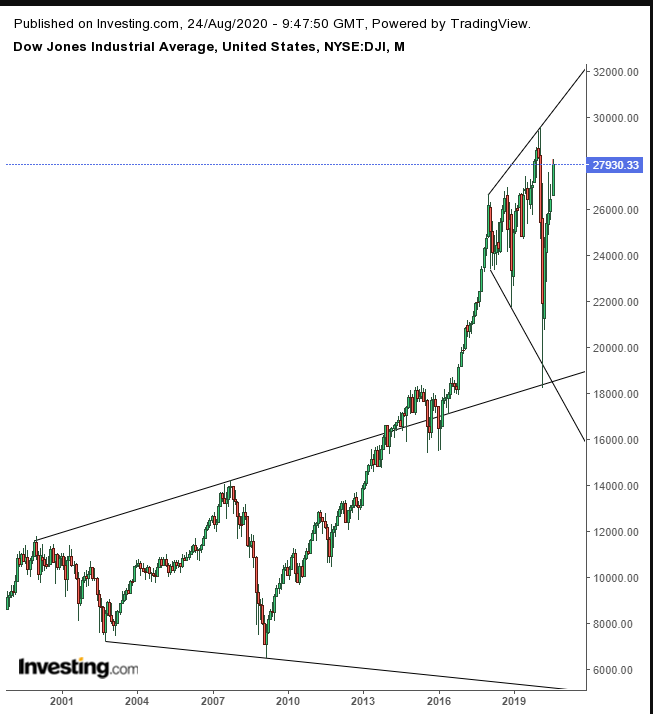
When you ask “what is today’s Dow Jones Industrial Average,” you are participating in a tradition that spans over 130 years. Whether the index is at 10,000, 30,000, or 50,000, it represents the collective output, innovation, and resilience of the American corporate landscape. By understanding its mechanics, monitoring the factors that move it, and using its stability to anchor your investment portfolio, you can turn a simple daily headline into a powerful tool for long-term financial success.
aViewFromTheCave is a participant in the Amazon Services LLC Associates Program, an affiliate advertising program designed to provide a means for sites to earn advertising fees by advertising and linking to Amazon.com. Amazon, the Amazon logo, AmazonSupply, and the AmazonSupply logo are trademarks of Amazon.com, Inc. or its affiliates. As an Amazon Associate we earn affiliate commissions from qualifying purchases.