
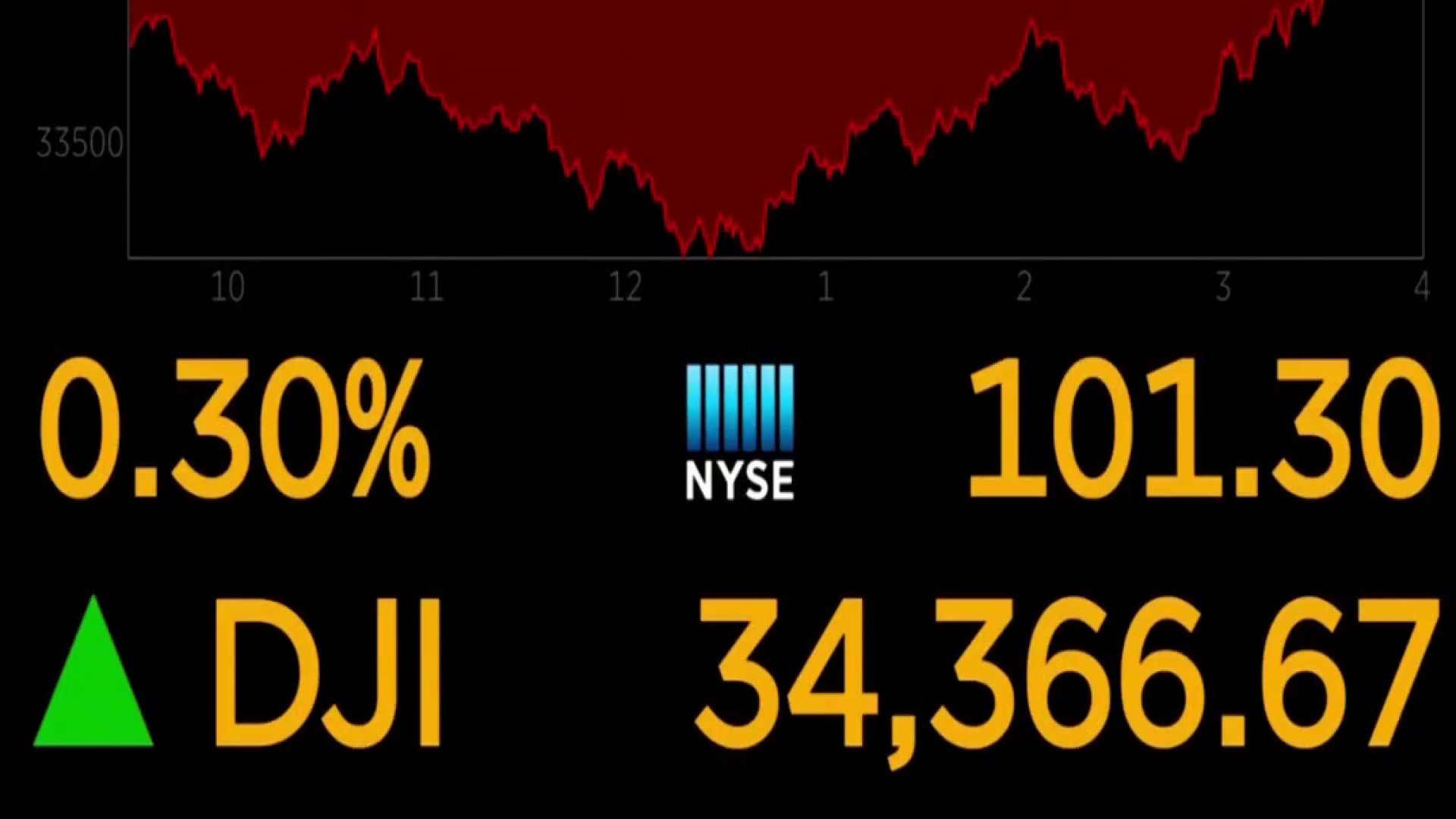
The Dow Jones Industrial Average (DJIA), often referred to simply as “the Dow,” is arguably the most recognized financial metric in the world. When news anchors report that “the market is up,” they are almost always referring to this century-old index. But for the modern investor, understanding what the Dow Jones is now requires looking beyond a simple number on a screen. It is an evolving barometer of the American economy, a collection of thirty “blue-chip” titans, and a psychological anchor for global financial sentiment.

In a landscape dominated by high-frequency trading, AI-driven algorithms, and volatile crypto-assets, the Dow remains a steady, albeit price-weighted, representation of corporate America. To understand its current standing, one must delve into its composition, its unique calculation methods, and its role in a diversified investment portfolio.
Understanding the Foundation: What the Dow Jones Represents Today
The Dow Jones Industrial Average was created in 1896 by Charles Dow and Edward Jones. At its inception, it tracked just twelve companies, primarily in the industrial sector—railroads, cotton, gas, and tobacco. Today, the name “Industrial” is largely a vestige of history. The index now spans technology, healthcare, entertainment, and financial services, reflecting the shift from a manufacturing-based economy to a service and information-based one.
The Composition of the “Thirty”
Unlike the S&P 500, which tracks 500 companies, the Dow focuses on a curated selection of 30 prominent companies listed on the New York Stock Exchange (NYSE) and the NASDAQ. These are not necessarily the thirty largest companies by market capitalization, but rather those deemed to be leaders in their respective industries with a history of sustained growth. Companies like Apple, Microsoft, UnitedHealth Group, and Goldman Sachs currently anchor the index. The selection process is not governed by a rigid formula but by a committee at S&P Dow Jones Indices, which ensures the index remains a relevant “pulse” of the broader U.S. economy.
The Price-Weighting Mechanism
One of the most critical aspects of understanding the Dow today is its weighting system. Most modern indices are “market-cap weighted,” meaning larger companies have a bigger impact. The Dow, however, is “price-weighted.” This means that companies with a higher stock price—regardless of their total company value—exert more influence over the index’s movement. For example, a stock trading at $400 per share will move the Dow more significantly than a stock trading at $40 per share, even if the latter has a larger total market valuation. This unique quirk is often criticized by academics but remains a defining characteristic of the index’s historical continuity.
The “Dow Divisor”
You might wonder how thirty stocks with prices ranging from $50 to $500 can add up to an index value in the tens of thousands. This is managed through the “Dow Divisor.” Since stock splits and spinoffs would otherwise cause the index to “drop” unnaturally, the divisor is a mathematical constant used to maintain consistency. Every time a company in the Dow undergoes a stock split, the divisor is adjusted. This ensures that the index reflects the actual percentage growth of the collective companies rather than being skewed by structural corporate changes.
Market Dynamics: What Moves the Dow in the Current Economy
To answer “what is the Dow Jones now,” one must look at the macroeconomic forces currently shaping its trajectory. The index does not move in a vacuum; it is a mirror reflecting interest rate policies, inflation data, and corporate health.
The Influence of Federal Reserve Policy
In the current financial climate, the Dow is highly sensitive to the Federal Reserve’s “hawkish” or “dovish” stances. Because the Dow is comprised of mature, dividend-paying companies, interest rate hikes can be a double-edged sword. Higher rates increase borrowing costs for these giants, potentially slowing growth. Conversely, the financial institutions within the Dow, such as JPMorgan Chase or American Express, often see improved margins on lending when rates rise. Consequently, the Dow often reacts more sharply to Fed announcements regarding the federal funds rate than more speculative indices.
Earnings Reports and Corporate Guidance
Since the Dow is a concentrated list of thirty stocks, an “earnings miss” from a single heavy-hitter can drag the entire index down. During earnings season, investors watch the Dow’s components closely for “guidance”—the company’s forecast for future quarters. Because Dow companies are often global entities (like Coca-Cola or McDonald’s), their performance serves as a proxy for global consumer health. If the Dow is trending upward, it often suggests that the world’s largest corporations are finding ways to navigate supply chain issues, labor costs, and fluctuating consumer demand.
Geopolitical Stability and Energy Costs
Historically, the Dow has been a “safe haven” during times of moderate uncertainty compared to the tech-heavy Nasdaq. However, it remains susceptible to geopolitical shocks. Rising energy prices, for instance, directly impact Dow components like Chevron, while simultaneously increasing operational costs for the index’s manufacturing and retail members. Understanding the Dow today requires an awareness of global trade relations, as these thirty companies derive a significant portion of their revenue from international markets.

Comparing the Dow: Its Role Relative to Other Indices
A common question for those checking the Dow is how it compares to the S&P 500 or the Nasdaq Composite. While they often move in the same direction, the magnitude of their movements tells different stories about the health of “Money” in the current era.
The Dow vs. the S&P 500
The S&P 500 is generally considered a better representation of the overall stock market because it is more diversified and market-cap weighted. However, the Dow remains relevant because it represents the “Old Guard.” When investors move money out of speculative growth stocks and into “value” stocks, the Dow often outperforms the S&P 500. This flight to quality is a hallmark of the Dow’s identity; it is the index people turn to when they want stability and dividends rather than explosive, high-risk growth.
The Psychology of “Big Numbers”
There is a significant psychological component to the Dow. Crossing “milestones”—such as Dow 30,000 or Dow 40,000—creates a surge in investor confidence and media coverage. While these numbers are somewhat arbitrary due to the price-weighting and the divisor, they act as powerful signals to retail investors. The “Dow Jones now” is often used as a shorthand for the general public’s perception of wealth and economic security. When the Dow is high, consumer confidence tends to follow, which in turn fuels more spending and investment.
Value Investing vs. Growth Investing
The Dow is the ancestral home of value investing. Most of its components are “mature” companies that have already gone through their hyper-growth phases. Instead of reinvesting every cent into R&D, these companies often return value to shareholders via dividends and stock buybacks. For an investor focused on steady income and capital preservation, the Dow’s performance is a more critical metric than the tech-heavy Nasdaq, which is prone to more dramatic swings.
Investing in the Dow: Strategies for Personal Finance
If you are looking at what the Dow Jones is now with an eye toward your own portfolio, there are several ways to gain exposure to these thirty titans without buying thirty individual (and often expensive) shares.
Index Funds and ETFs
The most common way to invest in the Dow is through Exchange-Traded Funds (ETFs) that track the index. The most famous of these is the SPDR Dow Jones Industrial Average ETF Trust (ticker symbol: DIA), often called “Diamonds.” By purchasing shares of this ETF, an investor gets immediate exposure to all thirty companies in the proportions dictated by the Dow’s price-weighting system. This is a low-cost, efficient way to participate in the growth of the largest U.S. corporations.
The “Dogs of the Dow” Strategy
A popular investment strategy involving this index is known as the “Dogs of the Dow.” This involves identifying the ten companies in the Dow with the highest dividend yields at the end of the year and investing in them for the following twelve months. The logic is that these companies are temporarily undervalued, and their high dividend yields will provide a cushion while their stock prices eventually recover. It is a classic “Money” strategy that focuses on income and contrarian value.
Risk Management and Diversification
While the Dow represents stability, it is not immune to bear markets. Diversification remains key. Because the Dow is limited to only thirty stocks and excludes small-cap and mid-cap companies, relying solely on the Dow can leave an investor under-exposed to the “disruptors” of the future. A balanced financial strategy often involves using the Dow as a “core” holding for stability while diversifying into other sectors and market caps to capture broader economic growth.
The Future of the Dow: Adaptation and Relevance
The Dow Jones is often criticized for being an “anachronism” because of its price-weighting and small sample size. Yet, it has survived over 125 years because it adapts. As the economy changes, the committee replaces lagging companies with emerging leaders. The removal of General Electric—an original member—and the addition of companies like Salesforce or Amazon (added in early 2024) proves that the Dow is capable of evolving.
What the Dow Jones is “now” is a bridge between the industrial past and the digital future. It remains the most cited index because it is relatable; it tracks the companies whose products we use every day, from the phones in our pockets to the credit cards in our wallets. For the modern investor, the Dow is more than just a number—it is a concentrated snapshot of the enduring strength of the corporate world and a vital tool for measuring the health of one’s personal financial journey. Whether it is trending up or down, the Dow continues to be the ultimate storyteller of the American economic narrative.
aViewFromTheCave is a participant in the Amazon Services LLC Associates Program, an affiliate advertising program designed to provide a means for sites to earn advertising fees by advertising and linking to Amazon.com. Amazon, the Amazon logo, AmazonSupply, and the AmazonSupply logo are trademarks of Amazon.com, Inc. or its affiliates. As an Amazon Associate we earn affiliate commissions from qualifying purchases.