
The Dow Jones Industrial Average (DJIA) has long served as the primary pulse-check for the American economy. When investors ask, “What is the Dow doing now?” they are rarely looking for a simple numerical value. Instead, they are seeking to understand the underlying health of the corporate giants that comprise the index and, by extension, the broader financial landscape. In the current economic climate, the Dow is navigating a complex intersection of fluctuating interest rates, shifting consumer behavior, and a transition from speculative growth back toward value-oriented stability.
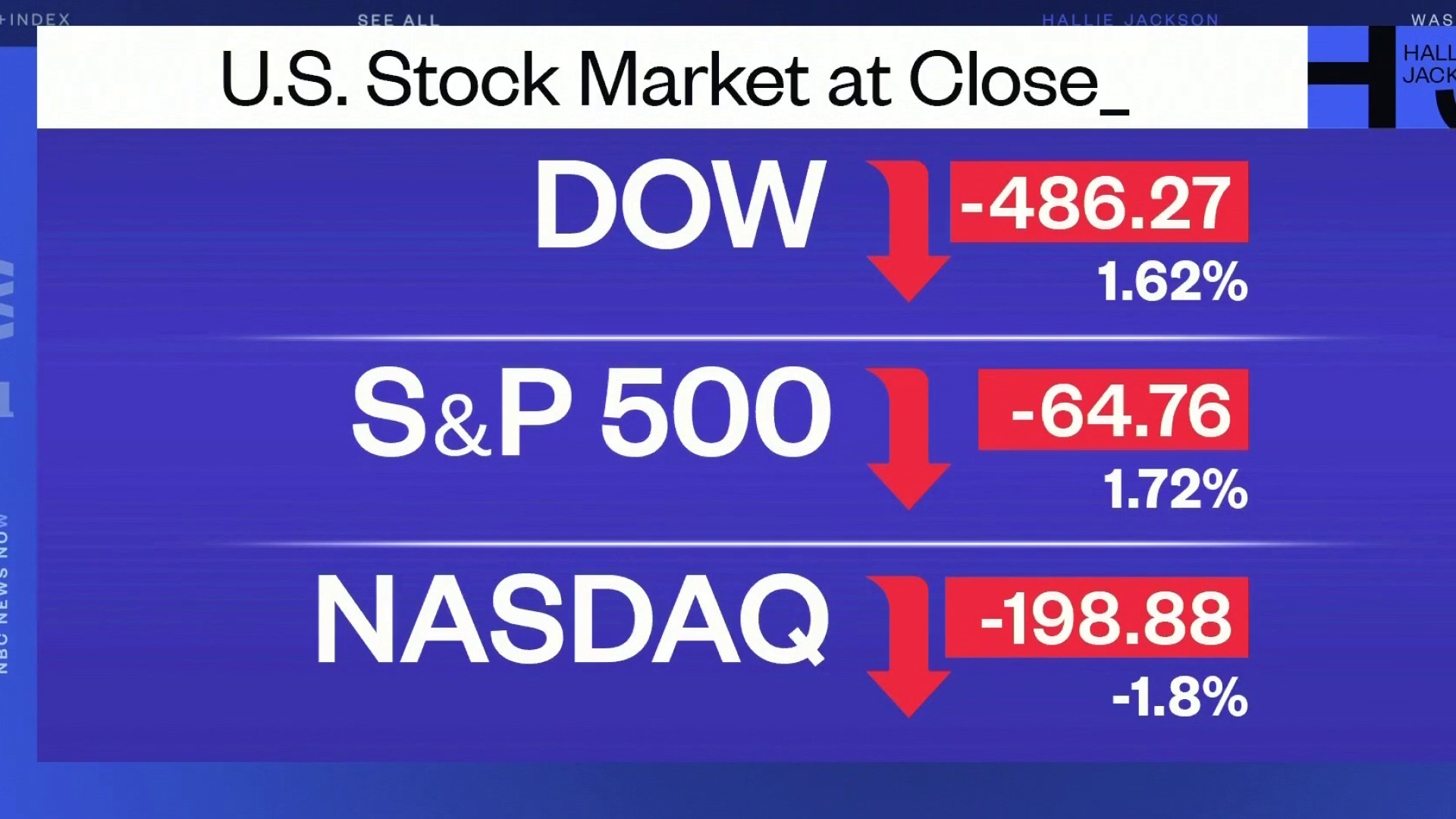
To understand the Dow’s current trajectory, one must look past the daily fluctuations and examine the structural forces at play. As a price-weighted index of 30 prominent companies listed on stock exchanges in the United States, the Dow provides a unique, albeit concentrated, view of industrial, financial, and consumer health. Today, the index is reacting to a “higher-for-longer” interest rate environment and a corporate earnings landscape that is increasingly rewarding efficiency over expansion.
Decoding the Dow’s Current Market Trajectory
The Dow’s movement in the current quarter is largely a reflection of the Federal Reserve’s ongoing battle with inflation. Unlike the tech-heavy Nasdaq, which is highly sensitive to the cost of capital for future growth, the Dow is comprised of established “Blue Chip” companies. These firms often have significant debt loads but also generate massive cash flows, making them a fascinating case study in how “Old Money” handles modern economic stressors.
The Federal Reserve and Interest Rate Expectations
The single most influential factor in “what the Dow is doing” at any given moment is the anticipation of central bank policy. For the past several cycles, the market has pivoted on the “pivot”—the moment when the Federal Reserve moves from a restrictive stance to a neutral or accommodative one. Currently, the Dow is exhibiting signs of “plateau pricing.” Investors have largely priced in the current interest rates, and the index now reacts violently to any data point—be it Consumer Price Index (CPI) numbers or employment data—that suggests the Fed might hold rates higher for longer than previously anticipated. When the Dow dips, it is often a sign of the market recalibrating its expectations for liquidity in the coming fiscal year.
Corporate Earnings as a Reality Check
While macroeconomics sets the stage, corporate earnings provide the script. We are currently seeing a divergence within the Dow components. Companies that have successfully implemented AI-driven cost-saving measures or those that possess “pricing power”—the ability to raise prices without losing customers—are buoying the index. Conversely, components tied to discretionary consumer spending are showing signs of exhaustion. When observing the Dow’s current behavior, we are seeing a rotation. Capital is moving out of high-multiple growth stories and seeking refuge in Dow staples that offer reliable dividends and defensive moats.
Sector-Specific Performance: Who is Leading and Who is Lagging?
Because the Dow is a price-weighted index, the movement of its highest-priced stocks has a disproportionate impact on its daily performance. This structural quirk means that a $5 move in a high-priced stock like UnitedHealth Group or Goldman Sachs moves the needle much further than a $5 move in a lower-priced stock like Coca-Cola or Verizon. To understand what the Dow is doing, one must look at the heavyweights within its thirty components.
The Resilience of Industrials and Healthcare
In recent months, the Industrial and Healthcare sectors have acted as the Dow’s anchors. Industrial stalwarts are benefiting from a resurgence in domestic manufacturing and infrastructure spending. These companies often have multi-year backlogs that provide a buffer against short-term economic downturns. In the healthcare space, the Dow is benefiting from the inelastic demand for medical services and the rollout of new pharmaceutical breakthroughs. When the Dow remains stable despite volatility in other indices, it is usually these defensive sectors doing the heavy lifting.
The Financial Sector and the Yield Curve
The financial heavyweights within the Dow, such as JPMorgan Chase and Goldman Sachs, are currently operating in a bifurcated environment. On one hand, higher interest rates allow banks to earn more on net interest margins. On the other hand, a stagnating deal-flow environment for investment banking and concerns over commercial real estate exposure create a ceiling for growth. Currently, the Dow’s financial components are in a “wait and see” mode, reacting more to the shape of the yield curve than to individual balance sheet strengths.
The Influence of Tech Heavyweights
Though often associated with “bricks and mortar” industry, the Dow has evolved to include tech giants like Microsoft and Apple. Their inclusion has changed the “DNA” of the Dow. These stocks now act as a bridge between the old economy and the new. When these tech-centric Dow components rally, they can mask weaknesses in the more traditional industrial components. Observing the Dow now requires an understanding of how these mega-cap tech stocks are behaving not as “growth” plays, but as the new “utilities” of the digital age.
Technical Analysis: Navigating Volatility and Trendlines
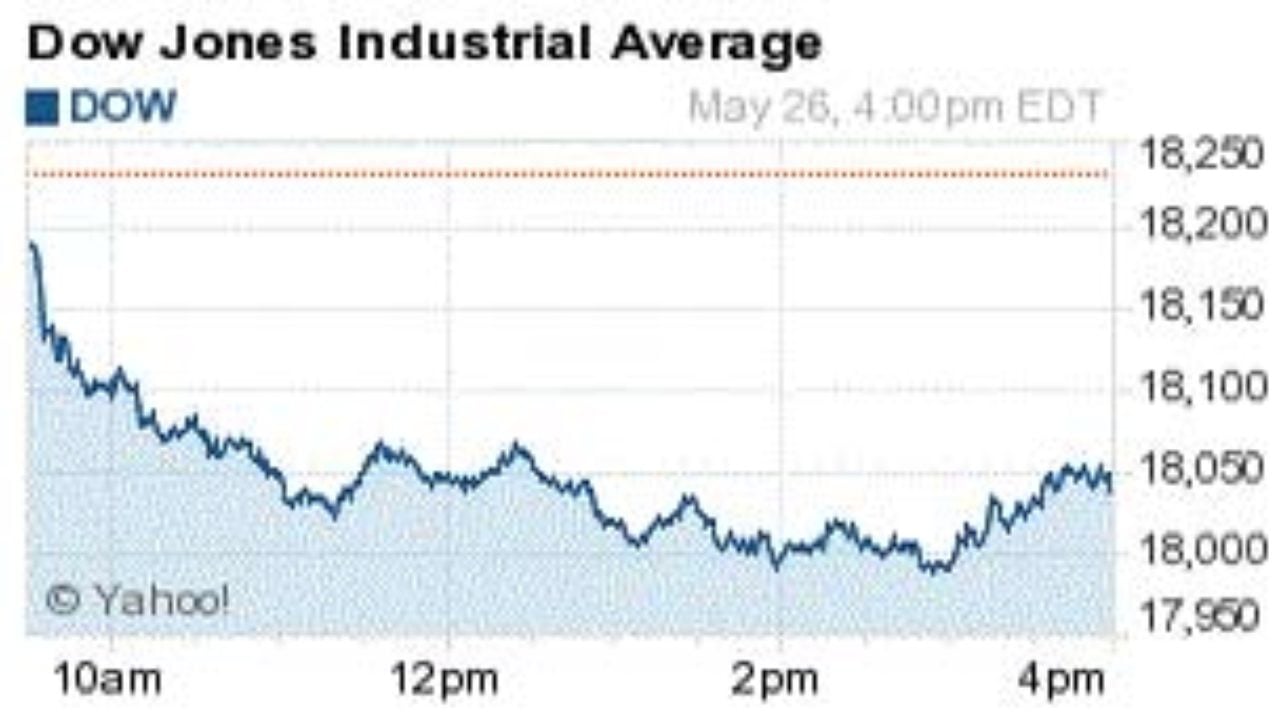
From a technical perspective, the Dow is currently testing key psychological and mathematical thresholds. Traders often look at “support” and “resistance” levels to predict where the index might head next. Currently, the Dow is showing a pattern of “higher lows,” suggesting that while there is significant selling pressure at the top, buyers are consistently stepping in to prevent a total collapse.
Support and Resistance Levels in the Current Climate
Technical analysts are closely watching the 50-day and 200-day moving averages. When the Dow stays above its 200-day moving average, it signals a long-term bullish trend. We are currently seeing a “sideways” market where the Dow is bouncing between established resistance levels (where sellers outweigh buyers) and support levels (where value hunters enter). This consolidation phase is often a precursor to a major move, as the market builds up the “energy” needed to break out in either direction.
The VIX and Market Sentiment
What the Dow is doing is also inextricably linked to the “Fear Gauge,” or the VIX. When the VIX is low, the Dow tends to grind higher in a low-volatility environment. However, we have seen periodic spikes in volatility driven by geopolitical tensions and uncertainty regarding fiscal policy. Currently, the Dow is exhibiting a “resilient skepticism.” Investors are cautious, keeping some cash on the sidelines (dry powder), but the underlying sentiment remains that the U.S. economy is too robust to bet against in the long term.
Strategic Considerations for the Modern Investor
For the individual investor, understanding what the Dow is doing is only useful if it informs an actionable strategy. In a market characterized by high interest rates and selective growth, the “buy everything” strategy of the last decade is no longer viable. Instead, the Dow’s current behavior suggests a return to fundamental analysis.
The Case for Dividend-Growth Investing
Many of the Dow’s components are “Dividend Aristocrats”—companies that have not only paid but increased their dividends for decades. In the current environment, these dividends provide a crucial “total return” component. When the price of the Dow is flat, the yield becomes the primary driver of wealth accumulation. Investors are currently looking at the Dow as a source of “yield plus growth,” favoring companies that can maintain their payouts even if the economy slows down.
Balancing Growth and Value in a Shifting Economy
The current state of the Dow highlights the importance of diversification. Because the index contains both high-growth tech and low-growth value stocks, it serves as a built-in diversified portfolio. For those looking at “what the Dow is doing now,” the takeaway is often the importance of rebalancing. As certain sectors within the Dow become overextended, the index naturally rotates into undervalued areas. Emulating this rotation within one’s own portfolio—moving gains from high-performing sectors into lagging value sectors—is a strategy currently being rewarded by the market.
The Broader Economic Context: Looking Beyond the Ticker
Finally, to answer “what is the Dow doing now,” one must look at the global stage. The Dow components are multinational corporations that derive a significant portion of their revenue from overseas. Therefore, the strength of the U.S. dollar and the economic health of Europe and Asia are just as important as domestic factors.
Global Trade and Multi-National Components
A strong dollar can actually be a headwind for the Dow, as it makes American goods more expensive abroad and reduces the value of international earnings when converted back to USD. Currently, the Dow is navigating a period of dollar strength, which has put pressure on the earnings of its multinational components. Watching the Dow now involves watching the currency markets; a softening of the dollar often acts as an immediate catalyst for a Dow rally.

Preparing for a “Soft Landing” or Recessional Risks
The ultimate question hanging over the Dow is whether the economy will achieve a “soft landing”—cooling inflation without triggering a recession. The Dow’s current behavior suggests a 60/40 tilt toward the soft-landing scenario. There is enough optimism to keep the index near historic highs, but enough caution to prevent a runaway “melt-up.”
In conclusion, “what the Dow is doing now” is acting as a massive weighing machine for economic reality. It is filtering out the noise of the headlines and focusing on the cold, hard facts of corporate profitability and central bank liquidity. For the disciplined investor, the current state of the Dow represents a transition period—a move away from the era of “easy money” and toward a more disciplined, value-driven market. By monitoring the Dow’s core sectors, technical levels, and the macro-environment, one can navigate this period not with fear, but with a strategic eye toward long-term wealth preservation and growth.
aViewFromTheCave is a participant in the Amazon Services LLC Associates Program, an affiliate advertising program designed to provide a means for sites to earn advertising fees by advertising and linking to Amazon.com. Amazon, the Amazon logo, AmazonSupply, and the AmazonSupply logo are trademarks of Amazon.com, Inc. or its affiliates. As an Amazon Associate we earn affiliate commissions from qualifying purchases.