
In the world of high-stakes finance and personal investing, few symbols carry as much weight as “SPX.” To the uninitiated, it might look like a random string of letters, but to seasoned traders, institutional fund managers, and retail investors, SPX represents the heartbeat of the American economy. SPX is the ticker symbol for the Standard & Poor’s 500 Index, a market-capitalization-weighted index of 500 of the largest publicly traded companies in the United States.
Understanding what SPX is, how it functions, and why it is considered the ultimate benchmark for equity performance is essential for anyone looking to navigate the financial markets. Whether you are building a retirement nest egg or trading complex derivatives, the SPX is the North Star of the financial universe.
Understanding SPX: The Benchmark of American Prosperity
The SPX is not just a list of companies; it is a mathematical representation of the health of the U.S. corporate sector. Established in its modern form in 1957, the index tracks the performance of 500 leading companies and captures approximately 80% coverage of available market capitalization. Because of its broad base and the rigorous criteria for inclusion, it is often preferred over the Dow Jones Industrial Average (DJIA) as a true barometer of the U.S. stock market.
The History and Evolution of the S&P 500
The S&P 500 was the first companion to the traditional stock market trackers, designed to provide a more comprehensive view than the price-weighted indices of the past. Over the decades, the SPX has evolved alongside the economy. In the mid-20th century, it was dominated by industrial and manufacturing giants. Today, it reflects the digital age, with technology and healthcare companies commanding significant portions of the index. This evolution ensures that the SPX remains relevant, shedding stagnant companies and adding innovators that drive modern economic growth.
How the Index is Calculated: Market Cap Weighting
Unlike price-weighted indices where a higher stock price grants a company more influence, the SPX uses a float-adjusted market capitalization weighting methodology. This means that the total market value of a company’s outstanding shares determines its impact on the index. If a company like Microsoft or Apple sees its market cap swell into the trillions, its movements will have a much larger effect on the SPX than a smaller utility company. This structure ensures that the index reflects the actual economic scale of the businesses it tracks, providing a realistic view of where the capital is flowing in the market.
SPX vs. SPY: Key Differences Every Investor Should Know
One of the most common points of confusion for new investors is the difference between SPX and SPY. While they are both intrinsically linked to the S&P 500, they serve very different purposes in a financial portfolio. SPX is the underlying index itself—a theoretical value—whereas SPY (the SPDR S&P 500 ETF Trust) is an Exchange-Traded Fund that investors can actually buy and sell like a stock.
Cash Settlement vs. Physical Delivery
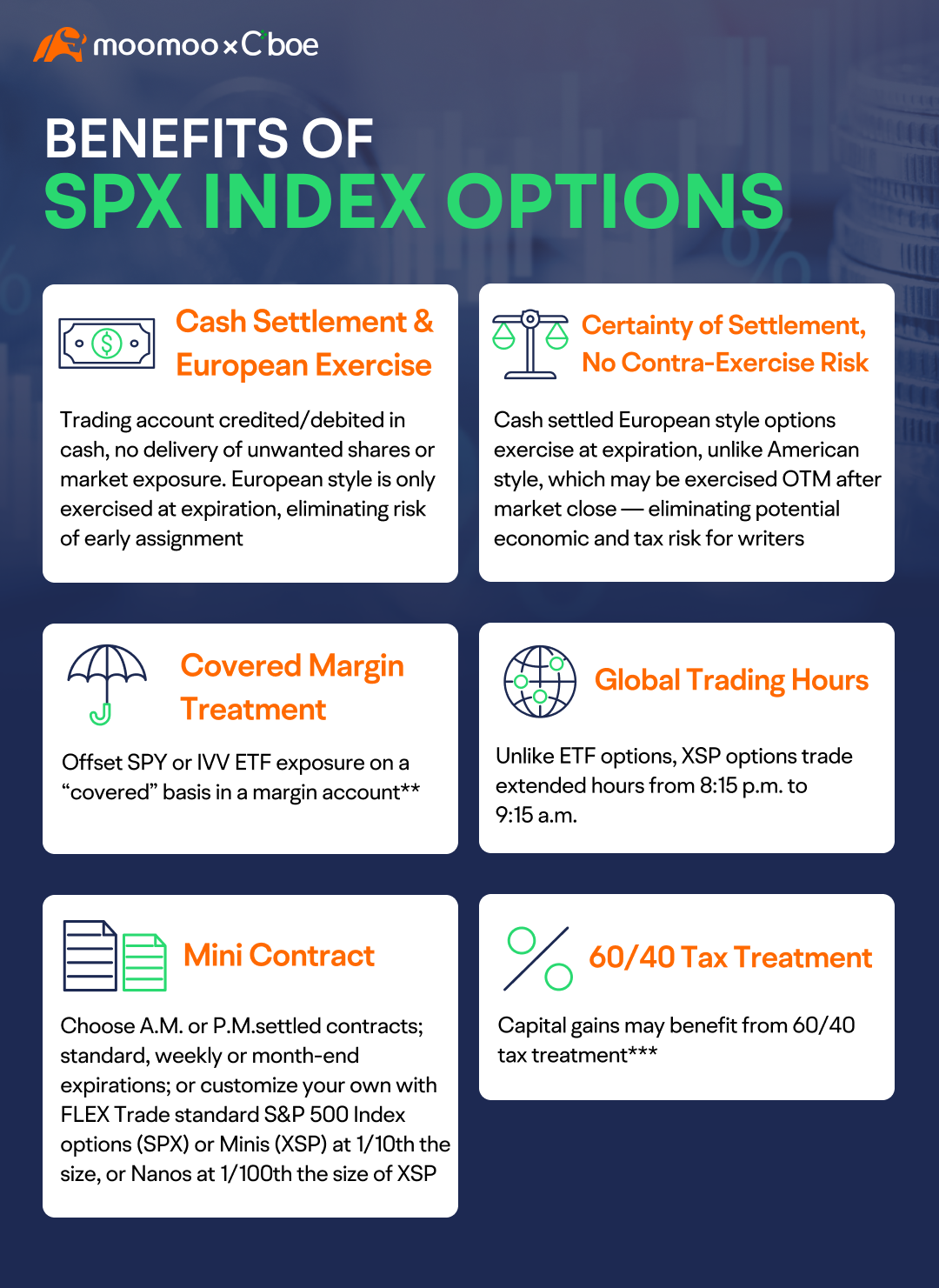
A primary technical difference arises when looking at the options market. SPX options are “cash-settled,” meaning that upon expiration, no actual shares change hands; instead, the difference in value is settled in cash. Conversely, SPY options involve the “physical delivery” of ETF shares. For high-net-worth individuals and institutional traders, the cash settlement of SPX is often preferred because it simplifies the closing of positions and eliminates the “pin risk” associated with being assigned shares of an ETF unexpectedly.
Tax Advantages and Section 1256 Contracts
From a wealth management perspective, the SPX offers significant advantages through Section 1256 of the IRS Code. Trading SPX options qualifies for “60/40” tax treatment. This means that 60% of capital gains are taxed at the lower long-term capital gains rate, and 40% are taxed at the short-term rate, regardless of how long the position was held. For active traders, this can result in a substantially lower tax bill compared to trading SPY, where gains are typically taxed at the short-term rate if held for less than a year. This makes the SPX a powerful tool for tax-efficient capital growth.
The Role of SPX in Modern Portfolio Theory

Modern Portfolio Theory (MPT) emphasizes the importance of diversification to maximize returns relative to risk. The SPX is perhaps the most efficient vehicle for achieving this. By investing in the index, an individual is not betting on a single CEO or a single product; they are betting on the collective ingenuity and profitability of the American corporate machine.
Diversification Across 11 Economic Sectors
The SPX is meticulously balanced across 11 GICS (Global Industry Classification Standard) sectors. These include Information Technology, Healthcare, Financials, Consumer Discretionary, Communication Services, Industrials, Consumer Staples, Energy, Real Estate, Materials, and Utilities. This broad exposure protects investors from a total loss if one specific sector, such as Energy, underperforms. When tech stocks are volatile, healthcare or consumer staples often provide a defensive cushion. This internal “checks and balances” system is why the SPX is the cornerstone of most long-term investment strategies.
Using SPX as a Performance Benchmark
For professional fund managers, the SPX is the “gold standard” they must beat. When you hear a financial advisor talk about “alpha,” they are referring to returns generated above the performance of the SPX. Because the index has historically returned an average of about 10% annually over long horizons (before inflation), it sets a high bar. Many investors find that instead of paying high fees for active management that fails to beat the market, simply holding an index-tracking instrument is the most reliable path to building wealth.
Strategies for Trading and Investing in the SPX
There is no “one size fits all” approach to the SPX. Its versatility allows it to be used by passive savers and aggressive speculators alike. Depending on your financial goals, time horizon, and risk tolerance, your interaction with the SPX will take different forms.
Passive Investing via Index Funds
For the majority of people, the best way to utilize the SPX is through passive index funds or ETFs. By contributing regularly to an S&P 500 fund—a strategy known as dollar-cost averaging—investors can participate in the long-term growth of the U.S. economy. This “set it and forget it” approach minimizes the psychological stress of market timing and benefits from the power of compounding. Over decades, the SPX has proven to be a resilient wealth generator, recovering from every recession, war, and market bubble in its history.
Advanced Strategies: Options and Hedging
For sophisticated investors, the SPX is a tool for risk management. Institutional investors often use SPX put options to hedge their portfolios against market downturns. If a fund manager holds a large basket of U.S. stocks, they can buy SPX puts that gain value if the market crashes, offsetting the losses in their physical stock holdings. Additionally, the high liquidity of the SPX makes it the preferred venue for “income generation” strategies, such as selling covered calls or iron condors, allowing traders to profit from market stability or volatility rather than just upward price movement.
Why SPX Remains the Gold Standard for Global Investors
Even as emerging markets rise and new asset classes like cryptocurrency gain popularity, the SPX remains the most influential index in the world. Its dominance is rooted in the transparency of U.S. financial markets and the global reach of the companies within the index.
Economic Resilience and Corporate Earnings
The companies within the SPX are global entities. When you invest in the S&P 500, you are gaining exposure to global consumption. A significant portion of the revenue generated by S&P 500 companies comes from outside the United States. This international footprint means that the SPX is not just a reflection of the U.S. domestic economy, but a proxy for global economic activity. The rigorous requirements for a company to join the index—including positive earnings over the most recent four quarters—ensure that only the most financially viable organizations are represented.

Future Outlook for the S&P 500
As we look toward the future of finance, the SPX is poised to integrate the next wave of economic drivers, such as artificial intelligence, renewable energy, and biotechnology. The index’s methodology allows it to be self-cleansing; as old industries fade, new ones take their place in the top 500. This inherent adaptability is why the SPX is expected to remain the primary vehicle for institutional capital and a foundational asset for individual investors for generations to come.
In summary, “SPX” is more than a ticker; it is a testament to the growth, resilience, and profitability of the modern corporate world. By understanding its mechanics—from market cap weighting to tax advantages—investors can better position themselves to capture the long-term rewards of the equity markets. Whether used as a benchmark for performance or as a core portfolio holding, the SPX remains the most vital tool in the world of money.
aViewFromTheCave is a participant in the Amazon Services LLC Associates Program, an affiliate advertising program designed to provide a means for sites to earn advertising fees by advertising and linking to Amazon.com. Amazon, the Amazon logo, AmazonSupply, and the AmazonSupply logo are trademarks of Amazon.com, Inc. or its affiliates. As an Amazon Associate we earn affiliate commissions from qualifying purchases.