
For decades, the S&P 500 has stood as the definitive barometer of the American economy and the “gold standard” for equity investors worldwide. Comprising 500 of the largest, most successful publicly traded companies in the United States, this index offers a blend of stability, growth, and diversification that is difficult to replicate through individual stock picking. For the modern investor, understanding how to harness the power of the S&P 500 is perhaps the most critical step toward achieving financial independence. This guide explores the mechanics of the index, the vehicles used to invest in it, and the strategies required to maximize your returns while managing risk.
Understanding the S&P 500 Index
Before putting capital at risk, it is essential to understand exactly what the S&P 500 is and how it functions. Unlike a single stock, the S&P 500 is a market-capitalization-weighted index. This means that the companies with the highest market values have the greatest influence on the index’s performance.
What is the S&P 500?
The Standard & Poor’s 500 Index is a stock market index tracking the stock performance of 500 of the largest companies listed on stock exchanges in the United States. It is maintained by S&P Dow Jones Indices. To be included, a company must meet specific liquidity and profitability requirements, ensuring that the index represents the “blue-chip” core of the U.S. economy. When you invest in the S&P 500, you are essentially buying a small piece of tech giants, healthcare innovators, financial institutions, and industrial leaders all at once.
How the Index is Weighted
The S&P 500 uses a float-adjusted market capitalization weighting method. In simple terms, the “bigger” the company (Price per Share × Number of Shares Outstanding), the more weight it carries. For example, if a massive technology company makes up 7% of the index, its price movements will affect the index far more than a smaller retail company that might only make up 0.1%. This structure allows the index to naturally reflect the evolving landscape of the economy, as growing industries gain weight while declining sectors lose influence.
Why Invest in the S&P 500?
The S&P 500 is often recommended by financial luminaries like Warren Buffett, who famously advised that for most people, a low-cost S&P 500 index fund is the best way to grow wealth. The reasons for this endorsement are rooted in historical performance and structural efficiency.
Historical Performance and Reliability
Since its inception in its modern form in 1957, the S&P 500 has provided an average annual return of approximately 10% before inflation. While the market experiences volatility—including bear markets and recessions—the index has historically recovered and reached new highs over every 10-to-20-year period. This track record makes it a cornerstone for retirement planning and long-term capital appreciation.
Instant Diversification
One of the primary rules of investing is to avoid “putting all your eggs in one basket.” Investing in the S&P 500 provides instant diversification across eleven different sectors, including Technology, Healthcare, Consumer Discretionary, Financials, and Energy. This diversification protects your portfolio from the failure of any single company. If one company in the index goes bankrupt, it is replaced by another rising star, and the impact on your total investment remains minimal.
Low Costs and Efficiency
Because the S&P 500 is a “passive” index, it does not require a team of highly paid hedge fund managers to pick stocks. As a result, the fees (expense ratios) associated with S&P 500 funds are among the lowest in the financial industry. By keeping costs low, more of your money stays invested, allowing the power of compound interest to work more effectively over time.
Practical Steps to Start Investing
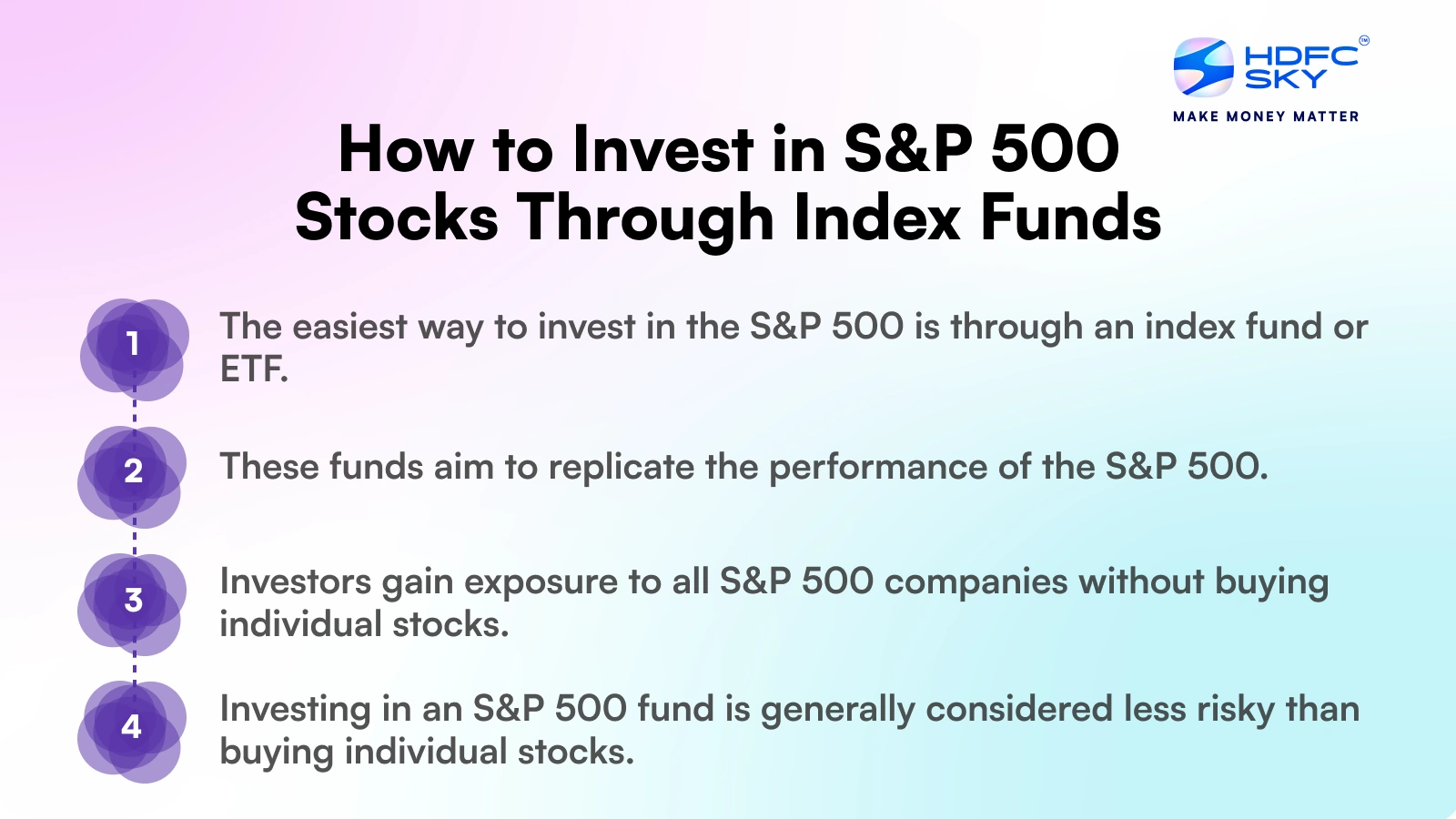
You cannot “buy” the S&P 500 index directly, as it is merely a mathematical list. Instead, you must invest in financial products that track the index. Here is the step-by-step process to get started.
Choosing a Brokerage Account
To buy S&P 500-related assets, you need a brokerage account. Modern investors have a plethora of choices, from traditional firms like Vanguard and Fidelity to digital-first platforms like Charles Schwab. When selecting a broker, look for “zero-commission” trading and a user-friendly interface. Depending on your goals, you might open a taxable brokerage account for flexibility or a tax-advantaged account like an IRA or 401(k) for retirement savings.
Index Funds vs. ETFs
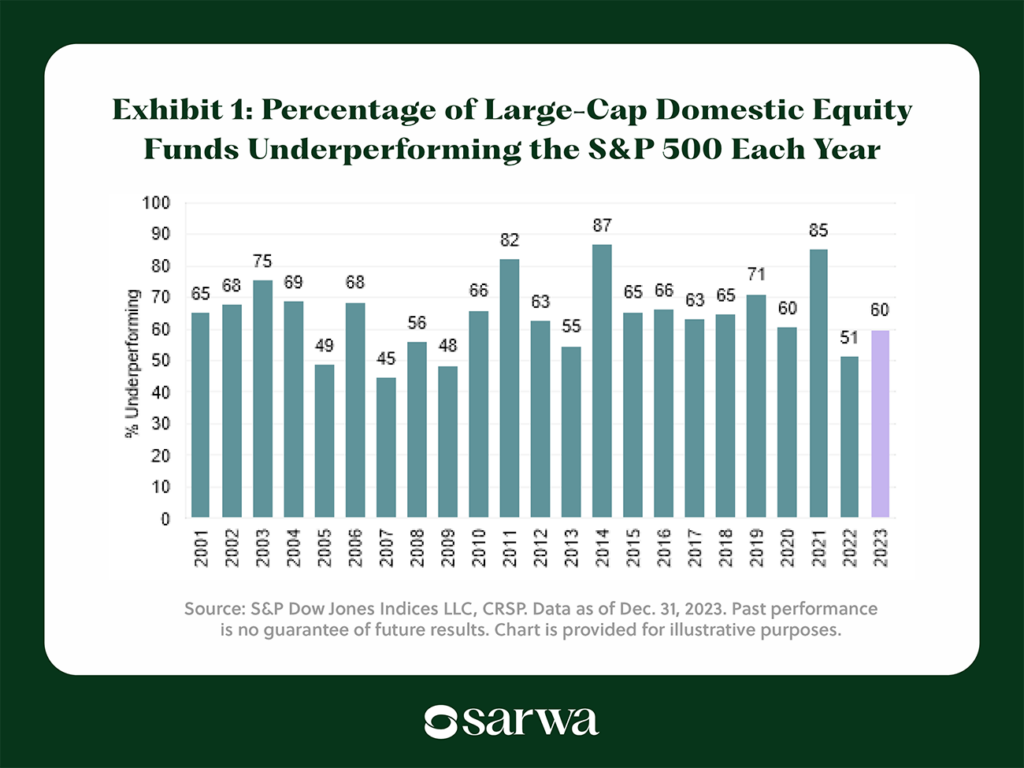
There are two primary ways to track the S&P 500: Mutual Funds (Index Funds) and Exchange-Traded Funds (ETFs).
- S&P 500 ETFs: These trade like stocks throughout the day. Popular examples include the SPDR S&P 500 ETF (SPY), the Vanguard S&P 500 ETF (VOO), and the iShares Core S&P 500 ETF (IVV). They are highly liquid and typically have very low expense ratios.
- S&P 500 Index Mutual Funds: These are priced once at the end of the trading day. They are excellent for investors who want to set up automatic recurring investments (e.g., $500 every month) directly from their bank account.
Determining Your Investment Amount
One of the most common myths in investing is that you need a large sum of money to start. Thanks to fractional shares and low minimums, you can often begin with as little as $1 to $10. The key is not the size of the initial investment, but the consistency of the contributions.
Investment Strategies for Long-Term Success
Simply buying the S&P 500 is a great start, but applying a disciplined strategy can significantly enhance your results and help you manage the psychological toll of market swings.
Dollar-Cost Averaging (DCA)
Market timing is a losing game for most investors. Instead of trying to “buy the dip,” many successful investors use Dollar-Cost Averaging. This involves investing a fixed amount of money at regular intervals (e.g., every payday), regardless of the index price. When prices are high, your money buys fewer shares; when prices are low, your money buys more. Over time, this lowers your average cost per share and removes the emotional stress of watching daily price fluctuations.
Reinvesting Dividends (DRIP)
Most companies in the S&P 500 pay dividends—a portion of their earnings distributed to shareholders. While you can take this as cash, the real “magic” happens when you utilize a Dividend Reinvestment Plan (DRIP). By automatically using dividends to buy more shares of the index fund, you increase your total holdings, which in turn generates more dividends. This creates a powerful feedback loop that can exponentially increase the size of your portfolio over several decades.
Staying the Course During Volatility
The S&P 500 is not a straight line up. It can drop 10%, 20%, or even 30% in a single year during economic crises. The most successful investors are those who treat these downturns as “sales” rather than reasons to panic. History shows that the biggest gains often occur immediately following the sharpest declines. Maintaining a “buy and hold” mentality is essential; selling during a crash locks in your losses and prevents you from participating in the eventual recovery.
Risks and Strategic Considerations
While the S&P 500 is one of the safest equity investments available, it is not without risk. A sophisticated investor must be aware of the limitations of an index-only approach.
Market Risk and Sector Concentration
Because the S&P 500 is weighted by market cap, it can become heavily concentrated in a single sector. In recent years, the “Big Tech” firms have grown to represent a significant portion of the index. If the technology sector faces regulatory headwinds or a valuation bubble, the S&P 500 will suffer disproportionately. Investors should be aware that they are heavily tied to the health of these massive corporations.
The Importance of a Balanced Portfolio
For many, the S&P 500 should be the core of a portfolio, but perhaps not the entire portfolio. Depending on your age and risk tolerance, you might consider “complementary” investments. These could include international stocks (to capture growth outside the U.S.), small-cap stocks (which have higher growth potential but higher risk), or bonds (to provide a cushion during market crashes).
Conclusion
Investing in the S&P 500 is a testament to the idea that wealth-building does not have to be complicated. By moving away from the stress of individual stock picking and toward the collective power of the 500 largest American companies, you align your financial future with the long-term growth of the global economy.
To succeed, you only need three things: a brokerage account, a low-cost index fund or ETF, and the discipline to keep buying and holding for years to come. While the market will inevitably have its ups and downs, the historical trajectory of the S&P 500 suggests that for the patient investor, time in the market is far more important than timing the market. Start today, reinvest your dividends, and let the most powerful economic engine in history work for you.
aViewFromTheCave is a participant in the Amazon Services LLC Associates Program, an affiliate advertising program designed to provide a means for sites to earn advertising fees by advertising and linking to Amazon.com. Amazon, the Amazon logo, AmazonSupply, and the AmazonSupply logo are trademarks of Amazon.com, Inc. or its affiliates. As an Amazon Associate we earn affiliate commissions from qualifying purchases.