
In an increasingly dynamic economic landscape, the allure of passive income has never been stronger. The concept of earning money that continues to flow with minimal ongoing effort, freeing up time and offering financial resilience, resonates deeply with many. While often mistakenly equated with “getting rich quick,” true passive income is a powerful engine for wealth creation and financial independence, built on strategic planning, initial investment (of time or capital), and often, a degree of patience. This comprehensive guide will demystify passive income, explore various avenues, and provide actionable insights into cultivating streams that contribute to your financial well-being.
Understanding Passive Income: The Foundation
Before diving into specific strategies, it’s crucial to grasp what passive income truly entails. It’s more than just money for nothing; it’s about leveraging your resources—whether that’s capital, skills, or intellectual property—to create systems that generate earnings without requiring your constant, active involvement.
What Exactly is Passive Income?
At its core, passive income is income that requires little to no effort to maintain once the initial setup is complete. This initial setup, however, can be substantial, involving significant upfront investment, creation of an asset, or development of a system. Think of it as building a robust machine; once constructed and powered, it continues to run, producing output (income) with only occasional maintenance. Examples range from rental income and dividends from investments to royalties from creative works or profits from automated online businesses.
Active vs. Passive Income: A Clear Distinction
The contrast between active and passive income is fundamental. Active income is what most people earn through a traditional job or freelancing, directly exchanging time and labor for money. If you stop working, the income stops. This includes salaries, wages, and most self-employment earnings.
Passive income, conversely, decouples your earnings from your direct, ongoing labor. While it may require active effort during the setup phase, the goal is to create an asset or system that generates revenue independently. For instance, writing a book (active effort) leads to royalties (passive income) long after the writing is done. Investing in a dividend stock (active decision) yields quarterly payouts (passive income). Understanding this distinction is the first step toward strategically building your financial future.
Why Pursue Passive Income? Benefits and Realities
The benefits of cultivating passive income streams are profound. Firstly, it offers enhanced financial security, providing an additional layer of income that can supplement or even replace active earnings. This acts as a buffer against job loss, economic downturns, or unexpected expenses. Secondly, it buys you freedom—time freedom to pursue passions, spend with loved ones, or simply have more control over your schedule, and geographical freedom if your income streams are location-independent. Thirdly, passive income accelerates wealth accumulation through compounding, as earnings can be reinvested to generate even more income.
However, it’s vital to address the realities. Passive income is rarely “effortless” initially. It demands research, smart decision-making, discipline, and often, capital. Many ventures require ongoing monitoring, occasional adjustments, and a commitment to learning. The “set it and forget it” ideal is often a simplification; instead, think of it as “set it, optimize it, and monitor it.”
The Myth of “Get Rich Quick” – Effort Required
Perhaps the biggest misconception surrounding passive income is that it’s a shortcut to instant wealth. This “get rich quick” mentality is not only unrealistic but also dangerous, often leading individuals down paths of unsustainable or fraudulent schemes. True passive income takes time to build, nurture, and scale. It’s a marathon, not a sprint. Success stories typically involve years of diligent effort, consistent investment, and a willingness to learn from setbacks. The “passive” aspect refers to the ongoing maintenance required, not the initial effort or the time to profitability. Patience, persistence, and realistic expectations are paramount.
Investment-Based Passive Income Strategies
One of the most traditional and effective ways to generate passive income is through strategic investments. By deploying capital, you can create assets that generate regular returns, often with minimal ongoing involvement beyond initial research and management.
Dividend Stocks and Funds
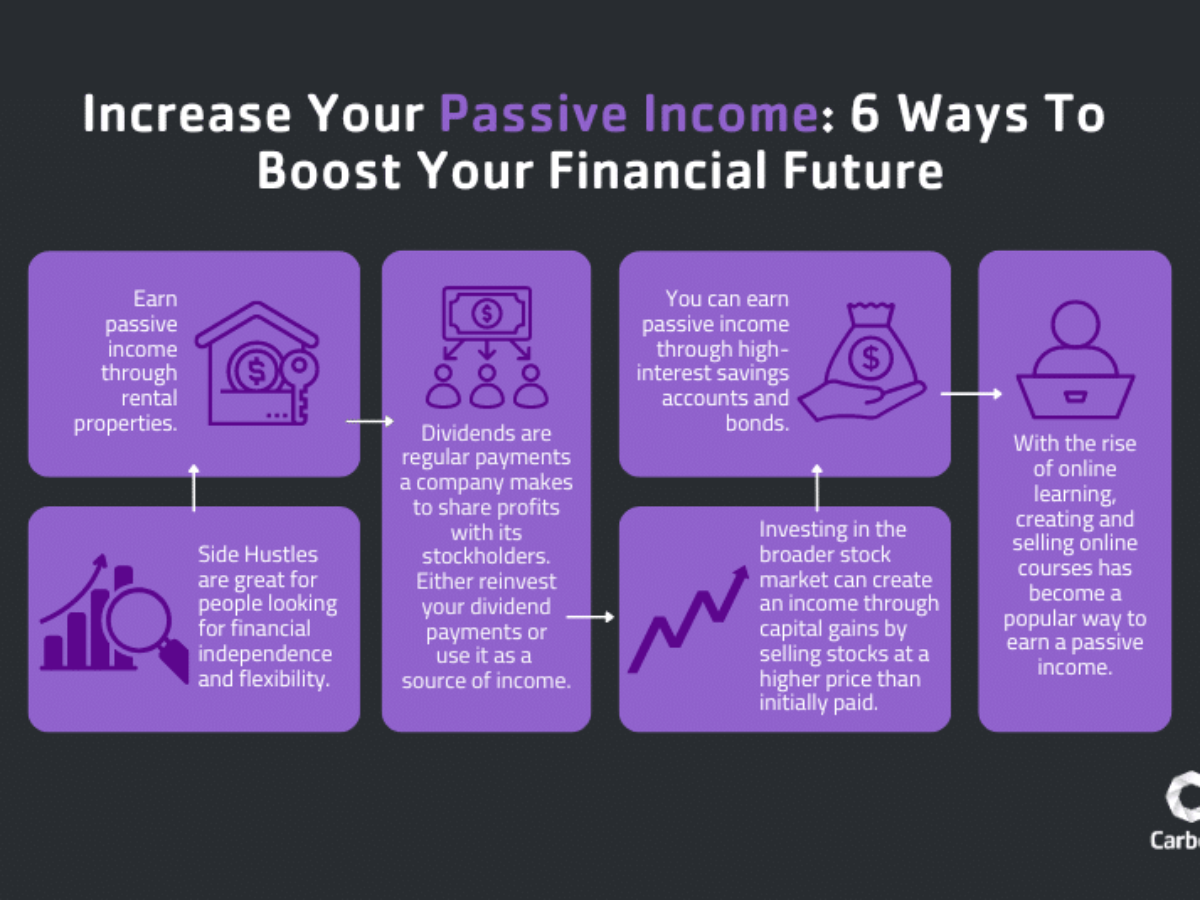
Investing in dividend-paying stocks and exchange-traded funds (ETFs) or mutual funds is a cornerstone of investment-based passive income. Companies that consistently distribute a portion of their earnings to shareholders in the form of dividends can provide a steady income stream. Dividend stocks are often from established, financially stable companies, offering both income and potential capital appreciation. To diversify and mitigate risk, many investors opt for dividend ETFs or mutual funds, which hold a basket of dividend-paying stocks across various industries. The key is to research companies with strong financial health and a history of sustainable dividend payouts. Reinvesting these dividends can significantly accelerate wealth accumulation through the power of compounding.
Real Estate Investing (REITs, Rental Properties, Crowdfunding)
Real estate is a classic asset for passive income generation, offering multiple avenues:
- Rental Properties: Owning residential or commercial properties and renting them out provides a consistent monthly income stream. While it requires upfront capital, property management, and maintenance, outsourcing these tasks can make it more passive. Equity appreciation also adds to long-term wealth.
- Real Estate Investment Trusts (REITs): For those who want exposure to real estate without direct ownership and management, REITs are an excellent option. These are companies that own, operate, or finance income-producing real estate across a range of property types. REITs trade on major stock exchanges, making them liquid, and are legally required to distribute at least 90% of their taxable income to shareholders annually in the form of dividends, making them highly attractive for passive income.
- Real Estate Crowdfunding: This relatively newer option allows individuals to invest in larger real estate projects (commercial properties, developments) with smaller amounts of capital by pooling funds with other investors. Platforms manage the projects, providing a more hands-off approach for the investor who earns a share of the rental income or profits from the sale.
Peer-to-Peer Lending
Peer-to-peer (P2P) lending platforms connect individual borrowers with individual lenders, cutting out traditional financial institutions. As a lender, you lend money to individuals or small businesses, and in return, you earn interest on those loans. You can diversify your investment across multiple loans to mitigate risk. While offering potentially higher returns than traditional savings accounts, P2P lending does come with risks, including borrower default. Careful due diligence on platforms and diversification are crucial.
High-Yield Savings Accounts and CDs (Lower Risk, Lower Return)
For those prioritizing capital preservation and liquidity over aggressive growth, high-yield savings accounts (HYSAs) and Certificates of Deposit (CDs) offer a very low-effort form of passive income. While the interest rates are generally lower than those from dividend stocks or real estate, they provide a safe place to store cash and earn a modest, predictable return. HYSAs offer flexibility, while CDs typically lock in your money for a specified term in exchange for a slightly higher fixed interest rate. These are excellent options for emergency funds or short-term savings goals.
Bonds and Annuities
Bonds represent a loan made by an investor to a borrower (typically a corporation or government entity) in exchange for regular interest payments and the return of the principal at maturity. They are generally considered less volatile than stocks and provide a fixed income stream. Annuities are insurance contracts that guarantee regular payments to the annuitant, often for life, starting immediately or at some future date. They can be a way to convert a lump sum into a steady income stream, particularly popular for retirement planning, though they often come with fees and complexity.
Digital Product & Content-Based Passive Income
The digital age has opened up a plethora of opportunities to create assets once and sell them repeatedly, generating income from products that can be replicated infinitely at virtually no additional cost.
Creating and Selling Digital Products (E-books, Courses, Templates)
If you have specialized knowledge, creative skills, or a knack for design, creating digital products can be highly lucrative. This includes writing and selling e-books (fiction or non-fiction), developing online courses on platforms like Teachable or Udemy, or designing digital templates for resumes, social media, or presentations. The initial effort involves creating high-quality content, marketing it, and setting up a sales funnel. Once launched, these products can generate sales for years with minimal ongoing intervention, aside from occasional updates or customer service.
Affiliate Marketing
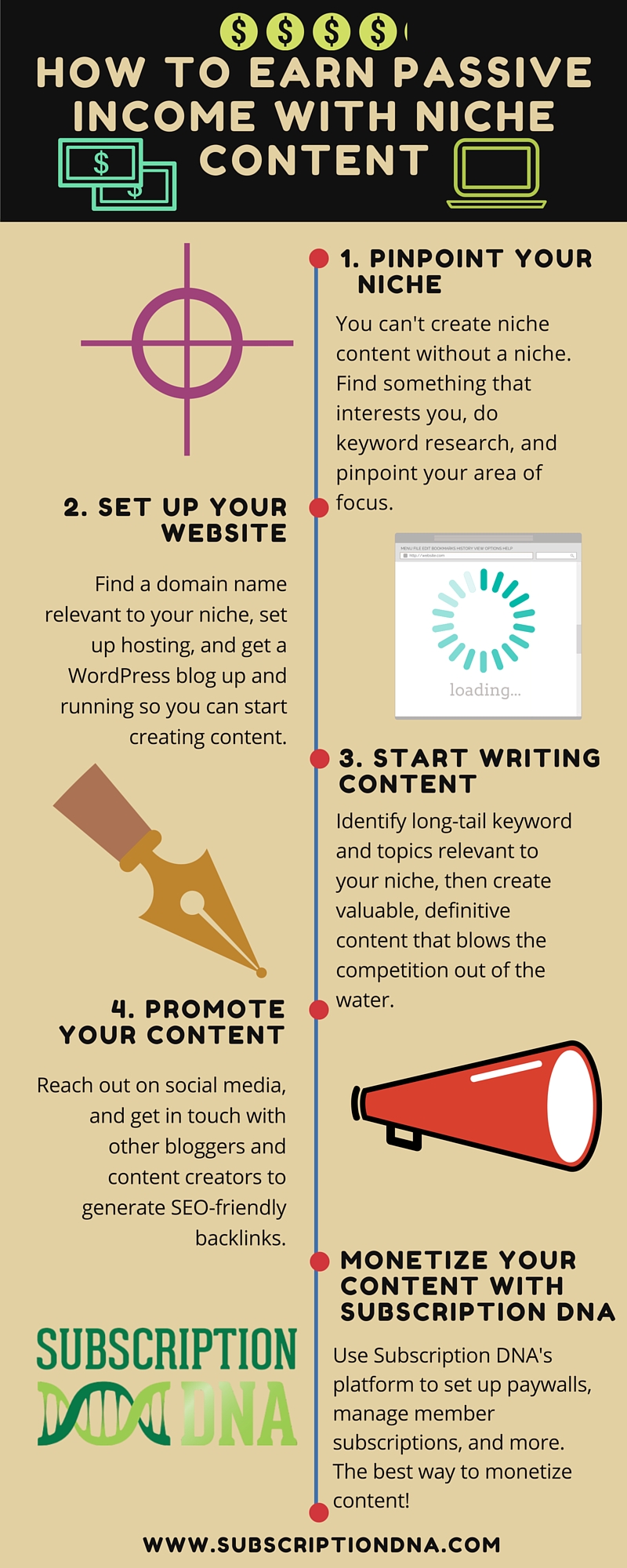
Affiliate marketing involves promoting other companies’ products or services and earning a commission on every sale made through your unique affiliate link. This can be done through a blog, a YouTube channel, social media, or a dedicated website. The key is to build an audience interested in a particular niche and recommend products genuinely aligned with their needs. While setting up content and building trust takes active effort, the income becomes passive once the content is established and attracting traffic, as sales can occur without your direct involvement in each transaction.
YouTube Channels and Blogging (Ad Revenue, Sponsorships)
Building an audience on platforms like YouTube or a personal blog can evolve into significant passive income streams. Once you meet certain criteria (e.g., watch hours and subscribers for YouTube, consistent traffic for a blog), you can monetize your content through:
- Ad Revenue: Google AdSense or similar ad networks place advertisements on your videos or website, earning you a share of the ad revenue generated from views and clicks.
- Sponsorships: Brands may pay you to promote their products or services directly within your content.
- Selling Your Own Products: This can be a blend of digital products, physical merchandise, or services directly to your engaged audience.
While content creation is active, older content continues to draw views and generate revenue long after it’s published, making it a powerful source of evergreen passive income.
Stock Photography and Videography
If you have a talent for photography or videography, you can license your work on stock photo and video websites (e.g., Shutterstock, Adobe Stock, Getty Images). Every time someone downloads your image or video, you earn a royalty. The initial investment is in creating a high-quality portfolio, but once uploaded, your assets can generate income repeatedly over time, reaching a global audience. The more diverse and high-quality your portfolio, the greater your earning potential.
Software as a Service (SaaS) or App Development (More complex)
For those with technical skills, developing a Software as a Service (SaaS) product or a mobile app can lead to highly scalable passive income. Users subscribe to your software (e.g., a project management tool, a niche utility app) for a recurring fee. This requires significant upfront development, marketing, and ongoing maintenance, customer support, and updates. However, once established, a successful SaaS or app can generate substantial recurring revenue with a strong profit margin, making it one of the more technologically driven passive income models.
Business & Asset-Based Passive Income
Beyond traditional investments and digital creations, certain business models and physical assets can be structured to generate income with minimal ongoing personal oversight.
Vending Machines and Laundromats
These are classic examples of asset-based businesses that can operate largely passively.
- Vending Machines: Purchasing and placing vending machines in high-traffic locations (offices, schools, public areas) generates income from sales. The main ongoing tasks are restocking, collecting cash, and maintenance, which can often be outsourced.
- Laundromats: A laundromat involves a higher initial investment but, once set up with reliable machines and security, can generate consistent revenue from customers using the washers and dryers. Ongoing tasks include cleaning, maintenance, and coin collection, which can be managed by staff or contractors. Both models rely on selecting good locations and quality equipment.
Licensing Intellectual Property
If you’ve created something unique – a patented invention, a distinctive design, a song, or even a brand name – you can license the right to use your creation to other individuals or businesses in exchange for royalties. This is a highly passive form of income once the intellectual property is developed and the licensing agreements are in place. The initial effort is in creation and protection (e.g., patenting, copyrighting), but the income stream can be long-lasting.
Automated Online Stores (Dropshipping, Print-on-Demand – requires initial setup)
While often requiring more active management than purely investment-based strategies, certain online store models can be made significantly passive with the right systems and outsourcing.
- Dropshipping: You set up an online store, market products, and take orders. However, you don’t hold any inventory. When a customer buys, the order is forwarded directly to a third-party supplier who ships the product directly to the customer. Your profit is the difference between your selling price and the supplier’s price. Automating order processing and customer service makes this more passive.
- Print-on-Demand (POD): Similar to dropshipping, you create designs for products (t-shirts, mugs, phone cases), set up an online store, and market them. When a customer orders, a POD service prints your design onto the product and ships it directly. Your only job is design and marketing. Both models require a solid understanding of e-commerce and marketing to succeed.
Royalties from Books, Music, or Patents
This is a broad category encompassing various forms of creative or inventive output. Authors earn royalties from book sales, musicians from song streams and sales, and inventors from patented technologies licensed to manufacturers. The “passive” aspect comes after the initial creative or inventive work is done. These income streams can last for decades, providing a legacy of earnings for creators and innovators. Building a successful portfolio in these areas often requires significant talent, hard work, and often, strong representation or self-promotion.
Strategic Approaches to Building Passive Income
Regardless of the specific avenues you choose, a strategic mindset and consistent effort are crucial for successfully building and scaling passive income streams.
Start Small and Scale Up
The journey to substantial passive income rarely begins with a massive investment or an overnight success. Instead, it often starts with small, manageable steps. Begin by investing a modest sum in a dividend ETF, creating a single e-book, or setting up one vending machine. As you gain experience, understand the nuances, and start seeing returns, you can gradually scale your efforts. Reinvesting initial passive income back into your ventures is a powerful way to accelerate growth. This iterative approach allows for learning and adaptation without undue risk.
Diversification is Key
Putting all your eggs in one basket, especially with passive income, is risky. Economic shifts, industry changes, or unforeseen events can significantly impact a single income stream. Diversifying your passive income portfolio across different asset classes, industries, and types of ventures (e.g., a mix of investments, digital products, and a small business) mitigates risk. If one stream underperforms, others can compensate, ensuring greater overall financial stability and resilience.
Reinvesting Profits for Compounding Growth
One of the most potent strategies for building significant wealth through passive income is to continuously reinvest your earnings. Instead of spending every dividend, rental payment, or royalty check, put a portion (or all) of it back into your investments or ventures. This allows your money to work harder for you, generating “returns on returns” through the magic of compounding. Over time, even small initial investments can grow into substantial assets, creating a snowball effect for your passive income.
Automating and Outsourcing Tasks
For many passive income strategies, particularly those involving active assets like rental properties or online businesses, certain tasks are unavoidable. The key to maintaining the “passive” nature is to automate processes wherever possible and outsource tasks that require your direct time. This could mean using property management companies, virtual assistants for customer service, automated email marketing funnels, or specialized software to handle repetitive tasks. Delegating responsibilities frees up your time, allowing you to focus on strategy, expansion, or simply enjoying the fruits of your labor.
Continuous Learning and Adaptation
The financial and digital landscapes are constantly evolving. What works today might be less effective tomorrow. Successful passive income generators are perpetual learners, staying informed about market trends, new technologies, and changes in regulations. They are willing to adapt their strategies, explore new opportunities, and refine their existing ventures. Continuous learning not only helps in maintaining current income streams but also in identifying new, potentially lucrative avenues for future growth.

Conclusion
Building passive income streams is a journey toward financial empowerment and freedom, not a destination for instant riches. It requires a clear understanding of what it is (and isn’t), strategic planning, initial effort, and often, a degree of capital. Whether through judicious investments in stocks and real estate, the creation of scalable digital products, or the smart setup of automated businesses, the path to generating income with minimal ongoing effort is diverse and accessible to many. By starting small, diversifying, reinvesting profits, leveraging automation, and committing to continuous learning, you can progressively build a robust portfolio of passive income streams that contribute significantly to your financial security and unlock a life of greater choice and freedom. The time to plant the seeds for your financial future is now.
aViewFromTheCave is a participant in the Amazon Services LLC Associates Program, an affiliate advertising program designed to provide a means for sites to earn advertising fees by advertising and linking to Amazon.com. Amazon, the Amazon logo, AmazonSupply, and the AmazonSupply logo are trademarks of Amazon.com, Inc. or its affiliates. As an Amazon Associate we earn affiliate commissions from qualifying purchases.