
The automotive industry remained largely stagnant for nearly a century, defined by the internal combustion engine and a slow, iterative approach to mechanical engineering. That changed in the early 2000s when a small group of engineers in Silicon Valley decided to treat the automobile not as a piece of heavy machinery, but as a high-performance technological gadget. To answer the question of when the first Tesla came out, one must look back to 2008, the year the Tesla Roadster officially hit the streets. However, the technological journey began years earlier, sparked by a vision to prove that electric vehicles (EVs) could outperform their gasoline counterparts.

The Birth of the Tesla Roadster (2008): A Paradigm Shift in Automotive Engineering
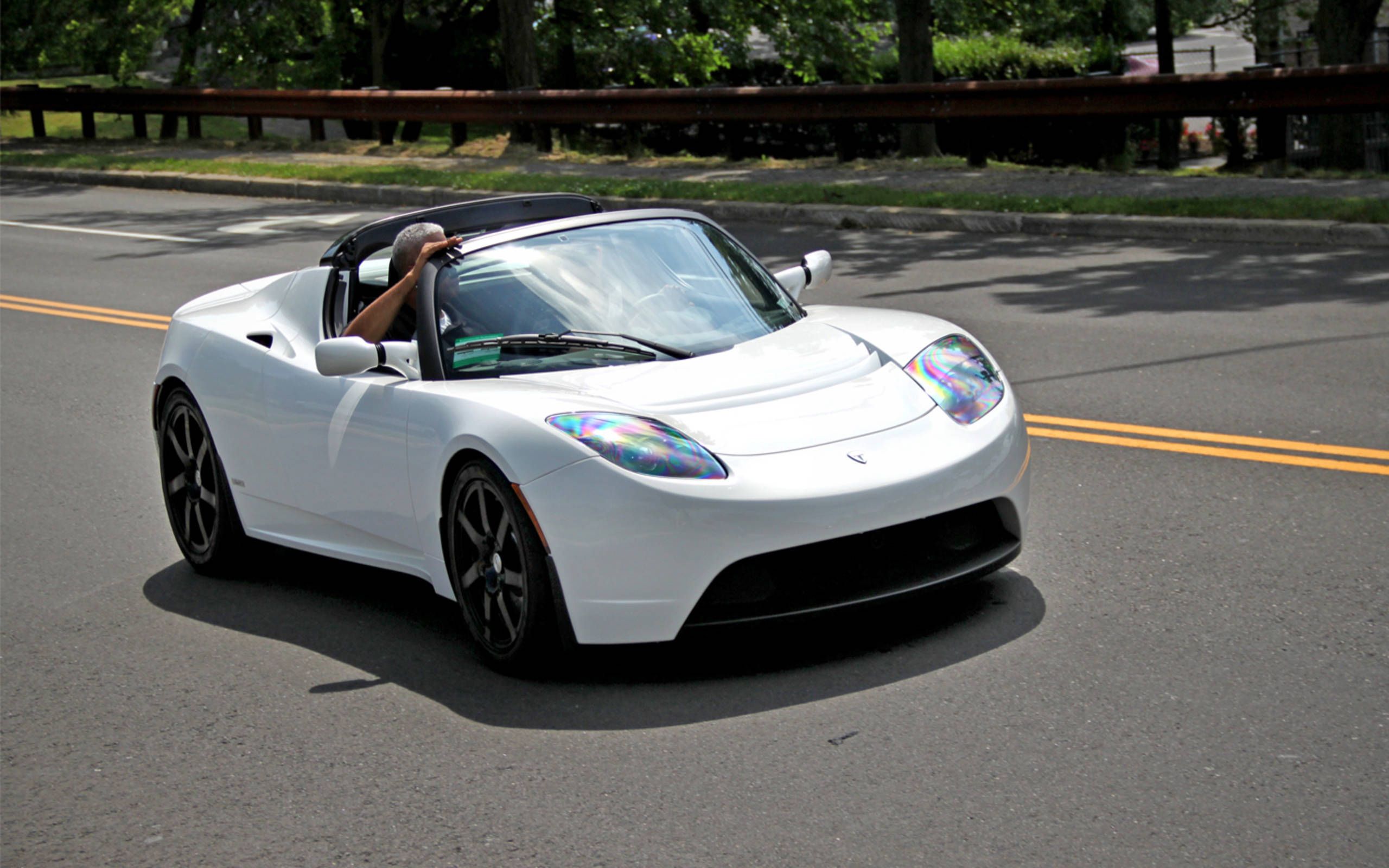
While Tesla Motors was incorporated in July 2003 by Martin Eberhard and Marc Tarpenning, the fruits of their labor didn’t reach customers until 2008. The first production Tesla Roadster, known as “P1,” was delivered to then-Chairman Elon Musk in February 2008. This wasn’t just a new car; it was a proof of concept that would redefine the “Tech” niche within the transportation sector.
AC Propulsion Roots and the Tzero Inspiration
The DNA of the first Tesla can be traced back to a kit car called the Tzero, built by AC Propulsion. The Tzero used lead-acid batteries and was remarkably fast, but it lacked range and commercial viability. Tesla’s founders saw the potential in AC Propulsion’s drive system but realized the hardware needed a revolutionary energy source. They licensed the technology and began the arduous process of integrating it into a chassis that could handle the torque and weight of a modern electric drivetrain.
Breaking the “Golf Cart” Stereotype
Before 2008, the public perception of electric cars was dismal. They were viewed as glorified golf carts—slow, aesthetically unpleasing, and limited to short-range urban commutes. The first Tesla Roadster shattered this tech barrier. By utilizing a sleek design based on the Lotus Elise chassis and a proprietary electric powertrain, Tesla produced a vehicle that could go from 0 to 60 mph in 3.7 seconds. It was the first production EV to travel more than 200 miles on a single charge, a technological feat that silenced skeptics and set the stage for the modern EV era.
The Technological Innovations Under the Hood
The release of the first Tesla in 2008 was significant not because of its leather seats or its handling, but because of the sophisticated technology hidden beneath its carbon fiber body. Tesla’s engineers approached the car’s design from a computer science perspective, prioritizing energy density and thermal management.
The Lithium-Ion Battery Breakthrough
The most critical tech innovation in the 2008 Roadster was the use of lithium-ion battery cells. At the time, lithium-ion was primarily used in consumer electronics like laptops and cell phones. No automaker had successfully scaled this technology to power a full-sized vehicle due to concerns over heat and stability.
Tesla’s solution was a massive battery pack consisting of 6,831 individual 18650-form-factor cells. This “commodity cell” strategy was a stroke of engineering genius; by using standardized cells, Tesla could leverage the existing manufacturing scale of the electronics industry. They developed a complex liquid cooling system to ensure these cells didn’t overheat, a technological hurdle that remains a cornerstone of Tesla’s intellectual property today.
Power Electronics and Software Integration
Beyond the batteries, the Roadster introduced advanced power electronics that managed the flow of electricity between the battery pack and the motor. The Power Electronics Module (PEM) acted as the “brain” of the car, converting DC power from the battery into AC power for the motor and managing regenerative braking. This was one of the first instances where software played a primary role in vehicle performance, allowing for precise control over torque delivery that a mechanical transmission could never achieve.
Engineering Challenges and the Path to Production
The road to the 2008 launch was fraught with technical setbacks. Transitioning from a prototype to a mass-produced technological product required solving problems that traditional car manufacturers had ignored for decades.
The Lotus Elise Partnership
To speed up development, Tesla entered into a contract with Lotus Cars. The Roadster utilized the basic structure of the Lotus Elise, but the engineering team quickly realized that over 90% of the components had to be redesigned to accommodate the heavy battery pack and the electric motor. This collaboration was a masterclass in modular engineering, proving that a startup could “disrupt” the industry by combining existing hardware frameworks with revolutionary digital and electrical systems.
Iteration and the “Founding” Conflict
The development phase of the Roadster (2004–2007) was marked by intense technical iteration. The original transmission design, for instance, failed repeatedly under the massive instant torque of the electric motor. The team eventually pivoted to a single-speed fixed-gear solution. This period also saw a shift in leadership, as the focus moved from pure engineering to scalable manufacturing. The friction between the original founders and Elon Musk during this time reflected the growing pains of a company transitioning from a garage-based tech startup to a global hardware manufacturer.
How the First Tesla Set the Tech Roadmap for the Future
When the first Tesla came out, it wasn’t just a product; it was the first step in a “Master Plan” that prioritized technological advancement over immediate profit. The Roadster served as the high-end, high-cost laboratory that funded the development of more accessible technology.
From Niche Gadget to Mass-Market AI and Autonomy
The technology pioneered in the 2008 Roadster evolved into the Autopilot and Full Self-Driving (FSD) suites we see today. While the original Roadster lacked the sensors and computing power of a Model 3, it established the philosophy that a car should be a software-defined machine. This perspective allowed Tesla to lead the industry in artificial intelligence and machine learning, using real-world data from its fleet to train neural networks—a concept that was science fiction when the first Roadster was being designed.
Over-the-Air Updates: The Software-Defined Vehicle
One of the most significant tech trends Tesla initiated was the “Over-the-Air” (OTA) update. While the very first Roadsters required physical diagnostic connections, the infrastructure for a connected car began there. This led to the realization that a car’s performance, safety features, and user interface could be improved post-purchase via software patches. In the tech world, this is standard; in the automotive world, it was a revolution that forced legacy giants like Ford and Volkswagen to completely overhaul their electrical architectures.
Conclusion: The Roadster’s Lasting Legacy in the Tech World
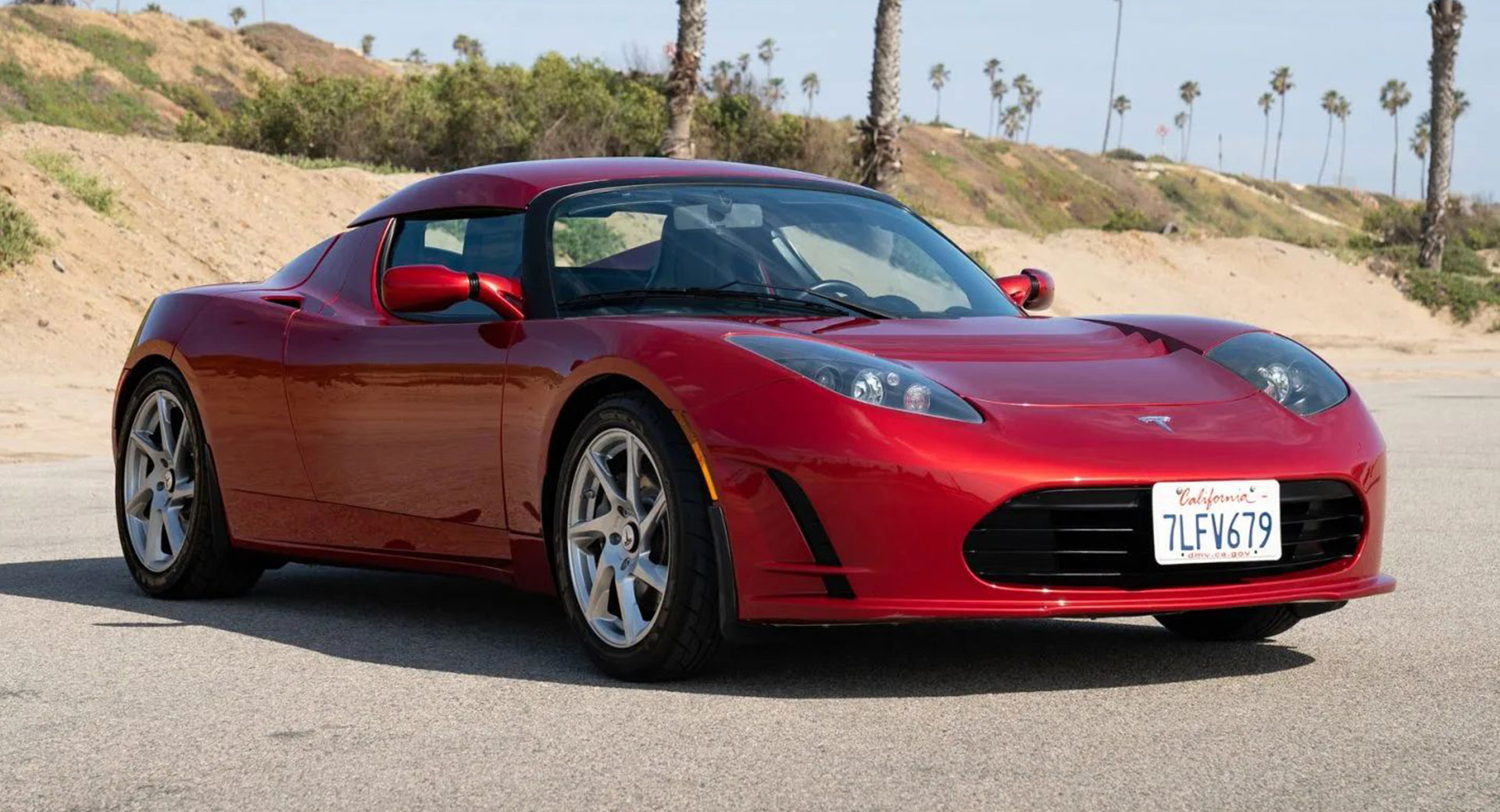
The first Tesla came out in 2008, but its impact is still being felt across the entire spectrum of modern technology. It proved that lithium-ion batteries were a viable power source for heavy machinery, that software could manage complex physical systems more efficiently than hardware alone, and that the “Silicon Valley approach” could successfully disrupt one of the world’s most entrenched industries.
By the time production of the original Roadster ended in 2012, Tesla had sold approximately 2,450 units. While that number is small compared to today’s millions, those 2,450 cars were the “Alpha” test for a sustainable energy future. Today, as we see AI-driven cars, massive battery storage farms, and a global shift toward electrification, we can trace the lineage of these innovations back to that two-seater convertible that arrived in early 2008. The first Tesla didn’t just change how we drive; it changed our fundamental understanding of what a machine can be when it is built with a “tech-first” mindset.
aViewFromTheCave is a participant in the Amazon Services LLC Associates Program, an affiliate advertising program designed to provide a means for sites to earn advertising fees by advertising and linking to Amazon.com. Amazon, the Amazon logo, AmazonSupply, and the AmazonSupply logo are trademarks of Amazon.com, Inc. or its affiliates. As an Amazon Associate we earn affiliate commissions from qualifying purchases.