
When people ask, “How many batteries are in a Tesla?” they are often surprised to learn that the answer isn’t a single large unit like the lead-acid battery found under the hood of a traditional internal combustion engine (ICE) vehicle. Instead, a Tesla is powered by thousands of individual lithium-ion cells, meticulously organized into modules and packs that function as a singular, high-performance energy storage system. This sophisticated architecture is at the core of Tesla’s technological lead in the electric vehicle (EV) industry.
Understanding the complexity of Tesla’s battery technology requires a deep dive into cell form factors, chemistry, and the digital systems that govern them. From the legacy 18650 cells to the revolutionary 4680 structural battery pack, the “battery” in a Tesla is a masterpiece of modern hardware and software engineering.

From Cells to Packs: The Architecture of Tesla’s Energy Storage
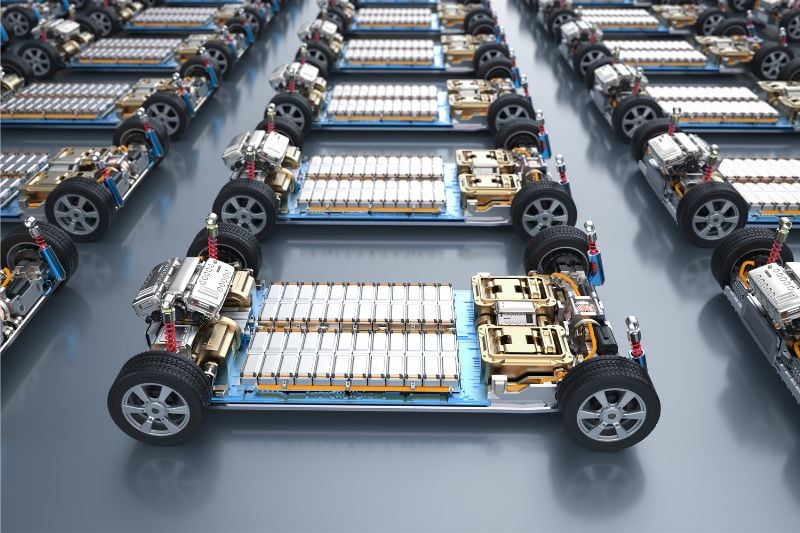
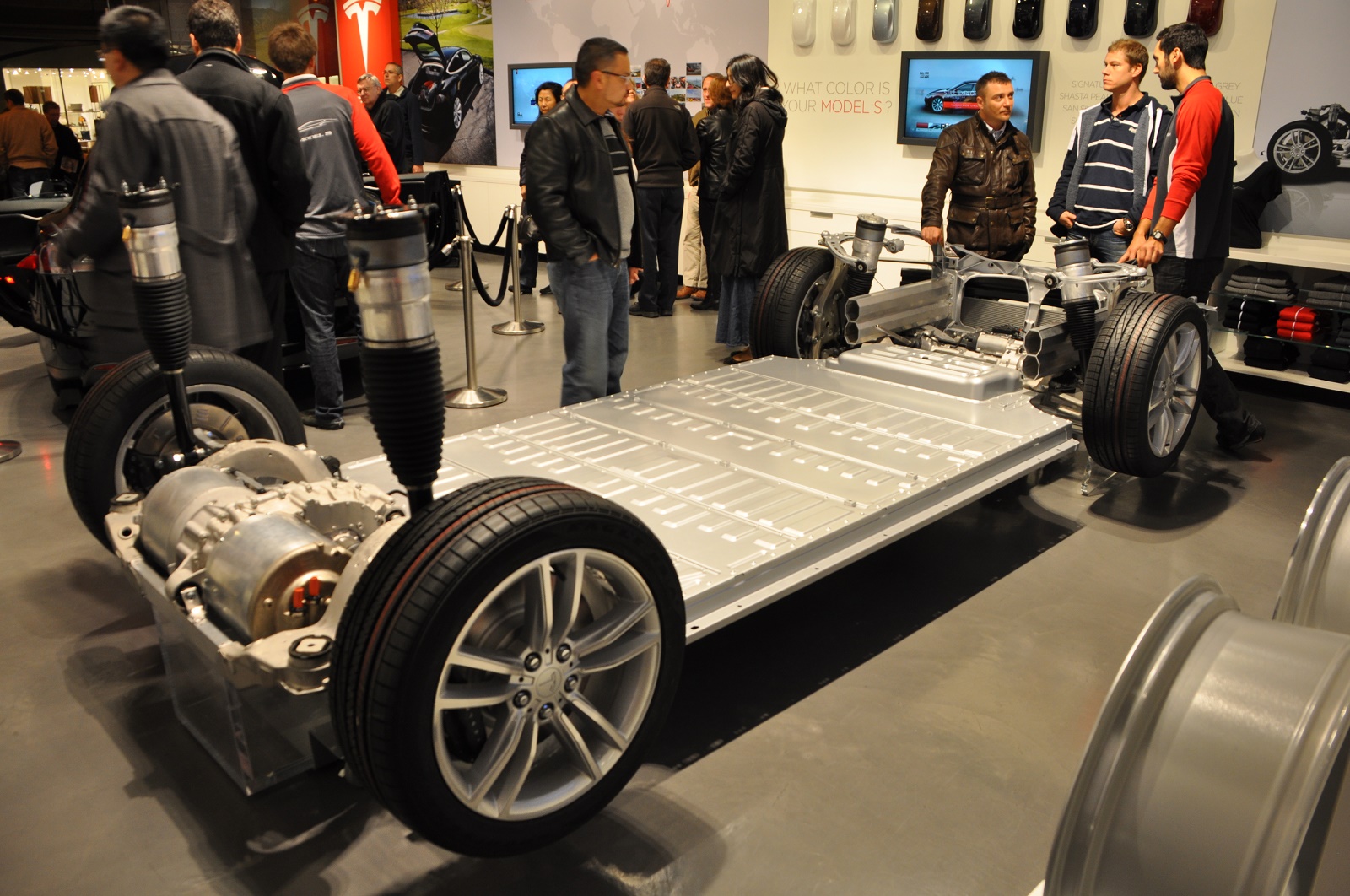
The power plant of a Tesla is a hierarchical system. At the most basic level is the battery cell, which is roughly the size of a standard AA battery. Thousands of these cells are grouped together into modules, and several modules are housed within a reinforced battery pack located in the floor of the vehicle.
Individual Cells vs. Modules
In a typical Model S or Model X, there are approximately 7,104 individual 18650-type cells. These are organized into 16 modules. Each module acts as a self-contained unit with its own monitoring hardware. This modularity is a safety and maintenance feature; if a single cell fails, the system can often bypass it or isolate the module to prevent a total vehicle shutdown. For the Model 3 and Model Y, the number of cells varies depending on the range and battery chemistry, generally hovering between 3,000 and 4,500 cells due to the larger size of the 2170 cell format.
The Shift Toward Structural Battery Packs
Tesla’s newest technological leap is the transition from a “cells-in-a-box” design to a structural battery pack. In this configuration, the battery cells aren’t just energy storage; they are a load-bearing part of the car’s chassis. By bonding the cells directly into a honeycomb-like structure, Tesla eliminates the need for heavy internal modules. This reduces the total weight of the vehicle and increases energy density by allowing more cells to be packed into the same volume. This engineering choice improves handling by lowering the center of gravity and increases the vehicle’s structural rigidity, showcasing how Tesla treats the battery as an integrated component of the vehicle’s physical architecture.
The Evolution of Tesla Battery Form Factors
Not all Tesla batteries are created equal. Over the last decade, Tesla has transitioned through three primary battery “form factors”—the physical dimensions and shape of the cells—to optimize for cooling, energy capacity, and manufacturing speed.
The 18650 Legacy
The original Tesla Roadster and the Model S/X utilized the 18650 cell. The name refers to its dimensions: 18mm in diameter and 65mm in height. These were essentially modified versions of the batteries used in laptops at the time. While they were revolutionary for the early 2010s, their small size meant that thousands of connections had to be welded, which increased manufacturing complexity and created more points of potential failure.
The 2170 Workhorse
With the launch of the Model 3, Tesla introduced the 2170 cell (21mm by 70mm). This cell was roughly 50% larger in volume than its predecessor. By moving to a larger format, Tesla was able to increase the energy capacity of each individual cell, thereby reducing the total number of cells needed for a 75kWh or 100kWh pack. This streamlined the manufacturing process at Gigafactory Nevada and improved the thermal management of the pack, as there was less “dead space” between the cells.
The 4680 Breakthrough and Why It Matters
The most recent evolution is the 4680 cell (46mm by 80mm). These cells are significantly larger, offering five times the energy capacity and a six-fold increase in power output compared to previous designs. The 4680 utilizes a “tabless” architecture, which significantly reduces the path that electrons must travel within the cell. This reduces internal resistance, which in turn reduces heat generation during fast charging and high-performance driving. For the consumer, this translates to faster charging speeds and longer range without adding significant weight.
Chemistry Matters: Comparing NCA, NCM, and LFP Technologies
The number of batteries in a Tesla is also dictated by the chemistry inside the cells. Tesla utilizes different chemical compositions depending on the vehicle’s intended use case, whether it is for long-distance travel, performance, or daily commuting.
High-Energy Density Chemistries: NCA and NCM
For its Long Range and Performance variants, Tesla typically uses Nickel Cobalt Aluminum (NCA) or Nickel Cobalt Manganese (NCM) chemistries. These formulations offer high energy density, meaning they can store a large amount of power in a relatively small and light package. The high nickel content provides the “punch” needed for the Model S Plaid’s 0-60 mph sprints. However, these chemistries are more sensitive to high temperatures and are generally recommended to be charged to 80% or 90% for daily use to prolong their lifespan.
Cobalt-Free LFP Batteries
In recent years, Tesla has shifted its Standard Range models (primarily the Model 3 and Model Y) to Lithium Iron Phosphate (LFP) chemistry. LFP batteries are heavier and less energy-dense than NCA cells, but they have two massive advantages: they are significantly more durable and cheaper to produce. Unlike nickel-based cells, LFP batteries can be charged to 100% daily without significant degradation. Because LFP cells store less energy per kilogram, a Tesla equipped with LFP batteries will actually have more individual cells than a nickel-based version of the same car to achieve a similar range.
The Battery Management System (BMS): The Brain of the Powerhouse
The hardware is only half the story. What makes Tesla’s battery tech industry-leading is the Battery Management System (BMS). This is a complex suite of software and sensors that monitors every single cell in the pack in real-time.
Thermal Regulation and Longevity
Heat is the enemy of battery health. Tesla’s BMS manages a sophisticated liquid cooling loop that snakes through the battery pack, touching every cell. The system can heat the battery (pre-conditioning) before the driver arrives at a Supercharger to ensure the fastest possible intake of energy. Conversely, it can aggressively cool the cells during high-speed driving on a track. By keeping the cells within a narrow temperature “sweet spot,” the BMS ensures that a Tesla battery can last for 300,000 to 500,000 miles before seeing significant capacity loss.
Over-the-Air (OTA) Optimization
Because the BMS is software-driven, Tesla can improve the performance of the “batteries” long after the car has left the factory. Through Over-the-Air (OTA) updates, Tesla has historically increased the range and charging speeds of its fleet by refining the algorithms that manage power draw and thermal limits. This digital layer allows Tesla to push the hardware to its absolute limit while maintaining a safety margin that prevents thermal runaway—a tech-centric approach that traditional automakers are only now beginning to replicate.
Conclusion
So, how many batteries are in a Tesla? While the physical count can range from roughly 3,000 to over 7,000 cells depending on the model and year, the real story lies in the technological synergy between those cells. Tesla has moved far beyond simply “stuffing batteries into a car.” Through the development of the 4680 form factor, the implementation of structural packs, and the refinement of LFP and NCA chemistries, Tesla has turned the battery into a sophisticated piece of computing hardware.
This focus on the “cell-to-chassis” philosophy ensures that the battery pack is not just a fuel tank, but a high-tech engine, a structural safety cage, and a software-managed asset all in one. As solid-state technology and silicon-anode research continue to progress, the number of batteries may decrease, but the intelligence and efficiency contained within each cell will only continue to grow.
aViewFromTheCave is a participant in the Amazon Services LLC Associates Program, an affiliate advertising program designed to provide a means for sites to earn advertising fees by advertising and linking to Amazon.com. Amazon, the Amazon logo, AmazonSupply, and the AmazonSupply logo are trademarks of Amazon.com, Inc. or its affiliates. As an Amazon Associate we earn affiliate commissions from qualifying purchases.