
The trajectory of Tesla, Inc. (TSLA) is often cited in financial circles as one of the most polarizing and spectacular stories in the history of the equity markets. For many modern investors, it is difficult to imagine a time when Tesla was not a dominant force in the S&P 500 or a trillion-dollar market cap contender. However, the journey began in a climate of immense skepticism and economic recovery. To understand the financial magnitude of Tesla today, one must look back to its debut on the public stage and the fiscal evolution that followed.
The Historic Debut: June 29, 2010
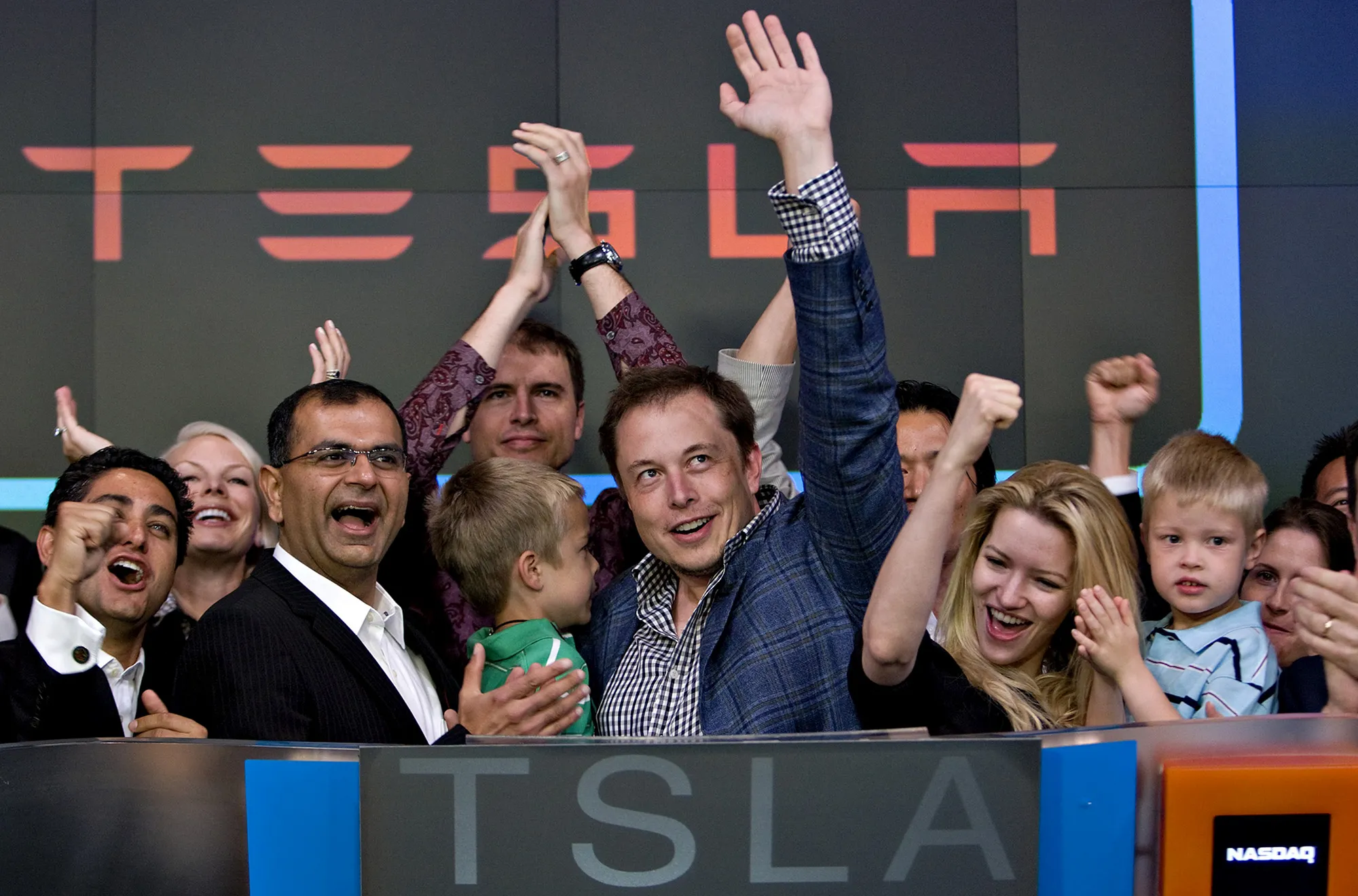
Tesla Motors, as it was known then, officially went public on June 29, 2010. This was a landmark event not just for the company, but for the American automotive industry as a whole. At the time, the United States was still licking its wounds from the 2008 financial crisis, and the “Big Three” automakers in Detroit were struggling to redefine themselves.
Breaking the 50-Year Drought for American Automakers
When Tesla filed its S-1 with the Securities and Exchange Commission (SEC), it marked the first time an American car company had gone public since the Ford Motor Company’s IPO in 1956. For over half a century, the barrier to entry for the automotive sector was considered too high, the capital requirements too intensive, and the competitive moats of established giants too deep. Tesla’s entry into the public market was a bold statement that the era of internal combustion might eventually face a digital and electric challenger.
Initial Market Reception and the Valuation Gap
On its first day of trading on the Nasdaq, Tesla offered 13.3 million shares at a price of $17.00 per share. By the end of the trading session, the stock had surged about 41%, closing at $23.89. The company raised approximately $226 million in capital. At that moment, Tesla’s market capitalization was roughly $2.2 billion—a staggering figure for a company that had only delivered a few thousand units of its high-end Roadster and was consistently losing money. Wall Street was deeply divided; many institutional investors viewed the IPO as a speculative gamble on a “niche hobbyist” product, while a small cohort of venture-minded investors saw it as the birth of a new energy paradigm.
From Speculative Startup to Trillion-Dollar Valuation
The financial journey from a $17 IPO price to the astronomical highs of the 2020s was anything but linear. For nearly a decade, Tesla was one of the most “shorted” stocks on the market. Short sellers bet billions that the company would go bankrupt under the weight of its massive capital expenditures and production challenges. Yet, the company’s ability to repeatedly return to the capital markets for funding—and eventually achieve self-sustaining cash flow—is a masterclass in business finance.
Navigating the “Valley of Death” and Funding Rounds
The years following the IPO were defined by “production hell,” a term coined by CEO Elon Musk. From a financial perspective, this period was characterized by high “burn rates.” Tesla needed to build Gigafactories, develop the Model S, Model X, and eventually the mass-market Model 3. To fund this expansion, Tesla utilized a variety of financial instruments, including secondary stock offerings and convertible debt.
While many traditional analysts warned that the constant dilution of shares would hurt long-term value, the strategy allowed Tesla to build the infrastructure necessary for scale. By the time the company reached the “tipping point” of profitability in late 2019 and early 2020, it had successfully bridged the “Valley of Death” that claims most automotive startups.
The Significance of Stock Splits for Retail Investors
As the share price began its exponential climb, Tesla became increasingly expensive for the average retail investor. To maintain liquidity and make the stock more accessible, the board implemented two significant stock splits.
- August 2020: A 5-for-1 stock split.
- August 2022: A 3-for-1 stock split.

For those who invested at the IPO price of $17, these splits mean that their original shares have multiplied significantly in volume, while the adjusted cost basis has dropped to pennies. These moves were strategically designed to keep the “Tesla Army” of retail investors engaged, further stabilizing the stock during periods of institutional volatility.
Analyzing Tesla’s Revenue Model and Profitability Pivot
What eventually silenced the critics was not just the delivery of cars, but the evolution of Tesla’s balance sheet. Tesla shifted from a company that relied on government subsidies and capital raises to one with some of the highest operating margins in the automotive industry.
Regulatory Credits: The Hidden Engine of Early Profitability
For several years, a significant portion of Tesla’s “net income” was derived from the sale of Zero-Emission Vehicle (ZEV) credits. Under various environmental regulations, traditional automakers that did not meet electric vehicle quotas had to purchase credits from companies like Tesla. In the 2020 fiscal year, Tesla earned $1.58 billion from these credits, which was more than its total net income for the year.
From a financial analysis standpoint, this was a brilliant arbitrage of regulatory policy. It allowed Tesla to fund its R&D and manufacturing improvements using the capital of its competitors. However, the true mark of Tesla’s financial maturity was when its automotive margins (excluding credits) began to exceed 20%, proving that the core business of making and selling cars was finally profitable in its own right.
Scalability and the Shift to Mass Production
The financial narrative of Tesla changed forever with the success of the Model 3 and Model Y. By shifting from a luxury niche player to a high-volume manufacturer, Tesla achieved economies of scale that were previously thought impossible for an EV-only company. The “Money” story of Tesla is essentially a story of manufacturing efficiency. By reducing the number of parts in their vehicles and pioneering “Giga-casting” techniques, Tesla significantly lowered the cost of goods sold (COGS), allowing them to maintain high margins even as they lowered prices to capture market share.
Investing in Innovation: Risk Management and Long-term Growth
For the modern investor, Tesla represents a unique asset class. It is often analyzed as a tech company rather than a traditional automaker because of its focus on Full Self-Driving (FSD) software, energy storage, and robotics. This “tech-heavy” valuation requires a different financial framework for risk management.
Volatility as the Price of Admission
Investors who entered the Tesla market during its IPO or in the years following had to stomach extreme volatility. It is not uncommon for TSLA to see 20% to 30% swings in a single month based on interest rate changes, delivery reports, or even the CEO’s social media activity. In financial terms, Tesla is a “high beta” stock, meaning it moves more aggressively than the broader market. For those focused on personal finance and portfolio stability, Tesla has served as a lesson in “position sizing”—investing enough to see significant gains, but not so much that the volatility compromises one’s financial security.

Lessons in Contrarian Investing
Tesla’s IPO and subsequent growth offer a profound lesson in contrarian investing. In 2010, the “smart money” was largely betting against the electrification of the automobile. The success of Tesla has forced a massive reallocation of capital across the global financial markets, as trillions of dollars are now flowing into ESG (Environmental, Social, and Governance) funds and green energy initiatives.
The IPO in June 2010 was the catalyst for a financial revolution. While the company still faces challenges—ranging from increased competition from legacy automakers to the complexities of global supply chains—its status as a public entity has allowed it to leverage the power of the capital markets to fund a vision that was once deemed impossible. Whether you view Tesla as an overvalued tech play or the future of transportation, its decade-plus journey on the Nasdaq remains the definitive case study in 21st-century business finance.
aViewFromTheCave is a participant in the Amazon Services LLC Associates Program, an affiliate advertising program designed to provide a means for sites to earn advertising fees by advertising and linking to Amazon.com. Amazon, the Amazon logo, AmazonSupply, and the AmazonSupply logo are trademarks of Amazon.com, Inc. or its affiliates. As an Amazon Associate we earn affiliate commissions from qualifying purchases.