
For business owners, corporate treasurers, and high-net-worth individuals, the logistics of tax compliance are often as complex as the tax laws themselves. While the focus is frequently placed on “how much” is owed, the “how to pay” is a critical component of fiscal management. This is where the Electronic Federal Tax Payment System (EFTPS) becomes an essential tool. Provided as a free service by the U.S. Department of the Treasury, EFTPS is the primary mechanism for transferring federal tax funds securely and efficiently.
In the modern financial landscape, paper checks are increasingly becoming relics of the past, particularly when dealing with the Internal Revenue Service (IRS). Understanding EFTPS is not merely about learning a new software tool; it is about mastering a vital aspect of business finance that ensures regulatory compliance, enhances security, and optimizes cash flow management.

Understanding EFTPS: The Digital Backbone of Federal Tax Compliance
At its core, EFTPS is an online system that allows taxpayers—both businesses and individuals—to pay all their federal taxes electronically. Launched to modernize the way the Treasury collects revenue, it has evolved into a robust platform that handles trillions of dollars in transactions annually. Unlike other payment portals that may cater to one-off individual payments, EFTPS is designed for the recurring, high-volume needs of the American business community.
How the System Works
EFTPS operates as a direct link between a taxpayer’s bank account and the U.S. Treasury. When a payment is initiated, the system uses the Automated Clearing House (ACH) network to transfer funds. Users can access the system 24 hours a day, seven days a week, either via the official website or through a voice response system. This accessibility is crucial for businesses operating across different time zones or those requiring last-minute adjustments to their tax liabilities.
Who is Required to Use EFTPS?
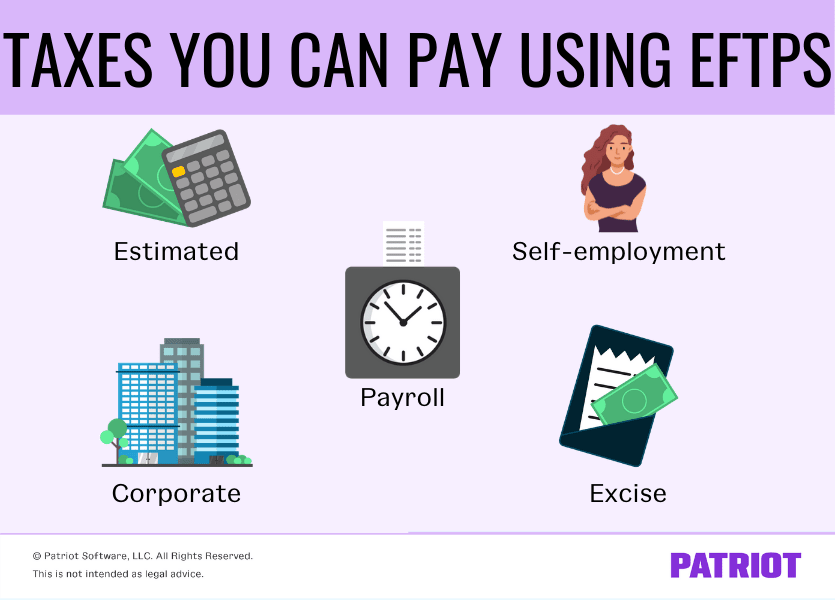
While any taxpayer can use EFTPS, it is mandatory for certain entities. Most notably, businesses that have a federal tax deposit obligation (such as payroll taxes or corporate income taxes) are generally required to use electronic funds transfer. If a business’s total federal tax deposits exceed a specific threshold (currently $2,500) in a quarter, they must transition away from paper coupons to an electronic system. For these entities, EFTPS is not just an option; it is a regulatory requirement that, if ignored, can result in significant penalties.
The Strategic Benefits of EFTPS for Business Finance
Beyond mere compliance, EFTPS offers several strategic advantages that align with sophisticated financial management. For a Chief Financial Officer or a small business owner, the system provides a layer of control and transparency that manual payment methods simply cannot match.
Enhanced Security and Fraud Prevention
Security is the paramount concern in any financial transaction involving government agencies. EFTPS employs a multi-layer security protocol. Upon enrollment, users receive a unique Taxpayer Identification Number (TIN), a Personal Identification Number (PIN), and an internet password. This “three-pillar” authentication ensures that only authorized personnel can initiate or change a payment. Furthermore, because the money moves directly from the business’s bank to the Treasury, there is no risk of checks being intercepted, altered, or lost in the mail—a common source of identity theft and financial fraud.
Precision in Cash Flow Management
One of the most significant advantages for business finance is the ability to schedule payments in advance. EFTPS allows users to schedule a payment up to 365 days in advance. For a business managing tight margins or complex liquidity, this is a game-changer. You can set up your quarterly estimated payments or payroll tax deposits the moment your accounting software calculates them, but set the “settlement date” for the actual due date. This ensures that the funds remain in your interest-bearing account for as long as possible while guaranteeing that the payment will not be late.
Streamlined Record-Keeping for Audits
In the event of an IRS audit or a routine internal financial review, the ability to produce a clear paper trail is invaluable. EFTPS provides an immediate acknowledgment number for every transaction. This receipt serves as legal proof that the payment was initiated. The system also maintains a comprehensive payment history for up to 16 months, which can be easily exported for reconciliation with bank statements and general ledgers. This level of transparency reduces the administrative burden on accounting departments and simplifies the year-end closing process.
Navigating the EFTPS Registration and Payment Process
While the system is highly secure, the initial setup requires a degree of patience and attention to detail. Because the Treasury must verify the identity of the taxpayer and the validity of the linked bank account, the enrollment process is not instantaneous.
Step-by-Step Enrollment
To begin using EFTPS, a business or individual must visit the official EFTPS website and provide their Taxpayer Identification Number (usually an EIN for businesses or an SSN for individuals), as well as their banking information (routing and account numbers). After the online application is submitted, the IRS verifies the data. Crucially, the PIN is sent via U.S. Mail to the address of record on file with the IRS. This process typically takes seven to ten business days. This “out-of-band” security measure ensures that even if a bad actor has your account numbers, they cannot intercept the physical mail required to authorize the account.
Making Your First Payment
Once the PIN is received, the user must go back to the website to create an internet password. From there, making a payment is a matter of selecting the appropriate tax form (e.g., Form 941 for quarterly payroll taxes, Form 1120 for corporate income tax), entering the amount, and selecting the settlement date. It is important to note that for a payment to be considered “on time,” it must be submitted by 8:00 PM Eastern Time at least one calendar day before the tax due date. This lead time is necessary for the ACH network to process the transfer.
Scheduling and Future-Dating Payments
For recurring obligations, such as estimated taxes for high-income earners or monthly payroll deposits, the scheduling feature is the most utilized aspect of EFTPS. A financial manager can log in once and schedule all four quarterly estimated payments for the entire year. If financial circumstances change—for example, if a business experiences a sudden drop in revenue—the user can log in and cancel or edit a scheduled payment up to two business days before the scheduled date. This flexibility is a cornerstone of proactive financial planning.
EFTPS vs. Other Payment Methods: Why Modern Businesses Choose Digital
The IRS offers several ways to pay federal taxes, including IRS Direct Pay, credit/debit card payments through third-party processors, and traditional wire transfers. However, for business-grade finance, EFTPS remains the gold standard.
Comparing EFTPS with Direct Pay and Wire Transfers
IRS Direct Pay is a popular tool, but it is limited exclusively to individuals. It cannot be used to pay business taxes or employment taxes. Credit card payments, while convenient for some, incur significant “convenience fees” (often between 1.8% and 2%), which can amount to thousands of dollars in unnecessary expenses for large tax bills.
Wire transfers, on the other hand, are fast but often come with high bank fees and require manual intervention for every transaction. EFTPS provides the professional-grade features of a wire transfer—speed and reliability—without the associated costs. It is specifically built to handle the diverse range of over 200 different types of federal tax payments, making it a “one-stop shop” for all federal liabilities.
Integration with Payroll and Accounting Software
Modern accounting departments often utilize third-party payroll providers. Many of these providers use EFTPS “Batch Provider” accounts to move funds on behalf of their clients. However, even if a business uses a payroll service, it is a best practice for the business owner to maintain their own EFTPS Inquiry PIN. This allows the business to log in and independently verify that the payroll provider has actually made the required deposits. This “trust but verify” approach is a critical component of internal financial controls.
Best Practices for Maintaining Financial Compliance via EFTPS
To maximize the utility of EFTPS and avoid potential pitfalls, financial professionals should adhere to a set of best practices designed to safeguard company assets and maintain a clean record with the IRS.
Managing Passwords and Security Codes
Given the sensitivity of the information within EFTPS, credential management is vital. Passwords should be updated regularly and stored in a secure corporate password manager. Furthermore, businesses should have a clear protocol for when an employee with access to the EFTPS account leaves the company. Changing the internet password immediately upon personnel turnover is a basic but essential security step to prevent unauthorized movement of corporate funds.

Avoiding Common Payment Errors
The most frequent issues with EFTPS are not technical glitches, but human errors. These include selecting the wrong tax period or the wrong tax form. For instance, applying a corporate income tax payment to a payroll tax period can trigger an automated “failure to pay” notice, even if the money has left the bank account.
To prevent this, businesses should implement a “two-person” rule for tax payments: one person initiates the payment in EFTPS, and a second person (such as a controller or business owner) reviews the confirmation receipt to ensure the amount, tax form, and period are correct. If an error is caught within the 48-hour window before the settlement date, the payment can be canceled and re-entered correctly, saving the company from the headache of reconciling misapplied funds with the IRS later.
In conclusion, EFTPS is more than just a payment portal; it is a sophisticated financial tool that offers security, control, and efficiency. By integrating EFTPS into their regular financial workflows, businesses and individuals can ensure they meet their federal obligations with precision, allowing them to focus on their primary goal: growing their financial health and stability.
aViewFromTheCave is a participant in the Amazon Services LLC Associates Program, an affiliate advertising program designed to provide a means for sites to earn advertising fees by advertising and linking to Amazon.com. Amazon, the Amazon logo, AmazonSupply, and the AmazonSupply logo are trademarks of Amazon.com, Inc. or its affiliates. As an Amazon Associate we earn affiliate commissions from qualifying purchases.