
When investors ask “how much is Bitcoin worth,” they are often looking for the current ticker price on an exchange. However, in the world of personal finance and global economics, the “worth” of Bitcoin extends far beyond its momentary decimal value against the US Dollar. To understand the true valuation of the world’s first cryptocurrency, one must look at it through the lens of scarcity, institutional adoption, and its evolving role as a financial hedge.
Bitcoin represents a paradigm shift in how we perceive and store value. Unlike traditional fiat currencies, which are managed by central banks and subject to inflationary pressures, Bitcoin operates on a decentralized protocol with a hard-capped supply. This fundamental difference is why its price is famously volatile, yet its long-term trajectory has captured the attention of the world’s most sophisticated financial institutions.

The Mechanisms of Market Valuation: What Drives Bitcoin’s Price?
The price of Bitcoin at any given moment is a reflection of the global equilibrium between buyers and sellers. However, beneath the surface of the daily candles on a trading chart, several core financial mechanisms dictate its market value.
Supply and Demand: The Impact of the “Halving”
The most significant factor in Bitcoin’s valuation is its programmed scarcity. There will only ever be 21 million Bitcoins in existence. This supply is released through a process called mining, and approximately every four years, an event known as “the halving” occurs. During a halving, the reward for mining new blocks is cut in half, effectively reducing the rate at which new Bitcoin enters the market.
From a basic economic standpoint, if the demand for an asset remains constant or increases while the supply of new units decreases, the price must rise. Historically, the years following a halving event have seen massive surges in Bitcoin’s market value, as the “supply shock” forces the market to reprice the asset based on its increased scarcity.
Institutional Adoption and Spot ETFs
In recent years, the “worth” of Bitcoin has been validated by Wall Street. The approval of Spot Bitcoin Exchange-Traded Funds (ETFs) marked a turning point in financial history. These financial instruments allow pension funds, insurance companies, and retail investors to gain exposure to Bitcoin without the complexities of managing private keys.
This influx of institutional capital provides a “price floor” that was absent in the early years of the asset. When trillions of dollars in managed assets have a regulated pathway to invest even 1% of their holdings into Bitcoin, the liquidity and valuation of the network increase exponentially. This transition from a “speculative retail asset” to a “standard institutional allocation” is a primary driver of its modern valuation.
Bitcoin as a Financial Asset: Digital Gold vs. Fiat Currency
To determine how much Bitcoin is worth, investors often compare it to existing asset classes. The most common comparison is to gold, the world’s oldest store of value.
The “Digital Gold” Thesis
Gold has a market capitalization of over $14 trillion. Many financial analysts argue that Bitcoin is “Gold 2.0.” Like gold, Bitcoin is durable, divisible, and scarce. However, Bitcoin is superior in terms of portability and verifiability. You cannot send $1 million worth of gold across the globe in ten minutes for a nominal fee, but you can with Bitcoin.
If Bitcoin were to capture even half of the market capitalization of gold, the price per coin would exceed $300,000. For many investors, the “worth” of Bitcoin is calculated by its potential to replace or supplement gold as the primary global reserve asset for the digital age.
A Hedge Against Monetary Inflation
The value of fiat currency, such as the US Dollar or the Euro, is tied to the stability of the issuing government and the policies of their respective central banks. When governments engage in quantitative easing or “money printing” to stimulate the economy, the purchasing power of the individual unit of currency decreases.
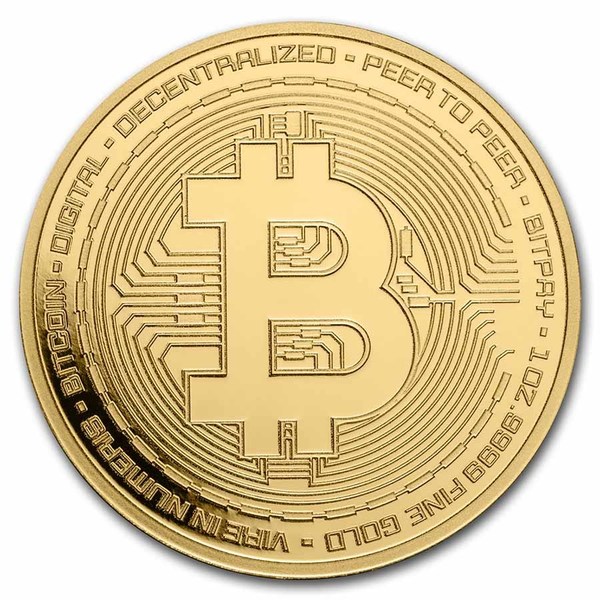
Bitcoin is often viewed as “insurance” against this debasement. Because its monetary policy is written in code and cannot be altered by any politician or banker, it serves as a non-correlated asset. When the value of the dollar goes down due to inflation, the “worth” of Bitcoin—denominated in those same dollars—typically goes up. This makes it an essential tool for wealth preservation in an era of high sovereign debt.
Practical Strategies for Navigating Bitcoin’s Volatility
For the individual investor, knowing how much Bitcoin is worth today is less important than knowing how to manage it within a broader financial portfolio. The asset’s volatility is a double-edged sword: it provides the opportunity for outsized gains, but it requires a disciplined approach to risk management.
The Power of Dollar-Cost Averaging (DCA)
Because Bitcoin’s price can swing 5-10% in a single day, “timing the market” is notoriously difficult and often results in financial loss for retail traders. Instead, many successful investors utilize a Dollar-Cost Averaging (DCA) strategy. This involves investing a fixed amount of money at regular intervals (e.g., $100 every month), regardless of the current price.
DCA lowers the emotional stress of investing. When the price is high, your $100 buys less Bitcoin; when the price is low, your $100 buys more. Over time, this averages out the cost basis of your investment and allows you to build a position in the asset without being sidelined by short-term market turbulence.
Risk Management and Portfolio Allocation
In personal finance, the “worth” of an asset must be balanced against its risk. Financial advisors who are bullish on Bitcoin often suggest a small allocation—typically between 1% and 5% of a total portfolio. This “asymmetric bet” means that if Bitcoin’s value goes to zero, the impact on the investor’s life is minimal. However, if Bitcoin continues its historical trend of 100% compounded annual growth, that small allocation could eventually become the largest driver of the portfolio’s total value.
The Long-Term Outlook: What Determines Future Value?
As we look toward the next decade, the worth of Bitcoin will be determined by its utility as a global financial layer and the regulatory environment that surrounds it.
Regulatory Clarity and Global Acceptance
For years, Bitcoin existed in a legal “gray area.” Today, we are seeing the emergence of clear regulatory frameworks in major economies. While some fear that regulation will stifle growth, the opposite is often true in finance. Clear rules of the road allow large-scale corporations and banks to integrate Bitcoin into their services. As it becomes easier to use Bitcoin for payments, collateral, and corporate treasury holdings, its intrinsic value as a utility increases.
Technological Scalability and the Lightning Network
The value of a network is often tied to its number of users (Metcalfe’s Law). While the base layer of Bitcoin is optimized for security and decentralization rather than speed, “Layer 2” solutions like the Lightning Network are changing the game. These technologies allow for near-instant, nearly free transactions on top of the Bitcoin blockchain.
As Bitcoin moves from being a “store of value” (like gold) to a “medium of exchange” (like cash), its total addressable market expands. If Bitcoin becomes the rail for global micro-payments and international remittances, the demand for the underlying asset will reach levels previously thought impossible.
Conclusion: Reframing the Question of Worth
When we ask “how much is Bitcoin worth,” we are asking a question about the future of money itself. If you view Bitcoin purely as a speculative stock, its worth is dictated by the whims of the daily market. However, if you view it as a fundamental technological breakthrough in the history of finance, its worth is measured by its ability to provide financial sovereignty, protect against inflation, and serve as the world’s first truly global, neutral money.
For the modern investor, Bitcoin represents a unique asset class that blends the properties of a tech stock with the security of a commodity. By understanding the cycles of supply and demand, the impact of institutional entry, and the importance of a long-term holding strategy, one can look past the daily price fluctuations and see the immense value proposition of the decentralized digital economy. Whether Bitcoin is priced at $50,000 or $500,000, its true worth lies in its role as a hard-money alternative in an increasingly digital and inflationary world.
aViewFromTheCave is a participant in the Amazon Services LLC Associates Program, an affiliate advertising program designed to provide a means for sites to earn advertising fees by advertising and linking to Amazon.com. Amazon, the Amazon logo, AmazonSupply, and the AmazonSupply logo are trademarks of Amazon.com, Inc. or its affiliates. As an Amazon Associate we earn affiliate commissions from qualifying purchases.