
In the contemporary financial landscape, the barrier between traditional banking and digital commerce has all but vanished. As the global economy shifts toward a “cashless” paradigm, the ability to move capital quickly, securely, and internationally is no longer a luxury—it is a fundamental requirement for personal wealth management and business scalability. At the heart of this revolution sits PayPal, a pioneer in the fintech space that has evolved from a simple payment gateway into a robust financial ecosystem.
Whether you are looking to streamline your monthly budgeting, launch a side hustle, or manage a multi-national corporate entity, understanding how to properly establish and leverage a PayPal account is a critical step in your financial journey. This guide moves beyond a simple “how-to” and explores the strategic integration of PayPal into your broader financial architecture.

1. Selecting the Architecture: Personal vs. Business Accounts
The first step in acquiring a PayPal account is a strategic one: determining which account type aligns with your specific financial goals. PayPal offers two primary categories of accounts, each designed with different tax implications, fee structures, and utility.
Personal Accounts: Managing Everyday Liquidity
For the majority of individuals, a Personal Account serves as a secondary digital wallet. From a personal finance perspective, this account is optimized for “peer-to-peer” (P2P) transactions and consumer purchases. It allows you to send money to friends and family, pay for online goods, and manage small-scale incoming funds without the overhead of merchant fees. In the context of a personal budget, a Personal Account acts as a buffer between your primary high-yield savings account and the volatile world of online spending, providing an extra layer of transaction privacy.
Business Accounts: Scaling Your Online Income
If your objective is to generate revenue—whether through freelancing, e-commerce, or consulting—a Business Account is the superior choice. Unlike Personal Accounts, Business Accounts are structured to handle high volumes of transactions and provide access to professional financial tools. They allow you to operate under a corporate or “Doing Business As” (DBA) name, which is essential for professional branding and liability separation. Furthermore, Business Accounts provide access to advanced reporting tools, which are invaluable when the time comes to reconcile books or file quarterly taxes.
2. The Infrastructure of Setup: Verification and Integration
Once you have identified the correct account type, the process of “getting” the account involves more than just an email address. It requires the construction of a secure bridge between the digital platform and your existing financial institutions.
Navigating the “Know Your Customer” (KYC) Protocols
To maintain compliance with international anti-money laundering (AML) laws, PayPal requires a rigorous verification process. This is the “KYC” phase. You will need to provide legal identification, tax ID information (such as a Social Security Number in the US), and proof of address. From a financial security standpoint, this is a vital hurdle; it ensures the integrity of the network and protects your capital from being associated with fraudulent entities. Completing this step fully is what grants you “Verified” status, which often removes initial limits on how much capital you can withdraw to your bank.
Linking Banks and Cards for Seamless Cash Flow
The true utility of a PayPal account is realized when it is linked to your primary financial engine. You can link a traditional checking account via routing and account numbers or link debit/credit cards. For optimal personal finance management, it is often recommended to link a dedicated “spending” checking account rather than your primary “savings” hub. During the linking process, PayPal will often send two micro-deposits (pennies) to your bank. Confirming these amounts proves ownership and establishes a secure, encrypted link for moving liquidity back and forth.
3. Optimizing PayPal for Personal Finance and Wealth Management
Many users treat PayPal as a passive intermediary, but when utilized correctly, it can become an active tool for wealth preservation and financial organization.
Budgeting and Transaction Tracking
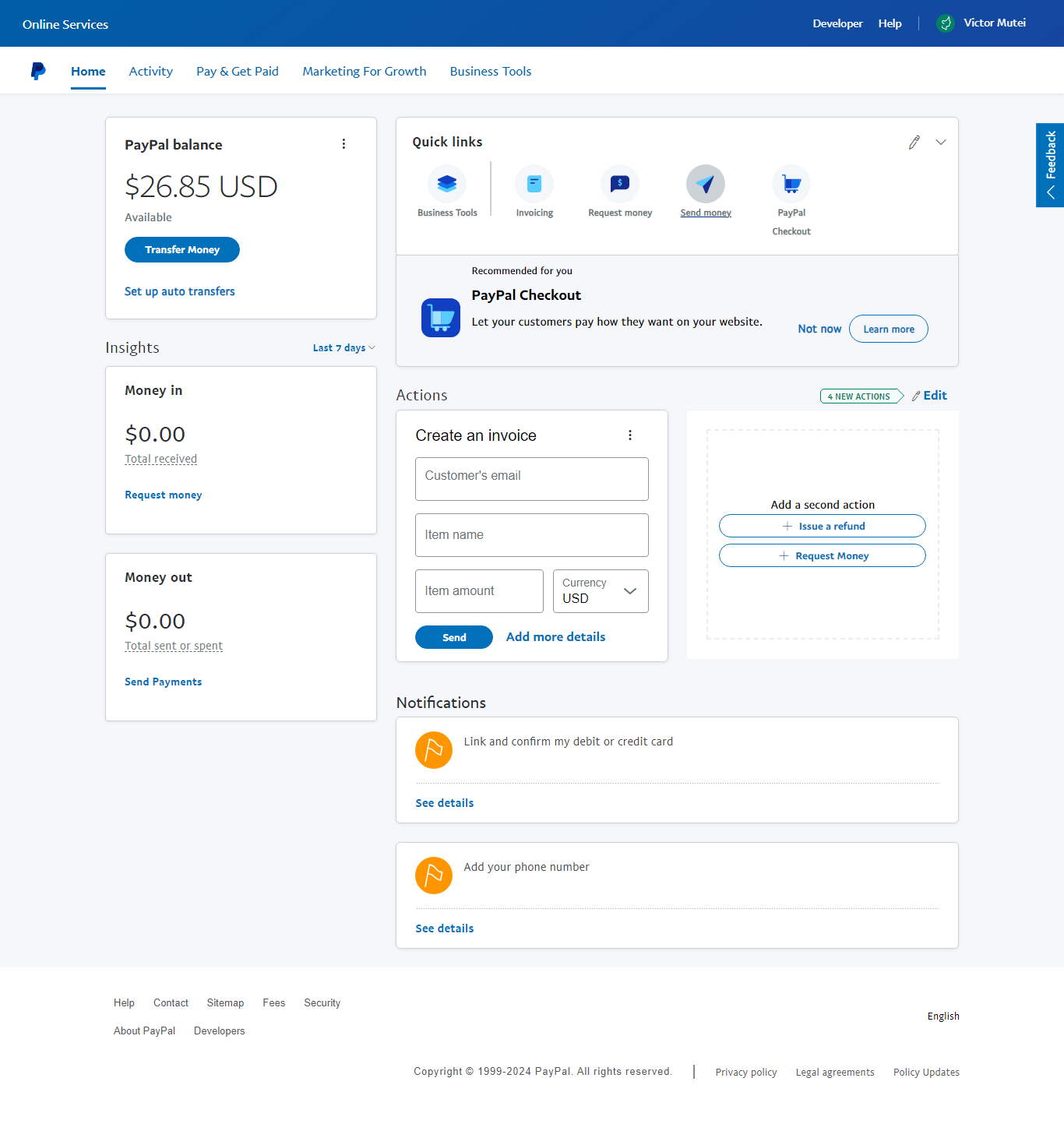
One of the most difficult aspects of personal finance is tracking “hidden” digital spending. PayPal provides a centralized ledger of every digital transaction, which can be exported into accounting software or spreadsheets. By using PayPal as your primary “online spending” gatekeeper, you can easily categorize your expenses at the end of the month. This clarity allows you to identify subscription fatigue—those recurring $9.99 charges you forgot about—and trim the fat from your monthly budget.
Utilizing PayPal Savings and Rewards
In recent years, PayPal has expanded into high-yield territory. For those looking to maximize their “lazy” money, PayPal’s internal savings features often offer competitive Annual Percentage Yields (APY) compared to traditional “big box” banks. By keeping a portion of your liquid capital within the PayPal ecosystem, you can earn interest while maintaining the ability to deploy that capital instantly for purchases. Additionally, leveraging PayPal’s cashback rewards and “Pay in 4” installments (when used responsibly) can help manage cash flow without dipping into long-term investment accounts.
4. Leveraging PayPal as a Business Growth Engine
For the entrepreneur, a PayPal account is more than a payment method; it is a suite of merchant services designed to accelerate the “Money In” phase of the business cycle.
Invoicing and International Receivables
If you are operating a side hustle or a professional service, the ability to get paid promptly is the lifeblood of your operation. PayPal’s invoicing tool allows you to create professional, tax-compliant invoices that clients can pay with a single click. For those working in the “Gig Economy,” the ability to receive international payments in multiple currencies—and choose when to convert them to your local currency—is a sophisticated way to manage foreign exchange (FX) risk. By timing your currency conversions, you can potentially save thousands in exchange rate fluctuations over the course of a fiscal year.
Accessing Working Capital and Business Loans
Perhaps the most overlooked financial benefit of having a seasoned PayPal Business Account is access to “PayPal Working Capital.” Unlike traditional bank loans that require a mountain of paperwork and credit checks, PayPal offers capital based on your historical sales volume on the platform. The repayments are automatically deducted as a percentage of your daily sales. This is a powerful tool for inventory financing or marketing pushes, as the repayment scales with your business’s actual performance, protecting you from fixed debt obligations during slow months.
5. Risk Management: Protecting Your Capital in the Digital Age
In the world of money, security is synonymous with wealth preservation. A PayPal account is only an asset if it is properly defended against external threats.
Implementing Multi-Factor Authentication (MFA)
The first line of defense for your digital capital is Multi-Factor Authentication. By requiring a secondary code—usually sent via an authenticator app or SMS—you ensure that even if your password is compromised, your funds remain inaccessible. In a professional finance context, failing to use MFA is an unacceptable risk. It is the digital equivalent of leaving your vault door unlocked.
Recognizing Phishing and Social Engineering
The greatest threat to your PayPal balance is rarely a technical hack; it is human error. “Phishing” emails that mimic PayPal’s branding are common tactics used to steal login credentials. From a financial literacy standpoint, it is crucial to remember that PayPal will never ask for your password or full financial details via email. Always navigate directly to the official website to manage your account. Furthermore, understanding “Buyer and Seller Protection” programs is essential for risk mitigation. These programs act as a form of transaction insurance, ensuring that if a deal goes south, your capital can be recovered through a formal dispute process.

Conclusion: The Strategic Value of the Digital Wallet
Getting a PayPal account is a simple task, but mastering a PayPal account is a financial strategy. By choosing the right account type, verifying your identity to ensure network integrity, and utilizing the platform’s advanced tools for budgeting, invoicing, and capital growth, you transform a simple app into a powerful financial engine.
As you move forward, view your PayPal account not just as a way to buy things, but as a dynamic ledger that tracks your progress toward financial independence. Whether you are saving your first $1,000 or processing your first $1,000,000 in sales, the digital infrastructure you build today will be the foundation of your financial security tomorrow. In the modern economy, your wealth is only as mobile as your tools allow it to be—and PayPal remains one of the most versatile tools in the investor’s and entrepreneur’s toolkit.
aViewFromTheCave is a participant in the Amazon Services LLC Associates Program, an affiliate advertising program designed to provide a means for sites to earn advertising fees by advertising and linking to Amazon.com. Amazon, the Amazon logo, AmazonSupply, and the AmazonSupply logo are trademarks of Amazon.com, Inc. or its affiliates. As an Amazon Associate we earn affiliate commissions from qualifying purchases.