
NVIDIA has been an undisputed titan in the technology sector for years, particularly with its dominant position in graphics processing units (GPUs) for gaming, professional visualization, and, most critically, artificial intelligence (AI) and data centers. Its stock has experienced phenomenal growth, often outperforming broader market indices and becoming a bellwether for the semiconductor industry and the AI revolution. Therefore, when NVIDIA’s stock experiences a significant downturn on any given day, it inevitably sparks concern and curiosity among investors, analysts, and the wider financial community.
Understanding why a high-profile stock like NVIDIA might decline requires a nuanced perspective that looks beyond mere headlines, delving into the intricate interplay of market forces, company-specific developments, and broader economic sentiment. It’s rarely a singular factor, but rather a convergence of influences that collectively impact investor confidence and trading activity.
Understanding Market Volatility and NVIDIA’s Investment Context
Stock market movements are inherently dynamic and often reflect a complex tapestry of investor expectations, economic indicators, and news flow. Even for companies with robust fundamentals and strong growth prospects, daily or weekly price fluctuations are a standard feature of investing. NVIDIA, despite its stellar performance over recent years, is not immune to these realities.
The Nature of Stock Market Fluctuations
The stock market operates on a principle of supply and demand, where stock prices reflect the collective perception of a company’s future earnings potential. Daily movements can be influenced by a myriad of factors, some rational and some purely emotional. Profit-taking after a significant run, short-term trading strategies, or reactions to general market sentiment can all contribute to a stock’s decline even in the absence of adverse company-specific news. Investors constantly re-evaluate their positions based on new information or shifting risk appetites, leading to natural ebbs and flows in share prices.
NVIDIA’s Recent Trajectory and High Valuation
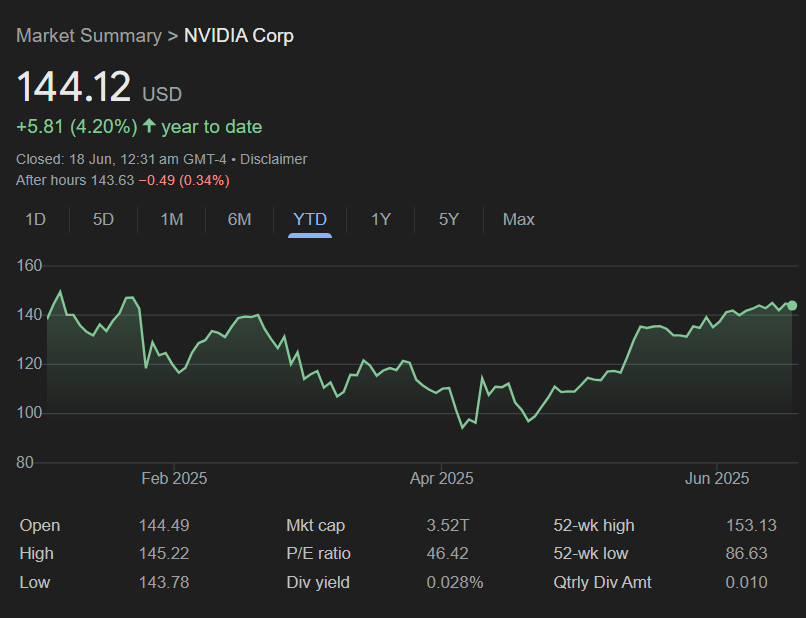
NVIDIA has been at the forefront of the AI revolution, with its GPUs becoming the essential infrastructure for training and deploying AI models. This strategic positioning, coupled with strong demand from data centers and continued relevance in gaming, has propelled its stock to unprecedented highs. Such rapid appreciation often leads to high valuation multiples (like Price-to-Earnings ratios), which, while justifiable during periods of explosive growth, also mean the stock can be particularly sensitive to any perceived threats to its growth trajectory. A high valuation implies high expectations, and even a slight miss or a hint of future slowdown can trigger a disproportionate sell-off as investors adjust their models.
Broader Market Sentiment and Macroeconomic Headwinds
Individual stock performance is rarely isolated from the broader market environment. A general market downturn, perhaps driven by rising interest rates, inflation concerns, geopolitical instability, or fears of an economic recession, can drag down even strong stocks. When investors become risk-averse, they tend to move capital out of growth-oriented, high-valuation stocks (like many tech companies, including NVIDIA) and into more defensive assets or sectors. Higher interest rates, in particular, tend to depress the valuation of growth stocks because they discount future earnings more heavily, making their projected cash flows less valuable in present terms.
Specific Factors Potentially Driving NVIDIA’s Decline
While general market conditions play a role, specific concerns related to NVIDIA’s business or its market positioning can often be the primary catalysts for a downward move. Pinpointing these requires careful analysis of recent news, financial reports, and industry trends.
Profit-Taking and Valuation Concerns
One of the most common reasons for a stock’s dip after a prolonged rally is simple profit-taking. After investors have seen substantial gains, some will decide to lock in those profits, leading to selling pressure. This is particularly true for short-term traders but also applies to institutional investors rebalancing their portfolios. Beyond profit-taking, there’s always an ongoing debate about NVIDIA’s valuation. While its growth has been undeniable, a sky-high Price-to-Earnings (P/E) ratio and other valuation metrics can lead some analysts and investors to question whether the stock is “overvalued” and ripe for a correction. Any hint that future growth might not meet the market’s aggressive expectations can trigger a re-evaluation of its fair value.
Macroeconomic Pressures and Sector Rotation
Beyond general market sentiment, specific macroeconomic pressures can weigh heavily on NVIDIA. For instance, if there are increasing fears of a global economic slowdown or recession, this could impact demand for both enterprise hardware (data centers) and consumer electronics (gaming GPUs). Corporate spending on IT infrastructure might slow, and discretionary consumer spending on high-end GPUs could decrease. Similarly, in a rising interest rate environment, investors might rotate out of high-growth, long-duration assets like tech stocks and into sectors that are more resilient to economic downturns or offer immediate cash flows (e.g., utilities, consumer staples, financials).
Competitive Landscape Shifts and Market Share Dynamics
While NVIDIA holds a commanding lead in many of its segments, particularly high-end AI chips, the competitive landscape is never static. Rivals like AMD are continually innovating and striving to gain market share in both gaming and data center GPUs. Furthermore, large cloud providers and tech giants (e.g., Google with its TPUs, Amazon with Inferentia/Trainium) are increasingly developing their own custom AI chips, which could reduce their reliance on NVIDIA’s offerings over the long term. Any news suggesting increased competition, a shift in customer preference, or a loss of market share in a critical segment could cause investors to reassess NVIDIA’s future revenue streams and profitability.
Analyst Revisions and News-Specific Triggers
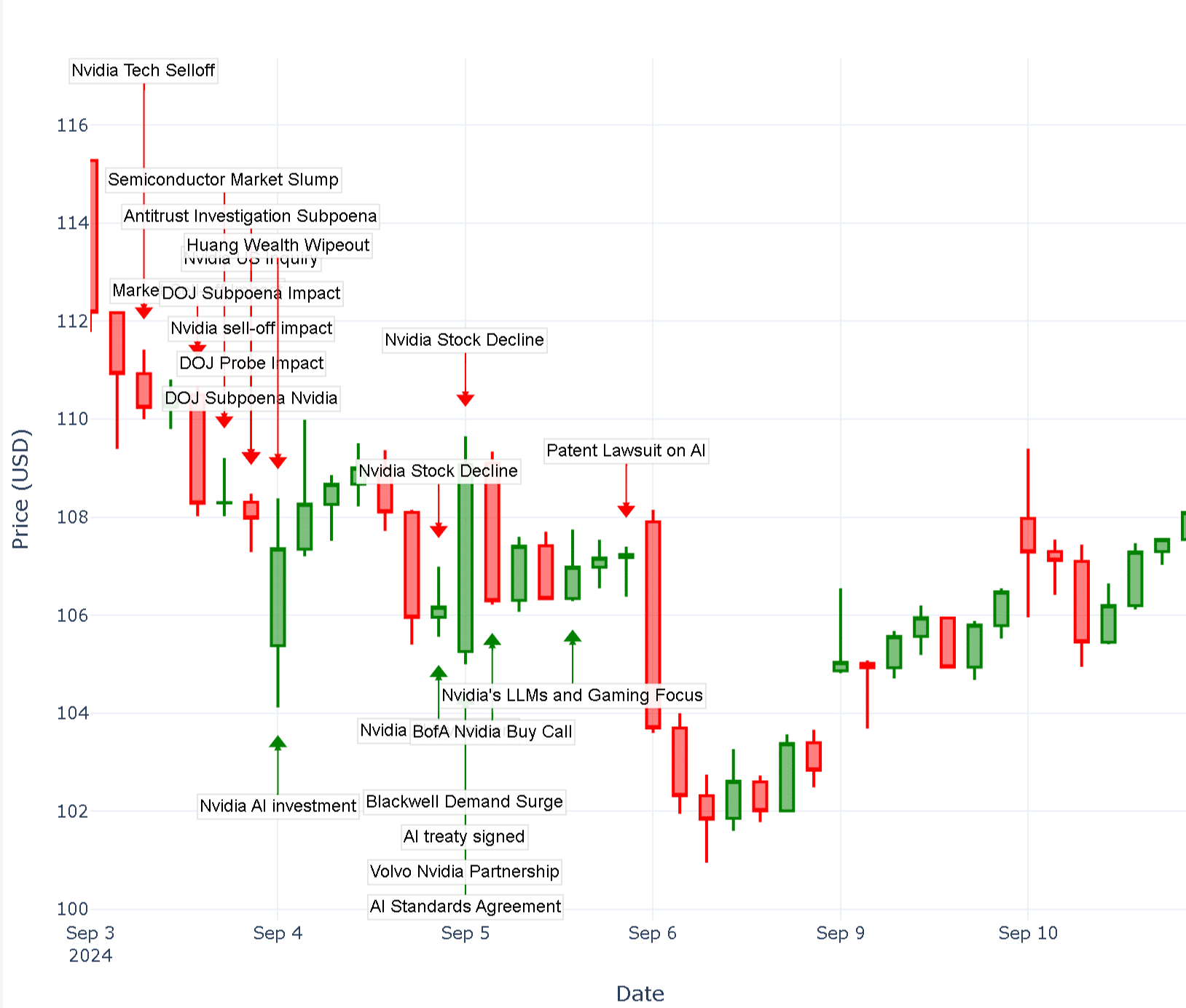
Analyst ratings and price targets can significantly influence investor sentiment. If a prominent analyst firm issues a downgrade, lowers a price target, or expresses concerns about NVIDIA’s prospects, it can trigger a wave of selling. Similarly, specific news events can act as immediate catalysts. This could include:
- A weaker-than-expected earnings report or guidance: Even if the company beats expectations, a conservative outlook for the next quarter can be enough to spook investors.
- Regulatory scrutiny: Concerns about antitrust issues, export controls (especially with China), or other governmental interventions could create uncertainty.
- Product launch disappointments: While rare for NVIDIA, a new product that fails to meet market expectations or faces unexpected delays could lead to a negative reaction.
- Supply chain disruptions: Persistent issues in the semiconductor supply chain can impact production, lead times, and ultimately sales.
Without a specific news event on the day of the decline, it’s often a combination of these underlying factors contributing to a more cautious investor stance.
The Long-Term vs. Short-Term Perspective for Investors
For long-term investors, distinguishing between transient market noise and fundamental shifts in a company’s prospects is crucial. A single day’s or week’s stock movement rarely signifies a terminal change in a robust company’s intrinsic value.
Differentiating Noise from Fundamental Shifts
Short-term stock movements are often influenced by temporary factors such as market sentiment, algorithmic trading, profit-taking, or reactions to minor news. These “noise” factors typically do not reflect changes in a company’s core business operations, its technological advantage, or its long-term growth potential. A true fundamental shift, conversely, would involve a significant alteration in NVIDIA’s competitive position, its market demand, its ability to innovate, or its financial health. Investors should ask whether the reasons for the stock’s decline genuinely undermine NVIDIA’s strategic advantages in AI, data centers, and high-performance computing.
Evaluating NVIDIA’s Core Business Strengths
Despite daily fluctuations, NVIDIA’s underlying business strengths remain formidable. The company is a leader in GPU technology, which is fundamental to the accelerating growth of AI and machine learning across virtually every industry. Its CUDA platform offers a powerful ecosystem that locks in developers and enterprises, creating a significant competitive moat. Furthermore, its continued innovation in areas like generative AI, omniverse, and enterprise software platforms suggests a forward-looking strategy that extends beyond hardware sales. A daily dip doesn’t erode these foundational elements unless accompanied by concrete evidence of a structural breakdown in these areas.
Importance of Due Diligence and Investment Thesis
For both existing and prospective investors, a stock’s decline should prompt a re-evaluation of their original investment thesis rather than a panicked reaction. This involves:
- Reviewing financial statements: Are revenues still growing robustly? Are profit margins holding up?
- Assessing competitive landscape: Has a new competitor emerged that fundamentally threatens NVIDIA’s dominance?
- Understanding technological trends: Is NVIDIA still at the cutting edge of AI and related technologies?
- Evaluating valuation: Even after a dip, does the stock still present a compelling value proposition based on future earnings potential?
A dip could simply be a recalibration of market expectations or a temporary correction. For those who believe in NVIDIA’s long-term growth story, such periods can sometimes even represent opportunities.
What This Means for Investors
The immediate reaction to a stock like NVIDIA being down can vary significantly depending on an investor’s current position, risk tolerance, and investment horizon. Understanding the implications for different types of investors is key to navigating such market events rationally.
For Existing Shareholders
For those who already own NVIDIA stock, a downturn presents a moment for introspection. It’s crucial not to make emotional decisions. Instead, existing shareholders should revisit their original reasons for investing. Has anything fundamentally changed about NVIDIA’s business or its industry position that invalidates their long-term thesis? If the answer is no, and the decline is primarily due to broader market sentiment or short-term profit-taking, then holding the position might be the appropriate strategy. Some long-term investors might even consider “dollar-cost averaging” by buying more shares at a lower price, thereby reducing their average cost per share. However, if new information suggests a genuine deterioration in the company’s prospects, a re-evaluation of the position might be warranted.
For Prospective Investors
For individuals contemplating an investment in NVIDIA, a significant dip can be perceived in two ways: as a potential buying opportunity or as a red flag. A lower price might make the stock more attractive from a valuation perspective, especially if the underlying growth narrative remains strong. However, prospective investors must exercise caution. A decline can sometimes signal deeper, unacknowledged issues. Therefore, it’s imperative to conduct thorough due diligence, research the specific reasons for the downturn, and form an independent view on the company’s future prospects and fair value. Avoid chasing the dip without understanding the complete picture; instead, focus on whether the reduced price aligns with a well-researched long-term investment strategy.
Risk Management and Diversification
Regardless of a stock’s individual performance, sound investment principles emphasize risk management and diversification. No single stock, regardless of its strength, should constitute an excessively large portion of an investment portfolio. Market downturns, even for powerful companies like NVIDIA, underscore the importance of having a diversified portfolio across different sectors, asset classes, and geographies. This strategy helps to mitigate the impact of any single stock’s poor performance and provides a more stable overall investment journey. Furthermore, understanding one’s own risk tolerance is critical; highly volatile stocks like NVIDIA, even with their growth potential, may not be suitable for all investors.
In conclusion, a daily decline in NVIDIA’s stock price, while potentially unsettling, is a normal occurrence in the volatile world of investing. It can stem from a variety of factors, ranging from routine profit-taking and broader macroeconomic pressures to specific concerns about competition or valuation. For investors, the key lies in understanding these underlying drivers, distinguishing between short-term noise and long-term fundamental shifts, and aligning any decisions with a well-researched investment thesis and a disciplined approach to risk management. NVIDIA’s long-term trajectory will ultimately be determined by its continued innovation, its ability to capitalize on the AI revolution, and its capacity to fend off emerging competition, rather than by a single day’s market performance.
aViewFromTheCave is a participant in the Amazon Services LLC Associates Program, an affiliate advertising program designed to provide a means for sites to earn advertising fees by advertising and linking to Amazon.com. Amazon, the Amazon logo, AmazonSupply, and the AmazonSupply logo are trademarks of Amazon.com, Inc. or its affiliates. As an Amazon Associate we earn affiliate commissions from qualifying purchases.