
When an investor asks, “What is the Nasdaq today?” they are rarely looking for a simple dictionary definition. In the modern financial landscape, the Nasdaq represents the pulse of innovation, a barometer for the global tech economy, and a critical component of millions of retirement portfolios. Whether the ticker is flashing green or red, the Nasdaq is more than just a list of stocks; it is a complex ecosystem that dictates the flow of trillions of dollars in capital.
To understand the Nasdaq today, one must look beyond the daily price fluctuations and delve into its structure, its influence on the broader market, and the strategic role it plays in a diversified investment portfolio.
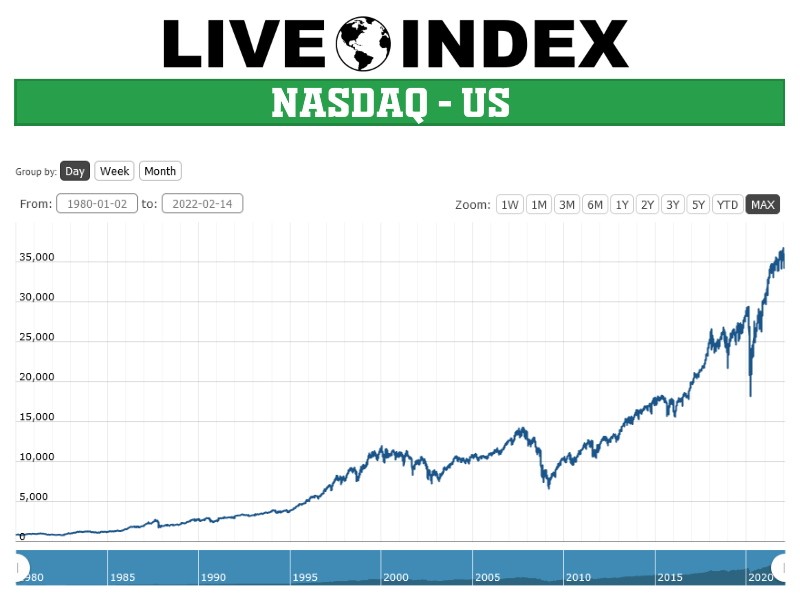
Understanding the Nasdaq: More Than Just a Stock Market
The term “Nasdaq” is often used interchangeably to describe two different but related entities: the Nasdaq Stock Market (the exchange) and the Nasdaq Composite (the index). Understanding the distinction is the first step for any serious investor looking to navigate the financial markets.
The Difference Between the Nasdaq Exchange and the Nasdaq Composite
The Nasdaq Stock Market began in 1971 as the world’s first electronic stock market. Unlike the New York Stock Exchange (NYSE), which historically relied on a physical trading floor, the Nasdaq was built on a computerized system that allowed for faster, more transparent trading. Today, it is the second-largest exchange in the world by market capitalization.
The Nasdaq Composite, on the other hand, is an index that tracks more than 3,000 stocks listed on the Nasdaq exchange. When news anchors report that “the Nasdaq is up 2%,” they are referring to the performance of this index. It is heavily weighted toward technology, consumer services, and health care, making it the primary benchmark for the “new economy.”
Why the Nasdaq-100 Matters to Individual Investors
While the Composite index tracks thousands of companies, the Nasdaq-100 is often the more relevant tool for retail investors. This index consists of the 100 largest non-financial companies listed on the Nasdaq. Because it excludes banks and investment firms, the Nasdaq-100 is a concentrated dose of growth and innovation.
For the modern investor, the Nasdaq-100 represents the “blue chips” of the 21st century. It includes the titans of industry—companies that have reshaped how we communicate, shop, and work. Monitoring this index provides a clearer picture of how high-growth sectors are performing compared to the broader, more traditional market.
How to Interpret Nasdaq Performance in Today’s Economy
Checking the Nasdaq’s daily performance is a ritual for many, but the numbers require context. The Nasdaq is notoriously more volatile than the Dow Jones Industrial Average or the S&P 500. This volatility is a byproduct of its composition: growth stocks.
Analyzing Daily Fluctuations and Price Action
Growth stocks—companies expected to grow at a rate significantly above the average for the market—are the backbone of the Nasdaq. These stocks are priced based on their future earnings potential rather than their current dividends. As a result, any news that shifts the outlook for the future can cause significant price action.
When analyzing the Nasdaq today, investors look for “support” and “resistance” levels. If the index is trending upward, it suggests a “risk-on” environment where investors are confident in future economic expansion. Conversely, a sharp drop in the Nasdaq often signals a flight to safety, where capital moves out of tech and into more stable assets like gold or government bonds.
The Role of Interest Rates and Inflation on Growth Stocks
One of the most significant factors affecting the Nasdaq today is the trajectory of interest rates set by central banks, such as the Federal Reserve. Because many Nasdaq companies rely on borrowing to fund research and development, higher interest rates increase their cost of doing business.
Furthermore, because growth stocks are valued on future cash flows, a rise in inflation makes those future dollars less valuable today. This is why the Nasdaq often reacts more violently to Consumer Price Index (CPI) reports or Federal Reserve announcements than other indices. Understanding this relationship is crucial for managing a “Money” focused portfolio; it allows an investor to anticipate swings based on the macroeconomic climate.
Key Drivers of the Nasdaq: The Influence of Big Tech and Innovation

To understand why the Nasdaq moves the way it does, one must look at the “heavy hitters” at the top of the index. The Nasdaq is a market-capitalization-weighted index, meaning the largest companies have the most significant impact on its daily movement.
The Impact of the “Magnificent Seven”
In recent years, a small group of companies—often dubbed the “Magnificent Seven” (including Apple, Microsoft, Alphabet, Amazon, Nvidia, Meta, and Tesla)—have come to dominate the Nasdaq’s performance. When these companies report strong earnings, the entire index can soar, even if hundreds of smaller companies are struggling.
For the individual investor, this concentration presents both an opportunity and a risk. On one hand, these companies possess massive “moats” and incredible cash reserves. On the other hand, if a single sector—like Artificial Intelligence or Cloud Computing—faces a setback, the Nasdaq can experience a disproportionate decline. Keeping an eye on the quarterly earnings of these giants is essential for understanding “what the Nasdaq is today.”
Beyond Software: Biotechnology and Green Energy in the Index
While “Nasdaq” is often synonymous with “Tech,” it is also a vital home for the biotechnology and renewable energy sectors. The Nasdaq Biotechnology Index is a key sub-sector that tracks companies involved in drug discovery and medical research.
These sectors add a layer of complexity to the Nasdaq’s financial profile. Biotech stocks are often “binary”—they either succeed or fail based on clinical trial results or FDA approvals. This contributes to the Nasdaq’s reputation as a high-reward, high-risk environment, attracting investors who are looking for exponential growth rather than steady dividends.
Practical Strategies for Investing in the Nasdaq
Knowing what the Nasdaq is is only half the battle; the other half is knowing how to use that information to build wealth. Because you cannot invest directly in an index, you must use financial tools designed to track its performance.
Exchange-Traded Funds (ETFs) and Passive Growth
For most individual investors, the most efficient way to gain exposure to the Nasdaq is through Exchange-Traded Funds (ETFs). The most famous of these is the Invesco QQQ Trust, which tracks the Nasdaq-100.
Investing in a Nasdaq-based ETF allows for instant diversification across 100 of the world’s most innovative companies. It eliminates the “single-stock risk” associated with picking individual winners and losers. Over the last decade, the Nasdaq-100 has consistently outperformed more traditional indices, making it a favorite for those with a long-term time horizon and a higher tolerance for volatility.
Managing Volatility in a Tech-Heavy Portfolio
Because the Nasdaq is prone to “corrections” (drops of 10% or more), investors must employ sound financial strategies to protect their capital. Dollar-cost averaging—investing a fixed amount of money at regular intervals—is a particularly effective strategy for the Nasdaq. It allows investors to buy more shares when prices are low and fewer when prices are high, smoothing out the cost basis over time.
Additionally, many investors use the Nasdaq as the “growth engine” of their portfolio while balancing it with “value” stocks or fixed-income assets. This “barbell strategy” ensures that while you participate in the upside of the next technological revolution, your entire net worth isn’t at the mercy of a single market downturn.
The Future of the Nasdaq: Digital Transformation and Market Evolution
The Nasdaq today is a reflection of the global shift toward a digital-first economy. As we look forward, the composition of the index will likely continue to evolve, reflecting the next wave of financial and technological breakthroughs.
The Shift Toward AI and Automation
We are currently witnessing a massive reallocation of capital toward Artificial Intelligence (AI). This shift is being led by Nasdaq-listed companies that provide the hardware (chips), the infrastructure (cloud computing), and the software (generative models) required for the AI era. As AI becomes integrated into every sector—from finance to manufacturing—the Nasdaq will likely remain the primary theater where this value is captured.

Global Reach and the Modern Investor
Finally, the Nasdaq has become a global brand. While it is an American exchange, the companies listed on it generate a massive portion of their revenue overseas. This means that when you invest in the Nasdaq, you are essentially betting on the growth of the global middle class and the continued adoption of digital services worldwide.
For the modern investor, the Nasdaq is not just a ticker on a screen. It is a dynamic, ever-changing map of where the world’s money is going. By understanding its mechanics, its drivers, and its risks, you can better position yourself to benefit from the innovations that define our era. Whether the market is up or down today, the Nasdaq remains the premier destination for those looking to invest in the future of the global economy.
aViewFromTheCave is a participant in the Amazon Services LLC Associates Program, an affiliate advertising program designed to provide a means for sites to earn advertising fees by advertising and linking to Amazon.com. Amazon, the Amazon logo, AmazonSupply, and the AmazonSupply logo are trademarks of Amazon.com, Inc. or its affiliates. As an Amazon Associate we earn affiliate commissions from qualifying purchases.