
For most individuals, a home is the most significant purchase they will ever make. Consequently, the interest rate attached to that purchase is one of the most critical numbers in their financial life. But the question “What is a good mortgage interest rate?” does not have a static answer. A rate that seemed astronomical in 2021 might look like a bargain in 2024.
To understand what constitutes a “good” rate, one must look beyond the simple percentage and examine the intersection of macroeconomic trends, personal financial health, and the specific terms of the loan. In this guide, we will dissect the variables that define a competitive rate in the current market and how you can position yourself to secure the best possible terms.
Understanding the Definition of a “Good” Mortgage Rate in Today’s Economy
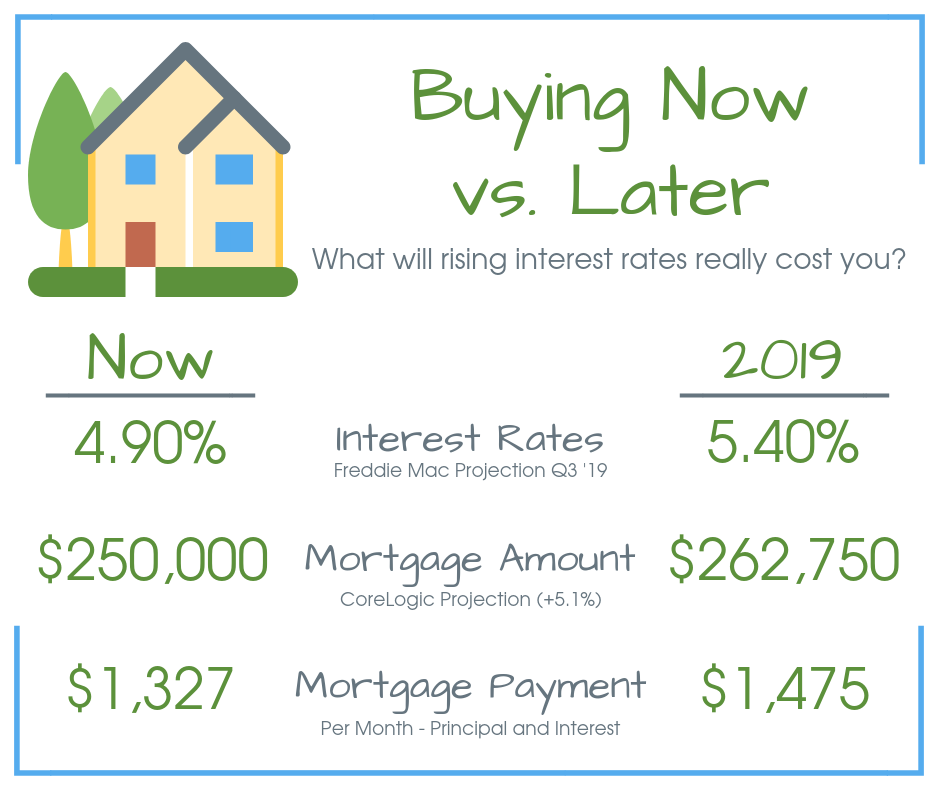
A “good” mortgage rate is a moving target. It is fundamentally defined by the current economic environment. To determine if a quote is competitive, you must first establish a baseline using national averages and historical context.
The Historical Context: Where We Are vs. Where We’ve Been
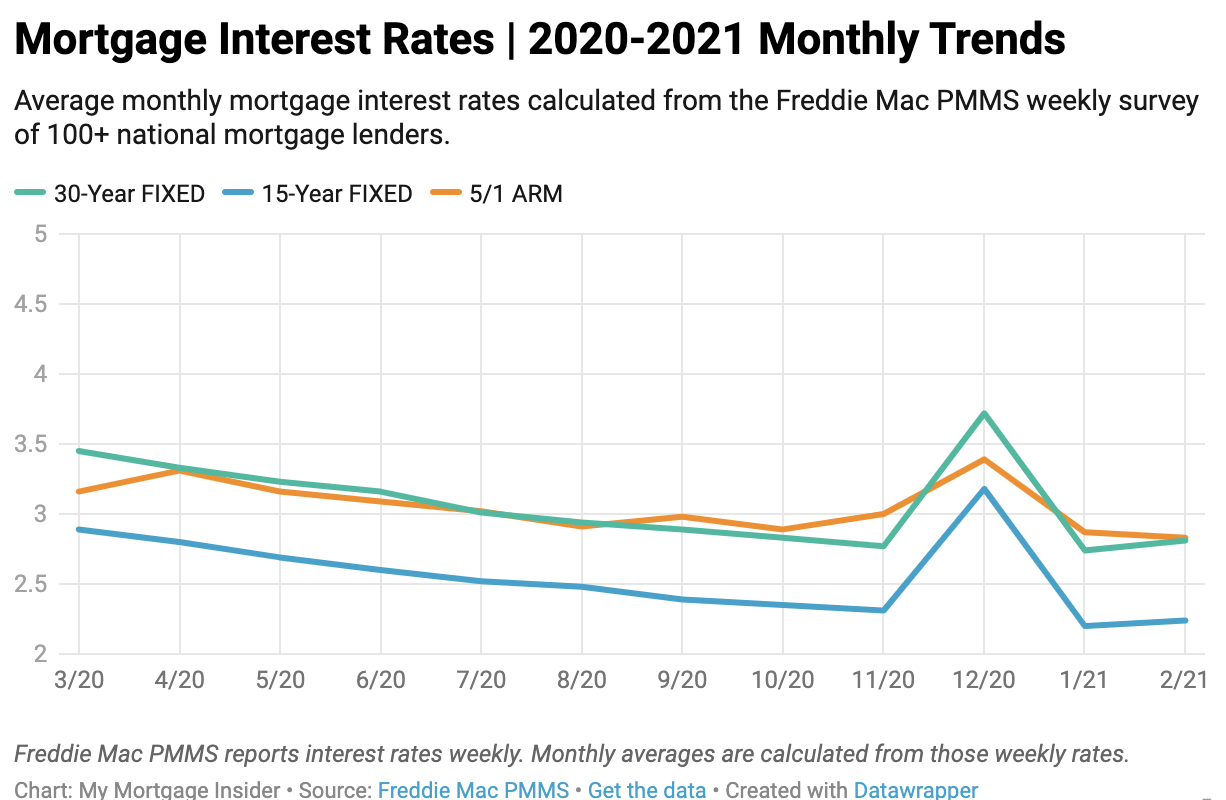
To put modern rates into perspective, we must look at the long-term history of the U.S. housing market. In the early 1980s, mortgage rates peaked at over 18%. Conversely, during the COVID-19 pandemic, rates plummeted to historic lows of 2.5% to 3%.
In the current landscape, the era of “free money” has ended. As the Federal Reserve adjusted its policy to combat inflation, rates shifted into a new range, typically oscillating between 6% and 7.5%. Therefore, in today’s market, a “good” rate is generally anything that sits at or slightly below the current national average for your specific loan type. Comparing a 6.5% rate today to a 3% rate from three years ago is counterproductive; instead, compare it to the 7% average of last month.
The Federal Reserve’s Role in Shaping Market Benchmarks
While the Federal Reserve does not set mortgage rates directly, its influence is absolute. The Fed sets the federal funds rate—the rate at which banks borrow from each other. When this rate rises, the cost of doing business for lenders increases, which is then passed on to consumers in the form of higher mortgage interest rates.
Additionally, mortgage rates are closely tied to the yield on the 10-year Treasury note. Investors view mortgages as a similar asset class to bonds. When Treasury yields rise due to economic strength or inflation concerns, mortgage rates typically follow suit. A “good” rate is one that tracks closely with these benchmarks without excessive “spread” or profit margin added by the lender.
The Core Factors That Determine Your Personalized Interest Rate
Lenders do not offer the same rate to everyone. The rate you see advertised on a billboard is usually reserved for “perfect” borrowers. Your personalized rate is a reflection of the risk the lender perceives in lending to you.
Credit Score: The Foundation of Financial Trust
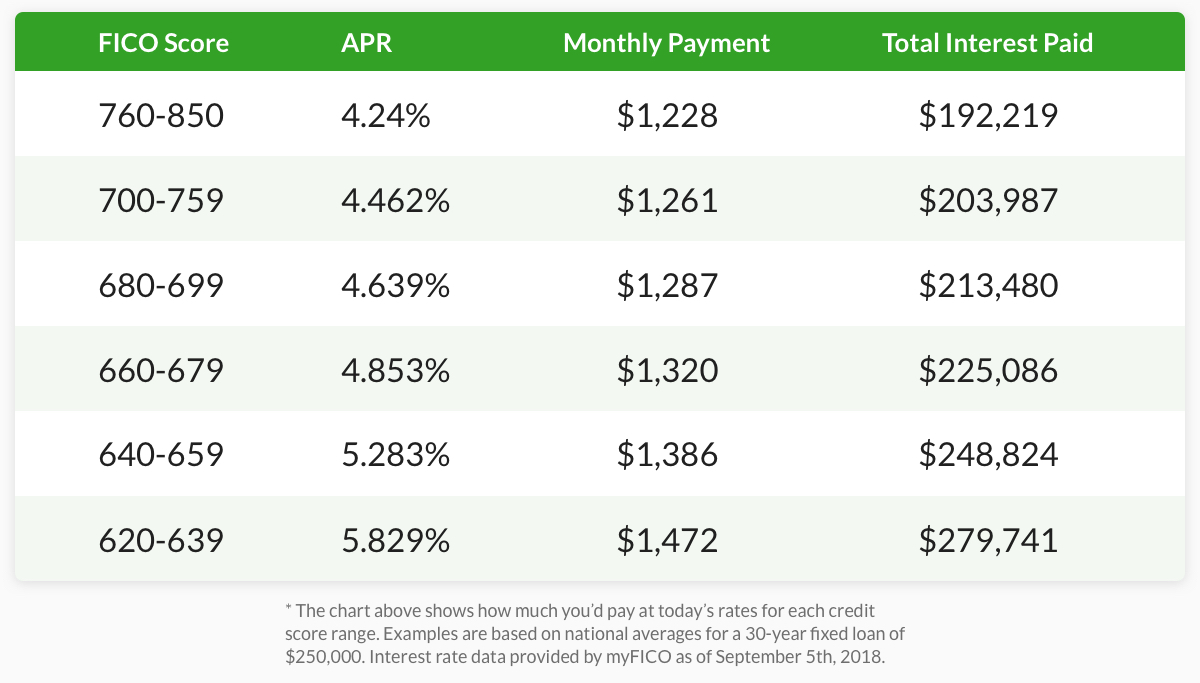
Your credit score is arguably the most impactful factor in determining your interest rate. Lenders use the FICO score to categorize borrowers into tiers. Generally, a score of 740 or higher is required to access the lowest advertised rates.
If your score falls into the “fair” range (620–670), you may find that your quoted rate is 0.5% to 1.5% higher than the prime rate. Over a 30-year loan, this seemingly small gap can result in over $100,000 in additional interest payments. Therefore, a “good” rate for someone with a 640 score is very different from a “good” rate for someone with an 800 score.
Loan-to-Value (LTV) Ratio and Down Payments
The LTV ratio represents how much of the home’s value you are borrowing versus how much you own outright via your down payment. A lower LTV (meaning a higher down payment) reduces the lender’s risk.
If you provide a 20% down payment, you reach the “magic number” that eliminates the need for Private Mortgage Insurance (PMI) and often unlocks lower interest rate tiers. If you are only putting 3% or 5% down, the lender compensates for the increased risk of default by slightly increasing the interest rate.
Debt-to-Income (DTI) Ratio and Loan Term Length
Lenders look at your DTI to ensure you aren’t overextended. A DTI below 36% is ideal, though some programs allow up to 43% or even 50%. A high DTI can lead to a higher interest rate because the lender fears a single financial hiccup could cause you to miss payments.
Furthermore, the length of the loan matters. A 15-year fixed-rate mortgage almost always carries a lower interest rate than a 30-year mortgage because the lender is exposed to market volatility for a shorter period. If you can afford the higher monthly payments of a 15-year term, you can secure a significantly “better” rate.
Different Loan Types and Their Impact on Your Rate
Not all mortgages are created equal. The type of loan product you choose will dictate the base interest rate before your personal finances are even considered.
Conventional vs. Government-Backed Loans (FHA, VA, USDA)
Conventional loans are the standard, but they often have stricter credit and down payment requirements. For those who don’t qualify for the best conventional rates, government-backed loans are an alternative.
FHA (Federal Housing Administration) loans often have lower interest rates than conventional loans for borrowers with lower credit scores. However, they come with mandatory mortgage insurance premiums that can make the “effective” rate higher. VA (Veterans Affairs) loans often offer the best rates on the market with zero down payment, making them the gold standard for those who qualify.
Fixed-Rate vs. Adjustable-Rate Mortgages (ARMs)
A fixed-rate mortgage locks in your interest rate for the entire life of the loan. This provides stability but often starts at a higher rate than an ARM.
An Adjustable-Rate Mortgage (ARM) usually offers a lower “teaser” rate for an initial period (5, 7, or 10 years). After that, the rate fluctuates based on market indices. An ARM can be a “good” rate if you plan to sell the home or refinance before the introductory period ends, but it carries significant risk if market rates rise in the future.
Strategies to Secure the Lowest Possible Mortgage Rate
Securing a good rate isn’t just about having good credit; it’s about being a savvy consumer and negotiating effectively.
The Power of Rate Shopping and Comparison
Many homebuyers make the mistake of only talking to their primary bank. However, research from Freddie Mac shows that borrowers who get at least three quotes save an average of $1,500 over the life of the loan, while those who get five quotes save even more.
Different lenders—online lenders, credit unions, and retail banks—have different “appetites” for risk. A credit union might offer a better rate for a local resident, while a large online lender might have lower overhead costs that allow for more competitive pricing.
Buying Down the Rate: Understanding Mortgage Points
If you have extra cash at closing, you can “buy down” your interest rate using discount points. One point typically costs 1% of the total loan amount and reduces your interest rate by approximately 0.25%.
Determining if this is a “good” move depends on your “break-even point.” If paying $4,000 for a lower rate saves you $100 a month, it will take 40 months to break even. If you plan to stay in the home for 10 or 20 years, buying points is an excellent way to manufacture a better rate than the market is currently offering.
Timing the Market: When to Lock Your Rate
Mortgage rates change daily, sometimes even hourly. Once you find a rate you are happy with, you should consider a “rate lock.” This agreement with the lender guarantees your rate for a specific period (usually 30 to 60 days) while your loan is processed. If rates jump while you are in underwriting, you are protected. Some lenders also offer a “float-down” option, which allows you to take advantage of a lower rate if market conditions improve before you close.
Beyond the Percentage: Looking at APR and Total Cost of Ownership
Focusing solely on the interest rate can be a financial trap. To truly understand if you are getting a good deal, you must look at the “big picture.”
Why the APR Is More Important Than the Interest Rate
The interest rate is the cost of borrowing the principal balance. The Annual Percentage Rate (APR), however, includes the interest rate plus other costs like loan origination fees, mortgage insurance, and closing costs.
A lender might offer a “good” interest rate of 6.2% but charge high fees that push the APR to 6.8%. Another lender might offer a 6.4% interest rate with zero fees, resulting in a 6.4% APR. In this scenario, the higher interest rate is actually the better deal. Always use the APR to compare “apples to apples” when shopping for lenders.
Calculating the Long-Term Impact of a 1% Difference
To appreciate what a “good” rate truly means, consider the math. On a $400,000 30-year fixed mortgage:
- At a 6% interest rate, the monthly principal and interest payment is approximately $2,398.
- At a 7% interest rate, that payment jumps to $2,661.
That 1% difference costs an extra $263 per month. Over 30 years, that equates to an additional $94,680 in interest. When you view the rate through this lens, the effort spent improving your credit score or shopping for an extra week becomes clearly worth the investment.
In conclusion, a good mortgage interest rate is one that is lower than the current market average, fits within your monthly budget, and is optimized for your long-term housing plans. By understanding the economic forces at play and taking proactive steps to manage your financial profile, you can secure a rate that serves as a foundation for long-term wealth building rather than a financial burden.
aViewFromTheCave is a participant in the Amazon Services LLC Associates Program, an affiliate advertising program designed to provide a means for sites to earn advertising fees by advertising and linking to Amazon.com. Amazon, the Amazon logo, AmazonSupply, and the AmazonSupply logo are trademarks of Amazon.com, Inc. or its affiliates. As an Amazon Associate we earn affiliate commissions from qualifying purchases.