
The advent of cryptocurrency has sparked a global conversation that transcends the boundaries of traditional finance and computer science. At its core, cryptocurrency is not merely a digital version of the dollar or the euro; it is a sophisticated technological framework designed to solve one of the oldest problems in human interaction: trust. By leveraging a combination of peer-to-peer networking, cryptographic security, and decentralized consensus, cryptocurrency removes the need for centralized intermediaries like banks or governments. To understand how these digital assets operate, one must look beneath the price charts and market volatility to explore the underlying architecture that makes decentralized value transfer possible.
The Foundation: Distributed Ledger Technology and the Blockchain
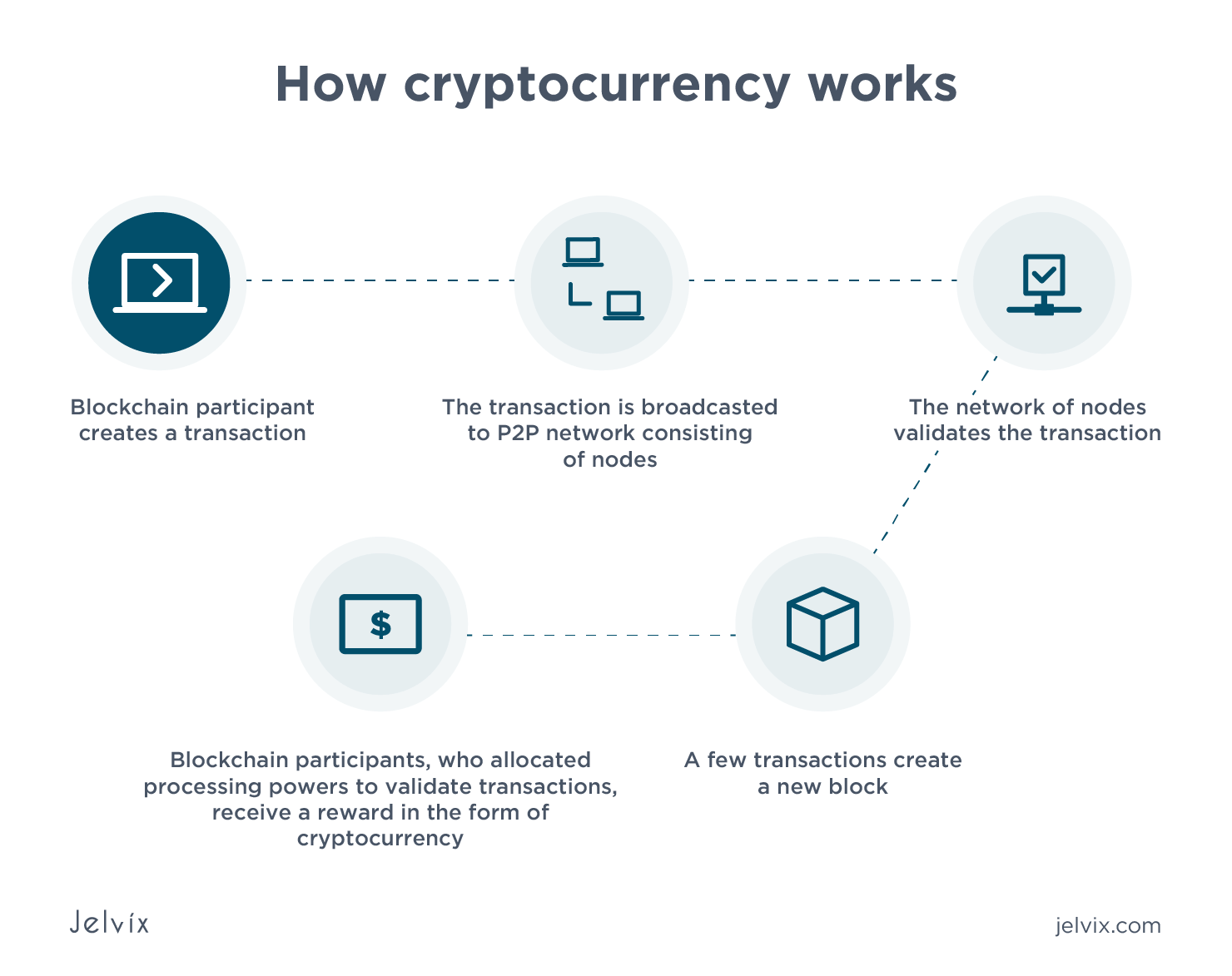
To grasp how cryptocurrency works, one must first understand the “ledger.” In traditional banking, a centralized ledger is a private database maintained by the bank to track who owns what. Cryptocurrency replaces this centralized model with Distributed Ledger Technology (DLT), specifically the blockchain.
The Structure of a Block
A blockchain is quite literally a chain of digital blocks. Each block contains a list of verified transactions. However, a block is more than just a data container; it consists of several technical components: the transaction data, a timestamp, and a “hash.” The hash is a unique digital fingerprint generated through a cryptographic function. Crucially, each block also contains the hash of the previous block. This creates a chronological link. If a single bit of data in an earlier block is altered, its hash changes, causing a “break” in the chain that is immediately visible to the entire network. This architecture ensures that once data is written, it becomes functionally immutable.
Decentralization: The Power of the P2P Network
Unlike a centralized server, a cryptocurrency network operates on a Peer-to-Peer (P2P) basis. Thousands of independent computers, known as “nodes,” maintain a copy of the entire blockchain. When a new transaction occurs, it is broadcast to all nodes simultaneously. This redundancy is the primary defense against systemic failure. If one server goes down or is compromised by a hacker, the rest of the network continues to operate, holding the “truth” of the ledger. This decentralized nature ensures that no single entity has the power to censor transactions, freeze accounts, or manipulate the supply of the asset.
Cryptographic Principles: Securing the Digital Frontier
The “crypto” in cryptocurrency refers to the advanced mathematics used to secure the network and verify transactions. Without cryptography, digital assets could easily be copied or spent multiple times—a problem known as “double-spending.”
Hashing Algorithms and Data Integrity
The integrity of a blockchain relies on hashing algorithms, such as SHA-256 (used by Bitcoin). A hashing function takes an input of any size and produces a fixed-length string of characters. This process is a “one-way street”: you can easily generate a hash from data, but you cannot reverse-engineer the original data from the hash. In the context of cryptocurrency, hashing ensures that the transaction history remains tamper-proof. Every node in the network continuously hashes the data; if a node attempts to broadcast a fraudulent block, the resulting hash will not match the mathematical requirements of the protocol, and the network will reject it.
Public-Key Cryptography: Wallets and Private Keys
Cryptocurrency uses “asymmetric” or public-key cryptography to manage ownership. Every user has a pair of keys: a public key and a private key.
- The Public Key: Think of this as your email address or a bank account number. It is safe to share with others so they can send you funds.
- The Private Key: This is akin to a digital signature or a highly secure password. It allows the owner to “sign” a transaction, proving they have the authority to move the funds associated with a specific public key.
When you “send” Bitcoin, you aren’t actually sending a file; you are using your private key to authorize the network to re-assign the ownership of a certain amount of value from your public address to someone else’s. The security of the entire system hinges on the fact that while the network can verify a signature using the public key, it is mathematically impossible to derive the private key from the public one.
Achieving Consensus: Proof of Work vs. Proof of Stake
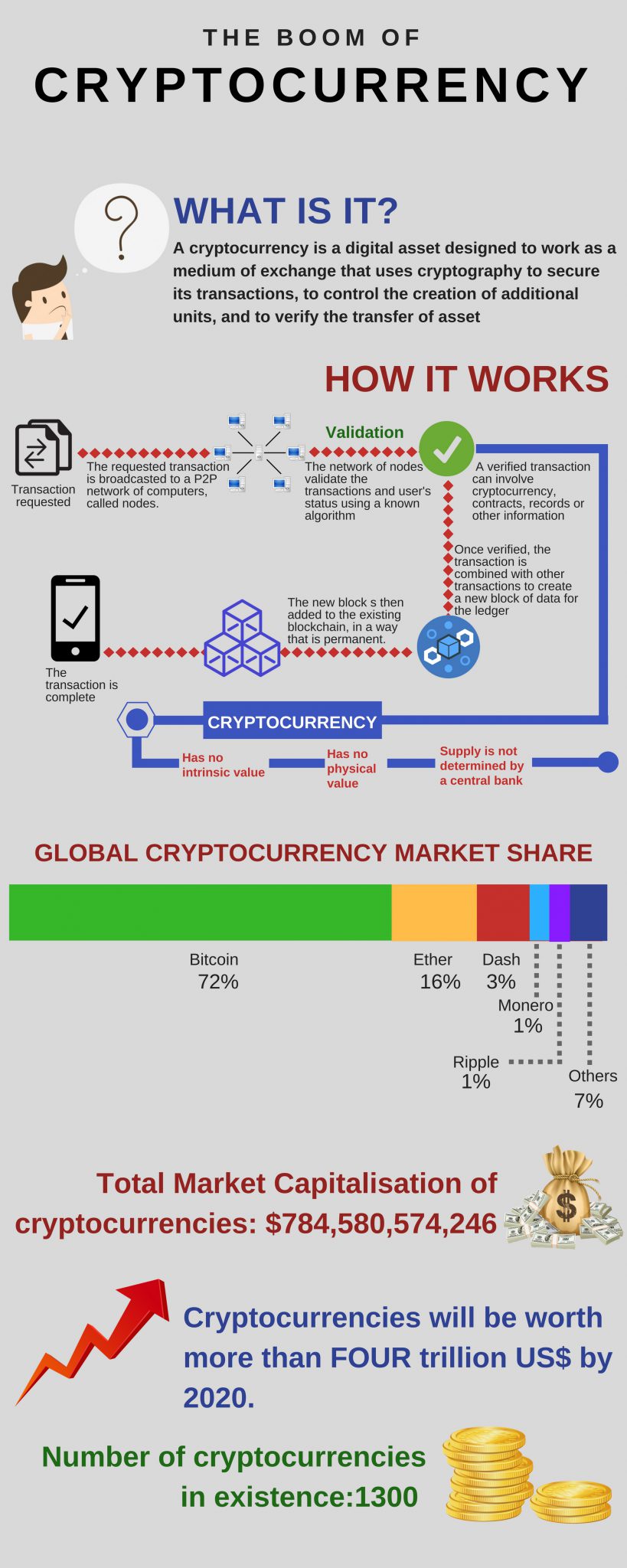
In a decentralized system, there is no boss to decide which transactions are valid. Instead, the network must reach a “consensus.” This is achieved through specific protocols that incentivize participants to act honestly.
Mining and the Proof of Work (PoW) Mechanism
Proof of Work was the first consensus mechanism, popularized by Bitcoin. In this system, “miners” compete to solve a complex mathematical puzzle. This puzzle is so difficult that it requires massive amounts of computational power and electricity. The first miner to solve the puzzle earns the right to add the next block to the blockchain and is rewarded with newly minted cryptocurrency.
The “work” serves as a security barrier. For an attacker to rewrite the blockchain, they would need to control more than 51% of the network’s total computing power—an endeavor so expensive that it is economically irrational. PoW is prized for its extreme security and proven track record, though it has faced criticism for its high energy consumption.
The Evolution to Proof of Stake (PoS)
As the tech evolved, Proof of Stake emerged as a more energy-efficient alternative, now famously used by Ethereum. In PoS, there are no miners. Instead, there are “validators.” To participate in securing the network, validators must “stake” (lock up) a certain amount of the network’s native cryptocurrency.
The protocol chooses a validator to create the next block based on the size of their stake and other factors. If a validator attempts to process fraudulent transactions, they lose their staked assets—a process called “slashing.” PoS reduces energy consumption by over 99% while maintaining security through economic incentives rather than raw computational force.
Smart Contracts and Programmable Money
While the first generation of cryptocurrency (Bitcoin) focused on the movement of value, the second generation (Ethereum and its successors) introduced the concept of “programmable money” through smart contracts.
The Role of the Ethereum Virtual Machine (EVM)
A smart contract is a self-executing contract with the terms of the agreement directly written into lines of code. These contracts live on the blockchain and execute automatically when predefined conditions are met. To run these scripts, networks like Ethereum utilize a “Virtual Machine”—a decentralized computer distributed across all nodes. This allows the blockchain to do more than just record transactions; it can execute complex logic, such as “If Person A delivers the digital asset, then release the payment to Person B.”
Automated Execution and Decentralized Applications (dApps)
Smart contracts are the building blocks of Decentralized Applications (dApps). These applications look and feel like regular apps but operate without a central authority. This has birthed entire ecosystems like Decentralized Finance (DeFi), where users can lend, borrow, and trade assets through automated protocols without ever needing a bank. Because the code is transparent and hosted on the blockchain, anyone can audit the “contract” to ensure it functions as promised, providing a level of transparency impossible in traditional software.
The Future of Crypto Infrastructure: Scalability and Layer 2 Solutions
As cryptocurrency technology matures, it faces the “Blockchain Trilemma”: the challenge of balancing security, decentralization, and scalability. Most base-layer blockchains (Layer 1) are slow because every node must verify every transaction to maintain security.
Solving the Blockchain Trilemma
To handle global levels of traffic, developers are moving beyond the base layer. If a blockchain is too decentralized, it is often slow; if it is too fast, it may become centralized. The tech industry is currently focused on “scaling” solutions that allow for thousands of transactions per second without compromising the core principles of the network.

Sidechains and Rollups
The most prominent solutions are Layer 2 protocols. These operate “on top” of the main blockchain. For example, “Rollups” bundle hundreds of transactions together, process them off-chain, and then post only a summary of the data back to the main blockchain (Layer 1). This significantly reduces the data load and lowers transaction fees. Other solutions, like the Lightning Network for Bitcoin, create private payment channels between users, settling only the final balance on the main ledger. These innovations are transforming cryptocurrency from a niche experimental technology into a robust, high-speed infrastructure capable of supporting the future of the digital economy.
In conclusion, cryptocurrency is a masterpiece of modern engineering. By synthesizing decades of research in cryptography and distributed systems, it provides a blueprint for a world where digital value and data can be managed with total transparency and without central points of failure. As the technology continues to evolve from simple value transfer to complex programmable ecosystems, its impact on the digital landscape will only deepen.
aViewFromTheCave is a participant in the Amazon Services LLC Associates Program, an affiliate advertising program designed to provide a means for sites to earn advertising fees by advertising and linking to Amazon.com. Amazon, the Amazon logo, AmazonSupply, and the AmazonSupply logo are trademarks of Amazon.com, Inc. or its affiliates. As an Amazon Associate we earn affiliate commissions from qualifying purchases.