
In the complex landscape of modern finance, the requirements of individuals with significant capital often exceed the capabilities of traditional retail banking. As personal assets grow, the need for a more sophisticated, integrated, and personalized approach to financial management becomes paramount. This is where wealth banking—often referred to as private banking or high-net-worth wealth management—enters the fold. Unlike standard banking, which focuses on transactional efficiency and mass-market products, wealth banking is a bespoke service designed to preserve, grow, and transition wealth across generations.
At its core, wealth banking is a holistic financial ecosystem. It combines investment services, tax planning, legal advice, and everyday banking into a single, seamless experience. For the affluent individual, it represents a shift from being a “customer” of a bank to being a “client” with a dedicated team of experts focused on long-term fiscal health.

Defining Wealth Banking and Its Core Objectives
Wealth banking is a specialized branch of the financial services industry dedicated to high-net-worth individuals (HNWIs) and ultra-high-net-worth individuals (UHNWIs). It is characterized by a high degree of personalization and a wide array of services that go far beyond simple checking and savings accounts. The primary objective is not just to provide a place to store money, but to develop a strategic roadmap for an individual’s entire financial life.
Beyond Basic Savings: A Holistic Approach
The defining feature of wealth banking is its holistic nature. In a standard banking environment, services are often siloed: you speak to one person about a mortgage, another about a credit card, and perhaps a third about a basic retirement account. In wealth banking, these elements are synthesized. A wealth manager looks at how a client’s real estate debt affects their tax liability, how their investment portfolio impacts their philanthropic goals, and how their liquid cash reserves can be leveraged for opportunistic acquisitions. This “big picture” perspective ensures that every financial decision moves the client closer to their ultimate objectives.
The Target Audience: Who Qualifies for Wealth Banking?
Wealth banking is an exclusive tier of service, typically gated by minimum “investable assets.” While definitions vary by institution, most wealth banking divisions require a minimum of $1 million in liquid assets (excluding primary residence). Some elite global firms set the bar at $5 million, $10 million, or even higher for their “private office” segments. The reason for these thresholds is the high cost of providing such personalized service; the bank assigns dedicated relationship managers and specialists whose time is focused on a small, select group of clients.
The Suite of Services: More Than Just Investing
While investment management is a significant component of wealth banking, it is only one piece of the puzzle. A true wealth banking relationship provides a 360-degree view of the client’s financial world, offering specialized services that address the complexities of significant capital.
Strategic Investment Management and Asset Allocation
Investment management in this niche is far more sophisticated than simply buying stocks and bonds. Wealth bankers provide access to institutional-grade research and exclusive investment vehicles. This includes “discretionary” mandates, where the bank manages the portfolio based on agreed-upon goals, and “non-discretionary” services, where the client retains final approval on all trades. The focus is on strategic asset allocation—balancing traditional equities with fixed income, commodities, and alternative assets to optimize the risk-return profile.
Tax Optimization and Legal Structuring
For the wealthy, it is often not about how much you earn, but how much you keep. Wealth banking involves close collaboration with tax professionals to ensure that investment structures are fiscally efficient. This might involve the use of trusts, offshore accounts (where legal and appropriate), or tax-loss harvesting strategies. By coordinating with legal experts, wealth bankers help clients navigate the complexities of cross-border tax laws and corporate structures, ensuring that the client’s wealth is protected from unnecessary erosion.
Estate Planning and Generational Wealth Transfer
One of the most critical aspects of wealth banking is the focus on legacy. Wealthy individuals are often concerned with how their assets will be distributed to future generations or charitable causes. Wealth banking teams assist in creating comprehensive estate plans, establishing family foundations, and setting up trusts that dictate how and when beneficiaries receive funds. This process often includes “family governance” meetings, where the bank helps educate the next generation on financial literacy and the responsibilities that come with inherited wealth.
The Hierarchy of Banking: Retail vs. Premier vs. Wealth Banking
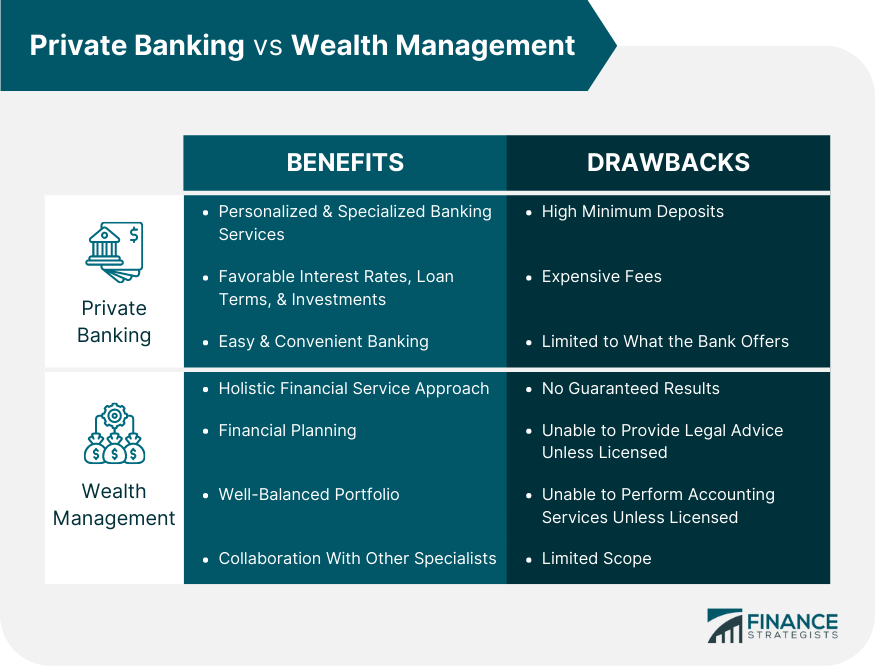
To understand the value of wealth banking, it is helpful to view it within the broader hierarchy of financial services. Banks typically categorize their clients into tiers based on their balance sheets, with each tier offering an increasing level of service and sophistication.
Understanding the Entry Thresholds
The base of the pyramid is Retail Banking, which serves the general public. Here, products are standardized, and service is mostly self-managed or provided by generalists. Above this is Premier or Preferred Banking. This is a middle-tier service for “mass-affluent” clients (typically with $100,000 to $500,000 in assets). Premier clients might get a dedicated phone line, waived fees, and slightly better interest rates, but the advice remains relatively product-driven. Wealth Banking (Private Banking) sits at the top of the pyramid. It is distinguished not just by the amount of money involved, but by the transition from “product sales” to “advisory services.”
The Depth of Personalization
The most significant difference across these tiers is the level of “bespoke” service. In retail banking, if you want a loan, you apply for a standard product. In wealth banking, a client might receive a customized credit line secured by their investment portfolio (Lombard loans), allowing them to access liquidity without selling their assets and triggering capital gains taxes. The wealth banker acts as a financial architect, designing solutions that do not exist on the standard menu of bank products.
Key Strategies for Capital Preservation and Growth
In the realm of wealth banking, the philosophy often shifts from aggressive growth to a dual focus on capital preservation and sustainable appreciation. When an individual has already achieved significant wealth, protecting that principal from market volatility, inflation, and litigation becomes a top priority.
Diversification Through Alternative Investments
One of the primary advantages of wealth banking is access to “Alternative Investments” that are not available to the general public. This includes Private Equity, Venture Capital, Hedge Funds, and Direct Real Estate investments. These assets often have a low correlation with public stock markets, providing an essential layer of diversification. By participating in private markets, wealth banking clients can capture “illiquidity premiums”—higher potential returns in exchange for committing their capital for longer periods.
Risk Management in Volatile Markets
Wealth banking utilizes advanced risk management tools to protect portfolios. This includes the use of derivatives for hedging, structured products that provide downside protection while allowing for capped upside, and sophisticated “stress testing” of portfolios. Wealth managers model how a client’s net worth would be affected by various economic scenarios—such as a sudden spike in interest rates or a global recession—and adjust the asset allocation accordingly to ensure the client’s lifestyle and long-term goals remain secure.
The Evolving Landscape of Modern Wealth Management
The world of wealth banking is not static. It is currently undergoing a significant transformation driven by changing client demographics, new values, and the integration of advanced financial tools.
The Integration of ESG and Values-Based Investing
Modern high-net-worth clients, particularly those from the millennial and Gen Z generations, are increasingly focused on “impact.” They want their investments to reflect their personal values. Wealth banking has responded by integrating Environmental, Social, and Governance (ESG) metrics into their investment processes. This isn’t just about philanthropy; it’s about the belief that companies with strong ESG practices are better positioned for long-term success. Wealth bankers now provide detailed reporting on the “carbon footprint” or “social impact” of a client’s portfolio alongside traditional financial returns.
The Digital Shift: Balancing Technology with Personal Touch
While wealth banking has traditionally been a high-touch, face-to-face industry, there is a growing demand for sophisticated digital tools. Clients now expect real-time access to their global portfolios, interactive “what-if” planning scenarios, and secure digital communication. However, the essence of wealth banking remains the human element. The most successful firms are those that use technology to handle the “data” while leaving the “judgment” to the relationship manager. In times of market crisis or major life changes, the value of a trusted human advisor who understands the client’s family dynamics and long-term fears cannot be replaced by an algorithm.

Conclusion
Wealth banking is far more than a premium version of standard banking; it is a specialized discipline that merges high-level finance with personal advocacy. By providing access to exclusive markets, sophisticated tax and estate structuring, and a dedicated team of experts, wealth banking ensures that the complexities of significant wealth are managed with precision. For the high-net-worth individual, it offers the most valuable commodity of all: the peace of mind that comes from knowing their financial legacy is being professionally guarded and strategically grown. As the global economic environment becomes increasingly volatile, the comprehensive, integrated approach of wealth banking remains the gold standard for personal financial management.
aViewFromTheCave is a participant in the Amazon Services LLC Associates Program, an affiliate advertising program designed to provide a means for sites to earn advertising fees by advertising and linking to Amazon.com. Amazon, the Amazon logo, AmazonSupply, and the AmazonSupply logo are trademarks of Amazon.com, Inc. or its affiliates. As an Amazon Associate we earn affiliate commissions from qualifying purchases.