
In the contemporary landscape of digital commerce, the term “Shopify” is often synonymous with online selling. However, from a technical perspective, Shopify is far more than a simple website builder. It is a sophisticated, multi-tenant Software-as-a-Service (SaaS) ecosystem designed to abstract the complexities of web infrastructure, database management, and cybersecurity, allowing developers and businesses to focus on front-end experience and logic. To understand what Shopify is in today’s tech-heavy environment, one must look beneath the surface-level interface at the robust stack that powers millions of digital storefronts globally.
The Core Architecture: Understanding Shopify as a SaaS Solution
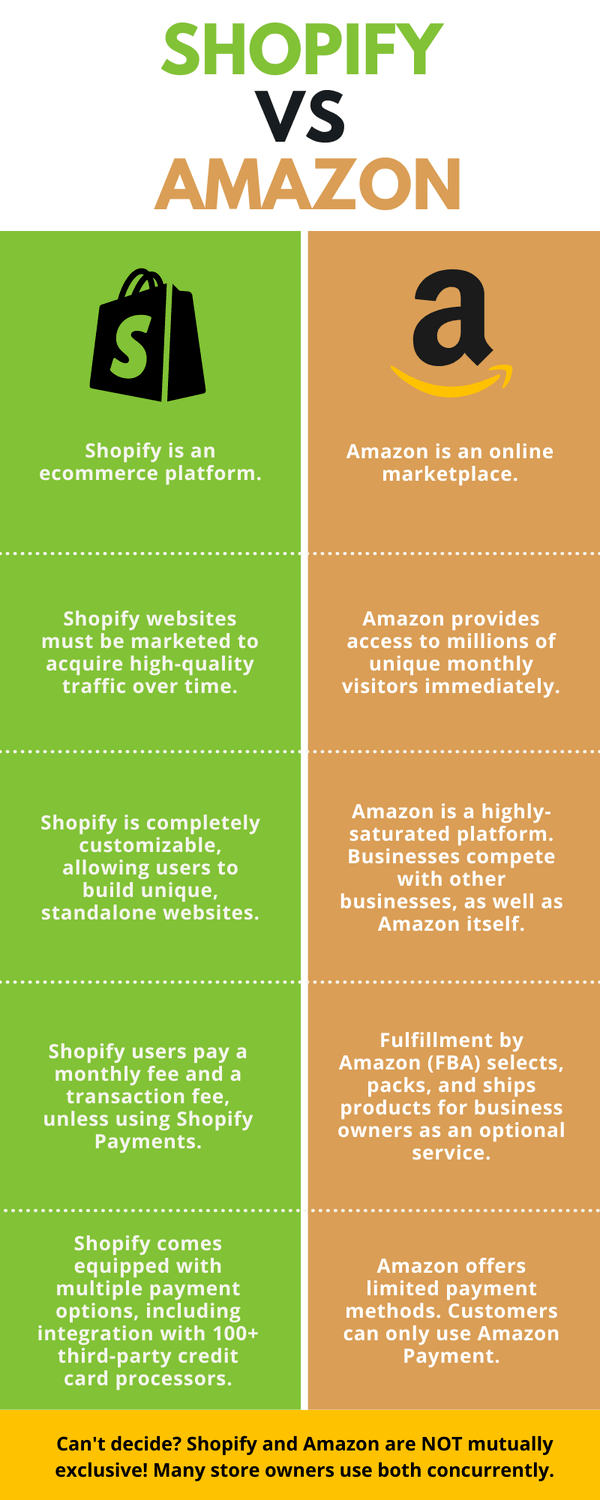
At its fundamental level, Shopify is a cloud-based commerce platform that operates on a subscription model. Unlike traditional “on-premise” or “self-hosted” solutions—such as Magento or early iterations of WooCommerce—Shopify manages the entire hosting environment, server maintenance, and core software updates. This architectural choice places it firmly within the SaaS category, offering a level of technical abstraction that eliminates the need for manual server patching or hardware scaling.
The Multi-tenant Cloud Infrastructure
Shopify’s technical foundation is built on a multi-tenant architecture. This means that a single version of the software serves multiple customers (tenants), though each user’s data remains isolated and secure. From a performance standpoint, this is managed through a massive, globally distributed infrastructure primarily hosted on Google Cloud Platform. By leveraging a multi-tenant model, Shopify can push global updates, security patches, and feature enhancements to its entire user base simultaneously, ensuring that even the smallest storefront benefits from the same enterprise-grade infrastructure as a global brand.
Liquid: The Proprietary Templating Engine
Central to Shopify’s technical identity is Liquid, an open-source template language written in Ruby. Liquid acts as the bridge between the Shopify database and the HTML rendered in a user’s browser. It uses a combination of objects, tags, and filters to display dynamic content. For developers, Liquid is the primary tool for customizing themes. Because it is a “safe” language—meaning it does not allow for direct database queries or system-level access—it ensures that the core platform remains secure while offering high levels of front-end flexibility.
The Shopify Tech Stack: Beyond Simple Storefronts
While many perceive Shopify as a “closed” system, its modern evolution has seen it transform into a highly extensible platform. The modern Shopify tech stack is designed for interoperability, allowing for complex integrations through a robust API-first approach. This shift has made it a preferred choice for technical teams who require more than just a template-based website.
API-First Approach and Headless Commerce
One of the most significant shifts in Shopify’s technical roadmap has been the embrace of Headless Commerce. Through the Shopify Storefront API—a GraphQL-based interface—developers can decouple the backend commerce engine from the front-end presentation layer. This allows a business to use Shopify’s powerful checkout and inventory management systems while building a custom front-end using modern frameworks like React, Next.js, or Vue. This “headless” approach offers total creative freedom and improved performance, as the front end can be optimized independently of the backend logic.
The App Ecosystem and Third-Party Integrations
The Shopify ecosystem is extended by thousands of third-party applications. These are not merely “plugins” in the traditional sense; they are independent web applications that interact with the Shopify core via REST or GraphQL APIs. This modularity allows for “best-of-breed” technical stacks. A developer might integrate a specialized AI-driven search engine (like Algolia), a sophisticated CRM (like Klaviyo), and a logistics management tool, all communicating via secure API webhooks. This ensures that the core platform remains lightweight while functionality can be scaled infinitely.
Performance, Scalability, and Security Protocols
For any digital platform, the three pillars of technical excellence are speed, the ability to handle load, and data integrity. Shopify’s engineering focus is heavily weighted toward these areas, particularly regarding the high-traffic demands of modern “flash sales” or global shopping events like Black Friday.
Global Content Delivery Networks (CDNs) and Edge Computing
To ensure low latency regardless of a user’s geographic location, Shopify utilizes a global Content Delivery Network (CDN) powered by Fastly. When a user visits a Shopify site, the static assets—such as images, CSS, and JavaScript—are served from the server closest to them. Furthermore, Shopify has increasingly moved logic to the “edge,” using edge computing to process data closer to the user. This reduces the time-to-first-byte (TTFB) and ensures that high-resolution imagery and complex scripts do not degrade the user experience.
PCI Compliance and Data Security in the Cloud
Security is perhaps the most significant technical burden for any commerce platform. Shopify is a Level 1 PCI DSS (Payment Card Industry Data Security Standard) compliant platform. This is the highest level of security certification available. Technically, this means Shopify handles the encryption of payment data, the security of the network, and regular vulnerability testing. By centralizing the payment gateway through Shopify Payments, the platform uses tokenization to ensure that sensitive credit card data never touches the merchant’s local servers, drastically reducing the “attack surface” for potential data breaches.
The Future of the Platform: AI and Automation Integration
As the tech industry pivots toward artificial intelligence and machine learning, Shopify has integrated these technologies directly into its core product suite. This is not just a marketing layer but a fundamental update to the platform’s utility and backend processing capabilities.
Shopify Magic and Generative AI
Shopify has introduced a suite of AI-enabled features under the banner of Shopify Magic. This includes generative AI for product descriptions, email marketing, and even image generation. Technically, these tools are built on Large Language Models (LLMs) that have been fine-tuned for commerce contexts. By integrating these models directly into the administrative dashboard, Shopify reduces the friction of content creation and catalog management, using machine learning to predict which keywords and tones will perform best in a technical SEO context.
Shopify Flow: Backend Automation for Technical Efficiency
For larger enterprises, manual workflows are a bottleneck. Shopify Flow is a low-code automation platform that allows developers and technically minded users to build complex logic chains. For example, a “Flow” can be created where: If an order is flagged as high-risk by the fraud analysis engine, Then the order is paused, and a notification is sent to a Slack channel via a Webhook. This event-driven architecture allows for highly sophisticated business logic to run automatically in the background, mirroring the functionality of enterprise resource planning (ERP) systems.
Conclusion: The Platform as a Digital Engine
In conclusion, “What is Shopify?” is a question that yields a different answer depending on who asks it. For the developer, it is a powerful SaaS platform offering a blend of Ruby-based templating (Liquid) and modern GraphQL APIs. For the systems architect, it is a globally distributed, PCI-compliant cloud infrastructure that handles the heavy lifting of scalability and security.
Shopify has successfully transitioned from a basic tool for selling online into a comprehensive technical environment. By prioritizing an API-first philosophy, embracing headless commerce, and integrating cutting-edge AI, Shopify serves as a robust engine for the modern digital economy. It provides the stability of a managed service with the extensibility of an open ecosystem, making it a cornerstone of contemporary software engineering in the retail space. As we move further into an era of automated, AI-driven commerce, Shopify’s role as a centralized, high-performance tech stack will only continue to solidify.
aViewFromTheCave is a participant in the Amazon Services LLC Associates Program, an affiliate advertising program designed to provide a means for sites to earn advertising fees by advertising and linking to Amazon.com. Amazon, the Amazon logo, AmazonSupply, and the AmazonSupply logo are trademarks of Amazon.com, Inc. or its affiliates. As an Amazon Associate we earn affiliate commissions from qualifying purchases.