
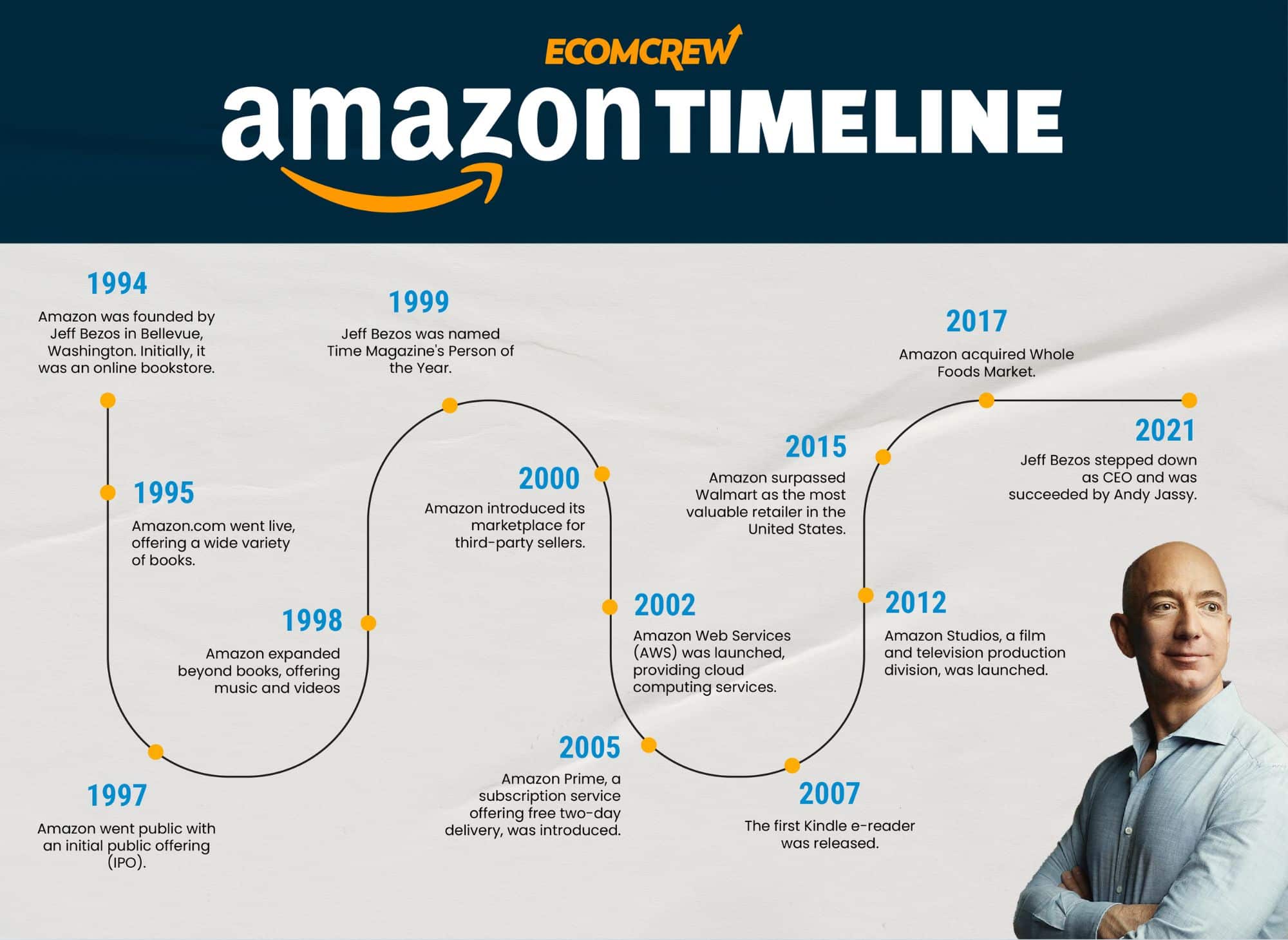
In the fast-moving landscape of modern commerce, few names carry as much weight as Amazon. When we ask the question, “How old is Amazon?” the numerical answer—founded on July 5, 1994—tells only a fraction of the story. At roughly three decades old, Amazon has transitioned from a risky startup operating out of a garage in Bellevue, Washington, into a definitive pillar of global corporate identity.
To understand the age of Amazon is to understand the evolution of brand strategy itself. Amazon is not merely a retail company; it is a masterclass in brand elasticity, long-term positioning, and the relentless pursuit of a “Day 1” mentality. This article explores how the Amazon brand has aged, matured, and reinvented itself over its thirty-year journey, moving from “The Earth’s Biggest Bookstore” to “The Everything Store.”
The Genesis of the “Everything Store”: A Brand Built on Customer Obsession
The Amazon brand did not begin with the name we know today. In 1994, Jeff Bezos originally incorporated the company as “Cadabra,” as in “Abracadabra.” However, after a lawyer misheard the name as “Cadaver,” Bezos realized the importance of a brand name that conveyed scale, power, and positive association. He settled on Amazon—named after the largest river in the world—to signal his intention of creating a company of unparalleled size and flow.
The 1994 Foundation: From Cadabra to the River
The early branding of Amazon was functional rather than emotional. In the mid-90s, the internet was a “Wild West.” To build a brand that could survive, Bezos focused on utility and trust. The initial branding focused on the novelty of the “online” experience. While other companies were focused on the technology of the internet, Amazon focused on the benefit of the internet: selection and convenience. By choosing a name that started with “A,” Amazon also ensured it appeared at the top of early search engine directories, a subtle but brilliant early brand strategy move.
The Brand Promise: Lower Prices and Better Selection
From its inception, the Amazon brand was built on a “Flywheel” strategy. The logic was simple: a better customer experience leads to more traffic. More traffic attracts more third-party sellers. More sellers lead to a larger selection. A larger selection, combined with operational efficiencies, allows for lower prices, which further improves the customer experience. This virtuous cycle became the DNA of the Amazon brand. It wasn’t just about selling books; it was about branding the concept of “Customer Obsession.”
Visual Identity and the Smile: The Evolution of the Amazon Logo
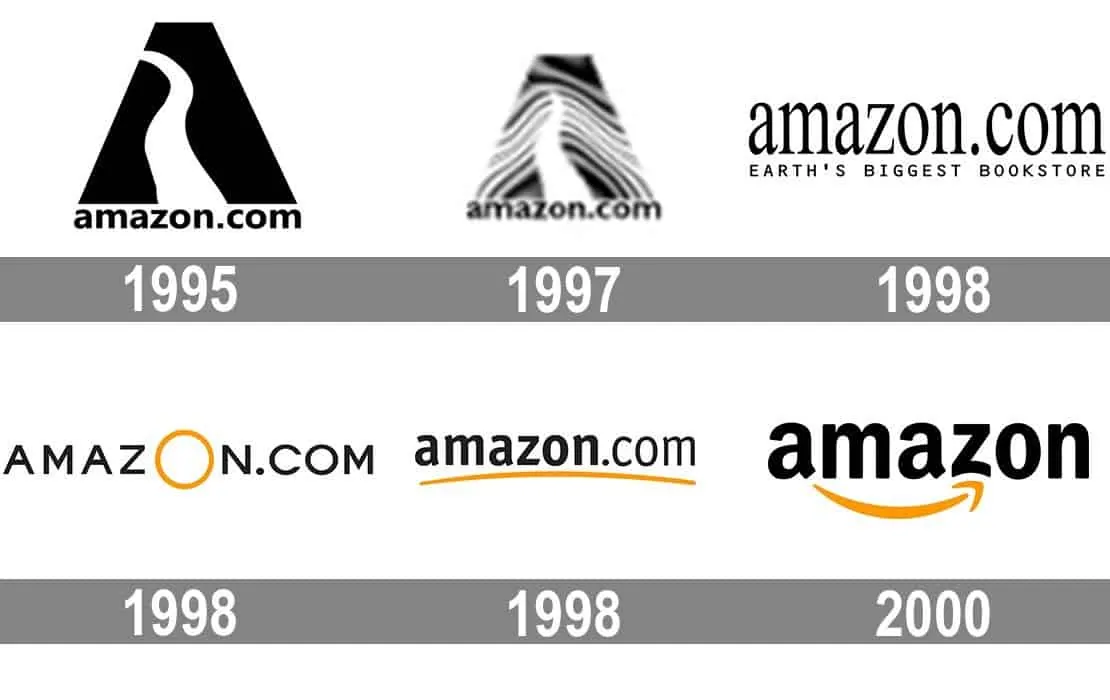
A brand’s age is often reflected in its visual history. Amazon’s logo has undergone several transformations, each reflecting a shift in the company’s corporate identity and strategic focus.
From the River to the “A to Z” Arrow
In the late 1990s, the Amazon logo featured a large “A” with a river path flowing through it. It was literal and somewhat clunky by modern standards. However, as the company expanded beyond books, the brand needed a visual identity that signaled its intent to sell everything.
In 2000, the company introduced the logo we recognize today: the word “amazon” with a yellow arrow underneath. This wasn’t just a design choice; it was a strategic branding statement. The arrow starts at the letter ‘A’ and ends at the letter ‘Z,’ signaling that the company carries every product imaginable. Furthermore, the arrow is shaped like a smile, reinforcing the brand’s core value of customer satisfaction.
Why the Smile Matters for Brand Recognition
The “Amazon Smile” has become one of the most recognizable brand assets in the world. It appears on every “brown box” delivered to doorsteps globally. In the world of branding, this is known as “sensory cues.” The sight of the box and the smile creates a psychological association with the “joy of arrival.” This reinforces the brand identity of reliability and fulfillment. By branding the shipping container itself, Amazon turned every delivery truck and every porch into a free billboard, a strategy that has kept the brand relevant and “young” in the eyes of consumers.
Strategic Brand Diversification: Moving Beyond E-Commerce
As Amazon reached its teenage years and entered its twenties, the brand faced a mid-life crisis of sorts: could it be more than just a store? The answer came through aggressive diversification that redefined what the Amazon brand stood for.
AWS and the Pivot to B2B Authority
One of the most significant shifts in Amazon’s brand identity was the launch of Amazon Web Services (AWS) in 2006. Suddenly, the brand that sold you Harry Potter books was now the brand powering the infrastructure of the internet. This moved Amazon from a B2C (Business to Consumer) brand to a B2B (Business to Business) powerhouse.
The branding of AWS was distinct—it focused on “innovation,” “scalability,” and “security.” This diversification ensured that the parent brand, Amazon, was viewed as a tech pioneer rather than just a retailer. It gave the company a “tech-first” aura that many of its retail competitors, like Walmart or Target, struggled to replicate.
Prime: Building Ecosystem Loyalty
In 2005, Amazon launched Prime. Originally a shipping program, Prime has evolved into a lifestyle brand. By bundling fast shipping with streaming video, music, and grocery discounts, Amazon moved from being a “place you shop” to a “service you subscribe to.”
This was a masterful brand strategy. Prime created a “walled garden” that incentivized loyalty. Once a customer is part of the Prime ecosystem, the friction of shopping elsewhere becomes too high. The Prime brand represents “frictionless living,” a powerful emotional hook that has allowed Amazon to maintain its market dominance as it enters its fourth decade.
The “Day 1” Philosophy: Sustaining Brand Longevity
Perhaps the most famous aspect of the Amazon corporate identity is Jeff Bezos’s “Day 1” philosophy. Despite being 30 years old, Amazon operates with the urgency of a startup. This philosophy is central to how the brand avoids the stagnation that typically plagues aging corporations.
Resisting “Day 2” Stagnation
Bezos famously stated in his 2016 shareholder letter that “Day 2 is stasis. Followed by irrelevance. Followed by excruciating, painful decline. Followed by death. And that is why it is always Day 1.”
From a brand strategy perspective, the “Day 1” mantra is a tool for internal and external alignment. It tells employees that innovation is mandatory and tells consumers that the brand will never stop evolving. This prevents Amazon from being seen as a “legacy brand.” While other 30-year-old companies might lean on their heritage, Amazon leans on its future. This keeps the brand perception “young,” “innovative,” and “disruptive.”
Future-Proofing through Constant Innovation
The Amazon brand continues to age gracefully by entering new verticals—healthcare with Amazon Clinic, physical retail with Amazon Go, and the smart home market with Alexa. Each of these ventures carries the Amazon brand promise of convenience and data-driven personalization.
By integrating itself into the literal fabric of the home (via Echo devices), the brand has achieved a level of intimacy that few other companies can claim. Amazon isn’t just a website you visit; it’s a voice in your kitchen and a security camera on your porch. This “ambient branding” ensures that Amazon remains a central part of the consumer’s daily life, regardless of how many years have passed since its founding.

Conclusion: 30 Years of Branding Excellence
So, how old is Amazon? Chronologically, it is a child of the mid-90s, a survivor of the dot-com bubble, and a titan of the 21st century. But strategically, Amazon is as old as it needs to be to provide trust, and as young as it needs to be to provide innovation.
The Amazon brand has successfully navigated the transition from a niche bookstore to a global infrastructure. Its journey highlights the importance of a clear brand promise (customer obsession), a strong visual identity (the smile), and a culture that resists the comforts of maturity (Day 1). As Amazon moves into its next decade, its brand identity will likely continue to shift, but the core pillars of its strategy remain the same. Amazon has proven that in the world of branding, age is not about how long you’ve existed—it’s about how long you can remain indispensable to the consumer.
aViewFromTheCave is a participant in the Amazon Services LLC Associates Program, an affiliate advertising program designed to provide a means for sites to earn advertising fees by advertising and linking to Amazon.com. Amazon, the Amazon logo, AmazonSupply, and the AmazonSupply logo are trademarks of Amazon.com, Inc. or its affiliates. As an Amazon Associate we earn affiliate commissions from qualifying purchases.