
The question of when cryptocurrency prices will return to their former glory is one that haunts both veteran traders and novice investors alike. After the meteoric highs of 2021, the digital asset market has navigated a series of “crypto winters,” characterized by liquidations, regulatory crackdowns, and a general cooling of retail enthusiasm. However, in the world of personal finance and investing, price action is rarely random. Understanding when crypto will go back up requires a deep dive into macroeconomic trends, historical cycles, and the structural evolution of the financial ecosystem.
In this analysis, we will explore the fundamental drivers that dictate market recoveries, the technical milestones on the horizon, and the strategic approaches investors should consider while waiting for the next bull run.
Understanding the Macroeconomic Catalysts
Cryptocurrency no longer exists in a vacuum. While it was once touted as an uncorrelated asset class, the reality of the last five years has shown that digital assets are deeply sensitive to global liquidity and the broader financial environment.
Interest Rates and the Federal Reserve
The most significant headwind for “risk-on” assets—including crypto and tech stocks—is the cost of borrowing. When the Federal Reserve and other central banks raise interest rates to combat inflation, liquidity is pulled out of the market. Investors move their capital toward “safe” yields like U.S. Treasuries.
For crypto to sustain a meaningful upward trend, the market generally looks for a “pivot” or a pause in interest rate hikes. Lower rates make borrowing cheaper and increase the supply of “easy money,” much of which flows into speculative assets. A cooling inflation rate is often the first signal that the macro environment is becoming favorable for a crypto recovery.
Institutional Adoption and Spot ETFs
In previous cycles, the market was driven largely by retail FOMO (fear of missing out). Today, the narrative has shifted toward institutional “on-ramps.” The approval and success of Spot Bitcoin and Ethereum ETFs (Exchange-Traded Funds) represent a seismic shift in the financial landscape.
These instruments allow pension funds, insurance companies, and traditional financial advisors to allocate capital to crypto without the technical hurdles of managing private keys. As these institutions integrate digital assets into their standard portfolios, we see a “floor” being built under the price. The “recovery” in this context isn’t just a price spike; it is the gradual absorption of crypto into the $100 trillion global wealth management industry.
Technical Indicators and Historical Halving Cycles
While macroeconomics provides the “why,” technical cycles often provide the “when.” Cryptocurrency, particularly Bitcoin, has historically operated on a roughly four-year cycle that governs its expansion and contraction phases.
The Bitcoin Halving Effect
The Bitcoin halving is an event coded into the protocol that reduces the reward for mining new blocks by 50% every four years. This effectively slashes the new supply of Bitcoin entering the market. Historically, the halving has been the primary catalyst for a bull market.
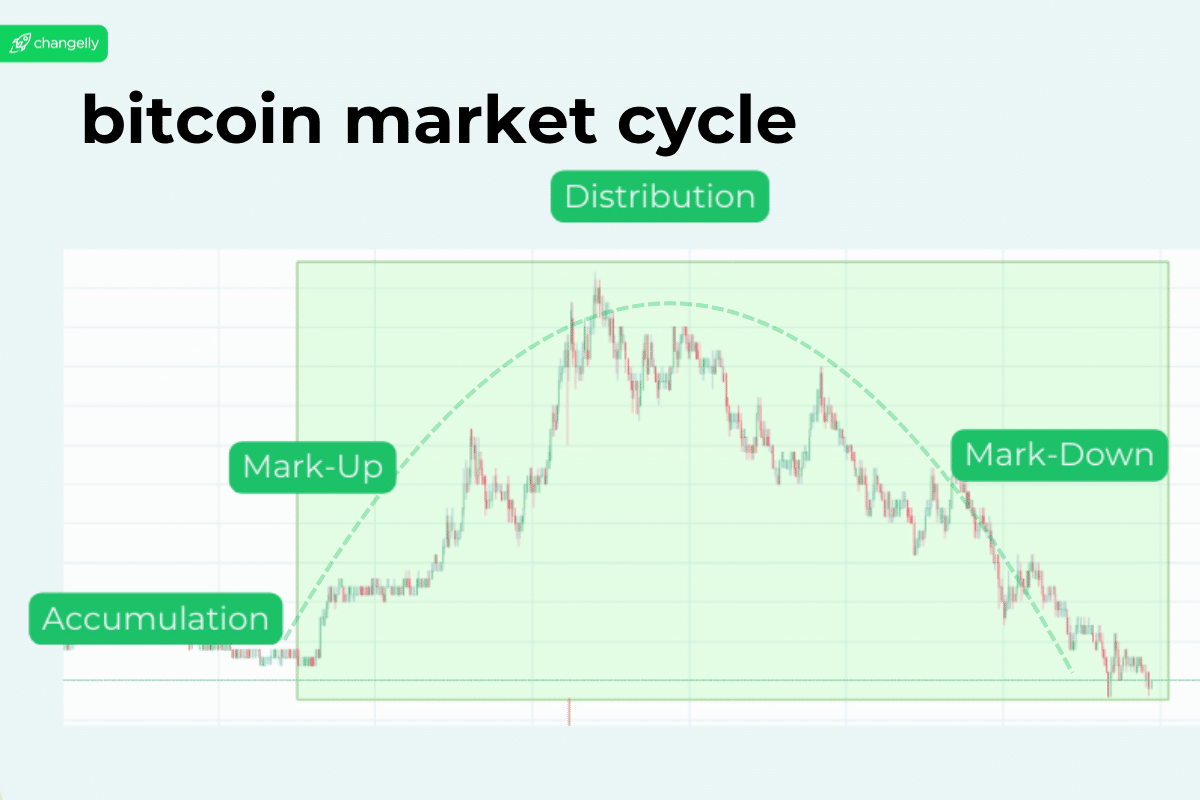
The pattern typically follows a specific rhythm: a pre-halving rally, a period of post-halving “re-accumulation” where prices remain stagnant, and finally, a parabolic move to new all-time highs 12 to 18 months after the event. For investors asking when crypto will go back up, looking at the distance from the last halving is often the most reliable historical barometer.
Market Sentiment and the Fear & Greed Index
In the short term, crypto is driven by psychology. The “Fear & Greed Index” is a popular tool among financial analysts to gauge whether the market is overextended or undervalued. When the market is in a state of “Extreme Fear,” it often marks a local bottom—a point where “weak hands” have sold and “smart money” begins to accumulate.
Recovery usually begins when the general public is most pessimistic. By the time the sentiment shifts to “Greed,” the initial recovery phase has usually already passed. Monitoring these sentiment shifts helps investors understand if the current price action is a “dead cat bounce” or the start of a sustained trend.

Structural Shifts in the Crypto Ecosystem
For the market to go back up and stay up, there must be a reason for the technology to exist beyond mere speculation. The “Money” aspect of crypto is increasingly tied to its utility within the digital economy.
The Transition from Speculation to Utility
In 2017 and 2021, many projects rose in value based on whitepapers and promises. The next major upswing is expected to be led by projects with “Real World Assets” (RWA) and proven revenue models. This includes the tokenization of real estate, the use of stablecoins for cross-border remittances, and decentralized finance (DeFi) platforms that offer transparent lending services.
As the industry matures, the “garbage” projects are flushed out. A recovery led by utility is much healthier than one led by meme-coin frenzies, as it creates a sustainable ecosystem where value is derived from actual usage rather than just the hope of selling to a “greater fool.”
Regulatory Clarity as a Growth Engine
For years, the “Sword of Damocles” hanging over the crypto market has been the lack of clear regulation in major economies like the United States. Uncertainty drives away large-scale investment. However, as legislative frameworks begin to take shape, the “fear of the unknown” diminishes.
Clear rules regarding stablecoin reserves, exchange operations, and tax reporting may seem restrictive in the short term, but they provide the legal certainty that multi-billion dollar corporations require to enter the space. When the “regulatory fog” lifts, it often acts as a green light for the next wave of capital inflow.
Investment Strategies for a Bear Market Recovery
In personal finance, the goal isn’t just to predict the top; it’s to survive the bottom. Timing the exact day crypto “goes back up” is nearly impossible, but preparing for the recovery is a matter of discipline.
Dollar-Cost Averaging (DCA)
One of the most effective strategies for the average investor is Dollar-Cost Averaging. Instead of trying to “time the bottom” with a lump-sum investment, DCA involves investing a fixed amount of money at regular intervals, regardless of the price.
This strategy lowers the emotional burden of volatility. If the price goes down, your fixed investment buys more units; if the price goes up, your existing holdings increase in value. Over a long-term horizon, DCA typically results in a better average entry price than trying to catch a falling knife or chasing a breakout.
Risk Management and Portfolio Diversification
A crucial part of an investment strategy is knowing how much to allocate. Because crypto is a high-volatility asset class, it should rarely constitute 100% of a person’s financial portfolio. Many financial advisors suggest a 1% to 5% allocation for those with a high risk tolerance.
Furthermore, “crypto” is not a monolith. Diversifying within the space—holding a mix of “Blue Chip” assets like Bitcoin and Ethereum, alongside smaller allocations in infrastructure or DeFi—can mitigate the risk of a single project failing. When the market does go back up, it is rarely a uniform rise; certain sectors will lead while others lag.

Conclusion: Timing the Turnaround
So, when will crypto go back up? The convergence of several factors suggests that the foundations for the next major leg up are currently being built. The combination of the Bitcoin halving cycle, the influx of institutional capital via ETFs, and the potential for a more favorable macroeconomic environment creates a compelling case for a medium-to-long-term recovery.
However, investors must remain patient. Market recoveries are rarely a straight line; they are a series of “two steps forward, one step back.” The key to profiting from the eventual return of the bull market is not found in checking the price every hour, but in understanding the underlying cycles and maintaining a disciplined investment strategy. For those who view crypto through the lens of a five-to-ten-year financial plan rather than a “get rich quick” scheme, the current period of consolidation may eventually be seen as one of the greatest wealth-building opportunities of the decade.
aViewFromTheCave is a participant in the Amazon Services LLC Associates Program, an affiliate advertising program designed to provide a means for sites to earn advertising fees by advertising and linking to Amazon.com. Amazon, the Amazon logo, AmazonSupply, and the AmazonSupply logo are trademarks of Amazon.com, Inc. or its affiliates. As an Amazon Associate we earn affiliate commissions from qualifying purchases.