
The resurgence of Bitcoin (BTC) in the global financial landscape has captured the attention of seasoned institutional investors and retail participants alike. After periods of volatility and “crypto winters,” the premier digital asset has once again demonstrated its resilience, breaking key resistance levels and pushing toward new all-time highs. However, the current upward trajectory is distinct from the speculative frenzies of the past. It is underpinned by a confluence of macroeconomic shifts, structural supply changes, and a fundamental evolution in how the traditional financial world perceives digital scarcity.
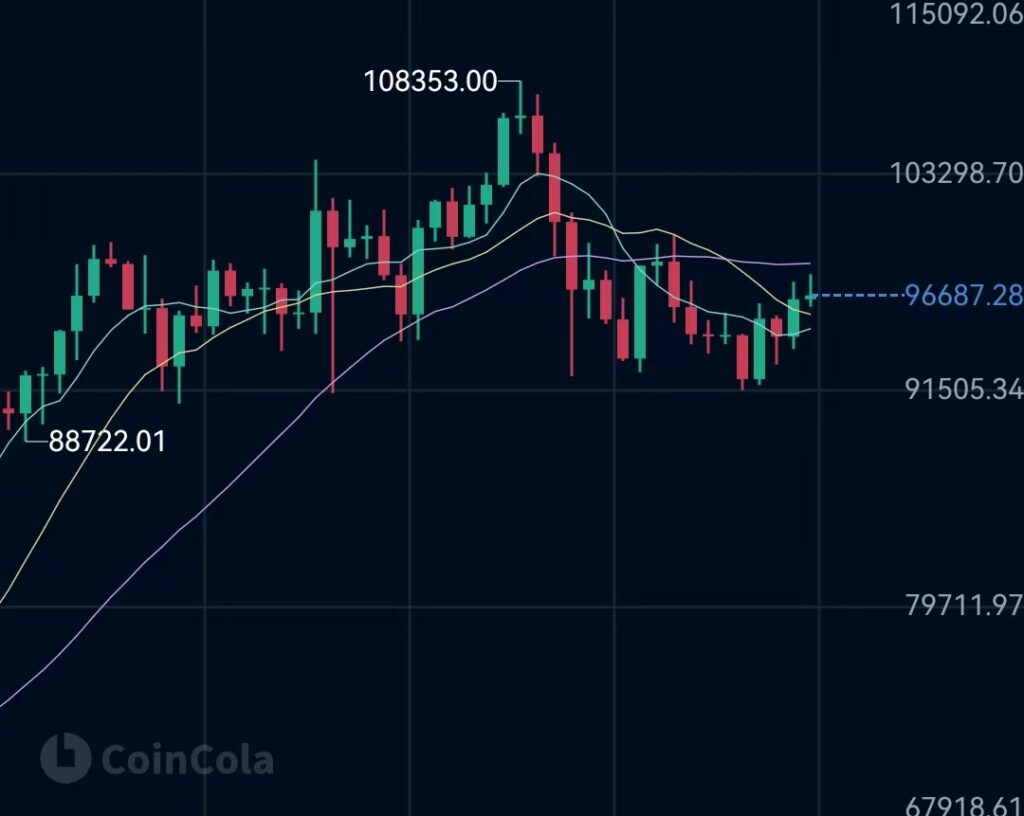
To understand why BTC is going up, one must look beyond the price charts and examine the deep-rooted financial mechanisms currently at play.
1. The Institutionalization of Bitcoin: The ETF Catalyst
For years, the primary barrier to entry for large-scale capital was the lack of regulated, accessible investment vehicles. The landscape shifted dramatically with the approval of Spot Bitcoin Exchange-Traded Funds (ETFs) in the United States. This development represents perhaps the single most significant driver of the current price appreciation.
The Influx of “Sticky” Capital
Before the advent of ETFs, investing in Bitcoin required navigating specialized exchanges, managing private keys, or dealing with the complexities of digital wallets—tasks that many institutional compliance departments found prohibitive. The introduction of products from financial titans like BlackRock and Fidelity has “legitimized” Bitcoin as a standard asset class. We are no longer seeing just speculative retail money; we are seeing “sticky” capital from pension funds, sovereign wealth funds, and private wealth managers who allocate to Bitcoin as part of a diversified portfolio.
Demand-Supply Imbalance via Regulated Channels
The daily buying pressure from ETF issuers often exceeds the daily production of new Bitcoin by miners. When multi-billion-dollar funds are required to purchase the underlying asset to back their shares, it creates a persistent bid in the market. This structural demand acts as a floor for the price, absorbing sell-side liquidity and driving the valuation higher as the available “free float” of Bitcoin on exchanges continues to dwindle.
2. Macroeconomic Factors and the Search for a Hard Asset
Bitcoin does not exist in a vacuum; its price is deeply correlated with global liquidity and the health of fiat currencies. As central banks navigate the delicate balance between controlling inflation and preventing recession, Bitcoin has emerged as a preferred “macro hedge.”
The “Digital Gold” Thesis in an Inflationary Era
While traditional inflation has cooled in some regions, the long-term concern regarding the debasement of fiat currency remains high. With global debt levels reaching record peaks, investors are increasingly looking for “hard money”—assets that cannot be arbitrarily devalued by government policy. Bitcoin’s fixed supply of 21 million units provides a mathematical certainty that traditional currencies lack. This “Digital Gold” narrative has moved from a fringe libertarian concept to a core investment thesis for major financial institutions looking to protect purchasing power over decades.
Interest Rates and Global Liquidity Cycles
Bitcoin historically thrives in environments of expanding global liquidity. As expectations for interest rate cuts by the Federal Reserve and other central banks solidify, the “opportunity cost” of holding non-yielding assets like Bitcoin decreases. Furthermore, when liquidity is injected into the financial system, it tends to flow into high-growth, scarce assets. The current upward movement reflects the market front-running a shift toward a more accommodative monetary policy, where “risk-on” assets are expected to outperform.
3. The Structural Impact of the Halving and Supply Constraints
One of the most unique aspects of Bitcoin is its programmatic monetary policy. Unlike fiat currencies, which can be printed at will, Bitcoin’s issuance is governed by code. The “Halving”—an event that occurs approximately every four years—is a central pillar of its value proposition.

Understanding the Supply Shock
The Halving reduces the reward for mining new blocks by 50%, effectively cutting the new supply of Bitcoin entering the market in half. Historically, the months following a halving event have seen significant price appreciation. This is simple economics: if demand remains constant or increases while the rate of new supply issuance is cut by half, the price must rise to find a new equilibrium. The market is currently pricing in this long-term scarcity, recognizing that the “taps” are tightening.
The Rise of Long-Term “HODLing” Behavior
On-chain data reveals a growing trend of “illiquid supply.” A significant portion of Bitcoin is held by entities that have no history of selling, even during price spikes. These long-term holders (often referred to as HODLers) treat Bitcoin as a generational store of value rather than a trading instrument. When a large percentage of the total supply is “locked up” in cold storage, any increase in demand—such as that from the aforementioned ETFs—results in an outsized impact on the price because there is very little Bitcoin available for sale at current levels.
4. Bitcoin as a Financial Tool and Global Settlement Layer
Beyond its role as a store of value, Bitcoin is increasingly recognized for its utility within the global financial infrastructure. This shift from “speculative token” to “financial tool” is providing a fundamental boost to its valuation.
Integration with Traditional FinTech
We are seeing a massive integration of Bitcoin into everyday financial tools. From PayPal and Venmo to major banking apps, the ability to buy, hold, and spend Bitcoin is becoming ubiquitous. This reduces friction and increases the velocity of the asset. When Bitcoin is integrated into the tools that people use for their personal finance, it ceases to be an “alternative” investment and becomes a standard component of a modern financial life.
Cross-Border Payments and Economic Sovereignty
In many parts of the world, Bitcoin serves as a vital financial rail for cross-border payments, bypassing the high fees and slow settlement times of the traditional SWIFT system. In emerging markets facing currency instability, Bitcoin is used as a tool for business finance and personal savings. This real-world utility creates a constant baseline of demand that is independent of Western speculative cycles. As more businesses adopt Bitcoin for international settlement, its value as a neutral, global financial network grows.
5. Market Sentiment and the Psychology of Momentum
In the world of investing, price action often drives sentiment, which in turn drives further price action. The “Money” niche is as much about psychology as it is about mathematics.
The Shift from Skepticism to FOMO
The narrative around Bitcoin has shifted from “Is it a scam?” to “How much should I own?” This psychological shift is powerful. As the price climbs, it validates the thesis of early adopters and attracts “momentum investors” who seek to capture the trend. In the corporate world, this manifests as “Fear Of Missing Out” (FOMO) on a balance sheet level. Following the lead of companies like MicroStrategy, other corporate treasuries are beginning to evaluate Bitcoin as a superior reserve asset compared to cash, which loses value to inflation.
Improved Market Infrastructure and Reduced Risk
The “plumbing” of the crypto market has matured significantly. Professional-grade custody solutions, robust futures markets, and improved regulatory clarity in many jurisdictions have reduced the “tail risk” that once scared away conservative investors. When the perceived risk of an asset being “banned” or “crashing to zero” diminishes, the discount rate applied to that asset drops, naturally leading to a higher valuation.

Conclusion: A Multi-Faceted Rally
The question of “why is BTC going up” cannot be answered with a single reason. Instead, it is the result of a “perfect storm” of financial factors. We are witnessing the convergence of a massive supply shock (the Halving), a historic demand catalyst (Spot ETFs), and a global macroeconomic environment that is desperate for a hedge against currency debasement.
For the modern investor, Bitcoin has evolved into a sophisticated financial instrument. It serves simultaneously as a high-growth tech asset, a defensive store of value, and a global payment rail. While volatility will always be a characteristic of the digital asset markets, the current upward trend is built on a foundation of institutional adoption and structural scarcity. As Bitcoin continues to integrate into the global financial system, its role as “digital gold” is not just a theory—it is becoming a cornerstone of 21st-century personal and corporate finance.
aViewFromTheCave is a participant in the Amazon Services LLC Associates Program, an affiliate advertising program designed to provide a means for sites to earn advertising fees by advertising and linking to Amazon.com. Amazon, the Amazon logo, AmazonSupply, and the AmazonSupply logo are trademarks of Amazon.com, Inc. or its affiliates. As an Amazon Associate we earn affiliate commissions from qualifying purchases.