
The history of money is often told through the lens of gold, silver, and government-issued fiat. However, a monumental shift occurred in the wake of the 2008 global financial crisis—a shift that fundamentally altered how we perceive value, sovereignty, and the transfer of wealth. To understand the future of your portfolio, you must first understand the origin story of the world’s first decentralized currency. When did Bitcoin launch, and why does that specific timeline remain the most important milestone in contemporary finance?
The Genesis of a New Financial Era: The 2008–2009 Timeline
The launch of Bitcoin was not a single event but a sequence of calculated releases that challenged the hegemony of traditional banking. At a time when the world’s largest financial institutions were collapsing, a pseudonymous figure known as Satoshi Nakamoto proposed an alternative that required no middleman.
The Whitepaper: October 31, 2008
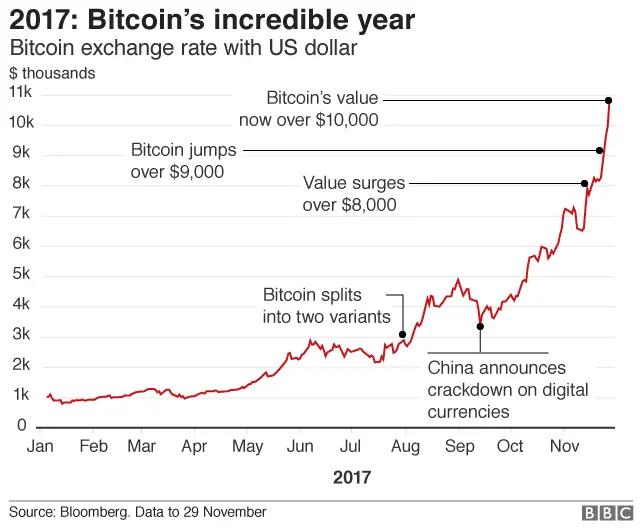
On Halloween of 2008, a link to a paper titled “Bitcoin: A Peer-to-Peer Electronic Cash System” was posted to a specialized cryptography mailing list. This document did not just describe a new technology; it described a new economic philosophy. By utilizing a proof-of-work mechanism, Nakamoto solved the “double-spending” problem that had plagued previous attempts at digital cash. For investors, this was the moment the blueprint for “Digital Gold” was first unveiled to the world.
The Genesis Block: January 3, 2009
The official “launch” of the Bitcoin network occurred on January 3, 2009, with the mining of the Genesis Block (Block 0). Within the code of this first block, Nakamoto embedded a message: “The Times 03/Jan/2009 Chancellor on brink of second bailout for banks.” This was more than a timestamp; it was a political and economic manifesto. It signaled that Bitcoin was created as a direct response to the perceived instability and inflationary risks of the traditional central banking system.
The First Transaction: January 12, 2009
The network’s viability was proven just days later when Satoshi Nakamoto sent 10 BTC to Hal Finney, a respected developer and cryptographic pioneer. This marked the first-ever peer-to-peer transfer of value on a decentralized ledger. From a financial perspective, this proved that value could be transmitted globally without a bank, clearinghouse, or central authority.
Why the Launch Date Matters for Investors Today
For the modern investor, the specific circumstances of Bitcoin’s launch provide the foundation for its value proposition. Understanding the “how” and “when” explains why Bitcoin behaves differently than stocks, bonds, or traditional currencies.
Solving the Double-Spending Problem
Before January 2009, digital money was easily forged or duplicated unless a central authority (like PayPal or a bank) verified the transaction. Bitcoin’s launch introduced the blockchain—a public ledger that everyone can see but no one can alter. This solved the trust issue, creating a financial tool that is “trustless” by design. In the world of money, trust is the ultimate currency; Bitcoin replaced human trust with mathematical certainty.
Scarcity and the 21 Million Cap
A core component of the Bitcoin launch was its programmed scarcity. Unlike fiat currencies, which can be printed at the discretion of governments, Bitcoin’s supply is hard-capped at 21 million units. This disinflationary model was baked into the protocol from day one. Investors view this “absolute scarcity” as a hedge against the devaluation of the US Dollar and other major currencies, positioning Bitcoin as a long-term store of value.
Decoupling from Central Banks
The launch timing—coinciding with the 2008 bailouts—emphasized Bitcoin’s role as an “outside” asset. It does not rely on the health of any specific nation’s economy or the decisions of a central bank. This decoupling provides a unique form of diversification for wealth management, offering an asset that can potentially perform well even when traditional markets face systemic stress.

Bitcoin as a Modern Asset Class: Evolution Since Launch
Since its quiet launch in 2009, Bitcoin has evolved from a niche experiment into a multi-trillion-dollar asset class. Its journey highlights the transition from speculative “magic internet money” to a cornerstone of modern financial planning.
Store of Value vs. Medium of Exchange
Initially envisioned as “electronic cash,” the narrative around Bitcoin has shifted toward it being a “Store of Value” (SoV). Because of its volatility and the growth of Layer-2 solutions like the Lightning Network, many investors treat Bitcoin similarly to gold—an asset held for the long term to protect purchasing power rather than something used to buy a daily coffee.
Institutional Adoption and Spot ETFs
The launch era was dominated by hobbyists, but the current era is defined by institutions. The approval of Spot Bitcoin ETFs (Exchange-Traded Funds) in early 2024 represented the ultimate validation of Nakamoto’s 2009 creation. These financial tools allow pension funds, 401(k)s, and retail investors to gain exposure to Bitcoin through regulated brokerage accounts, bridging the gap between the decentralized world and Wall Street.
Risk Management in Crypto Investing
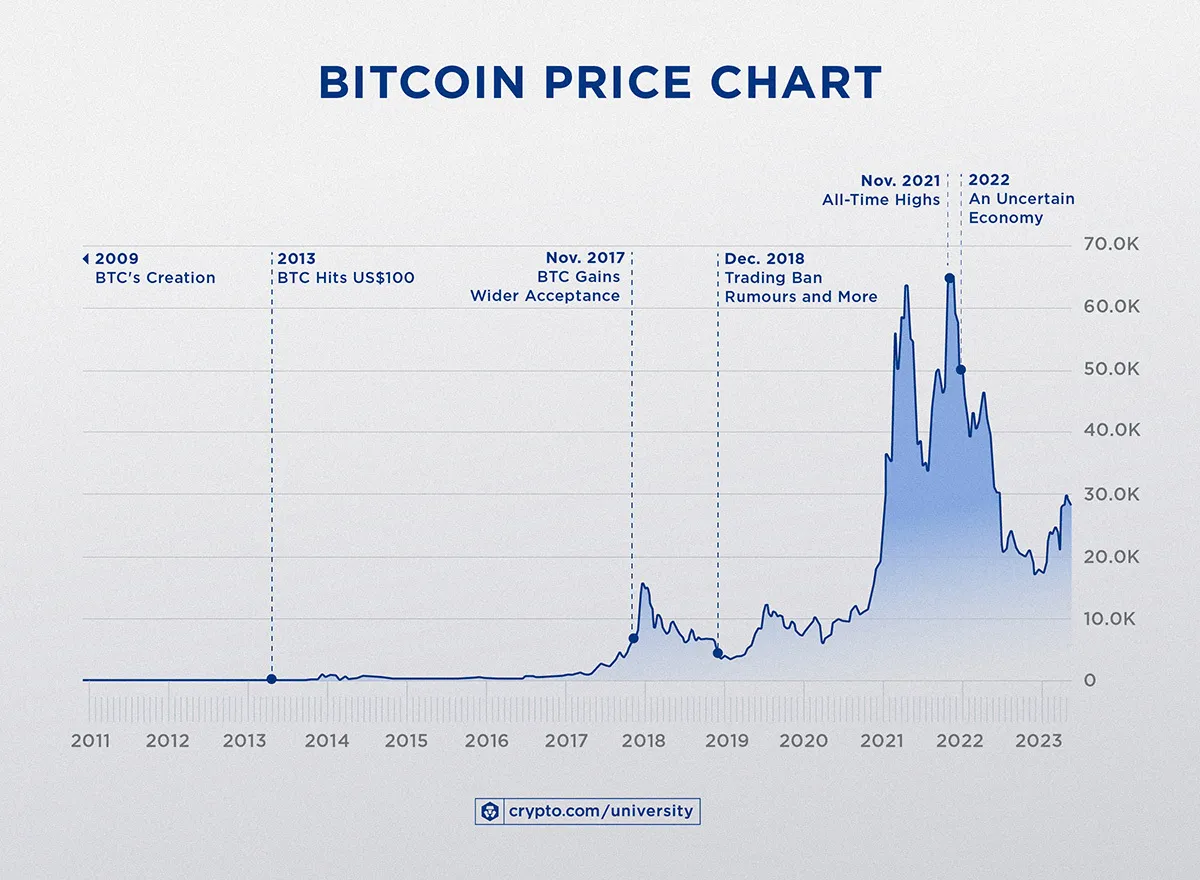
While the launch proved the technology works, the financial markets around Bitcoin remain volatile. Professional money management in this space requires an understanding of cycles. Bitcoin’s price history is characterized by “boom and bust” cycles typically tied to the “halving” event (where the reward for mining new blocks is cut in half every four years). Understanding these cycles is critical for anyone looking to generate income or grow wealth through digital assets.
Navigating the Future of Digital Finance
Looking back at the 2009 launch allows us to project where the financial landscape is headed. We are currently witnessing the “institutionalization” phase of Bitcoin, which carries significant implications for personal finance and global business.
The Impact of Halving Cycles
Bitcoin’s monetary policy is automated. Every 210,000 blocks (roughly every four years), the issuance of new Bitcoin drops. This “halving” often acts as a catalyst for price appreciation as the supply-side pressure decreases while demand remains steady or grows. For those looking at side hustles in mining or long-term investing, the halving remains the most anticipated event in the crypto-financial calendar.
Regulation and the Maturation of Global Finance
As Bitcoin moves further away from its 2009 launch date, it faces increasing scrutiny from regulators. While the original ethos was anti-establishment, the integration of Bitcoin into the global tax and legal framework is a sign of its maturity. Clearer regulations often lead to lower volatility and higher adoption rates, making it a more “investable” asset for the risk-averse.
Building a Long-term Portfolio Strategy
The most successful investors in the digital asset space are those who treat the launch of Bitcoin as the start of a multi-decade transformation. A prudent financial strategy involves:
- Dollar-Cost Averaging (DCA): Investing a fixed amount regularly to mitigate the impact of short-term volatility.
- Self-Custody: Understanding the financial security of holding your own keys, a core principle established at launch.
- Asset Allocation: Ensuring Bitcoin is part of a balanced portfolio that includes traditional equities and real estate.
Conclusion: The Legacy of January 2009
The launch of Bitcoin was not just the birth of a new software; it was the birth of a new era of money. By launching a decentralized, scarce, and borderless asset during a period of global financial instability, Satoshi Nakamoto provided a tool for financial sovereignty that had never existed before.
Whether you view Bitcoin as a revolutionary side hustle, a high-growth investment, or a digital safeguard against inflation, its origin story is the key to its value. As the network continues to age and gain security, the significance of that first Genesis Block only grows. Understanding when and why Bitcoin launched is the first step in mastering the complex, rewarding world of modern digital finance. For those who recognize the shift early, the journey that began in January 2009 is still in its opening chapters.
aViewFromTheCave is a participant in the Amazon Services LLC Associates Program, an affiliate advertising program designed to provide a means for sites to earn advertising fees by advertising and linking to Amazon.com. Amazon, the Amazon logo, AmazonSupply, and the AmazonSupply logo are trademarks of Amazon.com, Inc. or its affiliates. As an Amazon Associate we earn affiliate commissions from qualifying purchases.