
The question “what countries are in debt to the US?” is a common one, yet its answer is far more complex and nuanced than a simple ledger of loans. In the intricate world of global finance, direct bilateral debt—where one government explicitly borrows from another—is only a small piece of a much larger, interconnected puzzle. The primary way foreign nations, central banks, and entities hold a financial stake that can be interpreted as “debt to the US” is through their investment in US Treasury securities. These investments, while representing a liability for the US government, are simultaneously a crucial component of global financial stability and a preferred asset for many international actors. Understanding this dynamic requires delving into the mechanics of international finance, the allure of the dollar, and the motivations of major global economies.
Understanding International Debt: A Nuanced Perspective
To properly address the concept of countries being “in debt to the US,” we must first clarify what constitutes this debt. It’s not typically direct, government-to-government loans in the traditional sense, but rather a sophisticated system of financial interdependence centered around the US dollar and its role as the world’s primary reserve currency.
Distinguishing Between Direct Loans and Treasury Holdings
When people think of debt, they often envision one party borrowing directly from another. While the US government does extend certain types of loans to other nations (e.g., foreign aid with repayment clauses, military financing, or development loans through agencies like USAID), these amounts are relatively modest in the grand scheme of global finance. The vast majority of what is perceived as foreign “indebtedness” to the US comes from countries and their central banks purchasing US Treasury securities.
These securities—Treasury bills, notes, and bonds—are essentially IOUs issued by the US government to finance its expenditures. When a foreign entity buys a US Treasury bond, they are lending money to the US government. From the perspective of the US government, this is a liability (debt owed to the foreign holder). From the foreign holder’s perspective, it’s an asset (an investment in a safe, liquid instrument). This isn’t “debt to the US” but rather “investment in US debt,” a critical distinction that shapes our understanding of global financial relationships.
The Allure of US Treasury Securities
Why do foreign governments, central banks, and private investors consistently flock to US Treasury securities? Several factors contribute to their unparalleled appeal:
- Safety and Security: The US government, backed by the world’s largest economy and a robust legal framework, is considered one of the safest debtors globally. US Treasuries are often seen as a “risk-free” asset, particularly during times of global economic uncertainty.
- Liquidity: The market for US Treasuries is the deepest and most liquid in the world, meaning these securities can be bought or sold quickly without significantly impacting their price. This liquidity is crucial for central banks managing their foreign exchange reserves.
- Reserve Currency Status of the USD: The US dollar remains the dominant global reserve currency. Many countries hold large dollar reserves to facilitate international trade, stabilize their own currencies, and meet external obligations. Investing these dollar reserves in US Treasuries is a natural and efficient way to manage them.
- Interest Returns: While yields can fluctuate, US Treasuries offer a return on investment, providing income for foreign holders.
- Lack of Alternatives: For large-scale reserve management, few other sovereign debt markets offer the same combination of safety, liquidity, and depth as the US Treasury market.
Key Players in the Global Treasury Market
The foreign holders of US Treasury debt are diverse, including central banks, sovereign wealth funds, commercial banks, pension funds, corporations, and individual investors from around the globe. Central banks, in particular, play a significant role as they manage their national foreign exchange reserves, often accumulated through trade surpluses.
The Major Holders of US Treasury Debt: Who Holds the Keys?
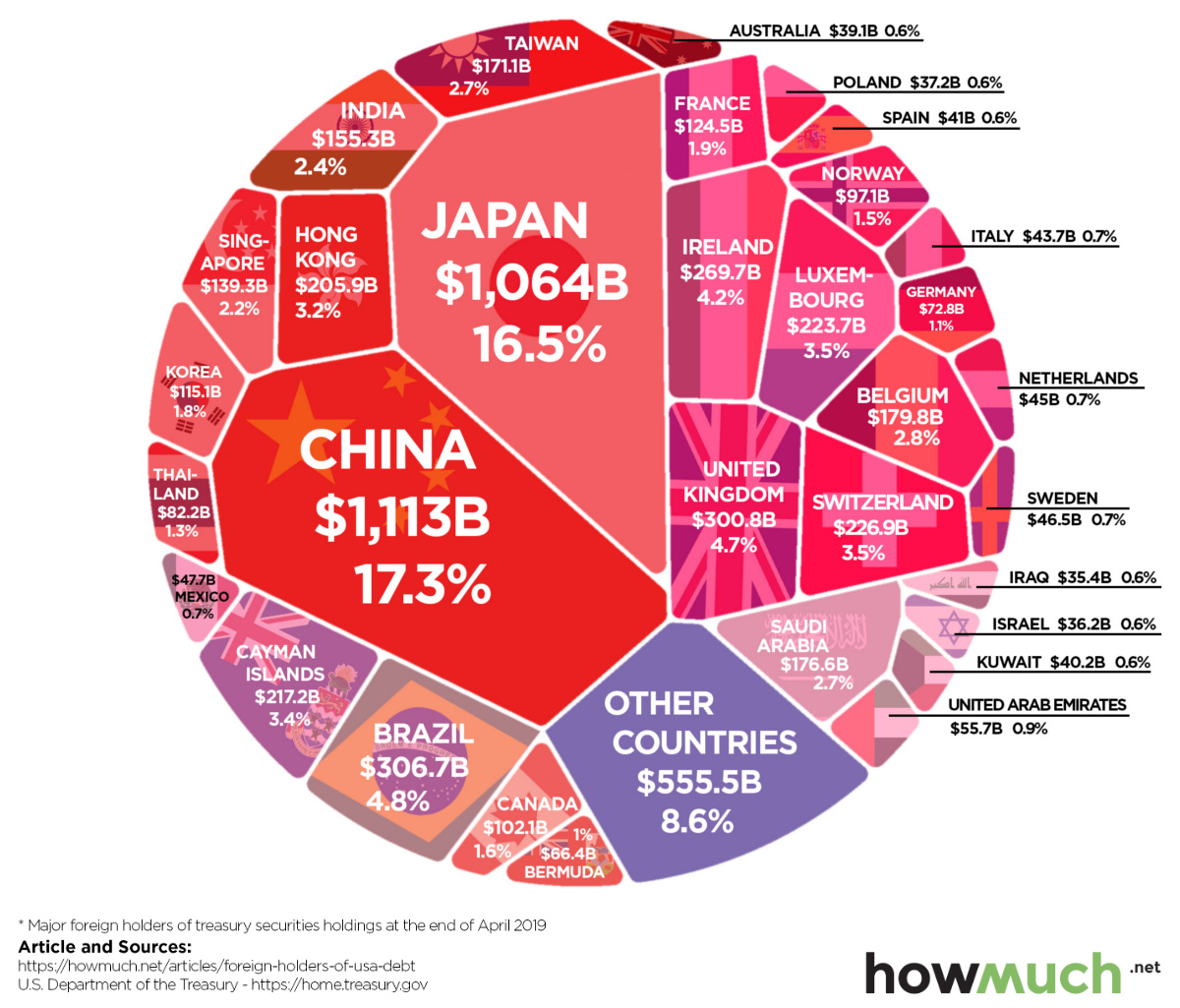
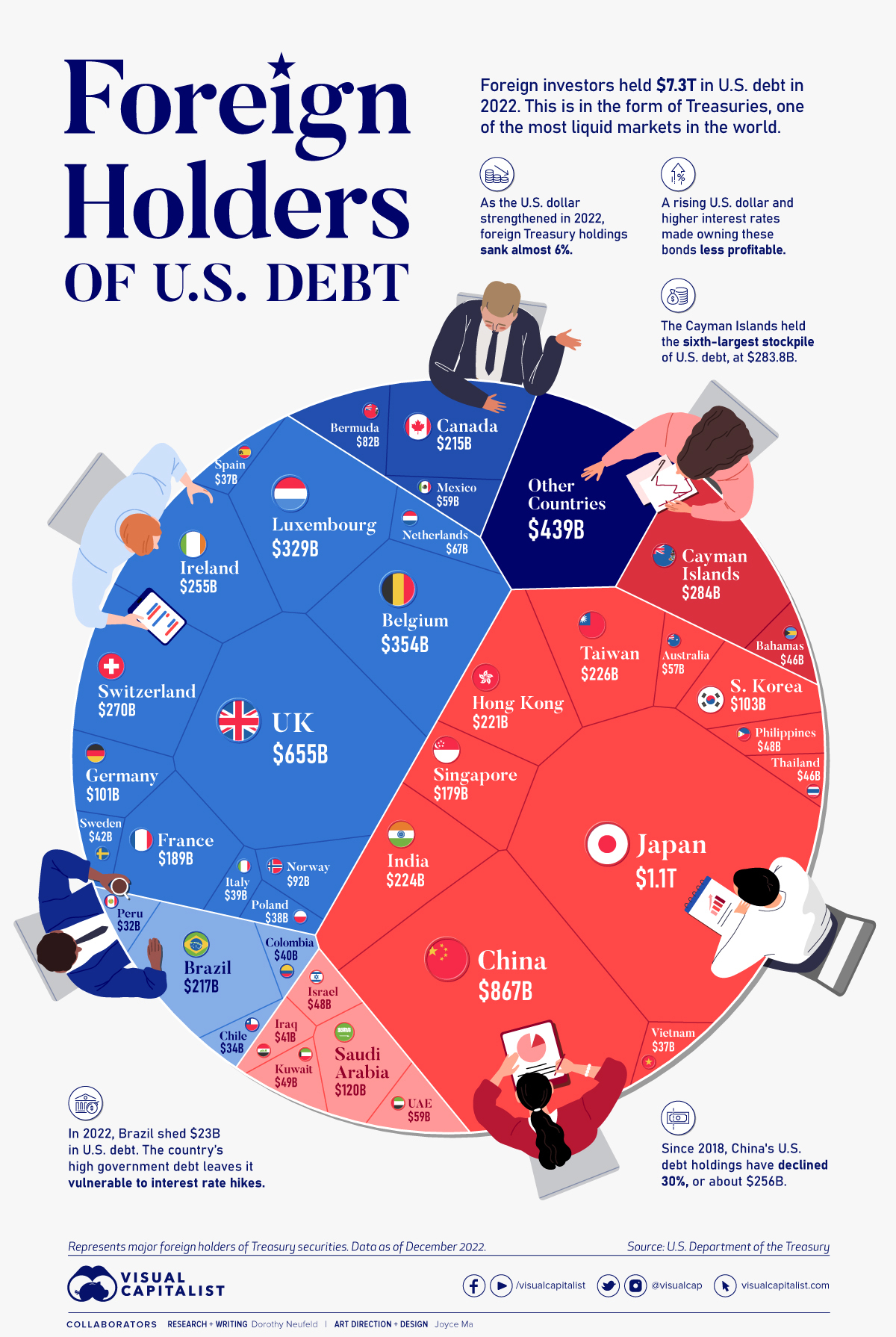
While numerous countries and entities invest in US Treasuries, a few nations consistently stand out as the largest foreign holders. These positions are not static and can shift based on economic conditions, trade balances, and geopolitical considerations.
China: A Significant but Shifting Stakeholder
For many years, China was the single largest foreign holder of US Treasury securities. Its massive trade surpluses with the US led to an accumulation of dollar reserves, which Beijing strategically recycled by purchasing US Treasuries. This strategy served multiple purposes: it helped keep the Chinese yuan relatively stable against the dollar, supported China’s export-driven economy, and provided a safe haven for its enormous financial holdings.
However, in recent years, China’s holdings have shown signs of diversification and, at times, reduction. Factors contributing to this shift include a conscious effort by China to diversify its reserve assets, a desire to promote the international use of the yuan, and potential geopolitical considerations amid ongoing trade tensions with the US. Despite these changes, China remains one of the top two foreign holders of US debt, signifying its continued, albeit evolving, importance in the global financial landscape.
Japan: A Steadfast Economic Partner
Japan consistently ranks as either the largest or second-largest foreign holder of US Treasury debt. Its substantial holdings are a result of its own large savings rate, persistent trade surpluses, and the close economic and strategic alliance with the United States. Japanese institutional investors, pension funds, and its central bank view US Treasuries as a reliable and liquid investment. Unlike China, Japan’s motivations have traditionally been less about currency manipulation and more about sound reserve management and finding stable investment opportunities for its domestic savings.
Other Notable Foreign Holders
Beyond China and Japan, several other nations and financial centers hold significant amounts of US Treasury securities:
- United Kingdom: London is a major global financial hub, and many international institutions and foreign investors hold US Treasuries through UK-based accounts. The UK itself also maintains substantial reserves.
- Belgium, Luxembourg, Cayman Islands, Ireland: These countries often appear high on the list, not necessarily because their national governments are massive investors, but because they serve as financial intermediaries, holding Treasuries on behalf of other foreign entities, including private investors, corporations, and sometimes even other sovereign nations who prefer anonymity.
- Oil-Exporting Nations: Countries with significant oil revenues often accumulate large dollar reserves and invest a portion of these in US Treasuries as part of their sovereign wealth funds.
- Other Developed Economies: Nations like Canada, Switzerland, Germany, and South Korea also hold considerable amounts of US debt as part of their reserve management strategies.
The Domestic Picture: Who Else Holds US Debt?
It’s crucial to remember that while foreign holdings are significant, the vast majority of US national debt is held domestically. The largest holders include:
- The Federal Reserve: As part of its monetary policy, the Fed frequently buys and sells Treasury securities.
- Intragovernmental Holdings: Funds like the Social Security Trust Fund and federal employee retirement funds invest their surpluses in special non-marketable Treasury securities.
- US Individuals and Institutions: American citizens, mutual funds, pension funds, insurance companies, and state and local governments are substantial investors in US Treasuries.
This domestic ownership provides an important counterpoint, illustrating that foreign debt holdings, while large, are part of an even larger domestic financial structure.
Implications of Foreign Ownership of US Debt
The substantial foreign ownership of US Treasury debt carries significant economic and geopolitical implications, influencing everything from interest rates to international relations.
Economic Stability and Interest Rates
Foreign demand for US Treasuries is a critical factor in keeping US borrowing costs low. When foreign entities purchase Treasuries, they increase demand for these securities, which in turn drives down their yield (the interest rate the US government has to pay). Lower interest rates make it cheaper for the US government to finance its budget deficits and for American businesses and consumers to borrow money, stimulating economic growth.
However, this reliance on foreign capital also presents a potential vulnerability. A sudden, large-scale divestment by major foreign holders could lead to a sharp increase in US interest rates, making it more expensive for the government to borrow and potentially stifling economic activity. While such a sudden sell-off is considered unlikely due to the mutual interests involved, it remains a theoretical risk.
Geopolitical Influence and Economic Leverage
The idea that large foreign holdings of US debt grant political or economic leverage has been a recurring theme in international relations. For instance, the notion that China could use its Treasury holdings as a “financial weapon” by dumping them to disrupt the US economy has been debated.
In practice, however, such a move would likely be self-defeating. A massive sell-off would depress the value of China’s remaining holdings, harm the stability of the global financial system (including China’s significant trade partners), and likely devalue China’s dollar-denominated assets. Thus, while theoretically possible, the practical implications make it an unlikely and mutually damaging strategy. The relationship is more one of interdependence than one-sided leverage.
Exchange Rate Dynamics and Trade Balances
Foreign investment in US Treasuries also influences the value of the US dollar. When foreign entities buy Treasuries, they typically need to convert their domestic currency into dollars, increasing demand for the dollar and potentially strengthening its value. A stronger dollar can make US exports more expensive and imports cheaper, potentially widening the US trade deficit. This dynamic creates a complex feedback loop where trade surpluses in some countries lead to dollar accumulation, which is then invested in Treasuries, influencing the dollar’s value and subsequent trade flows.
Beyond Treasury Holdings: Other Forms of International Financial Obligation to the US
While US Treasury holdings dominate the discussion of international “debt to the US,” it’s worth briefly acknowledging other, albeit smaller, forms of financial obligation.
Direct Bilateral Loans and Aid
As mentioned, the US government does extend direct loans and aid to various countries. These can include:
- Foreign Military Financing (FMF): Loans or grants used to purchase US military equipment and training.
- Development Assistance Loans: Loans provided through agencies like USAID for specific development projects, often with favorable terms.
- Export-Import Bank Loans: Support for US exports by providing financing to foreign buyers.
These direct loans represent traditional indebtedness, where the recipient country directly owes money to the US government. However, the cumulative value of these direct loans is significantly smaller than the foreign holdings of US Treasury securities.
Multilateral Institutions with US Influence
The US is a major contributor to international financial institutions like the International Monetary Fund (IMF) and the World Bank. While these institutions lend to many developing and emerging economies, this is not direct debt to the US. Rather, the US’s financial contributions underpin the institutions’ ability to lend, giving the US significant influence over their policies and operations. Therefore, countries indebted to the IMF or World Bank are indirectly influenced by US financial power, but they are not directly “in debt to the US.”
Private Sector Debt to US Entities
It’s also important to distinguish between sovereign debt and private sector debt. Foreign companies, banks, and individuals often borrow money from US banks, corporations, or private investors. This represents a financial obligation to US private entities, not to the US government. While these cross-border private financial flows are substantial and contribute to the overall global financial interconnectedness, they fall outside the scope of national governments being “in debt to the US.”
Conclusion
The question “what countries are in debt to the US?” ultimately reveals a multifaceted landscape of global financial interdependence rather than a simple debtor-creditor relationship. The primary mechanism through which foreign nations are financially connected to the US is their extensive investment in US Treasury securities. This isn’t direct borrowing from the US but rather a crucial investment by foreign entities in the debt issued by the US government.
Nations like Japan and China are prominent examples of major foreign holders, driven by their trade surpluses, reserve management strategies, and the unparalleled safety and liquidity of the US dollar. This arrangement offers mutual benefits: foreign investment helps keep US borrowing costs low, while foreign investors gain a secure and liquid asset. However, it also creates complex geopolitical and economic dynamics, highlighting the delicate balance of power in the global financial system. Beyond these significant Treasury holdings, direct bilateral loans and private sector debt represent smaller, distinct categories of financial obligations, further illustrating the intricate web of global finance. Understanding these distinctions is key to grasping the true nature of international financial relationships.
aViewFromTheCave is a participant in the Amazon Services LLC Associates Program, an affiliate advertising program designed to provide a means for sites to earn advertising fees by advertising and linking to Amazon.com. Amazon, the Amazon logo, AmazonSupply, and the AmazonSupply logo are trademarks of Amazon.com, Inc. or its affiliates. As an Amazon Associate we earn affiliate commissions from qualifying purchases.