
Navigating the complexities of tax season can often feel like deciphering a foreign language, especially when it comes to understanding what expenses qualify as a “write-off.” Far from a mythical benefit, tax write-offs, or deductions, are legitimate expenses that can significantly reduce your taxable income, thereby lowering your overall tax liability. For individuals, families, and business owners alike, understanding and strategically utilizing these deductions is a cornerstone of sound financial planning. It’s not about avoiding taxes, but rather ensuring you only pay what you legitimately owe, no more and no less.
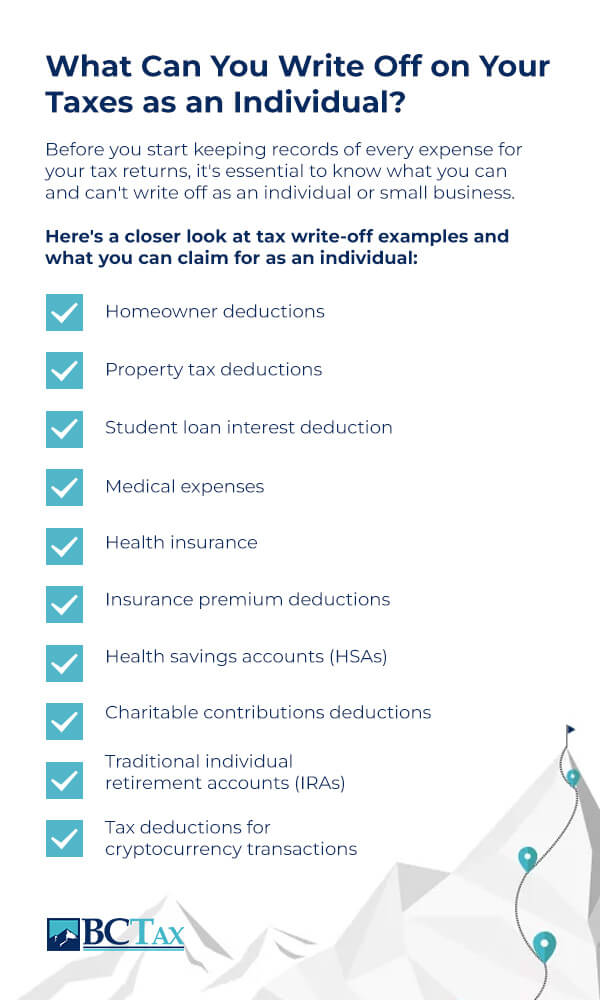
This comprehensive guide aims to demystify the world of tax write-offs, breaking down common deductions available to different taxpayer groups, distinguishing between credits and deductions, and offering practical strategies for maximizing your tax savings. While the information presented here is designed to be insightful and helpful, it’s crucial to remember that tax laws are complex and subject to change. Always consult with a qualified tax professional for personalized advice tailored to your specific financial situation.
Understanding the Fundamentals of Tax Deductions
Before diving into specific write-offs, it’s essential to grasp the basic principles that govern tax deductions. A clear understanding of these fundamentals will empower you to identify eligible expenses and maintain accurate records.
What Qualifies as a Tax Deduction?
At its core, a tax deduction is an amount that can be subtracted from your gross income to arrive at your adjusted gross income (AGI) or taxable income. The IRS generally allows deductions for expenses that are “ordinary and necessary” for earning income or for specific activities that Congress has deemed worthy of encouragement.
- Ordinary: The expense must be common and accepted in your trade, business, or profession.
- Necessary: The expense must be helpful and appropriate for your trade, business, or profession. It doesn’t have to be indispensable.
For individuals, many deductions are tied to specific life events or categories, such as education, healthcare, or charitable giving, rather than directly to income-earning activities in the same way business expenses are.
Distinguishing Between Above-the-Line and Below-the-Line Deductions
Deductions are often categorized based on where they are applied on your tax return, impacting how they interact with your AGI:
- Above-the-Line Deductions (Adjustments to Income): These deductions are subtracted from your gross income to calculate your Adjusted Gross Income (AGI). Examples include traditional IRA contributions, student loan interest, and self-employment tax deductions. Crucially, these deductions reduce your AGI, which can be beneficial because many other tax benefits, credits, and even certain deduction thresholds are tied to your AGI.
- Below-the-Line Deductions (Itemized Deductions vs. Standard Deduction): After calculating your AGI, you have a choice: take the standard deduction or itemize your deductions. The standard deduction is a fixed dollar amount determined by the IRS based on your filing status (e.g., single, married filing jointly). It’s a simpler option that many taxpayers take, especially after the Tax Cuts and Jobs Act of 2017 significantly increased standard deduction amounts. Itemized deductions, on the other hand, are a specific list of eligible expenses that you tally up. If your total itemized deductions exceed your standard deduction, you would choose to itemize. Common itemized deductions include state and local taxes (SALT cap applies), mortgage interest, charitable contributions, and medical expenses exceeding a certain AGI threshold.
The Importance of Record Keeping
Regardless of the type of deduction, meticulous record-keeping is non-negotiable. The IRS requires you to be able to substantiate any deductions you claim. This means keeping receipts, invoices, bank statements, canceled checks, mileage logs, and any other documentation that proves the expense was incurred and that it qualifies as a deduction. Digital copies are generally acceptable, but ensure they are clear, legible, and backed up securely. Without proper records, an audit could result in disallowed deductions, penalties, and interest.
Common Write-Offs for Individuals and Families
For most taxpayers, individual deductions play a significant role in reducing their annual tax bill. These typically fall into categories related to personal finance, health, and charitable acts.
Education-Related Expenses
Investing in education can not only enhance your career prospects but also offer tax benefits:
- Student Loan Interest Deduction: You can deduct up to $2,500 of interest paid on qualified student loans each year, an above-the-line deduction.
- American Opportunity Tax Credit (AOTC): A credit (more valuable than a deduction) for eligible students during their first four years of higher education. It’s worth up to $2,500 per eligible student, with 40% of it being refundable.
- Lifetime Learning Credit (LLC): This credit is for courses taken towards a college degree or to acquire job skills, without a limit on the number of years. It’s worth up to $2,000 per tax return.
Healthcare Expenses
While medical expenses must be substantial to be deductible, they can offer relief in cases of significant health costs:
- Medical and Dental Expenses: If your unreimbursed medical and dental expenses exceed 7.5% of your Adjusted Gross Income (AGI), you can deduct the amount above that threshold. This includes insurance premiums (if not paid pre-tax), doctor visits, prescription medications, hospital stays, and qualified long-term care services.
Homeownership Deductions
For homeowners, certain costs associated with buying and maintaining a home are deductible:
- Mortgage Interest: You can deduct the interest paid on your mortgage debt (up to $750,000 of debt for loans originated after December 15, 2017, or $1 million for earlier loans).
- Property Taxes: State and local real estate taxes are deductible, though subject to the $10,000 State and Local Tax (SALT) deduction cap for individuals, which includes property, income, and sales taxes.
- Points: “Points” paid to obtain a mortgage can sometimes be deducted, either fully in the year paid or amortized over the life of the loan.
Charitable Contributions
Generosity can be rewarded at tax time:
- Cash and Non-Cash Contributions: Donations to qualified charitable organizations are deductible. For cash contributions, you can generally deduct up to 60% of your AGI (sometimes 50% or 30% for certain non-cash contributions), though higher limits applied temporarily during the pandemic. Non-cash donations, like clothing or household items, must be in good condition and valued reasonably.
Retirement Contributions
Saving for retirement offers a dual benefit: future security and current tax savings:
- Traditional IRA Contributions: Contributions to a traditional IRA are often tax-deductible, reducing your taxable income in the year you contribute.
- 401(k) Contributions: Contributions made to a 401(k) or similar employer-sponsored retirement plan are generally made pre-tax, meaning they reduce your taxable income for that year.
Key Write-Offs for Business Owners and Freelancers
For those running a business or working as a freelancer, the landscape of deductions expands significantly, allowing them to subtract many of the costs of doing business.
Business Operating Expenses
Virtually every cost associated with running your business is potentially deductible:
- Rent and Utilities: Office rent, electricity, gas, and internet.
- Office Supplies: Pens, paper, printer ink, and other consumables.
- Software and Subscriptions: Tools vital for business operations, like accounting software, project management tools, or industry-specific applications.
- Advertising and Marketing: Costs for promoting your business, including website development, social media ads, and print advertising.
- Professional Services: Fees paid to lawyers, accountants, consultants, and other professionals.
Home Office Deduction
If you use a portion of your home exclusively and regularly for business, you may qualify for this deduction:
- Simplified Method: A straightforward option where you deduct $5 per square foot of your home used for business, up to 300 square feet (maximum $1,500 deduction).
- Actual Expense Method: Requires more detailed record-keeping but can yield a larger deduction by prorating actual expenses like mortgage interest, utilities, insurance, and depreciation based on the percentage of your home used for business.

Professional Development and Education
Expenses incurred to maintain or improve skills needed in your current business or profession are deductible:
- Conferences and Seminars: Registration fees, travel, and lodging for industry events.
- Courses and Workshops: Tuition for courses that enhance your business capabilities.
- Books and Publications: Industry-specific literature.
Travel and Meal Expenses
Business travel and meals have specific rules:
- Business Travel: Costs for airfare, lodging, and transportation while traveling away from home overnight for business purposes are 100% deductible.
- Business Meals: Meals with clients, customers, or employees, when conducted in a business setting, are generally 50% deductible (with some temporary exceptions for 100% deductibility in 2021-2022). Entertainment expenses are generally no longer deductible.
Vehicle Expenses
If you use your vehicle for business, you have two primary options for deduction:
- Standard Mileage Rate: A simple method where you multiply your business miles driven by a set rate (e.g., 67 cents per mile for 2024), plus tolls and parking fees.
- Actual Expenses: This method allows you to deduct the actual costs of operating your vehicle for business, including gas, oil, repairs, insurance, registration fees, and depreciation. Requires detailed record-keeping of all expenses and business vs. personal mileage.
Health Insurance Premiums
Self-employed individuals can often deduct their health, dental, and qualified long-term care insurance premiums:
- Self-Employed Health Insurance Deduction: If you are self-employed and not eligible to participate in an employer-sponsored health plan (either through your own employment or your spouse’s), you can deduct 100% of the premiums paid for yourself, your spouse, and your dependents. This is an above-the-line deduction.
Retirement Contributions
Self-employed individuals have excellent options for tax-advantaged retirement savings:
- SEP IRA (Simplified Employee Pension): Allows you to contribute a significant portion of your net self-employment earnings, up to certain limits, as a tax-deductible contribution.
- Solo 401(k): Offers even higher contribution limits, allowing you to contribute both as an employee and as an employer to your own retirement account.
Qualified Business Income (QBI) Deduction (Section 199A)
Many small business owners, including sole proprietors, partners, and S-corporation shareholders, may be able to deduct up to 20% of their qualified business income (QBI). This is a complex deduction with income limitations and special rules for certain service businesses, but it can provide substantial tax savings for eligible taxpayers.
Navigating Credits vs. Deductions
While both credits and deductions reduce your tax burden, they do so in fundamentally different ways, with credits generally offering a more potent financial advantage.
The Power of Tax Credits
A tax credit is a dollar-for-dollar reduction of your actual tax liability. If you owe $1,000 in taxes and qualify for a $500 credit, your tax bill immediately drops to $500. Deductions, by contrast, only reduce the amount of income subject to tax, meaning their value depends on your marginal tax bracket. For instance, a $500 deduction in a 22% tax bracket would only save you $110 ($500 * 0.22) in taxes. This makes credits significantly more valuable than deductions of the same amount. Some credits are also “refundable,” meaning if the credit amount is more than your tax liability, you might get a refund for the difference.
Examples of Common Credits
Understanding which credits you might qualify for is crucial:
- Child Tax Credit (CTC): A significant credit for eligible families with qualifying children, worth up to $2,000 per child (with a portion often refundable).
- Earned Income Tax Credit (EITC): A refundable credit primarily for low-to moderate-income working individuals and families.
- Saver’s Credit (Retirement Savings Contributions Credit): A non-refundable credit for low- and middle-income individuals who contribute to retirement accounts.
- Energy Credits: Credits for installing energy-efficient home improvements, such as solar panels or energy-efficient windows.
- Child and Dependent Care Credit: For expenses paid for the care of a qualifying child or dependent so that you can work or look for work.
Stacking Strategies
Often, you can benefit from both deductions and credits simultaneously. For example, a self-employed individual might deduct their health insurance premiums (an above-the-line deduction), contribute to a SEP IRA (another above-the-line deduction), take the QBI deduction, and then, if eligible, claim the Child Tax Credit. Understanding how these various tax benefits interact is key to optimizing your overall tax strategy.
Essential Strategies for Maximizing Your Tax Savings
Maximizing your tax write-offs isn’t just about finding obscure deductions; it’s about disciplined financial habits and strategic planning throughout the year.
Proactive Planning Throughout the Year
Don’t wait until April 14th to think about your taxes. Tax planning should be an ongoing process:
- Estimate Taxes and Adjust Withholding: Ensure your withholding (from employment) or estimated tax payments (for self-employed) are accurate to avoid surprises and potential penalties.
- Track Expenses Regularly: Use accounting software, spreadsheets, or even simple apps to log expenses as they occur, rather than scrambling at year-end.
- Tax Loss Harvesting: Consider selling investments at a loss to offset capital gains or a limited amount of ordinary income.
- Contribute to Tax-Advantaged Accounts: Maximize contributions to IRAs, 401(k)s, HSAs, and other accounts that offer tax deductions or tax-free growth.
- Bunching Deductions: For itemizers, sometimes it makes sense to “bunch” deductible expenses (like charitable contributions or medical expenses) into one tax year to exceed the standard deduction, then take the standard deduction in alternate years.
Organize and Digitize Records
Modern technology makes record-keeping simpler than ever:
- Cloud Storage: Use services like Google Drive, Dropbox, or OneDrive to store digital copies of all receipts and documents.
- Accounting Software: Tools like QuickBooks, FreshBooks, or Wave can automate expense tracking, categorize transactions, and generate reports.
- Dedicated Bank Accounts/Credit Cards: For business owners, separating business and personal finances is crucial for clear record-keeping.
Consult a Tax Professional
While self-preparation tools are excellent for straightforward returns, certain situations warrant professional advice:
- Complex Income Streams: If you have multiple income sources, investments, or are self-employed.
- Major Life Events: Marriage, divorce, buying a home, having a child, or starting a business significantly alter your tax situation.
- Unusual Expenses: If you have unique deductions or credits you’re unsure about.
- IRS Correspondence: If you receive a notice or are audited by the IRS. A tax professional can often identify deductions you missed, ensure compliance, and represent you if needed.

Stay Updated on Tax Law Changes
Tax laws are not static. Congress frequently passes new legislation, and the IRS updates its guidelines. Staying informed through reputable financial news sources or your tax advisor can ensure you’re aware of new opportunities or restrictions.
Understanding what you can write off on your taxes is an empowering step towards greater financial literacy and health. By diligently tracking expenses, planning proactively, and leveraging both deductions and credits, you can significantly reduce your tax burden and retain more of your hard-earned money. Remember, the goal is not just to file your taxes, but to file them smartly and strategically. When in doubt, the expertise of a qualified tax professional is an invaluable asset.
aViewFromTheCave is a participant in the Amazon Services LLC Associates Program, an affiliate advertising program designed to provide a means for sites to earn advertising fees by advertising and linking to Amazon.com. Amazon, the Amazon logo, AmazonSupply, and the AmazonSupply logo are trademarks of Amazon.com, Inc. or its affiliates. As an Amazon Associate we earn affiliate commissions from qualifying purchases.