
The modern cinematic experience is no longer defined by the walk to a neighborhood video store or the scanning of a newspaper for showtimes. Instead, it is defined by the “Infinite Scroll.” With tens of thousands of titles available at the touch of a button across platforms like Netflix, Max, Disney+, and Amazon Prime Video, the average consumer faces a psychological phenomenon known as choice overload. The question “What movie should I watch?” has transformed from a simple inquiry into a complex data science problem.

In the contemporary tech landscape, the solution to this indecision lies in sophisticated recommendation engines, neural networks, and increasingly, generative artificial intelligence. These technologies are designed to bridge the gap between a vast digital library and the unique, often fickle, preferences of the individual user.
The Evolution of Film Discovery: From Human Curation to Deep Learning
The transition from physical browsing to digital selection represents one of the most significant shifts in consumer technology. To understand how tech answers our movie-watching dilemmas today, we must first look at the architectural shift from manual curation to automated intelligence.
The Death of the Physical Aisle and the Rise of Metadata
In the era of Blockbuster, discovery was limited by physical inventory and the knowledge of store clerks. Today, the “inventory” is nearly limitless, and the “clerk” is a set of metadata tags. Every film in a streaming database is decomposed into hundreds, sometimes thousands, of data points. These include obvious tags like genre and director, but also nuanced “micro-tags” such as “gritty,” “visually striking,” “understated,” or “strong female lead.” This granular data forms the foundation of modern search-and-discovery technology.
Collaborative Filtering vs. Content-Based Filtering
Most recommendation tech utilizes two primary methodologies. Content-based filtering looks at the properties of the movies you have liked in the past—if you watched three space procedurals, the system suggests a fourth. Collaborative filtering, however, is more complex. It looks at “user similarity.” If User A and User B share 90% of their viewing history, and User B watches a new thriller that User A hasn’t seen, the algorithm identifies a high probability that User A will enjoy it too. The synergy of these two methods creates the “hybrid” models that power today’s leading interfaces.
Under the Hood: How Streaming Platforms Predict Your Mood
When you open a streaming app, the interface you see is unique to you. The technology behind this “Personalized Homepage” is one of the most advanced applications of machine learning in the consumer tech space.
Netflix’s Secret Sauce: The Art of Tagging and Artwork Personalization
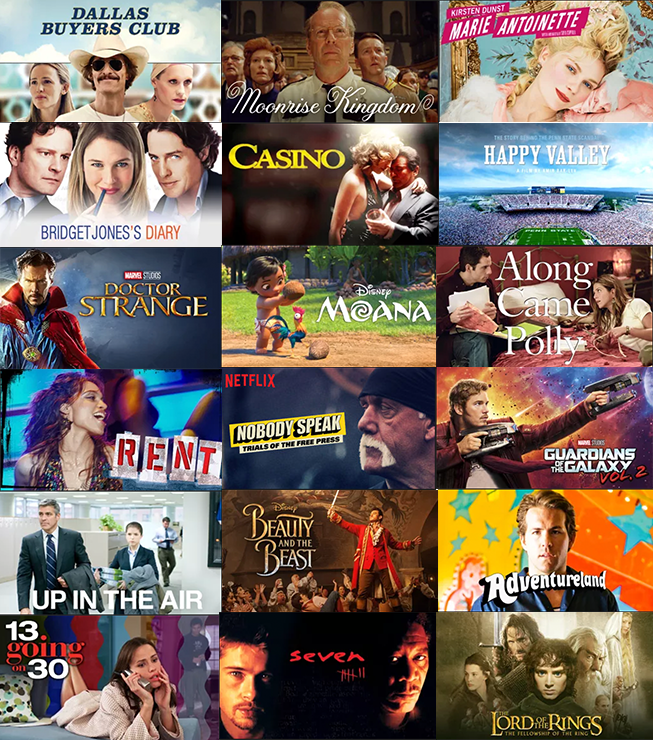
Netflix is perhaps the most prominent example of a tech company using data to dictate content consumption. Beyond just suggesting titles, Netflix uses a technology called “Aesthetic Visual Analysis.” This system selects the specific thumbnail image you see for a movie based on your past behavior. If you tend to watch romantic comedies, the thumbnail for an action movie might feature the lead couple. If you prefer explosions and stunts, the same movie will be advertised to you with an action-heavy still. This is real-time A/B testing at a massive scale, designed to reduce “friction” in the decision-making process.
Real-Time Data and the Feedback Loop
The algorithm doesn’t just care about what you watch; it cares about how you watch it. Tech stacks now monitor “completion rates” (did you finish the movie?), “rewatchability,” and “drop-off points.” If a significant percentage of users turn off a movie at the 20-minute mark, the system learns that the film’s pacing may be a deterrent and adjusts its recommendation rank accordingly. This feedback loop ensures that the technology is constantly evolving to match the shortening attention spans of the digital age.
The Role of Natural Language Processing (NLP)
With the advent of voice-controlled remotes and smart speakers, Natural Language Processing has become a critical component of movie discovery. When you ask your TV, “What movie should I watch tonight?”, the NLP engine must parse intent. It needs to distinguish between “Find me something like Inception” and “Find me something mind-bending.” This requires a deep understanding of semantics and the ability to map linguistic queries to the metadata tags mentioned previously.
Emerging AI Tools and Niche Apps for the Indecisive Viewer
While major streaming platforms have their own internal tech, a new ecosystem of third-party software and AI tools has emerged to help users navigate the fragmented landscape of multiple subscriptions.
Conversational AI and LLMs as Personal Curators
The rise of Large Language Models (LLMs) like ChatGPT and Claude has revolutionized movie recommendations. Unlike a standard search engine, a generative AI can engage in a dialogue. A user can provide highly specific prompts: “I want a movie from the 1990s that feels like a rainy Sunday, has no violence, and stars an actor who has won an Oscar.” The AI can cross-reference its massive training data to provide a curated list with justifications for each choice. This moves the technology from a “passive suggestion” model to an “active consultation” model.
Social Discovery Platforms and Community-Driven Tech
Apps like Letterboxd and Reelgood utilize a different technological approach: the social graph. By integrating social media elements with database technology, these platforms allow users to follow “taste-makers.” The tech here focuses on API integrations, allowing users to see which movies are trending among their specific social circle or which films are available on the services they currently pay for. This solves the “where is it streaming?” problem, which is often the final technical hurdle in movie selection.
JustWatch and the Aggregation Engine
One of the biggest pain points in the “what to watch” journey is platform fragmentation. JustWatch uses a sophisticated crawling technology to track the licensing agreements of thousands of movies across hundreds of platforms globally. Their recommendation engine is built on top of a massive relational database that updates in real-time as movies move from “theatrical” to “digital purchase” to “subscription streaming.”
The Paradox of Choice: How Tech is Solving (and Creating) Decision Fatigue
While technology provides the tools to find the perfect movie, it also contributes to the “Paradox of Choice”—a state where having too many options leads to anxiety rather than satisfaction. The tech industry is currently pivoting to solve the very problem it helped create.
The UX of Infinite Content: Less is More
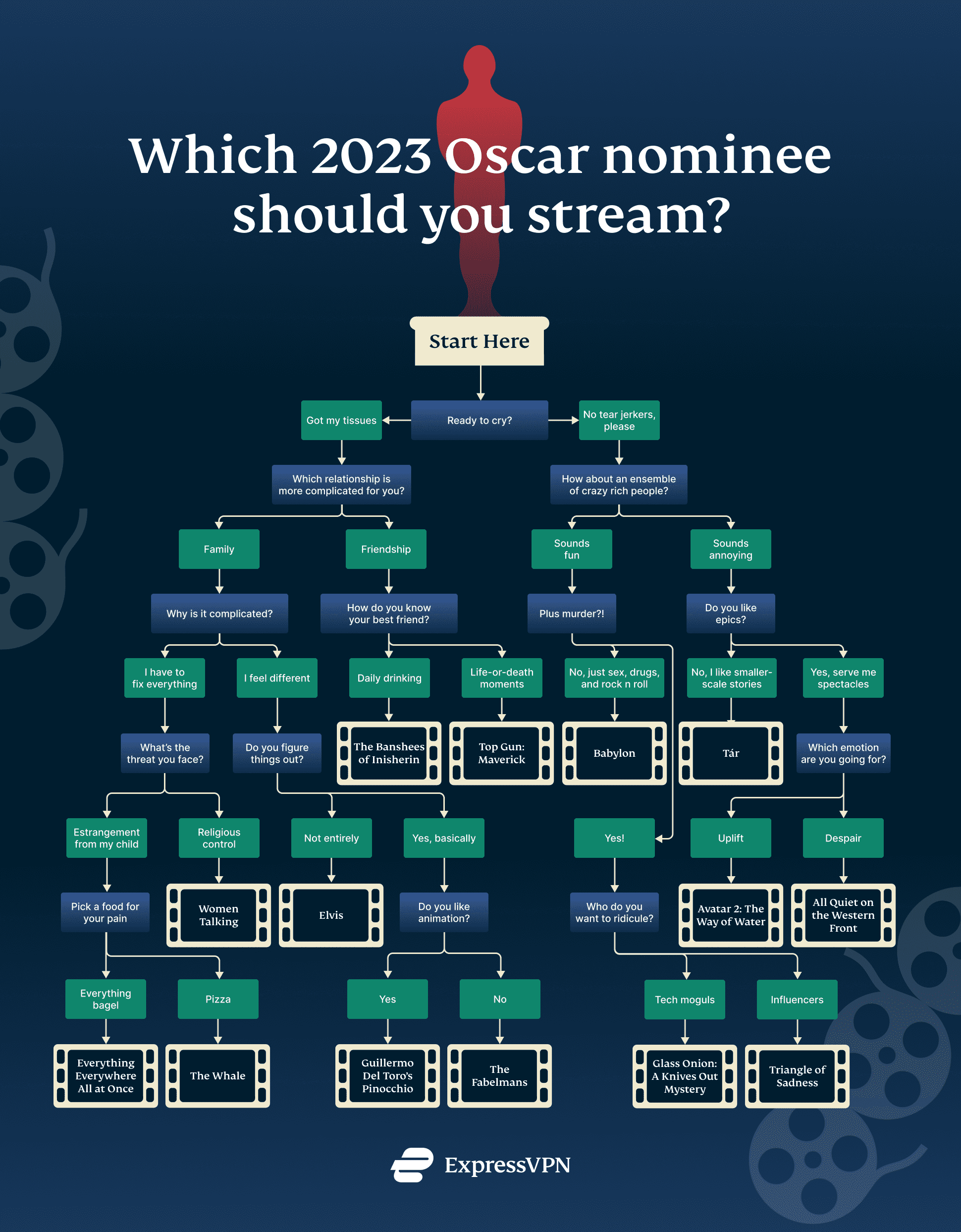
UX designers are beginning to realize that presenting 500 “Top Picks” is counterproductive. The next wave of discovery tech focuses on “Constraint-Based UI.” Some platforms are experimenting with “Shuffle” buttons or “Play Something” features that bypass the browsing phase entirely, using a “lean-back” approach where the AI takes full control based on the user’s high-probability matches. This mimics the experience of traditional cable TV but with the precision of modern data science.
Future Trends: Biometric Recommendations and VR
Looking forward, the technology for movie selection may become even more intrusive and intuitive. There are ongoing explorations into using biometric data—such as heart rate or facial recognition via a smartphone camera—to gauge a user’s current emotional state. If the tech detects high stress, it might suggest a “comfort movie” or a low-stakes comedy.
Furthermore, as we move into the era of spatial computing and VR (with devices like the Apple Vision Pro), the “interface” for choosing a movie will become a 3D environment. Imagine walking through a virtual library where the “books” on the shelves are dynamically generated based on your mood, the time of day, and your previous viewing habits.
Conclusion: The Algorithm as the New Critic
The question “What movie should I watch?” is no longer a matter of chance. It is a data-driven journey through complex algorithms and machine learning models. As the technology continues to evolve, the line between “what we want to watch” and “what the algorithm thinks we want to watch” will continue to blur.
For the consumer, this means less time spent scrolling and more time engaged in the cinematic experience. However, the responsibility remains with the tech architects to ensure that these engines don’t just create “echo chambers” of familiar content, but also introduce users to the unexpected, the avant-garde, and the transformative power of a movie they didn’t know they needed to see. The future of film discovery isn’t just about finding a movie; it’s about the technology of perfect timing.
aViewFromTheCave is a participant in the Amazon Services LLC Associates Program, an affiliate advertising program designed to provide a means for sites to earn advertising fees by advertising and linking to Amazon.com. Amazon, the Amazon logo, AmazonSupply, and the AmazonSupply logo are trademarks of Amazon.com, Inc. or its affiliates. As an Amazon Associate we earn affiliate commissions from qualifying purchases.