
The Moon, Earth’s ethereal companion, has captivated humanity for millennia, inspiring myths, poetry, and scientific inquiry. Its mere presence profoundly shapes our planet, from tides to the stabilization of Earth’s axial tilt. Yet, despite its proximity and significance, the definitive answer to the question “what made the Moon?” remains one of the most compelling mysteries in planetary science. While the pursuit of this answer is fundamentally a scientific endeavor, the journey to unraveling lunar origins is increasingly defined by cutting-edge technology. From the telescopes that gaze into the cosmic past to the supercomputers that simulate planetary collisions, and the intricate instruments that dissect lunar samples, technology is the indispensable lens through which we peer back billions of years to witness the Moon’s fiery birth. This article delves into how advanced technological tools and methodologies are not just aiding, but actively enabling, our quest to understand the monumental forces that forged our celestial neighbor.
The Technological Lens: Unveiling Lunar History
Our understanding of the Moon’s genesis, while still evolving, has been profoundly shaped by our ever-advancing ability to observe, measure, and analyze. The technological tools we employ serve as extensions of our senses, allowing us to gather data from incredible distances and scrutinize matter at microscopic levels.
Telescopes and Space Probes: Our Eyes on the Sky
The initial steps in understanding the Moon came from basic observation, but modern astronomy has transformed this into a sophisticated data-gathering process. Ground-based telescopes, equipped with adaptive optics, provide high-resolution images of the lunar surface, mapping its features, composition, and even detecting subtle changes over time. Space-based observatories, free from atmospheric distortion, offer even greater clarity. The Hubble Space Telescope, for instance, has provided critical insights into planetary formation processes elsewhere in the solar system, offering comparative data points for lunar models. The James Webb Space Telescope (JWST), with its unparalleled infrared capabilities, pushes these boundaries further, allowing us to observe dust disks around young stars – potential birthplaces of new planetary systems and moons – thereby offering clues to our own system’s violent youth.
However, direct lunar exploration has been the game-changer. The Apollo missions of the 1960s and 70s were technological marvels, placing humans on the Moon and, critically, returning hundreds of kilograms of lunar rock and soil. These samples remain invaluable. Beyond human missions, a fleet of robotic probes has dramatically expanded our knowledge. The Clementine mission (1994) provided the first comprehensive topographic map of the Moon, while the Lunar Prospector (1998–1999) detected evidence of water ice at the poles. More recently, NASA’s Lunar Reconnaissance Orbiter (LRO), launched in 2009, continues to provide an unprecedented trove of data, including high-resolution imaging, detailed topography, and measurements of surface temperatures and radiation. These missions, with their sophisticated cameras, spectrometers, altimeters, and radar systems, are essentially remote geological laboratories, mapping the Moon’s surface and subsurface to paint a clearer picture of its evolutionary history. Each new instrument developed for these missions offers a new perspective, chipping away at the unknown.
Geophysical Instrumentation: Listening to the Moon’s Core
While surface observations tell one story, the Moon’s interior holds another, equally crucial, narrative. Here, geophysical instrumentation plays a pivotal role. The Apollo missions left behind a network of seismometers, devices designed to measure ground motion. Over years, these instruments recorded “moonquakes” – both natural tremors and artificial impacts from spent rocket stages – transmitting data back to Earth. Analyzing these seismic waves, much like how geophysicists study Earth’s interior, allowed scientists to deduce the Moon’s internal structure: its crust, mantle, and a small, partially molten core. This information is vital for constraining models of lunar formation, as the early Moon’s interior structure would have been a direct consequence of its genesis and subsequent cooling.
Further technological advancements include gravimeters, which map subtle variations in the Moon’s gravitational field, revealing density anomalies beneath the surface, and magnetometers, which measure the Moon’s weak magnetic field, providing insights into its past magnetic dynamo and core dynamics. Understanding these internal characteristics through advanced instrumentation allows scientists to test hypotheses about the Moon’s initial state, its energy budget, and how it has evolved since its formation. These technologies provide the empirical data that ground theoretical models, moving speculation closer to scientific fact.
Computational Power: Simulating the Cosmic Cataclysm
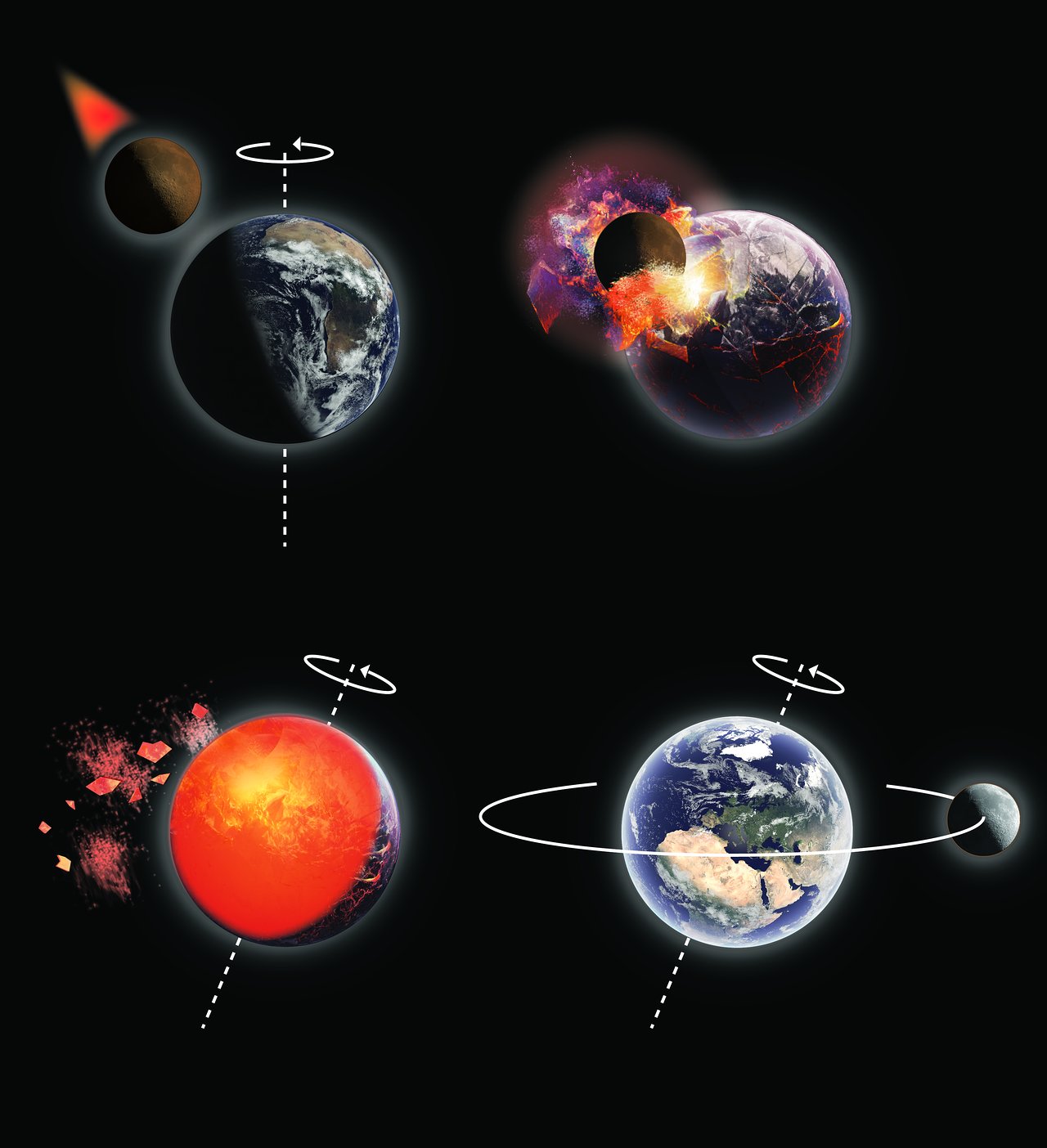
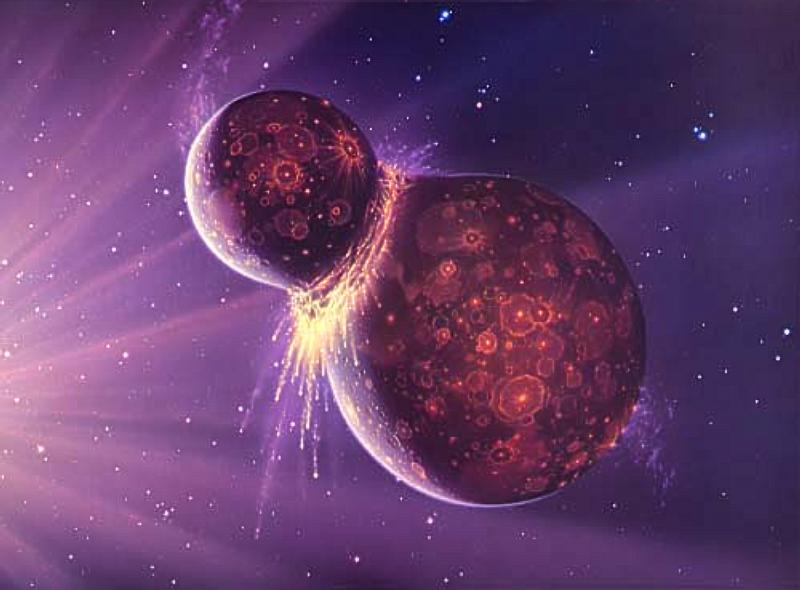
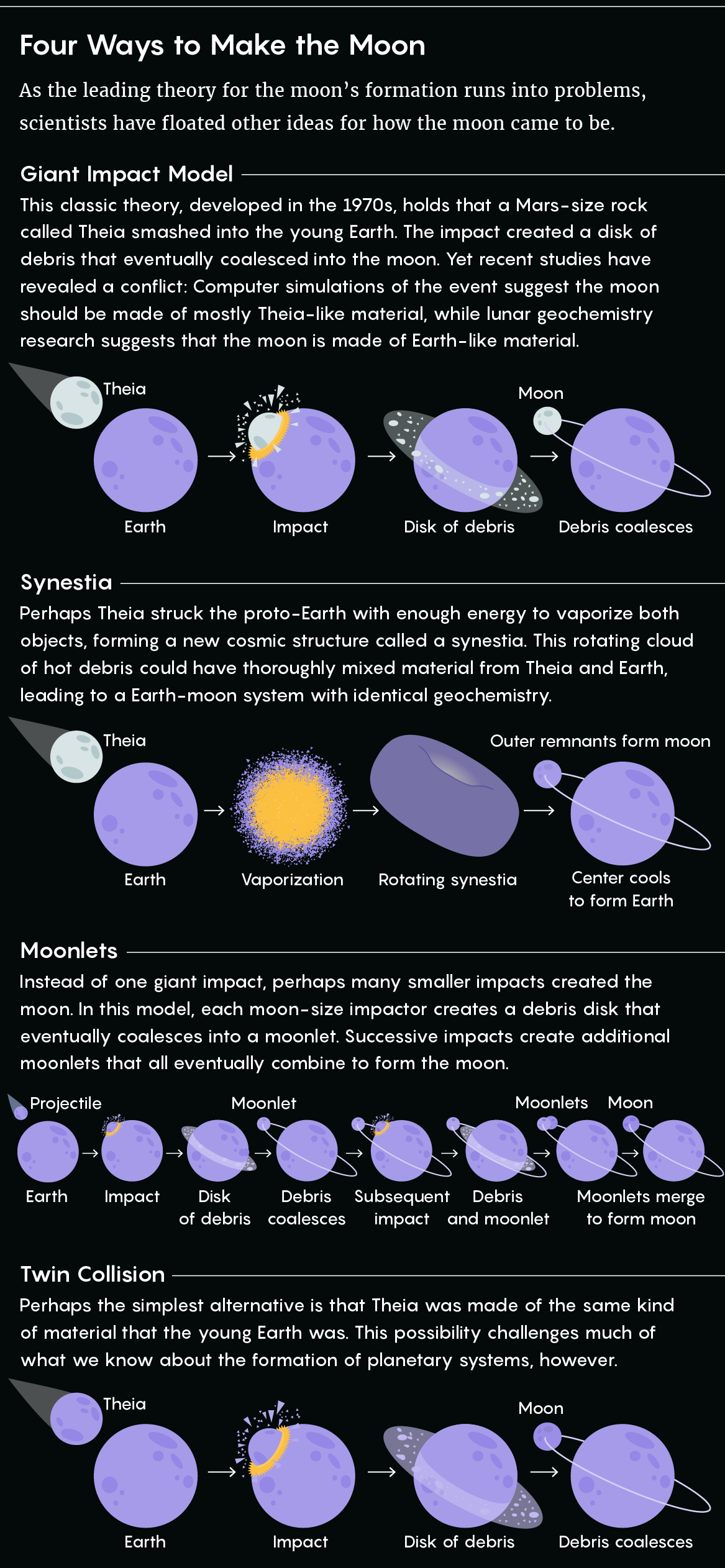
The prevailing hypothesis for the Moon’s formation is the “Giant Impact Hypothesis,” suggesting a Mars-sized protoplanet collided with early Earth. Reconstructing an event of such colossal scale, occurring billions of years ago, is impossible without the aid of immense computational power.
Hydrodynamic Simulations: Recreating the Giant Impact
Supercomputers are the virtual laboratories where the Giant Impact Hypothesis is tested and refined. Scientists employ sophisticated numerical simulations, specifically smoothed particle hydrodynamics (SPH) models, to recreate the cosmic collision. These simulations involve billions of particles, each representing a parcel of rock or fluid, interacting under the influence of gravity, hydrodynamics (fluid motion), and thermodynamics (heat transfer). Researchers can vary parameters such as the impactor’s size, mass, velocity, angle of impact, and the initial rotation rate of the proto-Earth.
These complex calculations track the distribution of energy, the melting and vaporization of rock, the ejection of debris into orbit, and its eventual accretion into a nascent Moon. Early simulations were crude, but with each generation of supercomputer and refinement of the physics algorithms, the models have become increasingly realistic. They have shown how a disk of debris, composed primarily of Earth material with some contribution from the impactor, could form and then coalesce into the Moon within weeks or months. The computational results are then compared with observational data – such as the Moon’s mass, orbit, and the angular momentum of the Earth-Moon system – to validate or adjust the simulation parameters, pushing us closer to understanding the precise dynamics of this ancient, formative event.
Data Analysis and AI: Sifting Through Cosmic Clues
The sheer volume of data generated by telescopes, probes, and simulations is staggering. To extract meaningful insights, advanced data analysis techniques, often powered by Artificial Intelligence (AI) and Machine Learning (ML), are indispensable. AI algorithms can identify subtle patterns in spectral data from lunar rocks, helping to classify minerals and infer geological processes that might be indicative of the Moon’s formation mechanism. They can process vast image datasets from missions like LRO to automatically map craters, identify compositional variations, and detect even minute surface changes.
In the realm of simulations, AI can optimize parameter searches for the Giant Impact models, exploring a much larger range of impact scenarios than human researchers could manually test. Machine learning can also be used to quickly predict outcomes of complex physical interactions, accelerating the development of new hypotheses. By sifting through terabytes of cosmic clues, AI and ML tools enable scientists to find correlations, detect anomalies, and build predictive models that would otherwise remain hidden within the noise, significantly speeding up the pace of discovery in lunar science.
Materials Science and Laboratory Innovation: Deciphering Lunar Samples
While remote sensing and simulations provide broad strokes, direct analysis of lunar samples offers unparalleled detail, allowing scientists to “read” the Moon’s history at an atomic level. This is where advanced materials science and laboratory innovations become crucial.
Isotopic Analysis: Reading the Moon’s Birth Certificate
The lunar samples brought back by Apollo missions, and more recently by China’s Chang’e-5 mission, are subjected to an array of sophisticated analytical techniques. Among the most powerful is isotopic analysis, performed using highly sensitive mass spectrometers. These instruments can precisely measure the ratios of different isotopes (atoms of the same element with different numbers of neutrons) in lunar rocks. Critically, oxygen isotopes in lunar rocks are remarkably similar to those found in Earth’s mantle, a key piece of evidence supporting the Giant Impact Hypothesis. If the Moon had formed from a completely different body, its isotopic signature would likely be distinct.
Further analysis of other isotopic systems, such as titanium, tungsten, and chromium, provides additional constraints on the origin of the Moon’s material and the conditions under which it formed. These ultra-precise measurements require highly controlled laboratory environments, extremely pure reagents, and cutting-edge detector technologies that can resolve minute differences in atomic masses. Each new generation of mass spectrometer offers greater precision and sensitivity, enabling scientists to refine our understanding of the chemical connection between Earth and its Moon, strengthening the argument for a shared lineage born from a catastrophic collision.
Analog Environments and Experimental Petrology
Beyond analyzing existing samples, scientists also use advanced laboratory setups to recreate the extreme conditions hypothesized during the Moon’s formation. Experimental petrology involves synthesizing minerals and rocks under high-pressure, high-temperature conditions (akin to those found deep within planetary interiors or during energetic impacts) to study their behavior and properties. For instance, experiments can simulate the melting and vaporization of silicate materials at temperatures exceeding 2000°C and pressures far beyond Earth’s surface.
These experiments help researchers understand how various elements would partition between solid, liquid, and vapor phases in the early lunar disk, impacting the Moon’s eventual composition. Analog environments can also simulate the vacuum of space and the radiation environment to understand how materials would have behaved during accretion. These innovative laboratory technologies provide a tangible link between the theoretical models and the empirical data from lunar samples, validating assumptions about the physical and chemical processes that governed the Moon’s chaotic genesis.
The Future of Lunar Understanding: Next-Gen Tech and Beyond
The quest to definitively answer “what made the Moon” is far from over, and future technological advancements promise to unlock even deeper insights.
Artemis and Beyond: Renewed Exploration
Upcoming missions, such as NASA’s Artemis program, represent a significant leap forward in lunar exploration. These missions aim to establish a sustained human presence on the Moon and, critically, return new samples from previously unexplored regions, particularly the lunar poles. The advanced payloads on Artemis landers and rovers will include more sophisticated drills capable of penetrating deeper into the regolith, and instruments designed for in-situ resource utilization (ISRU) – analyzing lunar materials for potential resources like water ice and rare-earth elements. The precise localization and communication technologies supporting these missions will enable unprecedented levels of coordination and data transmission, providing a continuous stream of new information to refine our models.
Quantum Computing and Advanced AI for Astrophysical Modeling
Looking further into the future, the nascent fields of quantum computing and even more advanced AI promise to revolutionize astrophysical modeling. Quantum computers could potentially simulate the complex quantum mechanical interactions within a giant impact scenario with far greater fidelity than classical supercomputers, handling the intricate interplay of forces and particles with unprecedented accuracy. Advanced AI, particularly in areas like physics-informed neural networks, could lead to self-improving simulation models that continuously learn from observational data and existing physics, accelerating the discovery of optimal parameters for lunar formation. These technologies could allow us to explore the parameter space of the Giant Impact Hypothesis with a depth and speed currently unimaginable, potentially resolving long-standing ambiguities in our understanding.
Space-Based Observatories: Deeper Insights
While current telescopes provide incredible views, future space-based observatories could push the boundaries even further. Concepts for next-generation observatories include arrays of telescopes working in tandem, or specialized instruments designed for high-resolution spectrography of lunar volcanism or outgassing. Furthermore, the burgeoning field of exoplanet science continues to discover moons orbiting planets outside our solar system. Comparative planetary science, leveraging data from these alien moons using advanced exoplanet detection technologies, could provide crucial contextual information, allowing us to understand if our Moon’s formation was a common or unique event in the universe. Each new discovery in exoplanetary systems, enabled by cutting-edge detection and characterization technologies, adds a new piece to the universal puzzle of moon formation.
Conclusion
The enduring mystery of “what made the Moon” stands as a testament to humanity’s innate curiosity and our relentless drive for knowledge. While the core question is scientific, the pursuit of its answer is inextricably linked to technological innovation. From the powerful optics that gather light across billions of miles to the intricate sensors that probe atomic structures, and the supercomputers that resurrect ancient cosmic collisions, technology is the engine of discovery. Each technological leap forward brings us closer to a complete understanding of our Moon’s violent and dramatic birth, allowing us to piece together a narrative spanning billions of years. The synergistic relationship between scientific inquiry and technological advancement not only continues to rewrite the Moon’s origin story but also highlights humanity’s profound capacity to use ingenuity to unravel the most profound secrets of the cosmos. As we venture further into space and develop ever more sophisticated tools, the ultimate answer to “what made the Moon” seems not just within reach, but an inevitable triumph of human technological prowess.
aViewFromTheCave is a participant in the Amazon Services LLC Associates Program, an affiliate advertising program designed to provide a means for sites to earn advertising fees by advertising and linking to Amazon.com. Amazon, the Amazon logo, AmazonSupply, and the AmazonSupply logo are trademarks of Amazon.com, Inc. or its affiliates. As an Amazon Associate we earn affiliate commissions from qualifying purchases.