
The Xbox One X, often lauded as “the world’s most powerful console” at its launch in November 2017, represented a significant leap forward in home console technology. It was not a new console generation but rather a premium, high-performance iteration within the Xbox One family, designed specifically to deliver uncompromised 4K gaming experiences to discerning players. Developed by Microsoft, the Xbox One X was engineered for a specific purpose: to bring true native 4K resolution, enhanced graphics, and superior performance to a console form factor, bridging the gap between traditional console gaming and the burgeoning PC gaming landscape.

At its core, the Xbox One X was an ambition realized—a testament to pushing the boundaries of what was previously thought possible within the constraints of console hardware. It wasn’t merely an incremental upgrade like its predecessor, the Xbox One S, which added 4K Blu-ray playback and HDR support. Instead, the Xbox One X was a complete re-engineering of the Xbox One architecture, featuring a significantly more powerful graphics processor, faster memory, and a more efficient cooling system, all packed into the smallest Xbox console ever created at the time. This formidable hardware allowed it to render games in native 4K resolution, offer enhanced visuals for games played on 1080p displays, and ensure smoother frame rates across a vast library of titles. It was designed for gamers who owned 4K televisions and sought the pinnacle of visual fidelity and performance that the console generation could offer before the advent of the Xbox Series X/S.
The Apex of Last-Gen Power
The Xbox One X’s reputation as a powerhouse was rooted in its impressive technical specifications, which set it apart from all other consoles of its generation, including its direct competitor, the PlayStation 4 Pro. Microsoft’s engineering team meticulously crafted a system capable of delivering fidelity previously exclusive to high-end gaming PCs. This focus on raw power meant gamers could experience their favorite titles with unprecedented visual clarity and performance on a console.
A Deep Dive into Hardware Specifications
At the heart of the Xbox One X was the custom-designed “Scorpio Engine” system-on-a-chip. This integrated circuit combined a custom AMD CPU and GPU into a single, highly optimized unit. The CPU was an 8-core custom x86 processor clocked at 2.3 GHz, representing a 31% increase in speed over the Xbox One and One S. However, the real star was the GPU. Boasting 6 teraflops of graphical processing power, with 40 compute units clocked at 1172 MHz, it dwarfed the 1.4 teraflops of the original Xbox One and significantly surpassed the PlayStation 4 Pro’s 4.2 teraflops. This monumental leap in GPU power was the primary enabler for native 4K gaming.
To complement this formidable GPU, the Xbox One X featured 12GB of GDDR5 RAM. Crucially, 9GB of this memory was dedicated to games, running at a blazingly fast 326 GB/s memory bandwidth. This high bandwidth was essential for handling the massive texture data and rendering requirements of 4K resolutions, ensuring that the GPU was consistently fed with information without bottlenecks. The remaining 3GB of RAM was reserved for the console’s operating system. Storage was typically a 1TB HDD, offering ample space for numerous game installations, which grew increasingly large due to high-resolution textures. These combined specifications allowed the Xbox One X to render game environments with incredible detail, improved lighting, and complex visual effects, all at a buttery-smooth frame rate.
Native 4K Gaming and Visual Fidelity
One of the Xbox One X’s most significant selling points was its ability to render games in native 4K (3840×2160 pixels), which is four times the resolution of standard 1080p HD. While other consoles often relied on checkerboard rendering or upscaling techniques to achieve a 4K output, the Xbox One X had the horsepower to draw every pixel, resulting in an unparalleled level of sharpness and detail. This capability, combined with support for High Dynamic Range (HDR) and Wide Color Gamut (WCG), meant that compatible games displayed a broader range of colors, deeper blacks, and brighter whites, creating a more vibrant and lifelike image.
Game developers could leverage this power to implement higher-resolution textures, improved anti-aliasing, enhanced draw distances, and more complex particle effects. The impact on titles optimized for the Xbox One X was often stunning, bringing a new level of immersion and visual fidelity to the console experience that rivaled or even surpassed many PC configurations of the time. For gamers with a 4K HDR television, the visual upgrade was transformative, making the most of their display technology.
Enhanced Performance for Existing Games
Even for games not specifically designed with native 4K in mind, or for users playing on 1080p displays, the Xbox One X offered substantial benefits. Through a feature called “supersampling,” the console would render games at a higher resolution (often 4K) and then downsample them to 1080p. This process effectively acts as a form of extreme anti-aliasing, resulting in a much cleaner, sharper image with fewer jagged edges than native 1080p rendering.
Beyond resolution, the raw power of the Xbox One X translated to improved performance across the entire Xbox One game library. Many titles, even those from the original Xbox One era, received “Xbox One X Enhanced” patches. These enhancements could include higher, more stable frame rates, faster loading times, increased anisotropic filtering (making textures appear sharper at an angle), and dynamic resolution scaling that kept games running smoothly even during intense action. This meant that the Xbox One X wasn’t just for new 4K titles; it breathed new life into older games, making the entire Xbox ecosystem a more polished and enjoyable experience.
Design, User Experience, and Ecosystem
Beyond its internal specifications, the Xbox One X also made strides in design and user experience, integrating seamlessly into the broader Xbox ecosystem and providing a premium feel. Its physical presence was as refined as its internal capabilities, designed to appeal to those who appreciated both performance and aesthetics.
A Sleek and Compact Form Factor
Despite being the most powerful console Microsoft had ever built, the Xbox One X was remarkably compact. It was, at the time of its launch, the smallest Xbox console ever made, boasting a sleek, minimalist design with a matte black finish. This engineering feat was achieved through an innovative vapor chamber cooling system—a technology more commonly found in high-end graphics cards—which efficiently dissipated heat from the powerful components, allowing them to operate at peak performance without overheating or requiring a bulky chassis. The internal power supply also contributed to its clean setup, eliminating the need for an external power brick. This attention to design meant the Xbox One X could blend effortlessly into any home entertainment setup, belying the immense power housed within.
The Xbox Dashboard and Features
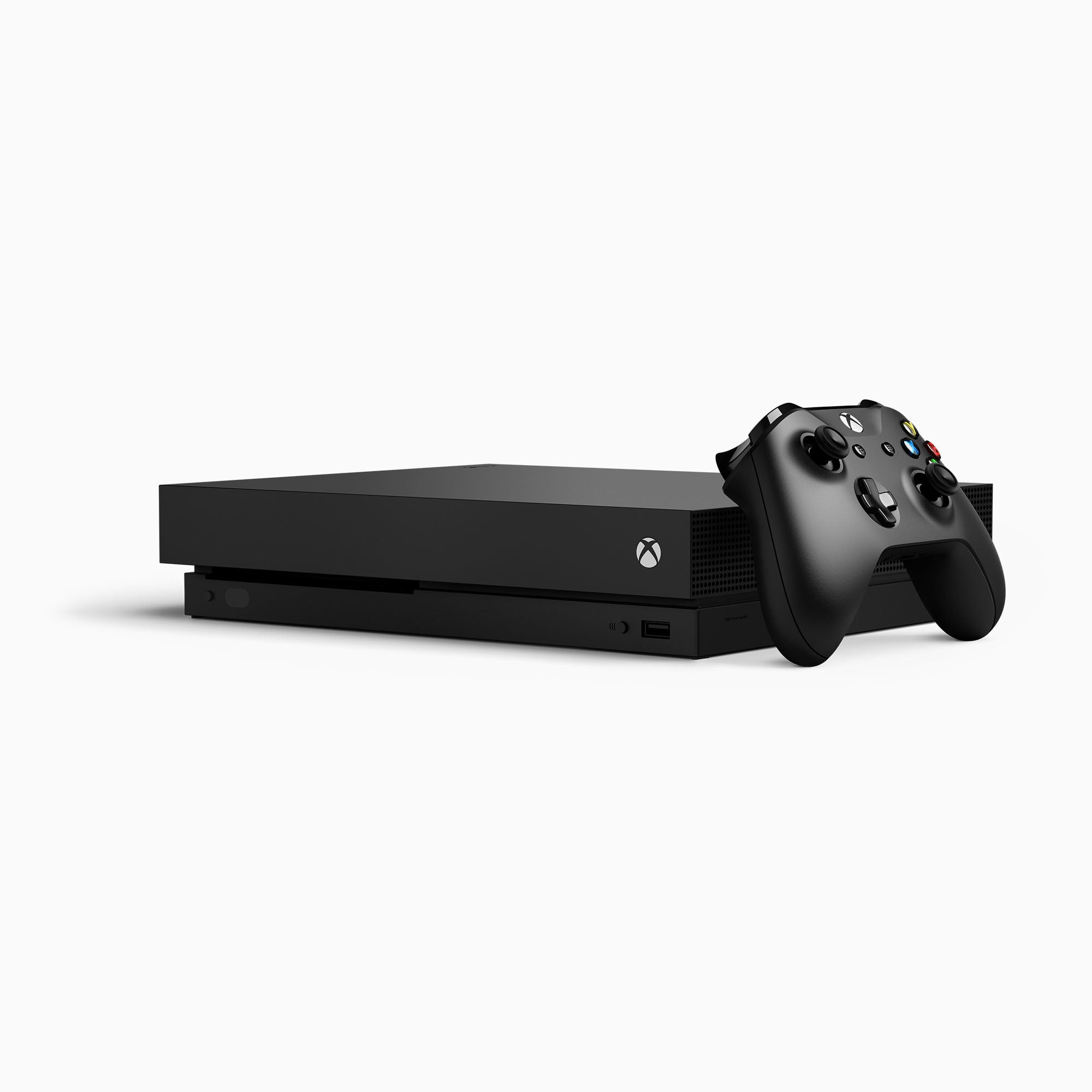
The user interface of the Xbox One X was identical to that of the Xbox One S, utilizing the familiar Xbox Dashboard. This meant a consistent and intuitive experience for anyone already in the Xbox ecosystem. The dashboard featured a customizable home screen, quick access to games and apps, and social features like activity feeds and friend lists. A key feature of the Xbox One X was its integrated 4K Ultra HD Blu-ray player, allowing users to watch physical 4K movies in stunning resolution, cementing its role as a comprehensive media entertainment hub. Beyond physical media, the console supported a wide array of streaming applications, including Netflix, Amazon Prime Video, Disney+, and more, all capable of outputting content in 4K HDR, further enhancing its versatility as a living room entertainment device.
Integration with Xbox Live and Game Pass
The Xbox One X was fully integrated into Microsoft’s robust Xbox Live online service, providing access to online multiplayer gaming, digital game purchases, cloud saves, and a thriving community. Xbox Live remained the backbone of the multiplayer experience, offering stable connections and features like Parties and Looking for Group. Complementing this was Xbox Game Pass, Microsoft’s subscription service that provides subscribers with access to a rotating catalog of hundreds of games for a monthly fee. The Xbox One X was an ideal platform for Game Pass, allowing users to download and play these titles with all the visual and performance enhancements the console could offer, maximizing the value of the subscription. The console also supported “backward compatibility,” allowing users to play a vast library of Xbox 360 and original Xbox games, many of which also received performance boosts on the Xbox One X, making it a comprehensive platform for enjoying generations of Xbox titles.
Performance, Graphics, and Gameplay Impact
The true measure of any gaming console lies in its ability to translate raw specifications into tangible improvements in gameplay experience. The Xbox One X excelled in this regard, offering a demonstrably superior visual and performance profile for the most demanding titles.
Unlocking True 4K Gaming Experiences
For games developed with the Xbox One X in mind, the difference was night and day. Titles like Forza Motorsport 7, Gears 5, Red Dead Redemption 2, Assassin’s Creed Odyssey, and Shadow of the Tomb Raider truly shone on the console. These games leveraged the Xbox One X’s power to render stunningly detailed environments, intricate character models, and breathtaking visual effects in native 4K resolution. The clarity and sharpness of the image, especially on a large 4K HDR television, were immersive, pulling players deeper into the game worlds. Every texture, every particle effect, and every ray of light appeared with a fidelity previously unimaginable on a console. This capability positioned the Xbox One X as the console of choice for visual enthusiasts who prioritized the absolute best graphical presentation.
Frame Rate Stability and Smoother Gameplay
Beyond raw resolution, the Xbox One X’s increased processing power significantly contributed to more stable and higher frame rates. While many games on the original Xbox One struggled to maintain a consistent 30 frames per second (fps) or saw significant drops during intense action, the Xbox One X often delivered a locked 30fps or, in many cases, offered a 60fps performance mode for a smoother, more responsive gaming experience. This improvement was particularly noticeable in fast-paced action games and shooters, where every frame counts. Smoother gameplay translates directly to a more enjoyable and reactive experience, reducing input lag and making fast-paced sequences more fluid and controllable.
The Sound Advantage: Spatial Audio
While visuals often take center stage, the Xbox One X also offered significant advancements in audio. It was one of the first consoles to fully support advanced spatial audio formats like Dolby Atmos and DTS:X. When paired with compatible audio systems (like soundbars or home theater setups with upward-firing speakers), these technologies allowed for a truly three-dimensional soundscape. Sounds could be precisely placed around and above the listener, providing a heightened sense of immersion and positional awareness in games. Hearing footsteps above you or an explosion rattling the environment from a specific direction added another layer of realism and tactical advantage, further enhancing the premium gaming experience.
Who Was the Xbox One X For?
The Xbox One X was a niche product within the broader console market, designed with a specific type of gamer and setup in mind. Its existence and market position reflected a strategy by Microsoft to cater to different segments of its audience, without forcing everyone into a single hardware upgrade path.
The Enthusiast Gamer and 4K TV Owner
The primary target audience for the Xbox One X was the enthusiast gamer—someone who appreciated cutting-edge graphics, demanded the best possible performance from their games, and, crucially, owned a 4K HDR television. For this demographic, the Xbox One X offered a console experience that came closest to high-end PC gaming without the complexity and higher cost typically associated with building a powerful gaming rig. It was an investment in premium fidelity, intended for those who wanted to fully utilize their advanced display technology. It offered a plug-and-play solution for top-tier console gaming.
Bridging the Generational Gap
The Xbox One X was released at an interesting time—late in the Xbox One generation but before the launch of the next generation of consoles (Xbox Series X/S). It effectively served as a “mid-generation refresh” or an “interim console” that blurred the lines between generations. It allowed Microsoft to keep pace with the rapidly evolving display technology (4K HDR TVs becoming more common) and the increasing demands for graphical fidelity, without abandoning the existing Xbox One user base. It extended the life and relevance of the Xbox One platform, offering a premium option for those not yet ready for an entirely new console generation but desiring significant upgrades.

Its Place in the Xbox Lineage
In the broader Xbox lineage, the Xbox One X sits as a powerful, albeit brief, pinnacle of the eighth console generation for Microsoft. It was the most powerful iteration of the Xbox One family, significantly outperforming the original Xbox One and the slimmed-down Xbox One S. With the launch of the Xbox Series X in 2020, the Xbox One X was officially discontinued. However, its legacy lives on. Many of the architectural principles and performance targets set by the Xbox One X informed the design of the Xbox Series X, which further expanded on 4K gaming, high frame rates, and advanced visual features. The Xbox One X demonstrated Microsoft’s commitment to raw power and premium experiences, paving the way for the true next-generation consoles.
In conclusion, the Xbox One X was a technological marvel for its time. It was Microsoft’s bold answer to the demand for true 4K console gaming, delivering an unparalleled level of power and visual fidelity within the console space. While its lifecycle was ultimately truncated by the arrival of the next generation, its impact was significant, solidifying the idea that consoles could deliver genuinely high-end, uncompromising gaming experiences. For those who owned one, the Xbox One X offered a professional, insightful, and undeniably engaging way to experience the best games of its era, marking a crucial step in the evolution of console gaming.
aViewFromTheCave is a participant in the Amazon Services LLC Associates Program, an affiliate advertising program designed to provide a means for sites to earn advertising fees by advertising and linking to Amazon.com. Amazon, the Amazon logo, AmazonSupply, and the AmazonSupply logo are trademarks of Amazon.com, Inc. or its affiliates. As an Amazon Associate we earn affiliate commissions from qualifying purchases.