
Tax season often brings a sense of urgency, but that urgency can quickly turn into anxiety if you find yourself missing a crucial document: the Form W-2. Typically, employers are required to send this Wage and Tax Statement to employees by January 31st. However, due to administrative errors, company closures, or a shift in employment status to the gig economy, many taxpayers find themselves staring at a deadline without the necessary paperwork.
Filing your taxes without a W-2 is not only possible but required by the IRS if you earned a taxable income. Navigating this process requires a blend of diligence, record-keeping, and an understanding of specific IRS forms designed for these exact scenarios. In this guide, we will explore the professional strategies for managing missing income documentation and ensuring your financial standing remains compliant with federal regulations.
Understanding Why You Might Lack a W-2
Before diving into the mechanics of filing, it is essential to identify why the form is missing. The IRS classifies income in different ways, and the solution to a missing W-2 depends entirely on your relationship with the entity that paid you.
Common Scenarios for Missing W-2s
There are several legitimate reasons why a W-2 might not arrive in your mailbox. The most common is a simple clerical error—perhaps you moved and failed to update your address with a former employer’s HR department. In more complex cases, a business may have filed for bankruptcy or shuttered its operations abruptly, leaving payroll tasks unfinished. Occasionally, an employer may simply be delinquent in their filing obligations. Regardless of the reason, the responsibility to report income falls squarely on the taxpayer. The IRS expects you to report all earnings, whether or not you received the formal summary of those earnings.
The Difference Between W-2 Employees and 1099 Contractors
A frequent point of confusion in the modern economy is the distinction between an employee and an independent contractor. If you worked as a freelancer, a driver for a rideshare service, or a consultant, you likely won’t receive a W-2 at all. Instead, you should be looking for a Form 1099-NEC (Nonemployee Compensation) or a 1099-K. In the “Money” niche of personal finance, understanding this distinction is vital. If you were misclassified as a contractor when you functioned as an employee, or vice versa, your filing process changes significantly. If you truly are an independent worker, you don’t need a W-2; you need your own accounting records of gross receipts and expenses.
Steps to Take Before Filing Without Your Form
The IRS prefers that you make every reasonable effort to obtain the original documentation before resorting to substitute forms. Taking these proactive steps can prevent processing delays and reduce the likelihood of an audit.
Contacting Your Employer or Payer
The first and most professional step is direct communication. Reach out to the payroll or human resources department of your employer. In many instances, the document was sent but lost in transit, and they can provide a digital copy or a reprint immediately. If the company has closed, try to reach out to the former owners or the accounting firm that handled their year-end taxes. Keep a log of these attempts, including dates and the names of people you spoke with, as the IRS may ask for proof of your “diligent effort” to secure the form.
Utilizing the IRS Get Transcript Tool
If direct contact fails, your next resource is the IRS itself. Employers are required to send copies of W-2s to the Social Security Administration, which then shares that data with the IRS. By using the “Get Transcript” tool on the official IRS website, you can request a “Wage and Income Transcript.” This document displays data from information returns the IRS has received, such as W-2s, 1099s, and 1098s. While this transcript might not be available until later in the tax season (often late May), it is a highly accurate way to see exactly what has been reported under your Social Security number.
Using IRS Form 4852: The Substitute for Missing W-2s
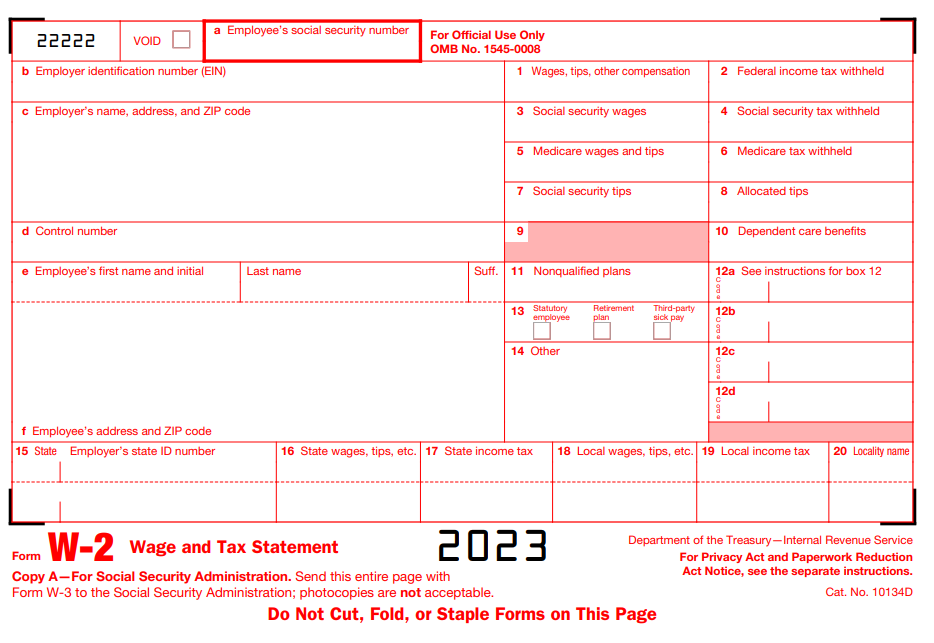
If the filing deadline is approaching and you still have no W-2, the IRS provides a specific solution: Form 4852, Substitute for Form W-2, Wage and Tax Statement. This is a formal declaration where you estimate your income and withholding to the best of your ability.
How to Accurately Estimate Your Earnings and Withholdings
To fill out Form 4852, you need to be precise. The best source for this information is your final paystub of the calendar year. Most year-end paystubs include “Year-to-Date” (YTD) totals for gross wages, federal income tax withheld, Social Security tax, and Medicare tax. When using Form 4852, you are essentially recreating the W-2 based on these totals. It is crucial to ensure that you are looking at the final paycheck issued in the tax year, as payments issued in early January of the following year typically count toward the next tax cycle.
Documentation Needed to Support Your Estimates
Filing a substitute form can sometimes trigger a request for more information from the IRS. To protect your financial interests, gather all supporting evidence used to calculate your numbers. This includes bank statements showing direct deposits, copies of previous paystubs, and any correspondence with your employer. If your estimates differ significantly from what the employer eventually reports, you may need to file an amended return (Form 1040-X). Having a well-organized paper trail ensures that if the IRS questions your figures, you can prove they were calculated in good faith.
Filing for Freelancers, Gig Workers, and the Self-Employed
For many people searching for “how to file without a W-2,” the reality is that they are operating within the side-hustle or freelance economy. In these cases, the lack of a W-2 is standard, and the filing process shifts toward business finance management.
Navigating Schedule C and 1099-NEC
If you earned more than $600 from a client as a non-employee, they are generally required to send you a Form 1099-NEC. However, even if you never receive this form, you must report the income. As a self-employed individual, you will use Schedule C (Form 1040) to report your profit or loss from the business. This section of your tax return is where you list your total “Gross Receipts”—the total amount of money you took in—regardless of whether it was documented on a formal 1099. This is the cornerstone of professional financial management for the modern worker: your own books should be more reliable than the forms you receive.
Deductions to Lower Your Taxable Income
One of the primary benefits of filing as a self-employed person (without a W-2) is the ability to deduct business expenses. While W-2 employees have limited options for deducting unreimbursed work expenses, those filing via Schedule C can subtract the costs of doing business from their gross income. This includes home office expenses, marketing costs, software subscriptions, and a portion of their internet and phone bills. By meticulously tracking these “adjustments to income,” you can significantly lower your overall tax liability, turning a complex filing situation into a strategic financial advantage.
Long-Term Financial Planning and Compliance
Filing taxes without a W-2 is a temporary fix for a stressful situation. To maintain a healthy financial life, you should transition from reactive filing to proactive tax management.
Estimated Tax Payments to Avoid Penalties
The US tax system is a “pay-as-you-go” system. W-2 employees pay through withholding, but if you are working without a W-2—particularly as a contractor—no one is taking taxes out of your checks. To avoid a large bill and “underpayment penalties” at the end of the year, it is professional practice to make quarterly estimated tax payments using Form 1040-ES. This keeps your cash flow predictable and ensures you aren’t hit with a massive liability in April.

Organizing Financial Records for Future Tax Seasons
The stress of a missing W-2 serves as a vital reminder of the importance of digital organization. Moving forward, use financial tools and apps to track every paycheck and expense in real-time. Cloud-based accounting software can sync with your bank accounts to categorize income automatically. By maintaining a “Tax Folder” (either physical or digital) throughout the year and saving every end-of-month paystub, you ensure that even if an employer fails to send a W-2 next year, you have all the data necessary to file accurately and on time.
In conclusion, while missing a W-2 creates an extra hurdle, it does not have to result in penalties or missed deadlines. By utilizing Form 4852, leveraging your own financial records, and understanding the nuances of self-employment income, you can navigate tax season with professional confidence and maintain your path toward long-term financial stability.
aViewFromTheCave is a participant in the Amazon Services LLC Associates Program, an affiliate advertising program designed to provide a means for sites to earn advertising fees by advertising and linking to Amazon.com. Amazon, the Amazon logo, AmazonSupply, and the AmazonSupply logo are trademarks of Amazon.com, Inc. or its affiliates. As an Amazon Associate we earn affiliate commissions from qualifying purchases.