
Venus, often dubbed Earth’s “sister planet” due to its similar size and mass, presents a starkly different reality beneath its thick, sulfuric acid clouds. While its proximity has long intrigued astronomers, unlocking the fundamental characteristics of this shrouded world, such as the precise length of its day, has been a monumental challenge. It’s a testament not just to scientific curiosity, but to the incredible advancements in space technology, remote sensing, and computational power that we can now answer this question with remarkable accuracy. The journey to determine Venus’s day length is a compelling narrative of technological innovation, overcoming extreme environmental obstacles, and pushing the boundaries of what’s observable from millions of miles away.
The Astonishing Slow Spin: A Challenge for Measurement Tech
The first hurdle in determining Venus’s rotation period was its perpetual veil of clouds. From Earth, optical telescopes could only discern the top layers of its atmosphere, offering no direct view of its surface features, which are typically used to track a planet’s rotation. This meant that for centuries, the true nature of Venus’s day remained a mystery.
A Day Longer Than Its Year: An Observational Conundrum
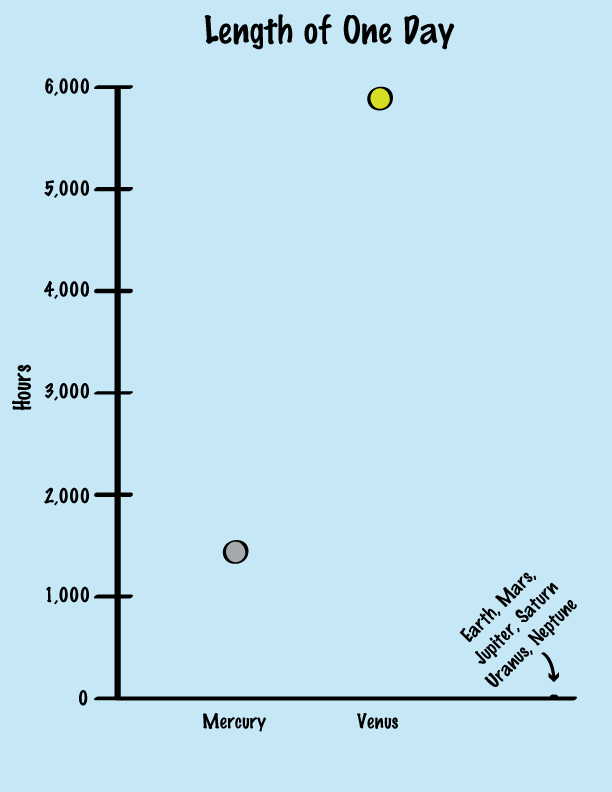
Perhaps one of the most astonishing facts about Venus is that its sidereal day – the time it takes to complete one rotation relative to the distant stars – is longer than its orbital period around the Sun. A Venusian day spans approximately 243 Earth days, while its year is about 225 Earth days. Compounding this peculiarity is its retrograde rotation, meaning it spins clockwise from a perspective above its north pole, opposite to most other planets in our solar system, including Earth. This slow, backward spin significantly complicated early attempts at measurement, as traditional optical tracking was rendered useless by the planet’s opaque atmosphere. Without technological intervention, this fundamental planetary characteristic would have remained speculative at best.
Overcoming the Veil: Early Radar Pioneering
The breakthrough came not with optical telescopes, but with the advent of powerful radar technology in the 1960s. Ground-based radar systems, such as those at the Arecibo Observatory in Puerto Rico and NASA’s Goldstone Deep Space Communications Complex, revolutionized planetary observation. Instead of visible light, these facilities emitted powerful radio waves capable of penetrating Venus’s dense atmosphere.
The principle was ingenious: by sending a radio signal towards Venus and detecting its faint echoes, scientists could analyze the Doppler shift in the returning signal. If Venus were not rotating, the entire reflected signal would show a uniform shift. However, because Venus is rotating, one side of the planet moves towards Earth while the other moves away. This differential motion causes a spreading or broadening of the Doppler-shifted signal. The extent of this broadening directly corresponds to the planet’s rotation rate. This early application of radar represented a pivotal moment, transforming Venus from a featureless disk into a world whose hidden surface dynamics could finally be probed by technological means. It was one of the earliest demonstrations of how advanced radio-frequency tech could pierce cosmic obscurities.
Missions to Venus: Technological Deep Dives and Data Collection
While ground-based radar provided the initial breakthrough, more precise measurements and detailed understanding required sending robotic emissaries directly to Venus. These interplanetary missions, equipped with increasingly sophisticated technology, refined our knowledge of the planet’s rotation and surface features.
Venera and Pioneer Venus: In-situ and Orbital Insights
The Soviet Venera program in the 1960s and 70s was a monumental achievement in space exploration, marking the first successful landings on another planet. While these landers primarily focused on atmospheric composition and surface conditions, their data indirectly contributed to our understanding by providing context for the planet’s extreme environment and atmospheric dynamics, which can influence surface rotation over geological timescales. The engineering feat of designing probes that could survive, even briefly, the crushing pressure and searing temperatures of Venus was a significant technological leap.
NASA’s Pioneer Venus missions in the late 1970s further advanced our capabilities. The Pioneer Venus Orbiter, equipped with its own radar mapper, provided the first comprehensive, albeit low-resolution, maps of Venus’s surface. This on-board radar technology, operating from orbit, allowed for more consistent and detailed observations than intermittent ground-based sweeps. By analyzing the subtle topographical features revealed by the orbiter’s radar, scientists could track the planet’s rotation more accurately, further constraining the period initially estimated by Earth-based radar.
Magellan’s Radar Masterpiece
The pinnacle of radar mapping technology for Venus, and perhaps one of the most successful planetary missions ever, was NASA’s Magellan spacecraft (1990-1994). Magellan was specifically designed to map Venus’s surface using Synthetic Aperture Radar (SAR) technology. Unlike simple radar, SAR works by synthesizing a much larger antenna from the spacecraft’s motion, allowing it to achieve incredibly high resolution, revealing details as small as 120 meters.

Magellan meticulously mapped over 98% of Venus’s surface, providing an unprecedented level of detail about its geological features: volcanoes, impact craters, rift valleys, and vast plains. By tracking the positions of these distinct features over multiple orbital passes spanning several years, scientists could precisely measure Venus’s rotation period. Magellan’s data confirmed the retrograde rotation and refined the sidereal day length to 243.025 ± 0.005 Earth days. This mission was a triumph of engineering and data processing, demonstrating how specialized radar technology could effectively render a planet’s surface from behind an impenetrable atmospheric curtain, offering unparalleled clarity.
Modern Computational Approaches and Future Tech Endeavors
The insights gleaned from missions like Magellan were not just raw data; they were the raw material for increasingly sophisticated computational analysis. Today, the quest for even greater precision and deeper understanding continues, driven by advanced software and the promise of next-generation space technology.
Refining Data with Advanced Software and Algorithms
The sheer volume of radar data generated by missions like Magellan requires powerful computational tools to process, interpret, and refine. Scientists use sophisticated algorithms and high-performance computing to create detailed topographic maps, correct for atmospheric distortions, and account for subtle gravitational influences that could affect perceived rotation. These specialized software suites are capable of performing complex calculations that integrate various data points, reducing errors and enhancing the precision of measurements. The interplay between raw sensor data and advanced analytical software is a cornerstone of modern planetary science, falling squarely within the realm of AI tools and software applications that push scientific boundaries. Researchers continue to fine-tune the Venusian day length, with recent studies, for example, using refined radar measurements and intricate orbital mechanics models to suggest a precise value of 243.0226 Earth days with even greater confidence.
The Quest Continues: Upcoming Missions and Next-Gen Instrumentation
The exploration of Venus is far from over, with several ambitious missions planned for the coming decades. These missions promise to deploy even more advanced technologies, building on the legacy of their predecessors and further refining our understanding of Venus’s rotation and evolution.
- NASA’s DAVINCI+ (Deep Atmosphere Venus Investigation of Noble gases, Chemistry, and Imaging Plus): This mission will deploy a probe to descend through Venus’s atmosphere, taking precise measurements of its composition and chemistry. While not directly measuring rotation, understanding atmospheric dynamics through cutting-edge spectrometers and sensors is crucial for modeling surface-atmosphere interaction, which can influence planetary spin over geological time.
- NASA’s VERITAS (Venus Emissivity, Radio Science, InSAR, Topography, and Spectroscopy): This orbiter will carry a next-generation Synthetic Aperture Radar (SAR) system, even more advanced than Magellan’s. It will create high-resolution 3D maps of Venus’s surface, providing unprecedented detail that will allow for extremely precise measurements of surface features and their movements, potentially detecting minute changes in the rotation rate over time and even signs of active tectonics. It also features a near-infrared spectrometer to peer through atmospheric windows and analyze surface mineralogy.
- ESA’s EnVision: This mission, also an orbiter, will carry an advanced SAR, a sounder to probe the subsurface, and spectrometers to analyze atmospheric gases and trace elements. Its combined instrument suite will provide a holistic view, linking geological processes, atmospheric dynamics, and interior structure, all contributing to a more nuanced understanding of Venus’s rotation and its evolutionary past.
These future missions represent the leading edge of space technology, featuring advanced sensor arrays, robust electronics designed to withstand extreme radiation and temperatures, and sophisticated data processing capabilities, including potential onboard AI for autonomous navigation and data prioritization.
Why Does it Matter? Technological Implications and Future Frontiers
Determining the precise length of a day on Venus is far more than an academic exercise. It offers profound implications for planetary science, informs our understanding of exoplanets, and drives the development of cutting-edge technology for extreme environments.
Informing Planetary Science and Exoplanet Study
Understanding Venus’s unique rotation — its slowness, its retrograde motion, and its interaction with a massive atmosphere — is critical for developing comprehensive models of planetary evolution. It helps scientists understand how planets acquire their spin, how internal dynamics (like core-mantle interactions) influence rotation, and how atmospheric drag can play a role over billions of years. The technologies developed to study Venus directly inform our strategies for observing and characterizing exoplanets. As we search for potentially habitable worlds beyond our solar system, understanding the rotation rates and atmospheric properties of “Earth-like” planets in our own system, revealed through advanced observational and analytical tech, provides invaluable comparative context.
Engineering for Extreme Environments
Venus’s surface is a hellish environment: temperatures hot enough to melt lead (around 462°C or 864°F), atmospheric pressure 92 times that of Earth’s sea level, and clouds of sulfuric acid. Developing technology capable of surviving and operating in such conditions is a supreme engineering challenge. The sensors, electronics, materials, and power systems designed for Venus missions push the boundaries of materials science and high-temperature electronics. These innovations in robust, resilient “gadgets” and “apps” (in the broad sense of hardware/software solutions) for extreme conditions have applications beyond space exploration, potentially benefiting terrestrial industries that operate in harsh environments, from deep-sea exploration to advanced manufacturing.
Conclusion
The question “what is the length of a day in Venus?” encapsulates a fascinating journey of scientific inquiry powered by relentless technological innovation. From the initial conceptual leap of using radar to pierce its perpetual cloud cover, through the focused orbital mapping of missions like Magellan, to the sophisticated computational analysis and next-generation instrumentation of future probes, technology has been the indispensable key. We now know that a Venusian sidereal day is approximately 243 Earth days long, a remarkably slow and retrograde rotation. This precise measurement is not just a numerical fact but a profound testament to humanity’s ability to develop increasingly advanced tools – from radar dishes and spacecraft to complex algorithms and heat-resistant electronics – to unveil the deepest secrets of our cosmic neighbors. The continued exploration of Venus, driven by technological frontiers, promises even more revelations, pushing the boundaries of our knowledge and our engineering prowess into the farthest reaches of space.
aViewFromTheCave is a participant in the Amazon Services LLC Associates Program, an affiliate advertising program designed to provide a means for sites to earn advertising fees by advertising and linking to Amazon.com. Amazon, the Amazon logo, AmazonSupply, and the AmazonSupply logo are trademarks of Amazon.com, Inc. or its affiliates. As an Amazon Associate we earn affiliate commissions from qualifying purchases.