
The world of video games is a dynamic landscape, constantly evolving with new titles, technological advancements, and shifting player expectations. Among the titans of the open-world genre, the Far Cry series stands as a testament to immersive gameplay, sprawling environments, and unforgettable antagonists. For both seasoned fans and newcomers looking to dive into the latest iteration of this action-packed franchise, the question “What is the latest Far Cry game?” is a natural one. This article delves into the technological evolution and current state of the Far Cry universe, identifying its most recent mainline installment and exploring what makes this series a perennial favorite in the realm of interactive entertainment.

The Far Cry Series: A Technological Evolution of Open-World Design
From its inception, the Far Cry series has been at the forefront of pushing boundaries in open-world game design, leveraging cutting-edge technology to craft vast, interactive environments. Each iteration has built upon the last, refining gameplay mechanics, enhancing graphical fidelity, and expanding the scope of player agency within its meticulously designed digital worlds.
From CryEngine to Dunia: Foundations of Immersion
The original Far Cry, released in 2004, was a groundbreaking title primarily known for showcasing the then-revolutionary CryEngine. This engine allowed for unprecedented draw distances, dense jungle foliage, and realistic water effects, setting a new standard for graphical realism in first-person shooters. Its emphasis on large, open levels, rather than linear corridors, laid the groundwork for the open-world philosophy that would come to define the series.
When Ubisoft took over the franchise, they developed the Dunia Engine, a heavily modified derivative of CryEngine, specifically tailored for the Far Cry experience. Dunia’s capabilities were instrumental in creating the expansive African savannahs of Far Cry 2, introducing dynamic weather systems, a sophisticated fire propagation system that could spread across the environment, and a more robust AI for enemies and wildlife. These technical innovations were not just graphical flourishes; they directly impacted gameplay, encouraging strategic thinking and emergent combat scenarios that felt incredibly organic. The engine continued to evolve with each subsequent title, improving texture streaming, lighting, character models, and environmental destruction, making each new world more believable and reactive.
Iterative Design: Refining the Open-World Sandbox
The core loop of Far Cry—exploring a hostile open world, capturing outposts, upgrading skills, and engaging in chaotic firefights—has been consistently refined over the years. Far Cry 3 (2012) is often cited as a pivotal moment, introducing a more focused narrative alongside an incredibly addictive gameplay loop. Technically, it improved upon Dunia’s capabilities with denser vegetation, more dynamic enemy patrols, and a robust crafting system. The introduction of the “radio tower” mechanic, a common open-world trope where players unlock map sections by climbing and activating towers, became synonymous with the series’ exploration design.
Far Cry 4 (2014) took players to the fictional Himalayan nation of Kyrat, further enhancing the Dunia Engine to render stunning mountain landscapes and diverse biomes. It introduced new verticality to exploration, grappling hooks, and gyrocopters, broadening the scope of player movement. Far Cry 5 (2018), set in rural Montana, USA, marked another significant leap, offering an entirely new approach to open-world progression where players had more freedom to tackle regions in any order. Its engine upgrades focused on environmental detail, vehicle physics, and a more advanced companion AI system, allowing players to recruit human and animal “Fangs for Hire” to aid them in combat.
Narrative-Driven Gameplay and Environmental Storytelling
Beyond raw graphical power, the Far Cry series has increasingly leveraged technology to tell more compelling stories through its gameplay and environments. The iconic villains, often charismatic and deeply disturbed, are brought to life with advanced facial animations and voice acting, making their ideological clashes with the player character more impactful. Environmental storytelling, where the world itself tells a story through derelict structures, scattered notes, and the aftermath of conflicts, became a hallmark. The technical ability to render these details convincingly, from the faded propaganda posters in Far Cry 3 to the intricate cult iconography in Far Cry 5, deepened player immersion and reinforced the thematic elements of each game. This blend of cutting-edge engine technology and thoughtful game design ensures that the Far Cry worlds are not just beautiful to look at, but rich with interactive narratives.
Far Cry 6: The Apex of Current Iteration
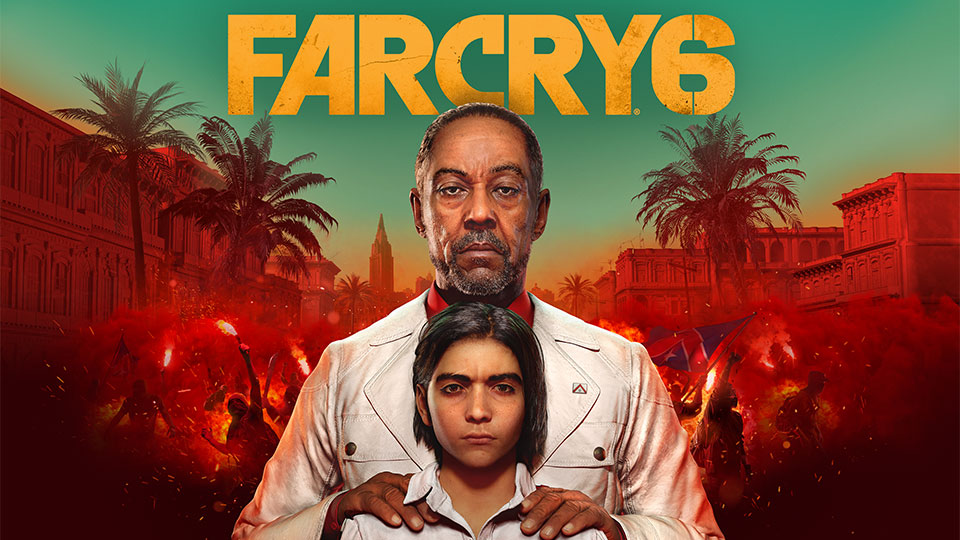
The latest main installment in the long-running series is Far Cry 6, released in October 2021. This game continues the franchise’s legacy of placing players in a visually stunning, politically charged open world ruled by a tyrannical antagonist, pushing the boundaries of the Dunia Engine’s capabilities to deliver a visceral and expansive experience.
Unleashing Yara: Graphical Fidelity and World-Building
Far Cry 6 transports players to the fictional Caribbean island nation of Yara, a tropical paradise frozen in time and ruled by the ruthless dictator Antón Castillo, portrayed by Giancarlo Esposito. From a technological standpoint, Yara represents one of the most ambitious environments crafted in the series. The Dunia Engine received significant upgrades to render the island’s diverse biomes, ranging from dense jungles and pristine beaches to bustling urban centers and dilapidated industrial zones, with incredible detail.
The game boasts enhanced lighting models, improved vegetation density, and advanced water simulations that make the Caribbean setting feel vibrant and alive. The character models are more intricate, particularly for the main cast, with highly detailed facial capture and animation that convey a wide range of emotions. Environmental destruction elements are also more robust, allowing for more dynamic and reactive combat encounters as cover can be destroyed and objects can be interacted with. This meticulous world-building, powered by advanced rendering techniques, creates a believable and immersive backdrop for the revolution unfolding on Yara.
Gameplay Mechanics: A Deep Dive into Revolutionary Innovations
Far Cry 6 introduces several new gameplay mechanics that, while retaining the core Far Cry loop, offer fresh twists. The most significant is the “Resolver” philosophy, which emphasizes improvisation and the use of unique, often makeshift weapons and gear. This includes “Supremo” backpacks, powerful ultimate abilities ranging from rocket barrages to jetpack jumps, and “Resolver Weapons,” highly customized and often outlandish firearms built from everyday items. Technically, this required the engine to handle a wider array of unique weapon physics, particle effects for their various abilities, and complex animation blending for their deployment.
The game also features a more prominent gear system, with different clothing pieces offering specific perks and abilities, encouraging players to mix and match for various combat scenarios. Vehicle combat and traversal have been expanded, with a broader range of customizable vehicles and enhanced driving mechanics. Furthermore, the “Amigos” system, a roster of animal companions like a crocodile named Guapo and a dachshund in a wheelchair named Chorizo, adds a layer of strategic depth and charm, with their AI routines designed to complement player actions in combat and exploration. The integration of these systems required robust programming and engine optimization to ensure seamless interaction and performance across the expansive open world.
Performance, Platforms, and Technical Considerations
Far Cry 6 launched on a wide array of platforms, including PC, PlayStation 4, PlayStation 5, Xbox One, Xbox Series X/S, Amazon Luna, and Google Stadia. This cross-generational release presented a significant technical challenge for the developers, requiring careful optimization to ensure a consistent and enjoyable experience across vastly different hardware capabilities.
On current-generation consoles (PS5, Xbox Series X/S) and high-end PCs, the game targets 4K resolution at 60 frames per second, leveraging features like ray-traced shadows and reflections (on PC) and improved loading times thanks to SSD technology. This provides a visually stunning and incredibly smooth gameplay experience. On previous-generation consoles, compromises were made in terms of resolution, frame rate, and graphical fidelity, but the core gameplay experience remained intact. The technical achievement lies in scaling such a complex and detailed open world across this diverse hardware landscape, showcasing the flexibility and power of the refined Dunia Engine. Regular patches and updates have also been released post-launch to address performance issues, introduce new content, and further optimize the game across all platforms, reflecting Ubisoft’s commitment to technical support.
Expanding the Universe: Standalone Titles and Spin-offs
While Far Cry 6 stands as the latest mainline entry, the series has a rich history of standalone titles and spin-offs that experiment with its core mechanics and settings. These games often serve as playgrounds for developers to test new ideas and expand the narrative possibilities of the Far Cry universe without being constrained by the expectations of a numbered sequel.
Experimenting with Core Mechanics: Primal and New Dawn
Far Cry Primal (2016) took a radical departure from the modern settings of the main series, transporting players to 10,000 BCE during the Stone Age. This standalone title ingeniously adapted the Far Cry formula to a prehistoric era, replacing firearms with spears, bows, and clubs, and vehicles with rideable beasts. From a technological perspective, this meant reimagining the combat systems, character animations, and sound design to fit the primitive setting. The Dunia Engine was heavily modified to render a world teeming with ancient megafauna and lush, untamed wilderness, emphasizing survival and primal combat. It demonstrated the engine’s versatility and the core gameplay loop’s robustness beyond its traditional context.
Far Cry New Dawn (2019) served as a direct narrative sequel to Far Cry 5, set 17 years after its apocalyptic ending. This game introduced a more vibrant, post-apocalyptic aesthetic, pushing the Dunia Engine to create a world reclaimed by nature but scarred by nuclear fallout. Technologically, New Dawn refined the RPG elements introduced in Far Cry 5, adding tiered enemies, base upgrades, and more distinctive weapon crafting. It also featured “Expeditions,” self-contained missions outside the main map, which demonstrated Ubisoft’s ability to create smaller, highly detailed environments within the existing engine framework, offering repeatable content and new gameplay scenarios.
Leveraging Existing Engines for New Experiences
These spin-offs are crucial from a technical perspective because they allow the development team to leverage the robust foundation of the Dunia Engine while pushing its boundaries in new directions. Rather than building a new engine from scratch, which is a massive undertaking, these titles demonstrate how an existing, well-optimized engine can be adapted to drastically different settings and gameplay mechanics. This approach not only saves development time and resources but also ensures a certain level of technical consistency and performance that players have come to expect from the franchise. They are a testament to the flexibility of the underlying technology and the creative freedom it affords developers to explore diverse themes within a familiar gameplay structure.
The Future Horizon: What’s Next for Far Cry Technology?
The gaming industry is perpetually looking forward, and the Far Cry series is no exception. While specific details about the next mainline installment, often referred to as Far Cry 7 or Far Cry Project Blackbird in rumors, remain under wraps, we can infer potential technological directions based on industry trends and Ubisoft’s historical development patterns.
Next-Gen Capabilities and Engine Advancements
As the current console generation (PlayStation 5 and Xbox Series X/S) matures, future Far Cry titles will undoubtedly push the boundaries of what the Dunia Engine, or its successor, can achieve. We can anticipate even greater graphical fidelity, with more advanced ray tracing implementations for hyper-realistic lighting, shadows, and reflections. The potential for more complex procedural generation of environments could lead to even larger and more varied worlds, reducing the need for extensive hand-placed assets.
The integration of advanced AI will likely be a major focus. This could manifest in more sophisticated enemy behaviors, dynamic NPC routines that react more intelligently to the player’s actions, and even more lifelike animal companions. The goal will be to make the open world feel even more alive and less scripted, fostering truly emergent gameplay moments. Furthermore, leveraging the increased processing power and faster SSDs of current-gen consoles will enable seamless transitions between areas, significantly reduced loading times, and the potential for a completely interconnected world without visible breaks.
Evolving AI, Player Freedom, and Environmental Interactivity
Future Far Cry games will likely explore new levels of player freedom and agency. This could involve more impactful choices that genuinely alter the narrative path, or a greater emphasis on sandbox elements that allow players to interact with the environment in novel ways. Imagine even more dynamic environmental destruction, where every shot or explosion has a lasting impact on the landscape, or complex ecological systems where player actions directly influence wildlife populations and resources.
The AI of allies and enemies could evolve to the point where they learn from player tactics, adapt to different combat scenarios in real-time, and display more human-like decision-making. This would push the technical capabilities of game AI beyond simple patrol routes and scripted reactions, creating truly challenging and unpredictable encounters. The goal is to move beyond mere visual upgrades and integrate technology that fundamentally enhances the gameplay experience, making each playthrough unique.
Community, Modding, and Longevity through Technology
Ubisoft has a history of supporting its games post-launch with DLC and seasonal content. Future Far Cry titles might further embrace community-driven content and modding tools, similar to what some other major open-world franchises offer. Providing robust SDKs (Software Development Kits) and easy-to-use modding tools could significantly extend the longevity of the game, allowing players to create their own maps, missions, and even entirely new gameplay experiences. This fosters a vibrant community and ensures the game remains relevant for years beyond its initial release. From a technical standpoint, designing a game engine with moddability in mind requires careful architecture and robust API design, ensuring that external content can seamlessly integrate without breaking the core game.
The Enduring Appeal: Far Cry’s Place in Gaming Tech
The Far Cry series has carved out a unique niche in the gaming landscape, consistently delivering titles that are both visually stunning and incredibly engaging. Its enduring appeal is deeply intertwined with its technological prowess and its commitment to a specific brand of open-world storytelling.
A Benchmark for Open-World Craftsmanship
Far Cry games have consistently served as benchmarks for open-world craftsmanship. They demonstrate how intricate level design, combined with advanced engine capabilities, can create worlds that feel vast, dangerous, and ripe for exploration. The series’ ability to blend dense natural environments with human-made structures, all rendered with impressive fidelity, sets a high bar for its competitors. It’s not just about the size of the map, but the density of interactive elements, the fidelity of the ecosystems, and the seamless transition between different areas – all aspects heavily reliant on underlying technology.
The Art of Immersion: Sound Design and Visuals
Beyond the raw power of its graphics, Far Cry excels in creating immersion through its holistic technological approach. The sound design, for instance, is critical: the rustling of leaves, the distant roar of an animal, the distinct sound of different weapons, and the powerful musical scores all contribute to the atmosphere. Technically, this involves advanced audio spatialization and dynamic mixing that adjusts based on the player’s position and current action. Visually, the dynamic lighting, weather systems, and meticulous environmental art direction combine to create photorealistic landscapes and captivating character designs. This synergy of visual and auditory technology ensures that players are fully drawn into the game world, enhancing the emotional impact of its narratives and the thrill of its gameplay.
Bridging Storytelling and Technological Prowess
Ultimately, the Far Cry series is a prime example of how technology serves storytelling in interactive media. The powerful Dunia Engine allows developers to bring incredibly complex and morally ambiguous narratives to life within stunning, reactive worlds. The technical advancements in AI, graphics, and gameplay mechanics don’t exist in a vacuum; they enhance the player’s ability to engage with the story, whether it’s through the emergent chaos of a firefight, the tension of infiltrating an enemy outpost, or the quiet moments of exploration. Each Far Cry game, and particularly the latest, Far Cry 6, stands as a testament to the power of technological innovation in crafting deeply memorable and endlessly replayable gaming experiences. As the series continues to evolve, it will undoubtedly remain a key player in pushing the boundaries of what is possible in open-world game design.
aViewFromTheCave is a participant in the Amazon Services LLC Associates Program, an affiliate advertising program designed to provide a means for sites to earn advertising fees by advertising and linking to Amazon.com. Amazon, the Amazon logo, AmazonSupply, and the AmazonSupply logo are trademarks of Amazon.com, Inc. or its affiliates. As an Amazon Associate we earn affiliate commissions from qualifying purchases.