
South Korea, a nation forged from resilience and driven by relentless innovation, stands as a formidable economic power on the global stage. Often referred to as one of the “Asian Tigers,” its journey from post-war devastation to a high-income, technologically advanced economy is nothing short of miraculous. At the heart of understanding this economic might lies its Gross Domestic Product (GDP) – a fundamental metric that quantifies the total value of goods and services produced within its borders over a specific period. For investors, policymakers, and global citizens alike, comprehending South Korea’s GDP offers crucial insights into its economic health, growth trajectories, and its enduring influence on international trade and technology.

Understanding South Korea’s Economic Powerhouse
To appreciate South Korea’s current economic standing, one must first grasp the core concept of GDP and then trace the remarkable path that led to its present prosperity. GDP serves as the most comprehensive scorecard for a nation’s economic activity, offering a snapshot of its productivity and wealth generation.
Defining Gross Domestic Product (GDP)
Gross Domestic Product (GDP) represents the total monetary value of all finished goods and services produced within a country’s borders in a specific time period, usually a year or a quarter. It is a vital measure of economic activity and serves as the primary indicator of a country’s economic health and size. There are two main types of GDP typically discussed:
- Nominal GDP: This measures GDP at current market prices, without adjusting for inflation. It can reflect changes in both the quantity of goods and services produced and the prices of those goods and services.
- Real GDP: This measures GDP adjusted for inflation, reflecting changes in the actual quantity of goods and services produced. It uses constant prices from a base year, providing a more accurate picture of economic growth by removing the effect of rising prices.
Why does GDP matter? A growing GDP generally indicates an expanding economy, which often translates to higher employment rates, increased income levels, and improved living standards. Conversely, a declining GDP signals an economic contraction, which can lead to job losses and reduced consumer spending. For South Korea, its consistently robust GDP growth over decades has been instrumental in elevating its global stature.
South Korea’s Historical Economic Trajectory
South Korea’s economic development, often dubbed the “Miracle on the Han River,” is an unparalleled success story. In the 1950s, after the devastating Korean War, South Korea was one of the poorest countries in the world, with an economy heavily reliant on agriculture and foreign aid. However, through strategic government planning, a strong emphasis on education, and an export-oriented industrialization strategy, the nation underwent rapid transformation.
The government played a crucial role by identifying key industries for growth, such as textiles, light manufacturing, and later heavy industries like steel, shipbuilding, and chemicals. This period saw the rise of powerful, family-owned conglomerates known as Chaebols, including Samsung, Hyundai, LG, and SK. These conglomerates became the engines of economic growth, receiving government support in exchange for meeting export targets and contributing to national development goals. By the 1980s and 1990s, South Korea had transitioned into a leader in electronics and automotive manufacturing, establishing itself as a global player. This rapid industrialization and diversification laid the robust foundation for its substantial GDP.
Key Drivers of South Korea’s GDP
South Korea’s economic success is not accidental; it is the result of deliberate strategies, significant investments, and a relentless pursuit of excellence in several key sectors. These drivers form the backbone of its impressive GDP figures.
Export-Oriented Economy and Global Trade
At its core, South Korea’s economy is profoundly export-driven. The nation has successfully carved out niches in global markets by producing high-quality, technologically advanced goods that are in demand worldwide. Major export categories include:
- Semiconductors: South Korea is a global leader in semiconductor manufacturing, particularly memory chips (DRAM and NAND flash), with giants like Samsung Electronics and SK Hynix dominating the market. These chips are critical components for everything from smartphones and computers to data centers and AI applications.
- Electronics: Beyond semiconductors, South Korea excels in consumer electronics, including smartphones, televisions, home appliances, and displays, largely spearheaded by Samsung and LG.
- Automobiles: Hyundai Motor Company and Kia Corporation have established themselves as major global automotive brands, known for their design, reliability, and innovation in electric and hydrogen-powered vehicles.
- Shipbuilding: Historically, South Korea has been a world leader in shipbuilding, constructing advanced vessels for various purposes.
- Petrochemicals: The country’s advanced industrial base supports a significant petrochemical industry, producing a wide range of chemical products.
These exports are crucial for generating foreign exchange, funding domestic growth, and maintaining a positive trade balance. South Korea’s extensive network of free trade agreements and its strategic location in East Asia further bolster its global trade capabilities.
Innovation and Technology Leadership
South Korea’s commitment to research and development (R&D) is a cornerstone of its economic strategy. The country consistently ranks among the top nations globally for R&D intensity (R&D expenditure as a percentage of GDP). This focus has allowed it to not only maintain its lead in established industries but also to pivot towards future-proof sectors.
The nation has become a hub for cutting-edge technologies, including:
- 5G and Telecommunications: South Korea was one of the first countries to commercially launch 5G networks and continues to push the boundaries of telecommunications infrastructure.
- Artificial Intelligence (AI): Significant investments are being made in AI research and application across various industries, from manufacturing to healthcare.
- Biotechnology and Healthcare: The bio-health sector is a rapidly growing area, with Korean companies making strides in pharmaceuticals, medical devices, and bio-similars.
- Advanced Manufacturing: Leveraging automation and smart factory solutions, South Korean industries continuously enhance productivity and efficiency.
This relentless pursuit of technological advancement ensures that South Korean products remain competitive and desirable in the global marketplace, directly contributing to its GDP.
Domestic Consumption and Investment
While exports are a primary driver, a robust domestic market and significant investment also play crucial roles. As the economy matured and incomes rose, South Korea developed a strong consumer base. A growing middle class with disposable income fuels domestic consumption, supporting local businesses and a thriving service sector.
Furthermore, both government and private sector investments are vital. The government consistently invests in infrastructure, education, and strategic industries to ensure long-term growth. Private sector investment, driven by the large Chaebols and a burgeoning startup ecosystem, continually injects capital into R&D, capacity expansion, and new business ventures, all of which contribute significantly to the nation’s GDP.
Current Status and Recent Trends in South Korea’s GDP
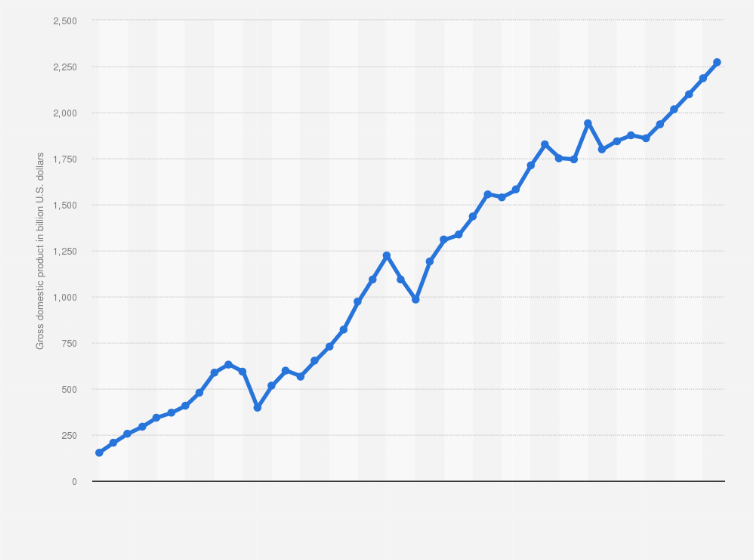
Understanding the current state and recent trajectories of South Korea’s GDP provides a contemporary perspective on its economic performance and resilience. The global economic landscape, marked by various challenges, continually shapes its short-to-medium term outlook.
Recent GDP Figures and Growth Rates
South Korea consistently ranks among the top global economies by nominal GDP. While specific real-time figures fluctuate, the country typically maintains a position within the top 10-15 economies worldwide. Its GDP growth rate, though not as explosive as during its industrialization phase, generally remains positive and competitive among developed nations.
- Pre-Pandemic Era: Prior to the COVID-19 pandemic, South Korea experienced steady, albeit moderate, GDP growth, driven by its strong export performance and domestic consumption.
- Pandemic Impact: Like most economies, South Korea faced headwinds during the pandemic. However, its robust healthcare system, rapid response, and strength in essential tech exports (like semiconductors due to increased demand for remote work and digital services) allowed for a relatively resilient economic performance compared to many peers.
- Post-Pandemic Recovery: The recovery has been influenced by global demand, supply chain dynamics, and inflation pressures. While global economic slowdowns and geopolitical uncertainties pose challenges, South Korea’s diversified industrial base and technological prowess often provide a buffer. The Bank of Korea and other financial institutions regularly provide updated forecasts, typically projecting stable, albeit potentially slower, growth in line with global economic trends.
Per Capita GDP and Living Standards
Perhaps an even more telling indicator of economic prosperity for its citizens is per capita GDP. South Korea boasts a high per capita GDP, placing it firmly among high-income countries. This reflects the high productivity of its workforce and the nation’s overall wealth generation.
A high per capita GDP translates to:
- Improved Living Standards: Access to quality education, healthcare, infrastructure, and a wide array of goods and services.
- Strong Purchasing Power: Citizens generally have significant disposable income, contributing to a vibrant consumer market.
- Global Competitiveness: A high per capita GDP often correlates with a highly skilled workforce and advanced technological capabilities, enhancing a nation’s competitive edge.
While a high per capita GDP doesn’t negate concerns about income inequality, it undeniably underscores the general affluence and prosperity achieved by the vast majority of South Koreans over the past decades.
Challenges and Future Outlook for South Korea’s Economy
Despite its impressive achievements, South Korea’s economy is not without its challenges. These structural and external factors will play a significant role in shaping its future GDP trajectory and overall economic health.
Demographic Headwinds
One of the most pressing long-term challenges for South Korea is its demographic crisis. The country faces an aging population and one of the lowest birth rates in the world. This demographic shift has several profound economic implications:
- Shrinking Labor Force: Fewer young people entering the workforce can lead to labor shortages, reduced productivity growth, and increased wage pressures.
- Increased Social Welfare Burden: A larger proportion of retirees relative to the working population places greater strain on pension systems, healthcare services, and social security.
- Slower Domestic Demand: An aging population might lead to changes in consumption patterns and potentially slower overall domestic demand growth.
Addressing these demographic trends through policy initiatives, immigration, and automation will be critical for sustaining GDP growth.
Geopolitical Risks and Global Competition
As an export-dependent nation, South Korea is inherently vulnerable to global economic fluctuations, trade disputes, and geopolitical tensions.
- Global Economic Slowdowns: A recession or significant slowdown in major trading partners (e.g., China, US, EU) directly impacts demand for South Korean exports, affecting its GDP.
- Trade Wars and Protectionism: Rising protectionist sentiments and trade barriers can disrupt supply chains and hinder market access for Korean products.
- Competition from China: While a key trading partner, China is also a major competitor in many manufacturing and technology sectors, increasing competitive pressure on Korean industries.
- North Korea Relations: The perennial geopolitical risk posed by North Korea, though often contained, can create uncertainty and impact investor confidence.
Navigating these external complexities requires astute diplomacy, strategic diversification of markets, and continued focus on high-value-added products.
Economic Restructuring and Diversification
To ensure sustained growth, South Korea is actively pursuing economic restructuring and diversification strategies.
- Boosting the Service Sector: Efforts are underway to reduce reliance on manufacturing exports by fostering growth in high-value service sectors, including finance, tourism, healthcare, and particularly, the burgeoning “K-content” industry (K-pop, K-drama, gaming).
- Supporting SMEs and Startups: While Chaebols have been central to past growth, there’s a concerted push to nurture small and medium-sized enterprises (SMEs) and a vibrant startup ecosystem to create new jobs and drive innovation beyond the large conglomerates.
- Addressing Wealth Inequality: Policies aimed at fostering inclusive growth and reducing wealth disparities are crucial for maintaining social cohesion and long-term economic stability.
These efforts are designed to create a more balanced and resilient economy, capable of weathering future shocks and identifying new engines of GDP growth.

Conclusion: A Resilient and Innovative Economy
South Korea’s GDP is not merely a statistical figure; it is a testament to the nation’s extraordinary journey of economic development, driven by strategic vision, relentless innovation, and the dedication of its people. From the ashes of war, it has risen to become a global leader in technology, manufacturing, and culture, consistently demonstrating its capacity for resilience and adaptation.
While significant challenges lie ahead, particularly those related to demographics and global economic uncertainties, South Korea’s strong foundation in R&D, its export prowess, and its commitment to economic diversification position it well for future prosperity. For anyone interested in global finance and economics, understanding the dynamics of South Korea’s GDP offers a compelling case study of how strategic investment, technological leadership, and a forward-looking mindset can transform a nation into a powerhouse. Its economic narrative continues to be one of dynamic growth, continuous innovation, and enduring global significance.
aViewFromTheCave is a participant in the Amazon Services LLC Associates Program, an affiliate advertising program designed to provide a means for sites to earn advertising fees by advertising and linking to Amazon.com. Amazon, the Amazon logo, AmazonSupply, and the AmazonSupply logo are trademarks of Amazon.com, Inc. or its affiliates. As an Amazon Associate we earn affiliate commissions from qualifying purchases.