
In the vast landscape of mathematics, “Algebra 3” is not a universally standardized course title like “Algebra 1” or “Algebra 2.” Instead, it typically serves as an umbrella term, often used informally, to refer to advanced algebraic concepts that delve significantly deeper than the foundational high school curriculum. For those pursuing careers in technology, engineering, data science, or artificial intelligence, what is colloquially known as “Algebra 3” represents a critical intellectual toolkit—a gateway to understanding the complex algorithms, theoretical underpinnings, and sophisticated models that drive modern innovation.
Far from being an arcane academic pursuit, the subjects often grouped under “Algebra 3” are the bedrock upon which much of our digital world is built. From the security protocols that protect our online transactions to the machine learning models that power recommendation engines, the principles of advanced algebra are at play. This article will demystify “Algebra 3,” exploring its key components and, more importantly, illuminating its indispensable role in the technological advancements of the 21st century.
Beyond the Basics: Understanding Advanced Algebraic Concepts
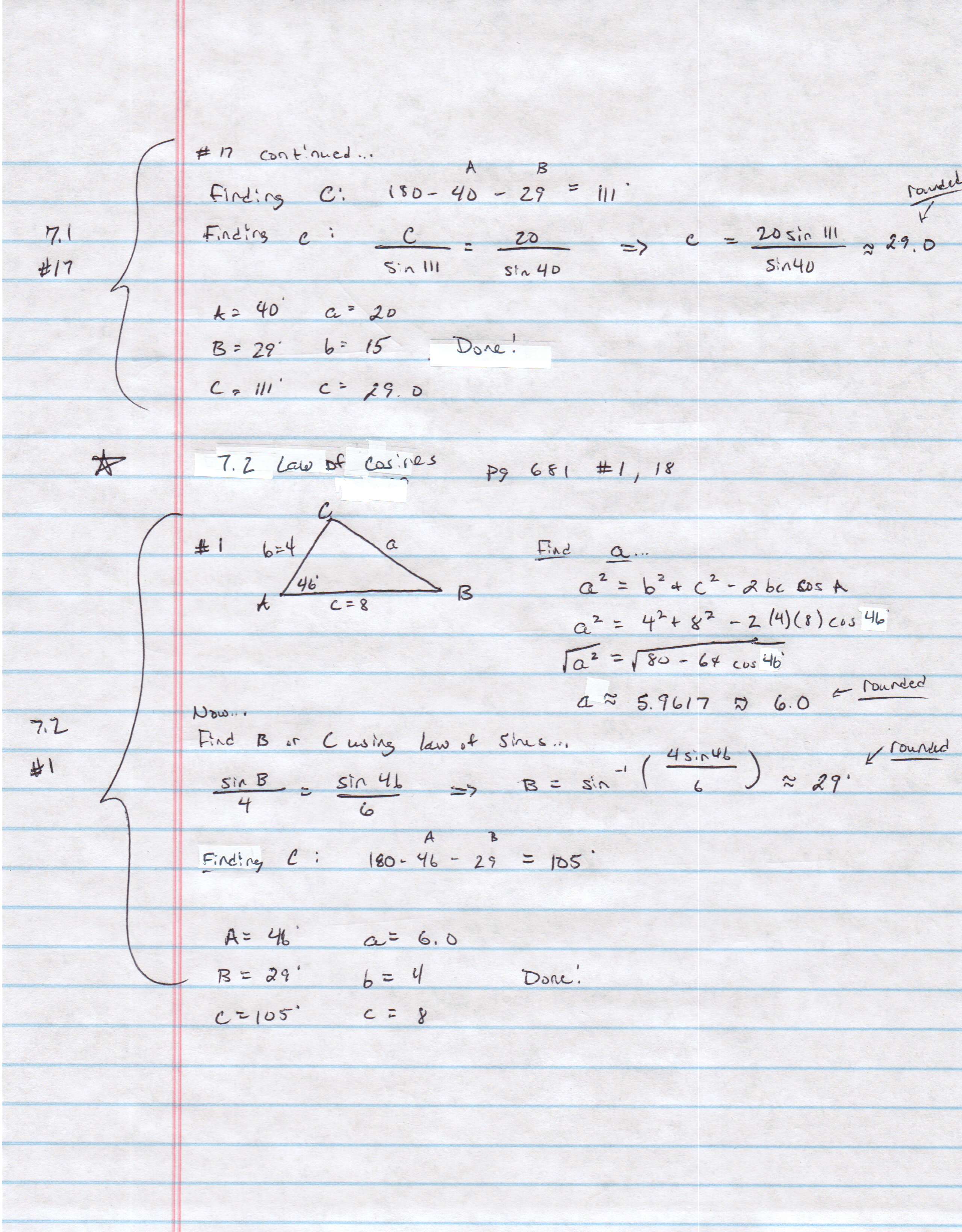
To appreciate what “Algebra 3” entails, it’s essential to understand how it diverges from its predecessors. Algebra 1 introduces fundamental concepts like variables, equations, functions, and basic graphing. Algebra 2 builds upon this, exploring more complex functions (polynomials, exponentials, logarithms), systems of equations, matrices, and sequences. “Algebra 3,” however, pushes beyond these computational mechanics into more abstract structures, rigorous proofs, and a broader application of algebraic theory. It’s less about solving specific equations and more about understanding the properties of mathematical systems themselves.
Distinguishing Algebra 3 from Prior Levels
The primary distinction of “Algebra 3” is its shift towards abstraction and generalization. While Algebra 1 and 2 often focus on real numbers and concrete problem-solving, advanced algebra introduces entirely new number systems (like complex numbers in greater depth), abstract structures (groups, rings, fields), and higher-dimensional spaces. The emphasis moves from rote calculation to conceptual understanding and logical deduction. It’s about not just how to solve a problem, but why a particular method works and under what conditions it applies. This rigorous, abstract thinking is precisely what equips technologists to innovate and solve unprecedented problems.
Key Branches Often Encompassed by “Algebra 3”
The content often associated with “Algebra 3” can vary, but generally includes a deep dive into several interconnected fields:
-
Linear Algebra: This is arguably the most pervasive and immediately applicable component for technology professionals. Linear algebra is the study of vectors, vector spaces, linear transformations, and matrices. It provides the mathematical language for representing and manipulating data, geometric transformations, and systems of linear equations. Its concepts are fundamental to computer graphics, data analysis, machine learning algorithms, and quantum computing. Understanding how to perform operations with matrices, solve systems using Gaussian elimination, or grasp the significance of eigenvalues and eigenvectors is crucial for anyone working with data at scale or developing sophisticated software.
-
Abstract Algebra (Modern Algebra): This branch explores algebraic structures such as groups, rings, and fields. While it might seem purely theoretical, abstract algebra has profound practical implications, particularly in cryptography and coding theory. Group theory, for instance, underpins the mathematical foundations of many public-key encryption schemes (like elliptic curve cryptography) and error-correcting codes. Ring and field theory are essential for understanding polynomial arithmetic over finite fields, which is vital for secure communication and data integrity. This area emphasizes proofs and the intrinsic properties of these structures rather than numerical calculations.
-
Boolean Algebra: While often introduced earlier in computer science curricula, a deeper dive into Boolean algebra—the algebra of true/false values and logical operations (AND, OR, NOT)—can be considered an advanced topic in its practical application. It is the mathematical foundation of digital logic, circuit design, and database query optimization. Understanding how to simplify Boolean expressions or design complex logical gates is directly tied to hardware design and efficient software implementation.
The Indispensable Role of Algebra 3 in Modern Technology
The concepts embedded within “Algebra 3” are not just academic curiosities; they are the fundamental tools that allow technologists to build, optimize, and secure the digital world. Their influence spans every major frontier of technological advancement.
Powering Artificial Intelligence and Machine Learning
It is impossible to discuss AI and Machine Learning (ML) without constant reference to linear algebra. Every piece of data in an ML model, whether an image pixel, a word embedding, or a numerical feature, is represented as a vector or a matrix. Neural networks are essentially complex chains of matrix multiplications and vector additions, followed by non-linear activation functions.
- Data Representation: Images, audio, and text are transformed into high-dimensional vectors, which are then processed using linear algebraic operations.
- Algorithms: Techniques like Principal Component Analysis (PCA) for dimensionality reduction, Singular Value Decomposition (SVD) for recommendation systems, and the backpropagation algorithm in neural networks are all deeply rooted in linear algebra.
- Optimization: The process of training an ML model involves minimizing a “loss function,” often through gradient descent. Gradients are vectors, and the optimization process involves moving in multi-dimensional vector spaces, guided by linear algebraic principles. Without a strong grasp of these concepts, understanding, let alone developing, advanced AI systems would be impossible.
The Backbone of Computer Graphics and Simulations
From the stunning visual effects in movies and video games to architectural visualizations and scientific simulations, computer graphics relies heavily on linear algebra.
- 3D Transformations: Rotating objects, scaling them, translating them in 3D space, and projecting them onto a 2D screen are all achieved using matrix transformations. A single 4×4 matrix can encapsulate all these operations, making it efficient to render complex scenes.
- Lighting and Shading: Vector algebra is used to calculate light directions, surface normals, and reflections, determining how objects appear under different lighting conditions.
- Physics Engines: Simulating physical phenomena like collisions, gravity, and fluid dynamics involves solving systems of linear equations and manipulating vectors to represent forces and velocities. Engineers and game developers leverage linear algebra to create realistic and immersive virtual environments.
Cryptography and Digital Security
Abstract algebra forms the theoretical core of modern cryptography, particularly public-key systems that secure our communications and transactions.
- Public-Key Cryptography: Algorithms like RSA (Rivest–Shamir–Adleman) and ECC (Elliptic Curve Cryptography) rely on mathematical problems that are easy to compute in one direction but extremely difficult to reverse without a secret key. These problems often involve operations in large finite fields or on elliptic curves, concepts deeply rooted in abstract algebra (specifically, field theory and group theory).
- Hashing and Digital Signatures: Secure hash functions and digital signatures, crucial for data integrity and authentication, also leverage modular arithmetic and number theory concepts that are expanded upon in abstract algebra.
- Error-Correcting Codes: Abstract algebra, particularly finite field theory, is fundamental to designing error-correcting codes used in data transmission and storage (e.g., in RAID systems, QR codes, and satellite communication). These codes allow for the detection and correction of errors without retransmission, ensuring data reliability.
Algebra 3 in Software Development and Data Science
The insights provided by advanced algebra transcend specific applications, influencing the very design and efficiency of software systems and the methodologies of data analysis.
Optimizing Algorithms and Data Structures
Software developers who understand “Algebra 3” can write more efficient and scalable code. The analysis of algorithm complexity, for instance, often involves understanding growth rates of functions, which can be seen through an algebraic lens.
- Efficient Data Handling: Algebraic concepts guide the design of efficient data structures. For example, understanding how matrix operations work informs the optimal storage and retrieval of large datasets.
- Graph Theory: While not exclusively algebraic, graph theory—the study of networks—often uses adjacency matrices and other algebraic representations to solve problems like shortest path algorithms, network flow, and social network analysis.
- Computational Efficiency: Many optimization problems, from resource allocation to logistics, can be formulated and solved using linear programming, a technique heavily reliant on linear algebra.
Data Analysis and Big Data Processing
Data science, at its heart, is the art and science of extracting insights from data. “Algebra 3” provides the quantitative tools for this crucial endeavor.
- Statistical Models: Regression analysis, a cornerstone of statistical modeling, fundamentally involves solving systems of linear equations to find the best fit line or hyperplane.
- Dimensionality Reduction: Techniques like PCA, already mentioned, are vital for processing high-dimensional data, reducing noise, and making data visualization feasible. These are direct applications of linear algebra.
- Recommendation Systems: Collaborative filtering algorithms, which power recommendation engines on platforms like Netflix and Amazon, use matrix factorization techniques (e.g., SVD) to predict user preferences based on past behavior and item ratings.
- Graph Databases: The underlying mathematics for querying and analyzing relationships in graph databases often involves linear algebraic operations on adjacency matrices.
Quantum Computing’s Mathematical Foundation
Quantum computing, the cutting edge of computational science, is almost entirely built upon the principles of linear algebra, specifically linear algebra over complex numbers.
- Qubits and Quantum States: Unlike classical bits, qubits can exist in superposition. Their states are represented as vectors in a complex vector space.
- Quantum Operations: Quantum gates, which manipulate qubits, are represented by unitary matrices. The application of a quantum gate to a qubit is a matrix-vector multiplication.
- Quantum Algorithms: Algorithms like Shor’s algorithm for factoring large numbers or Grover’s algorithm for searching unstructured databases are intricate sequences of unitary transformations on quantum states, all expressed and understood through the language of linear algebra. Anyone aspiring to contribute to this revolutionary field must have a deep mastery of advanced linear algebra.
Navigating the Learning Curve: Resources and Approaches
Given the profound importance of “Algebra 3” for technological careers, a structured approach to learning these concepts is crucial. It’s a journey that builds on prior knowledge and requires a blend of theoretical understanding and practical application.
Recommended Learning Paths and Prerequisites
Before diving into advanced algebra, a solid foundation in calculus (differential and integral) and discrete mathematics is highly recommended. Calculus provides tools for understanding continuous functions and optimization, while discrete mathematics introduces logic, proof techniques, and basic set theory, which are essential for abstract algebra.
- Linear Algebra First: For most tech-focused paths, starting with linear algebra is often the most practical and immediately rewarding. Many online courses (e.g., from MIT, Stanford, Khan Academy), textbooks (e.g., “Introduction to Linear Algebra” by Gilbert Strang), and university courses offer excellent starting points.
- Then Abstract Algebra: For those interested in cryptography, theoretical computer science, or advanced algorithm design, abstract algebra should follow. Textbooks like “Abstract Algebra” by Dummit and Foote or “A First Course in Abstract Algebra” by Fraleigh are standard references.
- Focus on Proofs: Unlike earlier algebra courses, “Algebra 3” topics heavily emphasize understanding and constructing mathematical proofs. Developing this skill is paramount.
Tools and Software for Algebraic Exploration
Modern software can significantly aid in understanding and applying advanced algebraic concepts, bridging the gap between theory and practice.
- Symbolic Math Software: Tools like Wolfram Alpha, MATLAB, Mathematica, and open-source alternatives like SymPy (Python library) can perform complex algebraic manipulations, matrix operations, and symbolic differentiation/integration, allowing learners to focus on concepts rather than manual calculation errors.
- Numerical Libraries: For linear algebra, Python’s NumPy library is indispensable. It provides efficient array manipulation and a vast array of linear algebra functions, making it a cornerstone for data science, machine learning, and scientific computing. R, Julia, and other languages also have similar robust libraries.
- Interactive Environments: Jupyter Notebooks (for Python) or RStudio (for R) provide interactive environments where code, explanations, and visualizations can be combined, making it ideal for learning and experimenting with algebraic concepts in a practical context.

Real-World Applications and Problem Solving
To truly internalize “Algebra 3” concepts, actively seeking out and engaging with real-world problems is critical.
- Coding Projects: Apply linear algebra concepts to build simple machine learning models (e.g., linear regression from scratch, image filters), implement basic computer graphics transformations, or work with data analysis tasks.
- Kaggle Competitions: Participate in data science competitions to apply algebraic techniques to real datasets.
- Cryptographic Libraries: Experiment with libraries like PyCryptodome to understand how abstract algebra manifests in practical encryption.
- Academic Papers: Read research papers in AI, computer vision, or cryptography to see how advanced algebraic concepts are used at the forefront of technological innovation.
In conclusion, “Algebra 3″—encompassing subjects like linear algebra, abstract algebra, and advanced Boolean algebra—is far from an optional academic add-on. For anyone serious about making significant contributions in technology, it is an essential intellectual foundation. It provides the rigorous language and tools necessary to design, understand, and push the boundaries of artificial intelligence, cybersecurity, data science, quantum computing, and beyond. Mastering these advanced algebraic concepts is not just about accumulating knowledge; it’s about acquiring a powerful lens through which to perceive and shape the future of technology.
aViewFromTheCave is a participant in the Amazon Services LLC Associates Program, an affiliate advertising program designed to provide a means for sites to earn advertising fees by advertising and linking to Amazon.com. Amazon, the Amazon logo, AmazonSupply, and the AmazonSupply logo are trademarks of Amazon.com, Inc. or its affiliates. As an Amazon Associate we earn affiliate commissions from qualifying purchases.