
In the rapidly evolving landscape of competitive gaming, the balance between social accessibility and competitive integrity remains one of the most significant technical hurdles for developers. With the release of Season 10 in Overwatch 2, Blizzard Entertainment introduced a transformative feature known as “Wide Match.” This system represents a sophisticated evolution in matchmaking algorithms, designed to solve a decade-old problem: how to allow friends with vastly different skill levels to play together without compromising the fairness of the competitive ladder.
As a piece of gaming software, Overwatch 2 relies on complex data points to ensure that ten players—each with varying degrees of mechanical skill and game sense—are placed in a lobby where the outcome is not predetermined. The Wide Match system is the technical answer to the “grouping restriction” dilemma that has historically frustrated the player base.
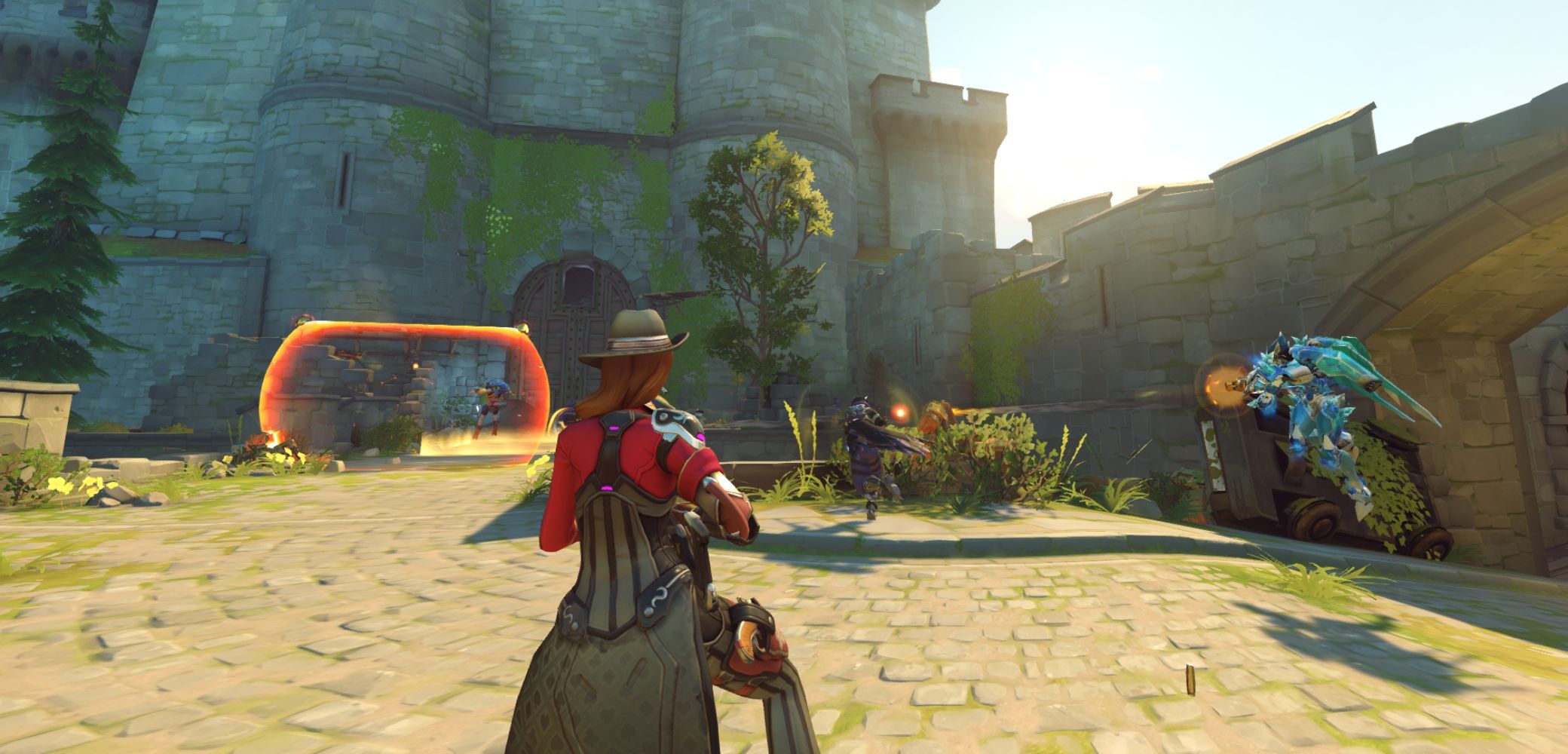
The Mechanics of Wide Matchmaking in Overwatch 2
At its core, the Wide Match system is a categorization tool within the Overwatch 2 matchmaking engine. Prior to its implementation, players were often met with a “Skill Rating (SR) too far apart” error, preventing them from queuing together in Competitive modes. The Wide Match update effectively removes these hard walls, replacing them with a more flexible, algorithmic approach.
Defining “Narrow” vs. “Wide” Groups
The matchmaking software now classifies every group into one of two categories: Narrow or Wide. A “Narrow Group” consists of players who are within a specific number of skill divisions of one another. For most ranks (Bronze through Diamond), this is typically within five divisions. When the software identifies a group as Narrow, it prioritizes fast queue times and high-precision matchmaking, assuming that the skill gap is small enough to be negligible.
A “Wide Group,” conversely, is triggered when the delta between the lowest-ranked player and the highest-ranked player exceeds the standard threshold. For example, if a Silver 2 player groups with a Platinum 5 player, the software flags this as a Wide Match. This classification triggers a different set of logic for the server-side matchmaking engine.
Skill Tier Gaps and Delta Limits
The technical parameters for what constitutes a “Wide” group scale based on the rank of the players involved. While lower and mid-tier players enjoy a five-division buffer, those at the highest echelons of play—Master, Grandmaster, and Champion—face tighter constraints. In these tiers, even a three-division gap can trigger a Wide Match status. This is because, at the top 1% of the player base, the difference in technical execution between a Master 1 and a Master 5 is exponentially more significant than the difference between a Silver 1 and a Silver 5.
The Algorithmic Challenge of Asymmetrical Skill Distribution
Implementing a Wide Match system is not as simple as removing a restriction; it requires a complete overhaul of how the software searches for opponents. The primary technical challenge is ensuring that the “Wide” group does not face a “Narrow” group of mid-tier players, which would result in an unfair advantage for the team with the higher-skilled “carry.”
Parallel Mirroring in Matchmaking
To maintain competitive integrity, the Overwatch 2 matchmaking algorithm employs a “mirroring” strategy for Wide Matches. If your group contains one Gold player and one Diamond player, the system will search specifically for another group with a nearly identical distribution—another Gold and Diamond pair.
This requirement significantly narrows the pool of available opponents. From a software engineering perspective, this increases the complexity of the search query. The matchmaker must balance the latency (ping) of the players, the roles they have selected (Tank, Damage, Support), and their specific skill deltas. This is why players in Wide Groups experience significantly longer queue times; the software is waiting for a statistically similar “anomaly” to enter the queue.
Queue Times and Server Allocation
The introduction of Wide Matchmaking has had a measurable impact on server traffic patterns. Narrow groups can usually be placed in a match within two to three minutes because the pool of similar players is vast. Wide groups, however, may wait ten minutes or more.
Blizzard’s technical documentation notes that this is a deliberate trade-off. The software prioritizes “match quality” over “match speed” for Wide Groups to prevent the lower-ranked player from being overwhelmed and the higher-ranked player from dominating the lobby. The server-side logic essentially isolates these Wide Groups into a separate matchmaking silo to protect the integrity of the standard “Narrow” queue.
Impact on Rank Progression and Fairness
One of the most innovative aspects of the Wide Match system is how it handles “Rank Progress.” In traditional matchmaking, a win or loss results in a relatively predictable movement on the ladder. However, when a Bronze player wins a game alongside a Diamond player, the technical “confidence” the system has in that win is lower.
The “Wide Group” Modifier
To prevent players from “boosting”—the practice of a high-ranked player artificially inflating a low-ranked friend’s status—the Wide Match system introduces specific modifiers to rank progression. When playing in a Wide Group, the amount of Rank Progress gained or lost after a match is reduced.
The software calculates a “weighted average” of the lobby’s skill. If the Diamond player carries the Silver player to a victory against a Gold-average team, the Diamond player gains very little progress because they were expected to win. Simultaneously, the Silver player receives a diminished reward because the victory was achieved with the assistance of a much higher-skilled teammate. This mathematical safeguard ensures that the “Wide” feature remains a social tool rather than a tool for bypassing the competitive grind.
Role Queue and Cross-Platform Considerations
The complexity of the Wide Match algorithm is further compounded by Overwatch 2’s Role Queue system. Each player has a different rank for Tank, Damage, and Support. The software must evaluate the “Wide” status based on the specific roles selected for that session.
Additionally, the technical divide between PC and Console players remains. Wide Matchmaking does not currently bridge the gap between PC and Console pools for Competitive play. This is a hardware-specific limitation, as the software must account for the mechanical differences between controller aim-assist and mouse-and-keyboard precision. Keeping these ecosystems separate, even within the Wide Match framework, is essential for maintaining a level playing field.
The Future of Dynamic Matchmaking Software
The rollout of the Wide Match system in Overwatch 2 represents a shift in how gaming companies approach player retention through software design. By recognizing that gaming is a social activity, Blizzard has moved away from rigid, binary systems and toward fluid, algorithmic solutions.
Balancing Social Play with Competitive Integrity
The ultimate goal of Wide Matchmaking is to eliminate the “smurf” problem. Historically, players would create secondary, lower-ranked accounts just to play with their friends. This behavior ruined the experience for genuine new players. By providing a legitimate, technical pathway for mismatched friends to play together, the software reduces the incentive for account manipulation.
From a tech-trend perspective, we are seeing more developers move toward this “siloed matchmaking” approach. It acknowledges that not every match can be perfectly balanced, so it creates a specific environment where “imperfect” matches can exist without bleeding into the core competitive experience.
Iterative Design and Developer Feedback Loops
Software of this scale is never “finished.” Blizzard continues to collect data on Wide Match queue times and the accuracy of rank modifiers. We can expect future iterations of the algorithm to use machine learning to better predict match outcomes in Wide Groups, potentially allowing for slightly faster matchmaking without sacrificing the “mirroring” logic.
The Wide Match system in Overwatch 2 is a masterclass in how modern game architecture handles the human element of play. It uses data-driven limits and sophisticated mirroring algorithms to solve a social problem through technical innovation. For players, it means the end of the “Skill Rating” barrier; for the industry, it sets a new standard for how competitive software can be both inclusive and rigorous. As we look forward, the success of this system will likely influence how other major esports titles, from Valorant to Apex Legends, refine their own matchmaking tech to keep their communities connected.
aViewFromTheCave is a participant in the Amazon Services LLC Associates Program, an affiliate advertising program designed to provide a means for sites to earn advertising fees by advertising and linking to Amazon.com. Amazon, the Amazon logo, AmazonSupply, and the AmazonSupply logo are trademarks of Amazon.com, Inc. or its affiliates. As an Amazon Associate we earn affiliate commissions from qualifying purchases.