
In the intricate world of financial accounting, clarity, precision, and detail are not merely desirable – they are indispensable. Businesses, regardless of size, generate a vast ocean of transactional data daily. Without a structured system to organize and process this information, understanding a company’s financial health would be an impossible task. At the heart of this organizational structure, alongside the famed General Ledger, lies a less celebrated but equally critical component: the subledger.
A subledger, short for subsidiary ledger, is a detailed accounting record that provides granular information for a specific general ledger control account. Think of the General Ledger (GL) as the main book, summarizing all financial transactions into high-level categories like “Accounts Receivable,” “Cash,” or “Inventory.” While the GL gives you the aggregated balance for each of these accounts, it doesn’t show the individual transactions that make up that balance. This is precisely where the subledger steps in.

For instance, a General Ledger might show a total balance of $500,000 for “Accounts Receivable.” Without further detail, this number is useful for overall financial reporting but tells you nothing about who owes the money, how much each customer owes, or when those payments are due. An Accounts Receivable subledger, however, would meticulously list every customer, every invoice issued, every payment received, and the outstanding balance for each individual customer. This granular detail is crucial for operational management, auditability, and strategic decision-making.
In essence, subledgers act as supporting documents that break down complex general ledger accounts into their individual components, providing the underlying detail necessary for accurate financial reporting, operational efficiency, and comprehensive financial analysis. They are the backbone of any robust accounting system, ensuring that every penny can be traced back to its origin and purpose.
The Core Function and Purpose of Subledgers
The primary role of subledgers extends beyond mere record-keeping; they are fundamental tools that imbue financial data with depth, context, and actionable insight. By design, subledgers address the inherent limitation of the general ledger, which prioritizes summary over individual transaction detail.
Bridging Detail and Summary
The most fundamental function of a subledger is to serve as the bridge between the day-to-day, often high-volume, transactional activities of a business and the summarized financial picture presented in the general ledger. Imagine a business with hundreds of customers, thousands of individual sales, and countless inventory movements. If every single one of these transactions were recorded directly and individually in the General Ledger, the GL would become unwieldy, cluttered, and nearly impossible to navigate or reconcile.
Instead, subledgers collect and categorize these individual transactions. For example, all sales to Customer A, Customer B, and Customer C are recorded in the Accounts Receivable subledger. The total outstanding balance from these customers then “rolls up” into a single, summary balance in the Accounts Receivable control account within the General Ledger. This hierarchical structure allows for both the broad overview necessary for financial statements and the deep dive required for operational management. It’s a system of efficient data management, ensuring that the right level of detail is available to the right stakeholders.
Enhancing Accuracy and Transparency
Accuracy is paramount in financial accounting. Errors, whether accidental or intentional, can have significant repercussions, from misinformed business decisions to legal and compliance issues. Subledgers significantly enhance accuracy and transparency by providing a clear, detailed audit trail for every transaction.
When an accountant or auditor needs to verify the balance of a General Ledger account, they can easily drill down into the corresponding subledger. If the General Ledger shows a balance of $100,000 for “Office Supplies,” the Office Supplies subledger would list every purchase, supplier, date, and amount that contributes to that sum. This level of detail makes it far easier to identify discrepancies, track down errors, or investigate suspicious activities. It provides an undeniable level of transparency, as every aggregated number in the GL is supported by a comprehensive breakdown. This meticulous record-keeping is invaluable for internal controls, external audits, and regulatory compliance, ensuring that financial statements are reliable and trustworthy.
Facilitating Managerial Insights
Beyond compliance and accuracy, subledgers are powerful tools for operational management and strategic decision-making. The granular data they contain provides insights that are simply unavailable from the aggregated numbers in the General Ledger.
Consider an Accounts Receivable subledger: it doesn’t just show total outstanding debt; it can reveal which customers are habitually late payers, which invoices are overdue, and which payment terms are most frequently utilized. This information can inform credit policies, collection strategies, and customer relationship management. Similarly, an Inventory subledger can track specific product movements, identifying slow-moving items, optimizing reorder points, and minimizing carrying costs. A Fixed Assets subledger provides precise data on asset depreciation, aiding in tax planning and capital expenditure decisions.
By providing this depth of information, subledgers empower managers to move beyond reactive problem-solving to proactive strategic planning. They enable detailed analysis of operational performance, identification of trends, and the ability to make data-driven decisions that impact profitability, efficiency, and growth.
Common Types of Subledgers and Their Applications
While the concept of a subledger is universal, businesses utilize various specific subledgers depending on the nature of their operations and the accounts they need to track in detail. Each type serves a distinct purpose, providing specialized data for critical business functions.
Accounts Receivable (AR) Subledger
This is one of the most common and vital subledgers. The Accounts Receivable subledger tracks all money owed to the company by its customers for goods or services provided on credit. It contains detailed records for each customer, including individual invoice numbers, dates, amounts, payment terms, and any payments received.
Applications:
- Cash Flow Management: Helps monitor which customers owe money, how much, and when payments are expected, crucial for predicting incoming cash.
- Credit Management: Identifies customers with overdue balances, informing decisions on extending future credit.
- Collections: Provides specific details needed to follow up on outstanding invoices.
- Customer Relationship Management: Gives a complete financial history for each client.
Accounts Payable (AP) Subledger
Conversely, the Accounts Payable subledger details all money the company owes to its vendors or suppliers. It records individual bills received, their due dates, amounts, and any payments made.
Applications:
- Vendor Management: Keeps track of obligations to each supplier, ensuring timely payments and maintaining good vendor relationships.
- Cash Flow Optimization: Allows businesses to manage their outgoing payments strategically, taking advantage of discounts and avoiding late fees.
- Budgeting: Provides insight into recurring expenses and future liabilities.
Inventory Subledger
For businesses that deal with physical goods, the Inventory subledger is indispensable. It meticulously tracks the quantity, cost, and location of each individual item in stock. This can include raw materials, work-in-process, and finished goods.
Applications:
- Cost of Goods Sold (COGS) Calculation: Provides the necessary data to accurately calculate the cost associated with sold inventory.
- Stock Management: Helps identify popular products, slow-moving items, and potential obsolescence.
- Loss Prevention: Aids in detecting inventory shrinkage due to theft or damage.
- Supply Chain Optimization: Informs purchasing decisions and warehouse management.
Fixed Assets Subledger
The Fixed Assets subledger provides detailed information on a company’s long-term tangible assets, such as buildings, machinery, vehicles, and office equipment. Each asset is recorded with its acquisition date, original cost, useful life, accumulated depreciation, and net book value.
Applications:
- Depreciation Calculation: Automates or facilitates the calculation of depreciation expenses for each asset, essential for financial statements and tax purposes.
- Asset Tracking: Helps in managing the physical assets, including their location and assignment.
- Insurance and Valuation: Provides data for insurance policies and asset valuation.
- Tax Planning: Ensures accurate reporting of asset values and depreciation for tax compliance.
Payroll Subledger
While often managed by specialized payroll systems, the data can be considered a form of subledger. It contains detailed records for each employee, including their gross wages, deductions (taxes, benefits, garnishments), net pay, and accruals (vacation, sick leave).
Applications:
- Employee Compensation: Ensures accurate and timely payment to employees.
- Tax Compliance: Provides all necessary data for payroll tax filings (e.g., FICA, federal and state income tax).
- Benefit Administration: Tracks employee contributions and employer matching for benefits.
- Reporting: Generates detailed reports for internal analysis and external audits.
The Relationship Between Subledgers and the General Ledger
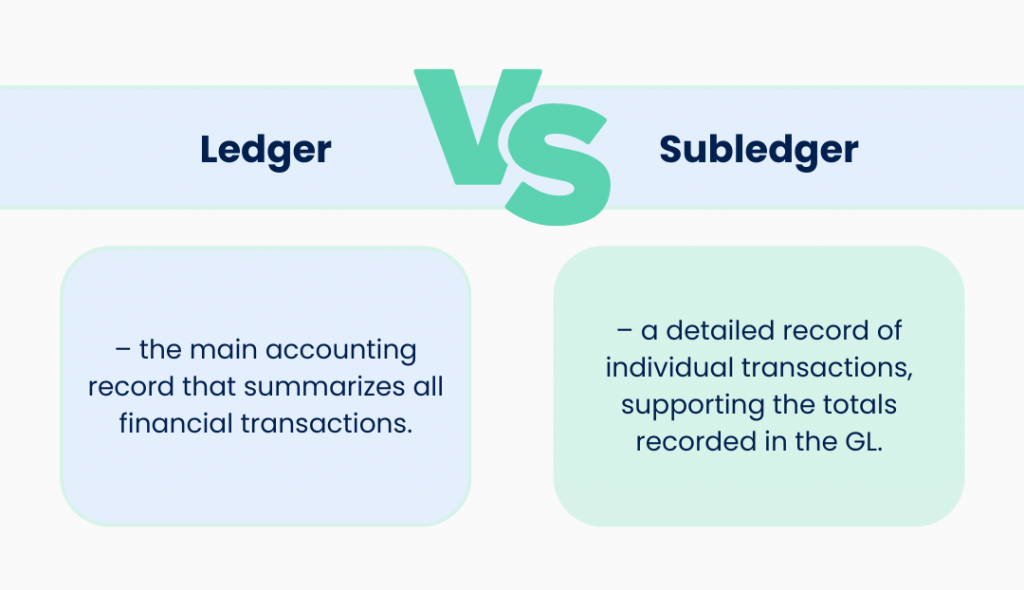
Understanding the connection between subledgers and the General Ledger is crucial to grasping the integrity and efficiency of a double-entry accounting system. They are not independent systems but rather two intertwined layers of the same financial record-keeping structure.
The Control Account Concept
At the core of this relationship is the “control account” concept. For every subledger, there is a corresponding control account in the General Ledger. This control account summarizes all the individual balances from its associated subledger. For example, the General Ledger will have one “Accounts Receivable” account, which is the control account for the entire Accounts Receivable subledger. The balance in this GL control account must always equal the sum of all individual customer balances in the AR subledger.
When a transaction occurs, it is first recorded in detail in the relevant subledger. Simultaneously, or as part of a batch process, a summary entry for that transaction’s effect on the overall account is posted to the General Ledger control account. This dual entry ensures that the detailed records are maintained while the summary accounts reflect the overall financial position. This design prevents the General Ledger from becoming bogged down with excessive detail, keeping it clean and manageable for producing high-level financial statements.
The Reconciliation Process
The most critical aspect of the subledger-General Ledger relationship is reconciliation. Regularly, typically monthly, accountants perform a reconciliation process where they compare the total balance of a subledger with the balance of its corresponding control account in the General Ledger.
Steps in Reconciliation:
- Sum Subledger Balances: Calculate the total of all individual balances within the subledger (e.g., sum of all customer outstanding balances in the AR subledger).
- Compare to GL Control Account: Check this sum against the balance of the relevant control account in the General Ledger.
- Investigate Discrepancies: If the totals do not match, accountants must investigate to find the source of the difference. Common reasons include:
- Posting errors: A transaction recorded in one ledger but not the other, or recorded incorrectly.
- Timing differences: Transactions recorded at different times in different systems (less common with integrated software).
- Unrecorded transactions: A transaction occurred but was never entered into the accounting system.
Reconciliation is not just an administrative task; it’s a vital internal control. It ensures the accuracy of both the detailed subledger and the summarized General Ledger, providing confidence in the financial statements. A lack of reconciliation can lead to significant errors, misstatements, and difficulty in identifying financial problems.
Impact on Financial Statements
Ultimately, the data originating from subledgers flows upward to inform the primary financial statements: the Balance Sheet, Income Statement, and Cash Flow Statement. The summarized balances from the General Ledger control accounts are the figures that appear on these reports.
For instance, the “Accounts Receivable” figure on the Balance Sheet is the balance from the General Ledger’s Accounts Receivable control account, which in turn is substantiated by the detailed AR subledger. Without the accuracy and reliability ensured by subledgers and their reconciliation, the financial statements themselves would lack credibility. Thus, subledgers are foundational to the integrity of a company’s financial reporting, providing the bedrock of detailed information upon which all high-level financial summaries are built.
Advantages and Disadvantages of Using Subledgers
The adoption of subledgers in an accounting system brings a host of benefits, particularly for businesses with a high volume of transactions. However, like any accounting tool, they also present certain challenges if not managed effectively.
Key Benefits
- Improved Detail and Granularity: This is the most significant advantage. Subledgers provide a comprehensive breakdown of aggregated General Ledger balances, offering deep insights into individual transactions, customers, vendors, or assets. This detail is crucial for operational management and strategic decision-making.
- Enhanced Control and Accuracy: By segregating detailed records, subledgers make it easier to pinpoint specific transactions, identify errors, and track discrepancies. This enhances the overall accuracy of financial records and strengthens internal controls.
- Facilitated Auditing: During an audit, subledgers provide the necessary documentation and audit trails to verify General Ledger balances. Auditors can easily drill down from a summary figure to the underlying transactions, making the audit process more efficient and transparent.
- Distributed Workload: In larger organizations, different accounting personnel or departments can be responsible for maintaining specific subledgers (e.g., one team for AR, another for AP). This distributes the workload, improves efficiency, and allows for specialization.
- Fraud Prevention: The detailed records and the reconciliation process act as a deterrent and detection mechanism for fraudulent activities. Irregularities are harder to hide when every transaction is meticulously documented and reconciled against a control account.
- Better Decision-Making: With access to detailed, real-time (or near real-time) data, managers can make more informed decisions regarding cash flow, inventory levels, credit policies, and asset utilization.
- Simplified General Ledger: By removing the need to record every single transaction in the GL, the General Ledger remains concise and manageable, focusing on high-level financial categories, which simplifies financial statement preparation.
Potential Challenges
- Increased Data Entry (Manual Systems): In manual or poorly integrated systems, maintaining subledgers can involve significant data entry, which is time-consuming and prone to human error.
- Complexity in Setup and Maintenance: Establishing and configuring various subledgers, especially in a comprehensive ERP system, can be complex and requires a clear understanding of accounting principles and business operations.
- Risk of Reconciliation Errors: While reconciliation is a benefit, if the process is not performed diligently or if there are systemic issues, discrepancies between subledgers and the General Ledger can arise and be difficult to resolve, leading to inaccuracies.
- Need for Integrated Systems: To maximize efficiency and minimize manual effort, subledgers ideally need to be integrated with the General Ledger through accounting software. Without such integration, the benefits can be significantly diminished.
- Learning Curve: Personnel need to be adequately trained to accurately record transactions in the correct subledgers and understand their relationship with the General Ledger.
Despite the potential challenges, the overwhelming advantages of using subledgers make them an indispensable component of modern financial management, particularly for businesses that seek detailed insights, robust control, and impeccable accuracy in their financial reporting. The key is to leverage appropriate financial tools and establish sound accounting practices to mitigate the inherent complexities.
Implementing and Managing Subledgers in Modern Business
In today’s fast-paced business environment, the effective implementation and management of subledgers are more critical than ever. The good news is that technological advancements have transformed what used to be a laborious, manual process into a streamlined, automated function.
The Role of Accounting Software
Modern accounting software, Enterprise Resource Planning (ERP) systems, and specialized financial tools are the bedrock of efficient subledger management. These systems are designed to integrate subledgers seamlessly with the General Ledger.
How Software Automates Subledger Management:
- Automated Posting: When a transaction is entered into a subledger module (e.g., an invoice in Accounts Receivable, a bill in Accounts Payable), the software automatically generates the corresponding entry to the General Ledger control account. This eliminates manual double-entry and reduces errors.
- Real-time Updates: Many systems provide real-time or near real-time updates, meaning that as transactions are recorded in subledgers, the General Ledger balances are immediately updated, providing an accurate, up-to-the-minute financial picture.
- Streamlined Reconciliation: Software often includes reconciliation tools that highlight discrepancies between subledger totals and GL control accounts, making the reconciliation process much faster and easier to manage.
- Reporting and Analysis: These systems can generate detailed reports from subledgers, offering granular insights that would be incredibly difficult to compile manually. This includes aging reports for receivables and payables, inventory valuation reports, and detailed asset schedules.
- Audit Trails: Modern software maintains comprehensive audit trails, tracking who made which entries, when, and from where, significantly enhancing transparency and compliance.
From small business accounting software like QuickBooks and Xero to large-scale ERPs like SAP and Oracle, these tools are indispensable for managing the complexity and volume of data associated with subledgers, allowing businesses to focus on analysis rather than data entry.
Best Practices for Subledger Management
To maximize the benefits of subledgers and mitigate potential pitfalls, businesses should adhere to several best practices:
- Regular Reconciliation: Make monthly or even weekly reconciliation between subledgers and their General Ledger control accounts a mandatory process. This proactive approach helps identify and correct errors swiftly before they accumulate and become harder to resolve.
- Clear Chart of Accounts: Develop a well-structured and logical Chart of Accounts that clearly links each subledger to its corresponding General Ledger control account. Consistency is key.
- Standardized Procedures: Establish clear, documented procedures for recording transactions, posting to subledgers, and performing reconciliations. Ensure all accounting staff are trained on these procedures.
- Strong Internal Controls: Implement internal controls such as segregation of duties (e.g., different people approving invoices vs. making payments), regular reviews, and approval hierarchies to prevent errors and fraud.
- Utilize Technology: Invest in and fully leverage accounting software or ERP systems designed to automate and integrate subledger management. Ensure the software is properly configured to meet the business’s specific needs.
- Data Integrity: Regularly back up financial data and ensure data accuracy at the point of entry. Implement data validation rules within the accounting system.
- Continuous Training: Provide ongoing training for accounting staff to keep them updated on software features, accounting standards, and best practices.
Future Trends
The future of subledger management is likely to be characterized by even greater automation and intelligence:
- Artificial Intelligence (AI) and Machine Learning (ML): AI could further automate data entry, categorization, and reconciliation, learning from past transactions to predict and identify potential discrepancies with higher accuracy.
- Blockchain Technology: While still nascent in accounting, blockchain could potentially create immutable, transparent subledger records, significantly enhancing auditability and reducing the risk of fraud.
- Real-time Analytics: Advanced analytics tools will draw even richer insights from subledger data, providing predictive capabilities for cash flow, inventory needs, and customer payment behaviors.
By embracing these technologies and best practices, businesses can transform their subledger management from a necessary administrative burden into a powerful strategic asset, providing the detailed insights needed to thrive in a competitive landscape.

Conclusion
In the intricate architecture of financial management, subledgers stand as the unsung heroes. They are the meticulous record-keepers, capturing the granular detail of every transaction that collectively paints a picture of a company’s financial health. While the General Ledger offers the high-level summary essential for financial reporting, it is the subledger that provides the depth, the justification, and the crucial insights required for operational efficiency, robust internal control, and informed decision-making.
From tracking individual customer debts in Accounts Receivable to monitoring every screw in an Inventory subledger, these subsidiary ledgers ensure transparency, enhance accuracy, and empower managers to navigate the complexities of business finance with precision. The seamless integration of subledgers with the General Ledger, often facilitated by modern accounting software, forms the backbone of a reliable and auditable financial system.
Ultimately, “what is a subledger?” is not merely a question about an accounting term, but about a foundational pillar of sound financial management. For any business striving for clarity, control, and strategic foresight in its financial operations, understanding and effectively utilizing subledgers is not just beneficial—it is absolutely essential. They are the vital links in the chain that connect daily transactional activity to overarching financial strategy, ensuring that every financial decision is grounded in comprehensive, accurate data.
aViewFromTheCave is a participant in the Amazon Services LLC Associates Program, an affiliate advertising program designed to provide a means for sites to earn advertising fees by advertising and linking to Amazon.com. Amazon, the Amazon logo, AmazonSupply, and the AmazonSupply logo are trademarks of Amazon.com, Inc. or its affiliates. As an Amazon Associate we earn affiliate commissions from qualifying purchases.