
The allure of a pool table in a game room or a bustling commercial establishment is undeniable. It’s more than just a piece of furniture; it’s a focal point for recreation, competition, and often, a significant financial investment. When considering such an acquisition, one of the most fundamental questions that arises is, “What is a standard size pool table?” While seemingly a straightforward query about dimensions, the answer carries profound financial implications, influencing everything from purchase price and operational costs to resale value and income-generating potential. Understanding these standard sizes is not just about fitting the table into a room; it’s about making a sound financial decision that aligns with your budget, space, and long-term objectives.
The Foundation: Defining “Standard” in Pool Tables
Before delving into the financial ramifications, it’s crucial to establish a clear understanding of what constitutes a “standard size” in the world of pool tables. Unlike many consumer goods, pool tables adhere to a set of widely accepted, often regulation-driven, dimensions that dictate their use, playability, and commercial viability.
Regulation Sizes: A Universal Language of Play and Commerce
At the heart of “standard size” are the regulations set by governing bodies such as the Billiard Congress of America (BCA) and the World Pool-Billiard Association (WPA). These organizations establish the precise dimensions for professional and competitive play, creating a universal standard that is recognized globally. While the term “standard” might suggest a single size, it actually refers to a range of accepted dimensions, each serving different purposes and attracting different types of players. The adherence to these standards ensures fair play, allows for consistent skill development, and most importantly, underpins the commercial ecosystem of pool halls, tournaments, and equipment manufacturing. Without these standards, the sport would lack cohesion, and the market for tables and accessories would be chaotic.
Common Standard Sizes for Home and Commercial Use
While professional tournaments primarily utilize 9-foot tables, the market offers a few “standard” sizes designed for various environments and financial considerations. These typically refer to the length of the table’s playing surface, not the overall outer dimensions.
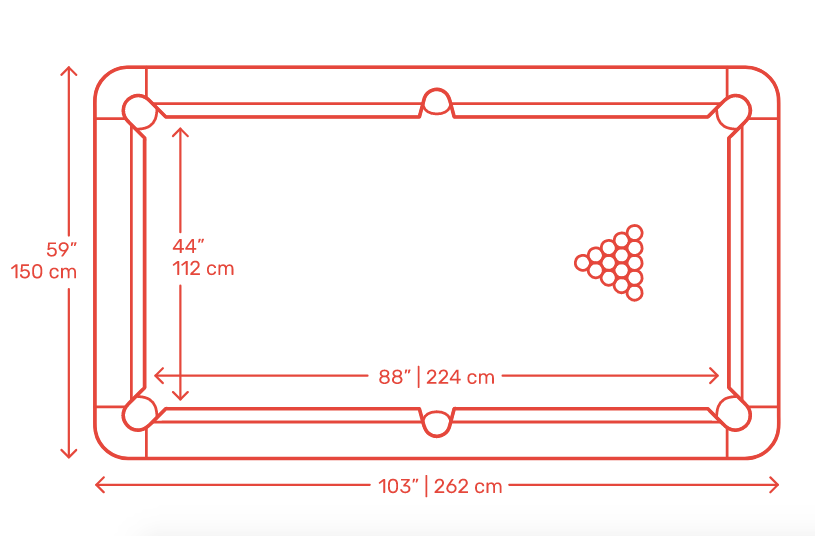
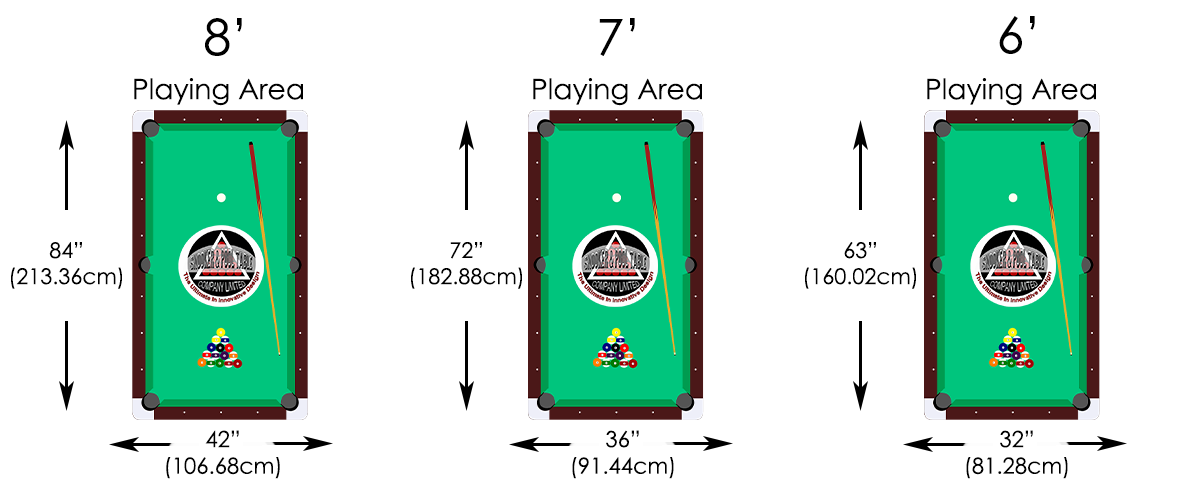
- 7-Foot Table (Bar Box/Coin-Operated): Measuring approximately 78 x 39 inches for the playing surface (and around 92 x 52 inches outer dimensions), the 7-foot table is the smallest of the standard sizes. It’s immensely popular in bars, pubs, and smaller home game rooms due to its compact footprint and suitability for quick, casual games. From a financial perspective, 7-foot tables are generally the least expensive to purchase and maintain, making them an accessible entry point for home users and a practical choice for commercial establishments where space and high turnover are key. Their smaller size means less cloth, fewer materials, and easier transport.
- 8-Foot Table (Home/Pro-Am): Often referred to as a “pro-am” or “oversized home” table, the 8-foot table has a playing surface of roughly 92 x 46 inches (with outer dimensions around 104 x 58 inches). This size strikes a popular balance, offering a more challenging and authentic playing experience than a 7-foot table without requiring the vast space of a 9-footer. For homeowners, it represents a significant investment that enhances property value and entertainment options. For smaller commercial venues or private clubs, it offers a quality playing experience that can attract more serious players than a bar box, potentially commanding higher hourly rates or league fees.
- 9-Foot Table (Regulation/Tournament): The true “regulation” or “tournament” size, a 9-foot table features a playing surface of about 100 x 50 inches (and outer dimensions around 112 x 62 inches). This is the size used in nearly all professional competitions and serious amateur leagues. Financially, 9-foot tables represent the largest upfront investment due to their sheer size, weight, and the quality of construction typically associated with them. However, for dedicated players, serious home enthusiasts, or commercial establishments aiming to host high-stakes tournaments or attract elite players, the 9-foot table is indispensable. Its larger playing area requires greater skill and strategy, elevating the game’s perceived value.
Beyond the Inches: The Importance of Proportions and Playfield
Crucially, “standard size” isn’t just about the length. It also implies precise proportions for the width, pocket openings, rail heights, and cushion responsiveness. These elements are standardized to ensure consistent ball dynamics and an equitable playing experience. Deviations from these proportions, even on a table of a seemingly standard length, can significantly impact playability and, consequently, the financial value and desirability of the table. A table that doesn’t “play true” due to incorrect proportions will quickly lose its appeal, regardless of its initial cost.
Investment Value: Why Size Matters to Your Wallet
The decision to purchase a pool table, especially a standard-sized one, is a financial commitment. Understanding how size influences its investment value is key to making a smart purchase, whether for personal enjoyment or as an asset for a business.
Upfront Costs: Table, Installation, and Accessories
The most immediate financial impact of standard size relates to the upfront costs. Generally, the larger the standard table, the higher its price tag. This is due to several factors: more materials (slate, wood, cloth), increased manufacturing complexity, and heavier shipping requirements.
- Table Price: A 7-foot table might range from $1,500 to $4,000, while an 8-foot table could be $2,500 to $7,000, and a 9-foot regulation table often starts at $4,000 and can easily exceed $15,000 for high-end models.
- Installation: Professional installation is highly recommended for all slate tables, and the cost increases with the table’s size and complexity. Larger tables are heavier, require more labor, and often more specialized tools, directly impacting installation fees.
- Accessories: While cues, balls, and racks are universal, larger tables require larger, more expensive felt (cloth), and potentially longer cue sticks, adding to the initial outlay. Furthermore, a standard size table necessitates a larger room, which might incur additional costs for lighting, flooring, or even minor renovations to accommodate optimal playing clearance.
Resale Market Dynamics: Standard Sizes Hold Their Value
One of the most compelling financial arguments for investing in a standard size pool table is its superior resale value. Non-standard or novelty-sized tables often struggle on the secondary market because they don’t appeal to serious players or commercial buyers.
- Demand: Standard 7, 8, and 9-foot tables are always in demand because they fit into established categories for home use, leagues, and tournaments. This broad appeal ensures a larger pool of potential buyers when you decide to sell.
- Liquidity: A standard size table is a more liquid asset. Should circumstances change (e.g., moving, lifestyle changes), selling a regulation-sized table is generally easier and fetches a better price than trying to offload an odd-sized, custom piece.
- Perceived Quality: Buyers often associate standard sizes with quality construction and legitimate playability. A non-standard size, especially one that deviates significantly from accepted proportions, can trigger skepticism about its origins and play experience, leading to devaluation.
Maintenance and Longevity: Protecting Your Investment
Maintaining a pool table is an ongoing financial consideration. Standard sizes offer advantages here too:
- Parts Availability: Replacement parts like cushions, pockets, and most importantly, felt, are readily available and standardized for 7, 8, and 9-foot tables. This means lower costs for replacement materials and easier access for repairs. Custom or non-standard tables might require specialized, expensive, or even custom-fabricated parts, dramatically increasing maintenance costs and downtime.
- Professional Services: Technicians are intimately familiar with standard table dimensions and construction. Their expertise allows for efficient and cost-effective refelting, leveling, and repairs. Working on non-standard tables can be more complex and time-consuming, translating into higher labor charges.
- Durability: Many standard tables, particularly those built for commercial or tournament use, are constructed with robustness in mind, designed to withstand years of heavy play. This inherent durability, combined with accessible maintenance, ensures a longer operational lifespan and protects your initial investment.
Business Acumen: Standard Sizes in Commercial Settings
For entrepreneurs in the hospitality, entertainment, or gaming industries, choosing the right size pool table is not merely a matter of preference but a critical business decision that impacts revenue, customer satisfaction, and operational efficiency.
Attracting Patrons: The Allure of Regulation Play
Commercial venues like pool halls, bars, and community centers often rely on their pool tables as a primary draw. Offering standard-sized tables, particularly 8-foot or 9-foot models, is essential for attracting a broad clientele, from casual players to league teams and serious enthusiasts.
- League Play: League organizers and teams almost exclusively require standard 8-foot or 9-foot tables to ensure fair competition and accurate skill measurement. Hosting leagues provides consistent, predictable revenue streams through table fees, food and beverage sales, and potential merchandise.
- Tournament Hosting: The ability to host local, regional, or even national tournaments on regulation 9-foot tables can significantly boost a venue’s profile, attracting large numbers of players and spectators, leading to substantial income generation. These events often come with entry fees, sponsorship opportunities, and increased sales during the event.
- Player Expectation: Serious players expect and demand standard-sized tables. Providing anything less can alienate this lucrative segment, who are often willing to spend more for a quality playing experience.
Operational Efficiency: Space Management and Revenue Generation
While a larger table means a larger footprint, strategic placement of standard sizes can optimize a venue’s space for maximum revenue.
- Space-to-Revenue Ratio: A 7-foot table, while smaller, might generate less revenue per hour due to its more casual appeal. An 8-foot or 9-foot table, though requiring more space, can often command higher hourly rates or be part of a higher-value league/tournament package, yielding a better space-to-revenue ratio in the right market.
- Customer Flow: The number and size of tables dictate how many patrons can play simultaneously. A mix of 7-foot (for quick games) and 8/9-foot tables (for serious play) can cater to diverse customer segments and maximize throughput.
- Coin-Operated Economics: For coin-operated models (often 7-foot), standardization ensures compatibility with standard mechanisms and pricing structures, simplifying maintenance and revenue collection.
Tournament Hosting: Unlocking Higher Earning Potential
The pinnacle of commercial pool table utilization is tournament hosting. This is where the financial benefits of 9-foot regulation tables truly shine.
- Prize Pools and Entry Fees: Major tournaments often feature significant prize pools, which are funded by entry fees. The prestige of playing on regulation tables attracts more participants, allowing for higher entry fees and larger prize pools, which in turn attracts even more players.
- Sponsorship Opportunities: Businesses are more likely to sponsor events held on regulation equipment in reputable venues. These sponsorships provide direct revenue and marketing support, amplifying the event’s reach and profitability.
- Ancillary Sales: Increased foot traffic from tournaments drives sales of food, beverages, merchandise, and other services offered by the venue, transforming the pool table into a central component of a larger revenue ecosystem.
The Hidden Costs and Benefits of Non-Standard Tables
While the focus here is on standard sizes, a brief look at non-standard tables highlights the financial pitfalls of deviating from established norms.
Customization Premium vs. Standard Accessibility
Non-standard tables, often custom-built to unique specifications, usually come with a significant price premium upfront. While this might appeal to those seeking uniqueness, it rarely translates into long-term financial gain. In contrast, standard tables benefit from economies of scale in manufacturing, making them more accessible and cost-effective without sacrificing quality. The “premium” for a non-standard size is usually for the rarity, not for superior playability or investment return.
The Challenge of Accessories and Parts for Unique Sizes
The financial headaches associated with non-standard tables often begin after purchase. Finding appropriate felt, cushions, or other replacement parts can be a nightmare. Custom parts are expensive and may have long lead times, leading to extended downtime for a commercial table or frustration for a home owner. This contrasts sharply with standard tables, for which parts are mass-produced and readily available at competitive prices. This accessibility dramatically reduces maintenance costs and ensures the table remains playable for years.
Diminished Resale and Limited Audience
Perhaps the most significant financial drawback of a non-standard table is its drastically diminished resale value. When it comes time to sell, the market for a custom-sized table is tiny. Most buyers are looking for a standard size for established play or space requirements. A non-standard table becomes an illiquid asset, often having to be sold at a deep discount, if at all. This represents a substantial loss on the initial investment, a stark contrast to the strong resale market for standard tables.
Making the Smart Financial Choice: Your Pool Table Investment
Choosing a pool table is a blend of passion and practicality. From a financial perspective, understanding and prioritizing standard sizes is paramount, whether you’re a homeowner or a business owner.
Assessing Your Space and Budget
Before any purchase, meticulously measure your available space, remembering to account for adequate cueing clearance around the table (typically 5 feet on all sides for optimal play). This directly informs which standard size is feasible. Simultaneously, establish a realistic budget, not just for the table itself, but for installation, accessories, and potential room modifications. Overspending on a table that doesn’t fit or requires costly room alterations is a common financial misstep. A 7-foot table might be the perfect financial and spatial fit for many homes, offering enjoyment without breaking the bank or overwhelming a room.
Future-Proofing Your Purchase
Investing in a standard size pool table is a way to future-proof your purchase. It ensures that the table will remain relevant for league play, social gatherings, or simply personal enjoyment for years to come. Its universal appeal also means that if your needs or circumstances change, you have a valuable, marketable asset that retains much of its initial investment. This longevity and flexibility make it a wise long-term financial decision.

Beyond the Price Tag: Considering Long-Term Value
While the initial price is a significant factor, true financial wisdom dictates looking beyond the immediate cost. Consider the long-term value: the joy it brings, the entertainment it provides, its potential to attract customers, its durability, and its future resale potential. In all these aspects, a standard size pool table consistently outperforms non-standard alternatives. It’s an investment in quality, playability, and financial prudence, ensuring that your passion for the game also makes sound fiscal sense. By choosing a standard size, you’re not just buying a table; you’re acquiring a reliable asset that delivers enduring value.
aViewFromTheCave is a participant in the Amazon Services LLC Associates Program, an affiliate advertising program designed to provide a means for sites to earn advertising fees by advertising and linking to Amazon.com. Amazon, the Amazon logo, AmazonSupply, and the AmazonSupply logo are trademarks of Amazon.com, Inc. or its affiliates. As an Amazon Associate we earn affiliate commissions from qualifying purchases.