
The financial landscape of the United States has undergone numerous transformations throughout its history, mirroring the nation’s economic growth, political shifts, and evolving understanding of monetary policy. Among the many forms of currency that have circulated, the Silver Dollar Certificate stands out as a fascinating and historically significant instrument. Far more than just a piece of paper, these certificates represented a direct promise from the U.S. government, once redeemable for a tangible amount of silver coin. Understanding their purpose, history, and eventual obsolescence provides a compelling window into America’s past, particularly its relationship with precious metals and the development of its modern currency system.
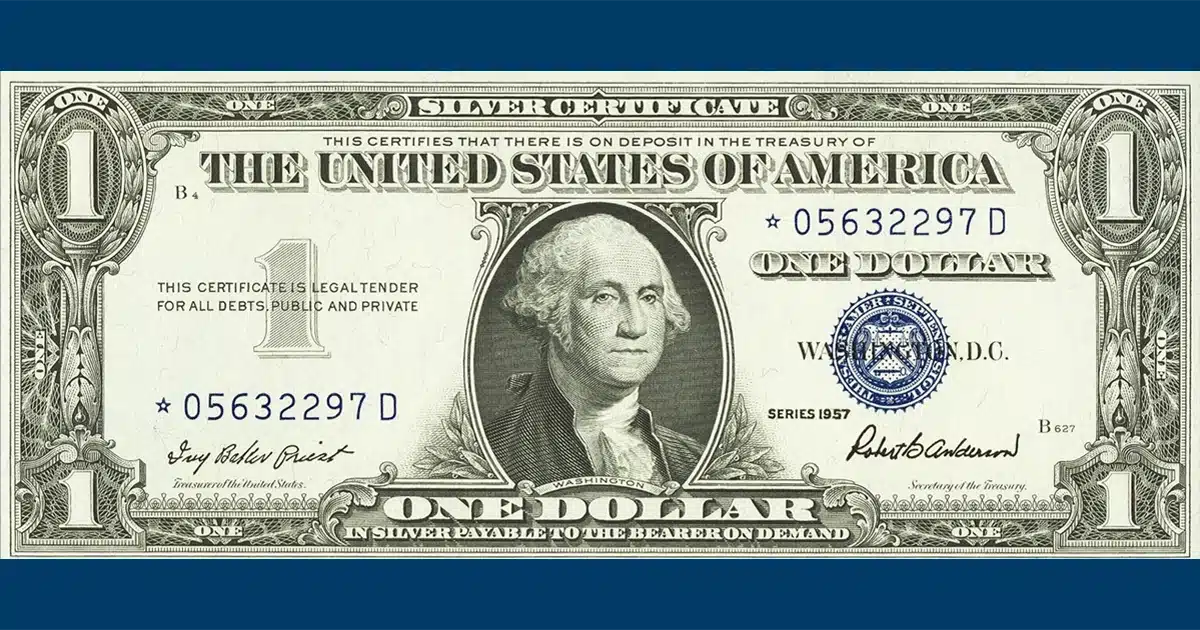
This article delves into the origins, characteristics, and eventual phasing out of silver dollar certificates, exploring their enduring appeal to numismatists and their place in the annals of American financial history. We will uncover how these certificates functioned as a cornerstone of the nation’s monetary system for decades and why they continue to captivate collectors and historians alike.
The Genesis and Purpose of Silver Certificates
To truly grasp the significance of silver dollar certificates, one must first appreciate the broader context of U.S. paper currency and the monetary standards that governed its value. These certificates did not emerge in a vacuum but rather as a solution to specific economic needs and challenges of their era.
A Brief History of U.S. Paper Currency
Before the widespread adoption of standardized national currency, the United States experienced a chaotic period where various forms of money circulated, including state bank notes, foreign coins, and even private scrip. The Civil War era marked a pivotal moment, as the Union government issued “greenbacks” (United States Notes) to finance the war effort, which were not backed by specie (gold or silver) and thus fluctuated in value. Following the war, there was a strong desire to restore confidence in the nation’s currency and establish a more stable monetary system. This led to the re-establishment of specie payments and the introduction of representative money – paper currency directly convertible into precious metals.
Introduction of the Silver Certificate
Silver certificates were first authorized by the Bland-Allison Act of 1878. Their introduction was largely a political compromise aimed at mollifying agrarian and mining interests who advocated for the increased use of silver in the monetary system. With vast silver discoveries in the American West, there was pressure to coin more silver and incorporate it into the national currency. However, carrying large quantities of silver dollars was impractical for everyday transactions. This is where the silver certificate came into play: it offered a convenient, portable, and easily transacted paper substitute for the bulky metal coins.
Instead of carrying a heavy bag of silver dollars, a person could carry a lightweight silver certificate, knowing it could be exchanged for the actual silver coins at any Treasury office or authorized bank. This convenience made them incredibly popular and instrumental in facilitating commerce across the burgeoning nation.
Redeemability and the Silver Standard
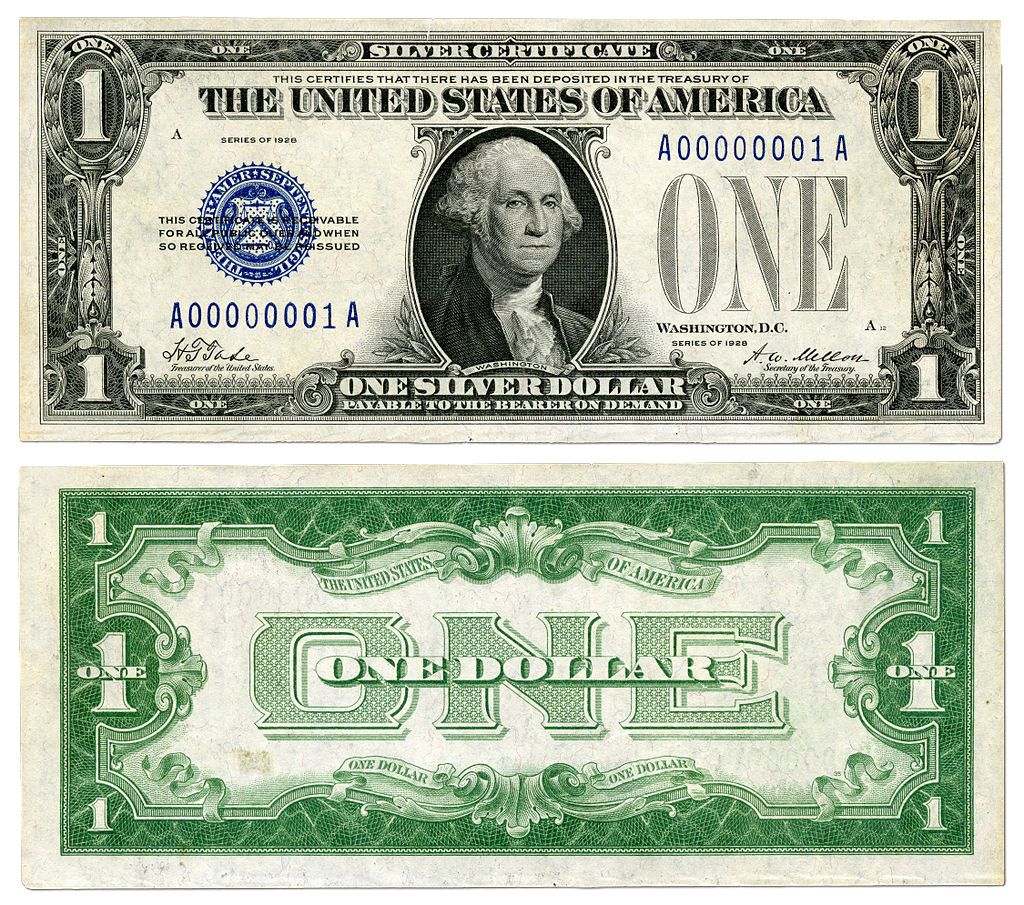
The defining feature of a silver certificate was its explicit promise of redeemability. Each certificate explicitly stated, “This certifies that there has been deposited in the Treasury of the United States of America [X] Silver Dollar payable to the bearer on demand.” This promise linked the paper currency directly to the nation’s silver reserves, establishing it as a form of representative money operating under a bimetallic or, more often, a silver standard.
The value of the certificate was, therefore, intrinsically tied to the market value of silver and the government’s commitment to maintaining convertibility. For much of their existence, silver certificates functioned as part of a broader system where a fixed amount of silver (or gold) defined the value of the national currency. This direct link was a source of stability and trust in an era prior to the modern concept of fiat money, where currency value is derived from government decree and public confidence rather than a physical commodity.
Key Features and Design Elements
Beyond their functional purpose, silver dollar certificates are also prized for their aesthetic qualities and the intricate details that reflect the artistry and security measures of their time. These features help collectors identify different series and understand their historical context.
Denominations and Series
Silver certificates were issued in a range of denominations, catering to various transactional needs. While the most common were the $1, $2, and $5 certificates, higher denominations up to $1,000 were also produced, though far less frequently. Each denomination featured distinct designs and portraits. The “Series” year (e.g., Series of 1886, Series of 1928, Series of 1957) is crucial for collectors, as it indicates when the design was first adopted or significantly altered, often reflecting changes in legislation or printing technology. Different series can have varying levels of rarity and value.
Iconic Imagery and Vignettes
A hallmark of silver certificates is their elaborate and often beautiful engravings. Early large-size certificates (issued before 1929) are particularly renowned for their artistic merit, featuring allegorical figures, historical scenes, and detailed portraits of prominent Americans. For instance, the famous “Educational Series” of 1896 is highly sought after for its stunning depictions. Even the later small-size certificates (1928 onwards), which adopted a more standardized design similar to today’s currency, bore distinctive imagery. George Washington famously appeared on the $1 silver certificate, while other historical figures like Abraham Lincoln ($5) and Ulysses S. Grant ($5, some series) graced higher denominations. These vignettes were not merely decorative; they were chosen to inspire national pride and deter counterfeiting through their intricate detail.
Distinctive Blue Seal and Serial Numbers
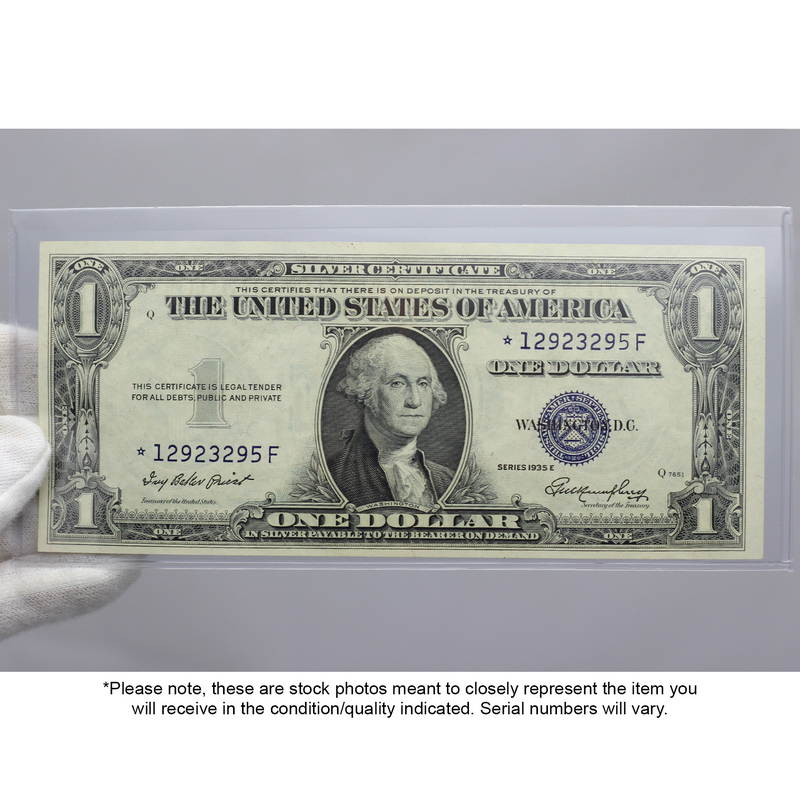
One of the most immediate visual identifiers of a silver certificate, especially for small-size notes, is the prominent blue seal on the right side of the bill, signifying its backing by silver. This sharply contrasted with the red seals found on United States Notes (another form of paper currency) and the green seals on Federal Reserve Notes (which eventually became the dominant form of U.S. currency). This color-coding provided a quick visual cue about the nature of the currency.
Serial numbers, unique to each note, are printed twice on the face of the certificate. For collectors, these numbers, especially those with unusual patterns (e.g., low numbers, solid numbers, radar notes), can significantly increase a note’s value. “Star notes” – those with a star symbol replacing the letter suffix in the serial number – are also highly collectible. These were replacement notes printed when an error occurred during the initial printing process, indicating a lower print run and thus higher rarity.
The Decline and Demise of Silver Certificates
The era of silver certificates, while significant, was not destined to last indefinitely. A combination of evolving economic thought, shifting monetary policies, and changing global dynamics ultimately led to their phasing out.
Shifting Monetary Policies
The 20th century saw a gradual but decisive move away from commodity-backed currencies towards fiat money systems. The Great Depression and the need for greater monetary flexibility prompted governments worldwide to reassess the rigid constraints of the gold and silver standards. In the US, the Gold Reserve Act of 1934 effectively devalued the dollar against gold and centralized gold reserves, weakening the direct link between currency and precious metals. While silver certificates continued to circulate, the economic rationale for tying paper money directly to a fluctuating metal became increasingly scrutinized.
The costs of maintaining vast silver reserves and the administrative burden of redeemability also contributed to the eventual shift. Economists began to favor a monetary system where the central bank (the Federal Reserve) could more actively manage the money supply to promote economic stability and growth, rather than being constrained by the availability of a physical commodity.
The End of Redeemability
The definitive end for silver certificates came in the 1960s. The rising market price of silver began to approach and then exceed the face value of the silver coins and, by extension, the silver content backing the certificates. It became more profitable for individuals to melt down silver coins or redeem certificates for physical silver than to use them as currency. This situation was unsustainable for the Treasury.
To address this, President John F. Kennedy signed legislation in 1963 that repealed the Silver Purchase Act of 1934 and the authority of the Treasury to issue silver certificates. The official date marking the end of silver certificate redeemability for actual silver dollars was June 24, 1968. After this date, while the certificates remained legal tender, they could only be exchanged for Federal Reserve Notes, effectively stripping them of their unique characteristic.
Transition to Federal Reserve Notes
As silver certificates were phased out, Federal Reserve Notes, which had been in circulation since the creation of the Federal Reserve System in 1913, increasingly became the sole form of U.S. paper currency. Unlike silver certificates, Federal Reserve Notes are not backed by a tangible commodity but by the “full faith and credit” of the U.S. government. This transition completed the move to a fiat money system, granting the Federal Reserve greater control over monetary policy and allowing the nation’s currency supply to be managed independent of precious metal reserves. While silver certificates are still technically legal tender, their value in circulation is generally limited to their face value unless they possess numismatic appeal.
The Enduring Appeal to Collectors and Investors
Despite their obsolescence as a functional form of currency, silver dollar certificates hold a powerful allure for numismatists (coin and currency collectors) and, in some specific cases, can represent a unique investment opportunity.
Numismatic Value and Rarity
The primary appeal of silver certificates today lies in their numismatic value. Factors that determine a certificate’s worth include:
- Condition (Grading): The better the condition (e.g., crispness, lack of folds, tears, or stains), the higher its value. Professional grading services (like PMG or PCGS Currency) assign grades that significantly impact market price.
- Rarity: Some series, specific print runs, or error notes are much rarer than others, commanding higher prices. Low-denomination small-size certificates (e.g., $1 Series of 1957) are relatively common and affordable, making them great entry-level collectibles.
- Series and Signatures: Certain series, particularly the intricate large-size notes, are highly sought after. Notes signed by particular Treasury officials or Secretaries can also be more valuable.
- Star Notes: As mentioned earlier, notes with a star in their serial number are replacement notes for defective prints and are generally rarer.
For collectors, the thrill lies in acquiring a piece of history and appreciating the artistry and unique characteristics of each note.
Historical Significance
Each silver certificate is a tangible artifact from a bygone era of American financial history. They tell a story of monetary standards, political debates, and the economic forces that shaped the nation. Owning a silver certificate connects one directly to a time when paper money was a direct promise for a precious metal, offering a unique perspective on the evolution of trust and value in currency. They serve as educational tools, illustrating the shift from commodity-backed money to modern fiat systems.
Investment Potential (for Rare Notes)
While most common silver certificates only hold a modest premium over their face value, rare and high-grade examples can indeed appreciate significantly, making them attractive to certain investors. Unlike direct investment in physical silver, which tracks commodity prices, investing in rare silver certificates is a niche within numismatics. The value is driven by collector demand, historical significance, and scarcity, rather than the intrinsic metal content. As the collecting community grows and specific notes become harder to find in pristine condition, their market value can climb. However, this is a specialized investment, requiring considerable knowledge and careful research, differentiating it from traditional financial assets.
Starting a Collection
For those interested in collecting silver certificates, a good starting point involves research and education. Begin with common, affordable notes to understand grading and series. Seek reputable dealers, attend currency shows, and utilize online resources. Proper storage (acid-free holders) is crucial to preserve the notes’ condition. Collecting silver certificates is not just about accumulating value; it’s a journey through American history, art, and economics.
Conclusion
The silver dollar certificate holds a unique and indelible place in the tapestry of American financial history. From its inception as a practical solution for conducting commerce backed by the nation’s silver reserves to its eventual retirement in favor of a modern fiat system, it embodies a critical chapter in the evolution of U.S. currency. No longer a circulating medium of exchange, these certificates have transitioned into cherished collectibles, valued for their historical significance, intricate designs, and the stories they tell about a nation’s journey through its monetary policies. Whether viewed as an economic relic, a work of art, or a tangible link to the past, the silver dollar certificate remains a fascinating subject, inviting us to appreciate the complexities and transformations that have shaped the very money we use today.
aViewFromTheCave is a participant in the Amazon Services LLC Associates Program, an affiliate advertising program designed to provide a means for sites to earn advertising fees by advertising and linking to Amazon.com. Amazon, the Amazon logo, AmazonSupply, and the AmazonSupply logo are trademarks of Amazon.com, Inc. or its affiliates. As an Amazon Associate we earn affiliate commissions from qualifying purchases.