
In the dynamic world of digital media and visual storytelling, few techniques are as potent and universally recognized as the montage sequence. More than just a collection of rapid cuts, a montage is a meticulously crafted series of short shots, often accompanied by music, designed to condense space, time, and information, or to evoke a particular emotion or idea. For content creators, filmmakers, marketers, and anyone leveraging visual communication, understanding the montage isn’t merely academic; it’s a foundational skill for maximizing impact and efficiency in their digital output. Within the technology sphere, where software innovations constantly redefine creative possibilities, the montage remains a cornerstone, enabling sophisticated narrative compression and aesthetic expression across platforms from cinema to social media.
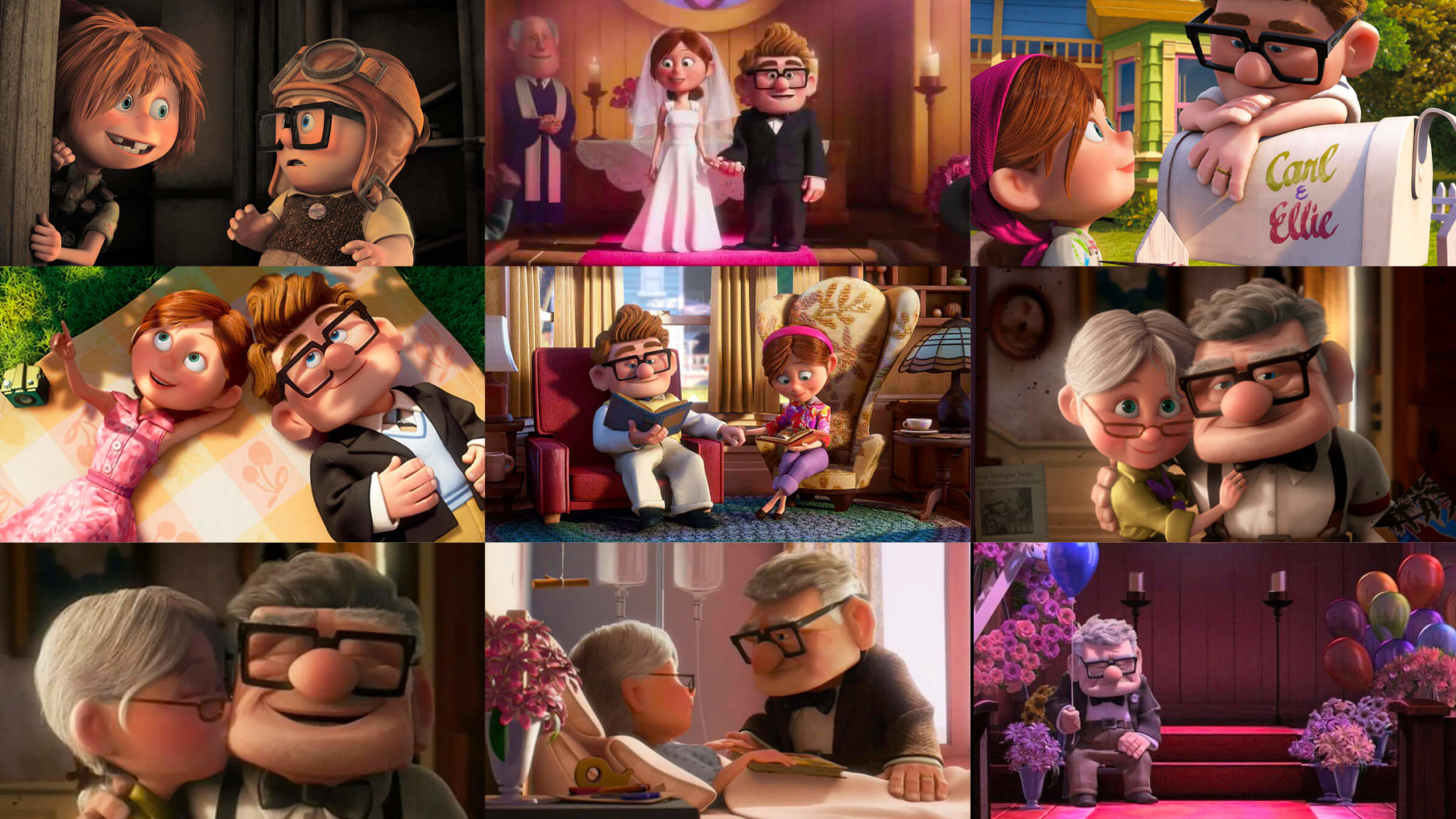
The Essence of Cinematic Storytelling: Defining the Montage
At its heart, a montage sequence is a storytelling device that leverages the power of juxtaposition and rapid succession to convey meaning more profoundly than a single shot or a conventional scene. The term itself, derived from the French “monter” (to assemble or to mount), speaks directly to its construction: a deliberate assembly of disparate elements to form a cohesive, impactful whole. In the tech landscape, where attention spans are fleeting and information density is key, the montage offers a powerful solution for communicating complex ideas quickly and compellingly.
Origins and Evolution: From Early Cinema to Digital Dominance
The concept of montage first gained prominence in early 20th-century Soviet cinema, notably through the theoretical work and films of Sergei Eisenstein. Eisenstein viewed montage not just as an editing technique, but as a dialectical process where the clash of two independent shots (thesis + antithesis) creates a new, more profound meaning (synthesis). His intellectual montage, for instance, used non-narrative shots to provoke abstract ideas in the viewer’s mind. Dziga Vertov’s “Kino-Eye” theories also championed the camera’s ability to capture and assemble fragments of reality into new, revelatory truths.
While the “intellectual montage” remains a powerful theoretical concept, the more common understanding today, particularly in Hollywood and popular media, is the “narrative montage.” This version focuses on compressing time or summarizing a series of events—think training sequences, travelogs, or the passage of seasons. From Rocky’s iconic training sequences to the rapid-fire succession of news headlines in a political thriller, montages have become an indispensable part of cinematic language.
With the advent of digital editing software and high-resolution cameras, the barriers to entry for creating sophisticated montages have significantly lowered. What once required laborious film splicing now happens with clicks and drags, making advanced visual storytelling accessible to a broader range of creators, from indie filmmakers to YouTube vloggers and corporate communicators. This democratization has led to a proliferation of montage use in all forms of digital content, solidifying its place as a staple of modern visual tech.
Beyond the Cut: Understanding the Purpose of a Montage
The primary purpose of a montage is to achieve narrative or emotional economy. It allows storytellers to avoid showing every single step of a process or every moment of a long period, instead giving the audience the essence.
- Condensing Time: Perhaps the most common use, a montage can show weeks, months, or even years passing in a matter of seconds. A character’s transformation, a building project, or a journey across continents can all be conveyed efficiently.
- Conveying Information: Rather than using expositional dialogue, a montage can visually present key facts, details, or a sequence of events necessary for the audience to understand a plot point. News reports often use montages to summarize events.
- Evoking Emotion or Mood: A series of carefully selected shots, combined with music, can evoke a powerful emotional response – nostalgia, excitement, despair, hope. This is often used in climactic moments or character reflections.
- Showing Parallel Events: Two or more storylines unfolding simultaneously can be intercut to highlight connections or contrasts, building tension or demonstrating causality.
- Symbolic Representation: Shots can be chosen not for their literal narrative contribution, but for their symbolic resonance, adding layers of meaning to the overall message.
In the tech realm, these purposes translate directly into effective communication strategies. A software tutorial might use a montage to rapidly demonstrate the progression of a project, while a product launch video could employ one to quickly showcase the myriad features and benefits of a new gadget without lengthy explanations.
The Technical Blueprint: Crafting Montages with Modern Software
Creating an effective montage is as much a technical endeavor as it is an artistic one. It requires not only a keen eye for visual storytelling but also a proficient understanding of the tools and software that bring these sequences to life. In the contemporary digital landscape, a range of powerful editing applications provides the capabilities needed to assemble and refine complex montage sequences, making the process more efficient and versatile than ever before.
Essential Software and Tools for Montage Creation
The backbone of any digital montage creation is video editing software. These platforms provide the environment for importing media, arranging shots, applying effects, and synchronizing audio.
- Professional Suites:
- Adobe Premiere Pro: A industry standard, known for its robust features, integration with other Adobe Creative Cloud apps (like After Effects for motion graphics), and extensive format support. Its precise timeline controls and vast array of effects make it ideal for intricate montage work.
- DaVinci Resolve: Increasingly popular, especially for its powerful color grading capabilities (which are crucial for visual consistency in montages) and a comprehensive free version. It offers a fully integrated workflow for editing, visual effects, motion graphics, and audio post-production.
- Final Cut Pro X (for macOS): Praised for its speed and intuitive interface, FCPX is a strong choice for macOS users, offering powerful organizational tools and a streamlined editing experience that can accelerate the montage assembly process.
- Consumer-Friendly & Mobile Apps: For creators on the go or those with less technical expertise, simplified apps like CapCut, InShot, or iMovie offer surprisingly capable tools for stitching together clips, adding music, and applying basic effects suitable for social media montages or quick explanatory videos.
- Stock Media Libraries: Websites like Shutterstock, Adobe Stock, Pexels, and Unsplash provide vast libraries of video clips, images, and audio tracks. These are invaluable for creating montages when original footage isn’t available or when specific B-roll is needed to fill out a sequence, especially for educational or commercial content.
- Audio Editing Software: While most video editors have basic audio capabilities, dedicated tools like Audacity (free) or Adobe Audition offer more granular control over music tracks, sound effects, and voiceovers, ensuring the audio component of a montage is as polished as the visuals.
Editing Techniques: Pacing, Rhythm, and Visual Juxtaposition
Beyond merely knowing the software, mastering montage creation involves specific editing techniques:
- Shot Selection: Each shot must contribute purposefully to the sequence’s overall message or emotion. Shots should be varied in composition, angle, and subject matter to maintain visual interest.
- Pacing and Rhythm: This is crucial. Fast-paced montages often convey excitement, urgency, or the rapid passage of time. Slower paces might suggest contemplation, growth, or a longer, more arduous journey. The length of each clip and the speed of the cuts dictate the rhythm, often synchronized with the accompanying music.
- Visual Juxtaposition: The deliberate placement of contrasting or complementary shots next to each other to create new meaning. For example, cutting between a struggling athlete and a successful competitor can highlight effort and aspiration.
- Transitions: While hard cuts are common, subtle transitions like dissolves or quick wipes can sometimes enhance the flow or thematic connection between shots. Overuse, however, can detract from the montage’s impact.
- Color Grading and Filters: Applying a consistent color palette or specific filters across all shots in a montage helps tie them together visually, enhancing mood and cohesion. This is particularly important when working with footage from different sources.
- Sound Design: The choice of music is paramount. It sets the emotional tone and often dictates the pacing. Sound effects can further punctuate key visual moments, adding another layer of sensory engagement.
Mastering these technical and artistic elements allows creators to transform raw footage into compelling narrative segments, a vital skill for anyone operating in the digital content landscape.
Strategic Applications in the Digital Age: Where Montages Shine
In an era saturated with information and visual content, the ability to communicate complex ideas swiftly and engagingly is a superpower. Montages, leveraging the condensed storytelling they offer, have become a cornerstone in various digital applications, from brand building to educational content, and even extending into the realm of AI-driven content generation.
Commercials and Marketing: Condensing Complex Narratives

The advertising industry has long recognized the power of the montage. In a 30-second commercial, an entire brand philosophy, product benefits, or a customer’s journey needs to be conveyed. Montages excel here by:
- Highlighting Features: A quick succession of shots demonstrating various product features in different use cases (e.g., a smartphone used for photography, gaming, work, and communication) effectively showcases its versatility.
- Building Brand Identity: A montage can visually articulate a brand’s values, lifestyle, or target audience. Upbeat music paired with dynamic shots of people enjoying a product or service can instantly communicate a brand’s essence.
- Emotional Connection: Marketers use montages to evoke aspirational feelings, nostalgia, or excitement, forging a deeper emotional bond with potential customers. This is particularly effective in luxury goods, travel, or lifestyle branding.
- Explaining Processes: For complex services or tech products, a montage can simplify intricate processes into digestible visual steps, making them accessible to a broader audience.
On digital platforms, where short-form video dominates, montages are indispensable for attention-grabbing ads on social media, YouTube pre-rolls, and website landing pages. Their ability to deliver high-impact narratives in a short timeframe makes them incredibly cost-effective and conversion-driving tools for any digital marketing strategy.
Educational Content and Tutorials: Enhancing Information Delivery
Beyond marketing, montages are proving invaluable in educational contexts, particularly for online learning and technical tutorials.
- Process Demonstration: When teaching software operation, coding steps, or scientific experiments, a montage can speed up repetitive or less crucial parts of a process, allowing learners to focus on key actions. For example, a montage might show the rapid installation of software before diving into its specific features.
- Concept Summarization: After presenting a detailed topic, a quick visual montage can recap the main points or examples, reinforcing learning and aiding retention.
- Historical Overviews: In online courses, a montage can quickly illustrate the evolution of a technology, an industry, or a cultural movement, providing necessary context without lengthy exposition.
- Skill Development: “How-to” videos for creative skills often use montages to show progress over time, inspiring viewers by demonstrating what’s achievable.
By strategically incorporating montages, educators and trainers can create more engaging, efficient, and impactful learning experiences, catering to the visual learning preferences of modern digital natives.
AI and Automation: The Future of Montage Generation
The cutting edge of technology is beginning to impact montage creation through artificial intelligence and automation. While human creativity remains paramount, AI tools are emerging to assist with various aspects:
- Automated Editing: AI-powered video editing software can analyze footage, identify key moments, and even suggest optimal cuts or pacing based on content analysis and predefined styles. This can significantly speed up the initial assembly phase of a montage.
- Content Curation: AI algorithms can sift through vast libraries of stock footage, identifying relevant clips based on keywords, themes, or emotional tags, making it easier to find complementary visuals for a montage.
- Music Synchronization: AI tools can analyze the rhythm and mood of a video sequence and suggest suitable music tracks, or even automatically adjust music tempo and cuts to synchronize with visual beats.
- Style Transfer and Enhancements: AI can apply specific visual styles, color grades, or even generate synthetic footage that seamlessly blends with existing material, offering new creative possibilities for unique montage aesthetics.
While fully automated “creative” montage generation is still nascent, AI assistance is rapidly becoming a powerful augmentation for human editors, allowing them to focus more on the narrative and emotional impact rather than the laborious manual tasks, thus democratizing sophisticated visual storytelling even further.
Mastering the Art: Tips for Effective Montage Creation
Even with the most advanced software, the true power of a montage lies in its intelligent design and execution. Beyond technical proficiency, it requires an understanding of how visuals, sound, and pacing interact to create a cohesive and impactful experience.
Music and Sound Design: The Unsung Heroes
The auditory component of a montage is arguably as important as, if not more important than, the visuals themselves.
- Setting the Tone: Music immediately establishes the emotional landscape of the montage. An uplifting track for a triumph, a somber melody for a struggle, or a driving beat for an action sequence. The chosen music should reinforce the narrative and emotional goals.
- Pacing the Cuts: The rhythm and tempo of the music often dictate the speed of the cuts. Matching visual edits to musical beats or phrases creates a sense of harmony and heightened impact, making the montage feel natural and cohesive.
- Sound Effects: Subtle sound effects (e.g., footsteps, clicks, environmental ambient sounds) can add texture and realism, grounding the abstract nature of a montage in sensory experience. However, they should be used judiciously to avoid cluttering the soundscape.
- Dynamic Range: Varying the volume and intensity of the music and sound effects can build dramatic tension or signify shifts in narrative focus. A gradual crescendo can signal an approaching climax, while a sudden drop can emphasize a moment of realization.
A well-chosen and expertly mixed soundtrack elevates a montage from a mere collection of clips to a powerful emotional journey, deeply engaging the viewer and enhancing memorability.
Visual Consistency and Thematic Cohesion
While montages often combine disparate shots, maintaining visual consistency and thematic cohesion is critical to preventing the sequence from feeling disjointed or chaotic.
- Color Grading: Applying a uniform color grade or filter across all clips helps to visually unite them, regardless of their original source or shooting conditions. This creates a distinct aesthetic signature for the montage.
- Compositional Rhythm: While individual shots may vary, consider how they flow together. Matching eye lines, maintaining similar framing types (e.g., all close-ups for an intimate montage), or consistent camera movement can create a visual rhythm.
- Thematic Thread: Every shot should serve the overarching theme or narrative purpose of the montage. If the montage is about transformation, each shot should subtly or overtly contribute to illustrating that change. Unrelated shots can confuse the audience and dilute the message.
- Symbolic Imagery: Integrate visual metaphors or recurring symbols that reinforce the theme. A shot of a rising sun can consistently symbolize new beginnings, for instance.
- Less is More: While montages condense information, avoid overstuffing them with too many ideas or visual elements. Clarity and impact often come from strategic selection rather than sheer volume. Each frame should earn its place.
By carefully orchestrating these elements, creators can craft montages that are not only technically proficient but also emotionally resonant and narratively powerful, making them truly stand out in a visually saturated digital world.
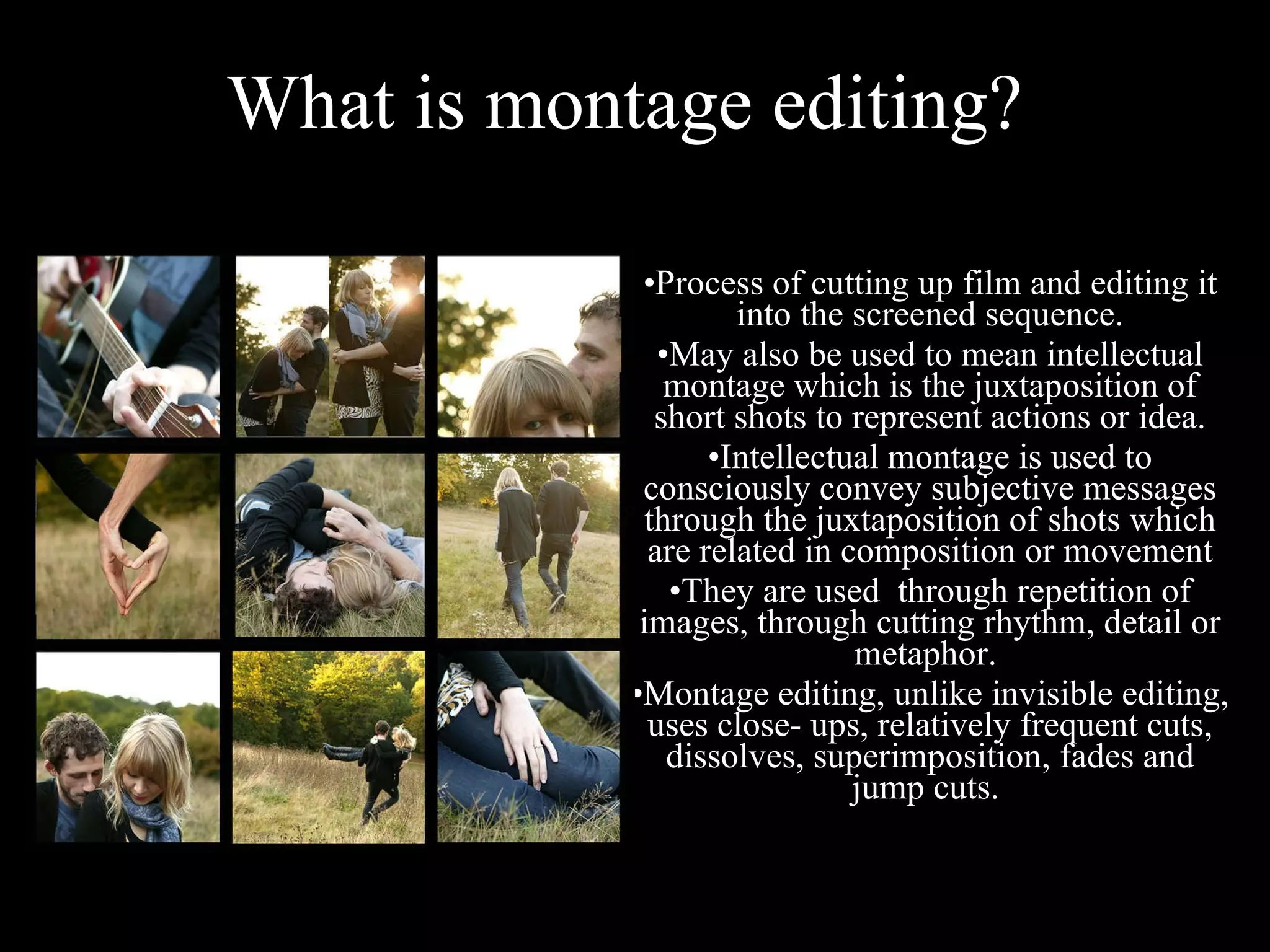
Conclusion: The Enduring Power of the Montage
The montage sequence, from its revolutionary origins in Soviet cinema to its pervasive presence in today’s digital landscape, stands as a testament to the enduring power of visual communication. In a technology-driven world where content creators are constantly striving for efficiency, impact, and audience engagement, the montage offers an unparalleled tool for condensing narratives, evoking emotions, and conveying complex information with brevity and flair.
For anyone involved in digital content creation, whether for marketing, education, entertainment, or personal branding, understanding “what is a montage sequence” and mastering its technical and artistic nuances is not just an advantage—it’s a necessity. With advancements in software, the democratization of editing tools, and the nascent capabilities of AI assistance, the ability to craft compelling montages is more accessible and powerful than ever before. As technology continues to evolve, so too will the forms and applications of the montage, ensuring its continued relevance as a vital technique for impactful storytelling in the digital age.
aViewFromTheCave is a participant in the Amazon Services LLC Associates Program, an affiliate advertising program designed to provide a means for sites to earn advertising fees by advertising and linking to Amazon.com. Amazon, the Amazon logo, AmazonSupply, and the AmazonSupply logo are trademarks of Amazon.com, Inc. or its affiliates. As an Amazon Associate we earn affiliate commissions from qualifying purchases.