
In the vast, intricate network of global air travel, where thousands of aircraft crisscross the skies daily, safety and efficiency are paramount. At the heart of maintaining this delicate balance lies an array of sophisticated technologies, many of which operate silently in the background, yet are utterly indispensable. Among these crucial components is the transponder, a device that serves as the aircraft’s voice to air traffic control (ATC). Specifically, the Mode C transponder represents a pivotal evolutionary step in this technology, transforming how controllers “see” and manage air traffic by adding a critical dimension: altitude reporting.

This article delves into the technical intricacies, operational significance, and historical context of the Mode C transponder. We will explore its fundamental role in preventing mid-air collisions, enabling efficient airspace management, and laying the groundwork for more advanced air traffic surveillance systems. Understanding the Mode C transponder is not merely about appreciating a piece of aviation electronics; it’s about grasping a core element of modern air safety infrastructure.
The Fundamental Role of Transponders in Aviation
To truly appreciate the Mode C transponder, one must first understand the broader context of air traffic control and the essential function of transponders in general. Before the advent of transponders, ATC primarily relied on “primary radar” to detect aircraft. While effective for initial detection, primary radar has significant limitations, particularly in identifying specific aircraft or gleaning detailed information about them.
How Air Traffic Control Works (Briefly)
Air traffic control is a complex system designed to prevent collisions between aircraft, organize and expedite the flow of air traffic, and provide information and other support for pilots. Central to this system are radar installations that scan the airspace.
- Primary Radar: This type of radar works by transmitting radio waves and listening for echoes reflected off an aircraft’s metallic structure. It provides a “blip” on the controller’s screen, indicating the aircraft’s position and sometimes its approximate speed. However, it cannot inherently identify the aircraft or report its altitude. Environmental factors, like weather, can also interfere with primary radar returns.
- Secondary Surveillance Radar (SSR): To overcome the limitations of primary radar, SSR systems were developed. Instead of passively waiting for reflections, SSR actively “interrogates” aircraft. This is where the transponder comes into play. The SSR ground station transmits an interrogation signal, and an aircraft equipped with a transponder replies with a coded response. This active communication is far more reliable and provides significantly more information.
What is a Transponder?
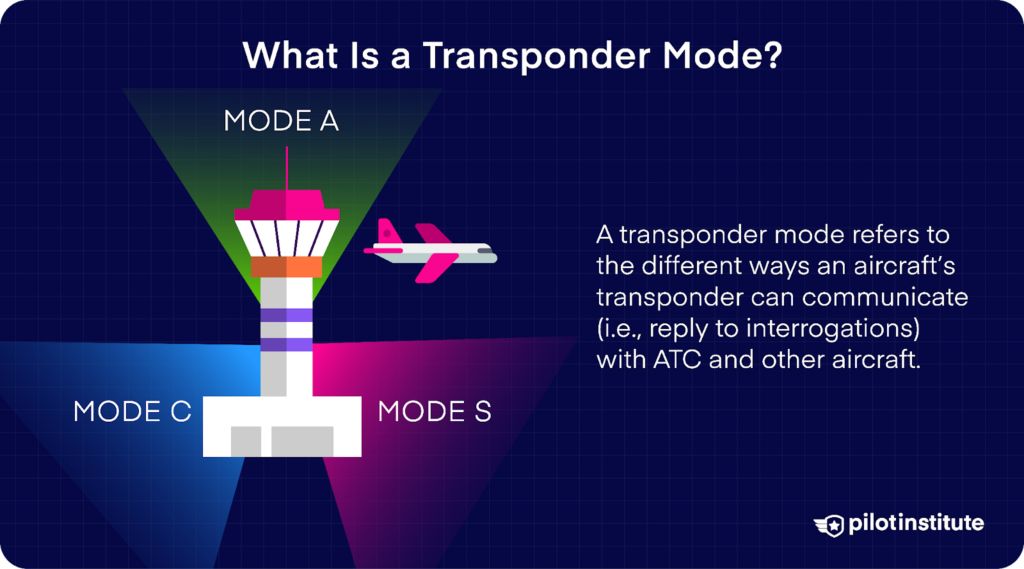
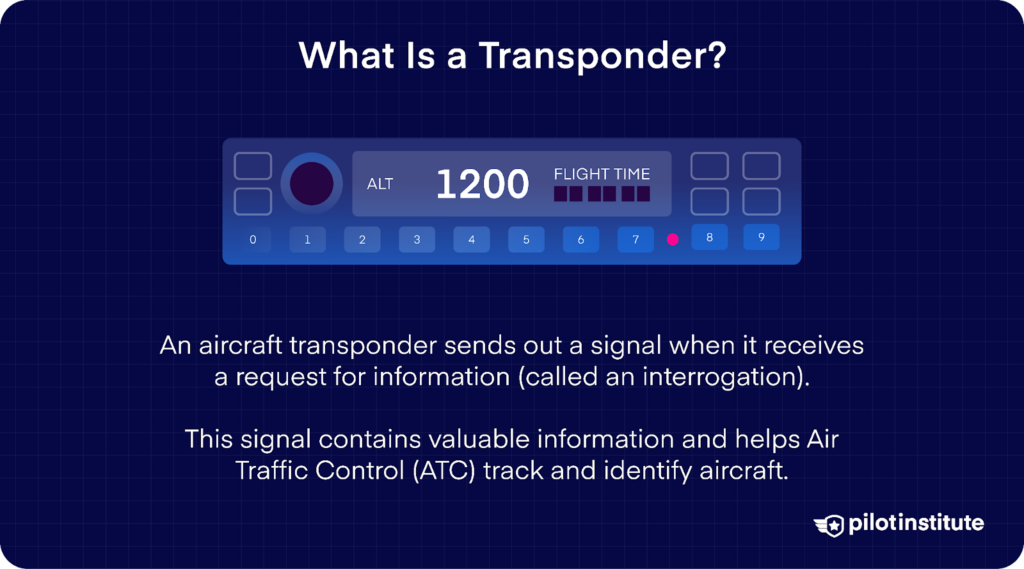
A transponder (a portmanteau of transmitter-responder) is an electronic device aboard an aircraft that receives an interrogation signal from a ground-based SSR system and, in turn, transmits an encoded reply signal. These replies contain vital information that is displayed on the air traffic controller’s radar screen, making aircraft identification and tracking much more precise and efficient. Early transponders, operating in what is known as “Mode A,” primarily provided a four-digit identification code, often referred to as a “squawk code,” assigned by ATC. This allowed controllers to differentiate between aircraft but still lacked the crucial vertical dimension.
Deconstructing Mode C: Altitude Reporting
The true innovation of the Mode C transponder lies in its ability to automatically report the aircraft’s pressure altitude. This capability elevated transponders from mere identification tools to essential safety devices, significantly enhancing the controller’s ability to manage vertical separation and prevent collisions.
Beyond Identification: Adding the Vertical Dimension
While Mode A provided a unique identity, it left controllers guessing about an aircraft’s precise altitude unless explicitly reported by the pilot and manually entered or estimated. This introduced potential for error and increased workload, especially in busy airspace. Mode C addressed this critical gap by integrating an altitude-reporting function.
- Mode A: Primarily provides a 4-digit octal identification code (e.g., 1200 for VFR, or specific codes assigned by ATC). This helps identify an aircraft but doesn’t inherently include altitude data.
- Mode C: Provides both the 4-digit identification code and the aircraft’s pressure altitude, automatically encoded and transmitted in 100-foot increments. This combined data vastly improves situational awareness for ATC.
The Altimeter and Encoding Altimeter Connection
The ability of a Mode C transponder to report altitude is not inherent to the transponder unit itself but rather a result of its connection to the aircraft’s altimetry system.
- Pressure Altimeter: Every aircraft is equipped with a pressure altimeter, which measures atmospheric pressure and displays it as an altitude. This instrument is calibrated to a standard atmosphere. The altitude it displays, when set to a standard pressure (29.92 inches of mercury or 1013.25 millibars), is known as “pressure altitude.” This is the altitude that Mode C transponders report, as it provides a standardized reference regardless of local barometric pressure variations, crucial for maintaining consistent vertical separation standards.
- Altitude Encoder: The Mode C transponder doesn’t directly read the altimeter’s dial. Instead, it receives data from an altitude encoder. This dedicated device converts the aircraft’s pressure altitude into a digital code, typically a Gillham code, which the transponder then modulates onto its reply signal. This ensures that the altitude data is consistently accurate and automatically updated without pilot input. The output is usually in 100-foot increments, meaning an aircraft at 5,050 feet would report 5,000 feet, and an aircraft at 5,149 feet would also report 5,100 feet. While seemingly coarse, this resolution is entirely adequate for ATC separation standards.
Importance for Separation and Safety
The automatic and continuous reporting of pressure altitude via Mode C revolutionized air traffic management:
- Preventing Mid-Air Collisions: By displaying both the aircraft’s position and its precise altitude, controllers can instantly see potential conflicts and issue timely instructions for avoidance. This greatly reduces the risk of vertical separation infringements.
- Maintaining Safe Vertical Separation: ATC regulations mandate specific vertical separation minimums (e.g., 1,000 feet in controlled airspace below FL290). Mode C allows controllers to verify that these minimums are maintained, even when aircraft are operating in cloud or at night.
- ATC Workload Reduction: Prior to Mode C, controllers had to rely on pilots to verbally report their altitudes, which was time-consuming, prone to human error, and increased radio congestion. Mode C automates this process, freeing up controllers to focus on other critical tasks and enhancing the efficiency of communication.
Operational Aspects and Pilot Interaction
For pilots, operating a Mode C transponder is a routine yet critical part of every flight. Familiarity with its controls and appropriate use of squawk codes are essential for seamless integration into the air traffic system.
Pilot Controls and Squawk Codes
A typical transponder control panel in the cockpit will feature several key functions:
- Squawk Code Selection: This is where the pilot enters the four-digit octal code assigned by ATC. These codes range from 0000 to 7777 (octal), providing over 4,000 unique combinations. Specific codes are reserved for particular situations (e.g., 7500 for hijack, 7600 for lost communications, 7700 for emergency).
- “IDENT” Function: This button, when pressed, momentarily adds a special pulse to the transponder’s reply signal. On the controller’s radar screen, this causes the aircraft’s target to “blossom” or flash brightly, allowing the controller to quickly and unambiguously identify a specific aircraft among many. Controllers often instruct pilots to “Squawk IDENT” when they need positive identification.
- Operating Modes: Transponders typically have several operating modes selected via a rotary knob or buttons:
- OFF: The transponder is powered down.
- STANDBY (STBY): The transponder is powered up and warmed, but not transmitting. This is often used during taxiing to avoid cluttering radar screens at busy airports.
- ON (or Mode A): The transponder replies to interrogations with the selected squawk code but without altitude information.
- ALT (or Mode C): The transponder replies with both the squawk code and the automatically encoded pressure altitude. This is the standard operational mode in most controlled airspace.
Mandatory Requirements and Airspace Classes
Regulations governing the use of Mode C transponders are stringent and vary slightly by country, but generally follow international standards set by organizations like ICAO (International Civil Aviation Organization). In the United States, for instance, the Federal Aviation Administration (FAA) mandates Mode C transponder use in specific airspace:
- Class A Airspace: All aircraft operating in Class A airspace (generally above 18,000 feet MSL up to 60,000 feet MSL) must be equipped with and operating a Mode C transponder.
- Class B Airspace: Within Class B airspace (typically around major airports), including the airspace above it and the lateral extensions of Class B, Mode C is required.
- Class C Airspace: Within and above Class C airspace (around moderately busy airports), Mode C is also mandatory.
- Above 10,000 feet MSL: Regardless of airspace class, Mode C is generally required above 10,000 feet Mean Sea Level (MSL) in the contiguous U.S.
- Within 30 nautical miles of a Class B airport (Mode C Veil): Even if outside the Class B airspace itself, aircraft operating within this “veil” must have an operating Mode C transponder.
These requirements apply to both Visual Flight Rules (VFR) and Instrument Flight Rules (IFR) flights, underscoring the universal importance of altitude reporting for air traffic safety. Failure to comply can result in fines or other penalties, but more importantly, it poses a significant safety risk.
Evolution and Future of Transponder Technology
While Mode C transponders were a monumental leap forward, technology never stands still. As air traffic density increased and the demands for more sophisticated data grew, the limitations of Mode A/C became apparent, paving the way for newer, more advanced surveillance technologies.
Limitations of Mode C and A
Despite their vital role, Mode A/C transponders suffer from certain inherent limitations:
- “Garbling”: In congested airspace, multiple transponders replying simultaneously to the same interrogation can lead to their signals overlapping and interfering, creating “garbled” returns on the radar screen. This makes it difficult for controllers to distinguish individual aircraft.
- Limited Data Output: Mode A/C essentially provides only an identification code and altitude. It lacks capabilities for transmitting additional information, such as aircraft call sign, speed, heading, or intent.
- Interrogation-Dependent: Mode A/C transponders only transmit when interrogated by ground-based radar. This means they are passive until “asked” for information, and their range is limited by the radar’s coverage.
- No Air-to-Air Capability: Aircraft equipped with Mode A/C transponders cannot directly “see” or exchange information with other aircraft. Collision avoidance systems like TCAS (Traffic Collision Avoidance System) emerged to address this, using their own interrogation and reply mechanisms.
The Rise of Mode S and ADS-B
To overcome these limitations, the aviation industry developed more advanced transponder and surveillance technologies:
- Mode S (Select): Mode S transponders are a significant upgrade. They provide selective interrogation, meaning a ground station can address a specific aircraft, reducing garbling. More importantly, each Mode S transponder has a unique 24-bit aircraft address. It can also transmit and receive a wider range of data (data link capabilities), including airspeed, heading, and other parameters, leading to more efficient communication and reduced voice workload. Mode S transponders also form the basis for enhanced TCAS systems.
- ADS-B (Automatic Dependent Surveillance-Broadcast): This is the next generation of air traffic surveillance. Unlike transponders that reply to interrogations, ADS-B “Out” continuously broadcasts an aircraft’s precise position (derived from GPS), altitude, velocity, and other information without needing interrogation from ground radar. This data can be received by ground stations (ADS-B “ground stations”) and by other ADS-B equipped aircraft (“ADS-B In”).
- Enhanced Safety: ADS-B provides significantly better situational awareness for both pilots (via ADS-B In displays like traffic and weather) and controllers. Its GPS-derived position is often more accurate than radar.
- Improved Efficiency: With more accurate and frequently updated information, ATC can reduce separation minimums in certain airspace, leading to more direct routes and increased airspace capacity.
- Reduced Infrastructure: ADS-B relies on ground stations but doesn’t require complex rotating radar antennas, making it more cost-effective to deploy in remote areas.
Coexistence and Transition
While Mode S and ADS-B are rapidly becoming the standard, Mode A/C transponders are still prevalent in many aircraft and remain a legal requirement in many airspaces. The transition to newer technologies is gradual, driven by regulatory mandates and the operational benefits of the advanced systems. Many modern transponders are “Mode S capable” and can also function in Mode A/C. In many parts of the world, aircraft are now required to have ADS-B Out capability, often integrated with a Mode S transponder. This ensures backward compatibility while embracing the future of air traffic management. The continued presence of Mode C transponders highlights their foundational importance and the phased approach to technological evolution in aviation, ensuring safety and compatibility throughout the transition.
Conclusion
The Mode C transponder, while seemingly a simple piece of electronics, has been a cornerstone of modern air traffic control for decades. Its ability to automatically report an aircraft’s altitude transformed air safety, moving beyond mere identification to provide a critical third dimension for collision avoidance and efficient airspace management. From its fundamental role in distinguishing primary radar echoes to its seamless integration with the aircraft’s altimetry system, Mode C revolutionized how controllers “see” the sky.
Even as advanced technologies like Mode S and ADS-B continue to evolve, offering even greater precision, data capabilities, and air-to-air awareness, the legacy of the Mode C transponder endures. It stands as a testament to the continuous drive for innovation in aviation, a vital link in the chain of technologies that ensure billions of passengers reach their destinations safely year after year. Understanding “what is a Mode C transponder” is therefore not just an academic exercise; it’s an appreciation of a critical technological enabler that made the skies safer and more accessible for all.
aViewFromTheCave is a participant in the Amazon Services LLC Associates Program, an affiliate advertising program designed to provide a means for sites to earn advertising fees by advertising and linking to Amazon.com. Amazon, the Amazon logo, AmazonSupply, and the AmazonSupply logo are trademarks of Amazon.com, Inc. or its affiliates. As an Amazon Associate we earn affiliate commissions from qualifying purchases.