
The Mercury Dime, officially known as the Winged Liberty Head Dime, stands as a testament to American coinage artistry and a captivating relic of a bygone era. More than just a ten-cent piece, this coin embodies a significant period in U.S. history, a sophisticated design aesthetic, and a compelling investment opportunity for numismatists and precious metals enthusiasts alike. For those navigating the intricate world of finance, understanding the Mercury Dime’s historical context, intrinsic value, and numismatic significance offers a unique lens through which to view alternative investments and the enduring appeal of tangible assets.

The Legacy of a Silver Icon: History and Design
The early 20th century marked a pivotal moment in American coinage, characterized by a deliberate shift towards more artistic and symbolically rich designs. The Mercury Dime emerged from this “Renaissance of American Coinage,” replacing the utilitarian Barber Dime and ushering in an era of aesthetic excellence that continues to captivate collectors today.
Birth of an American Classic: Historical Context
Prior to the Mercury Dime, the U.S. Mint’s coinage designs had largely remained unchanged for decades. The Barber coinage, introduced in 1892, featured a relatively staid Liberty Head design, and by the early 1900s, there was a growing sentiment for a more modern, artistically ambitious currency. President Theodore Roosevelt, inspired by ancient Greek and Roman coinage, spearheaded this movement, commissioning renowned sculptors to redesign America’s circulating currency. This initiative led to some of the nation’s most iconic coin designs, including the Saint-Gaudens Double Eagle, the Indian Head Cent, and eventually, the Mercury Dime.
Minted from 1916 to 1945, the Mercury Dime spanned a tumultuous period in American history, encompassing two World Wars, the Roaring Twenties, and the Great Depression. Its silver composition and beautiful design made it a constant presence in the pockets and purses of Americans during these transformative decades, imbuing it with a deep connection to the nation’s collective memory. The decision to use 90% silver and 10% copper for its composition adhered to the standards of the era, making it a valuable asset for its precious metal content even at face value.
Artistic Vision: Adolph A. Weinman’s Masterpiece
The artistic genius behind the Mercury Dime was German-American sculptor Adolph A. Weinman, a student of Augustus Saint-Gaudens. Weinman’s design was selected as part of a competition, and his rendition for the dime immediately stood out for its elegance and profound symbolism.
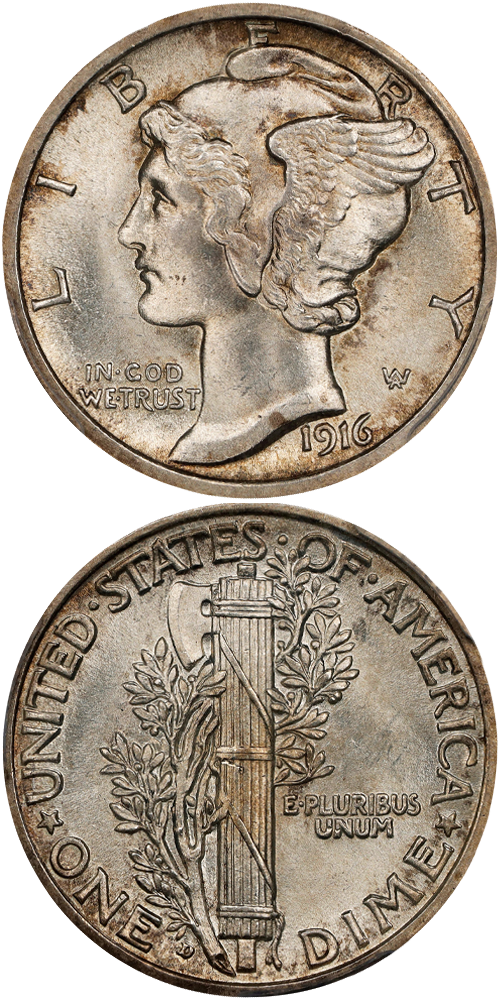
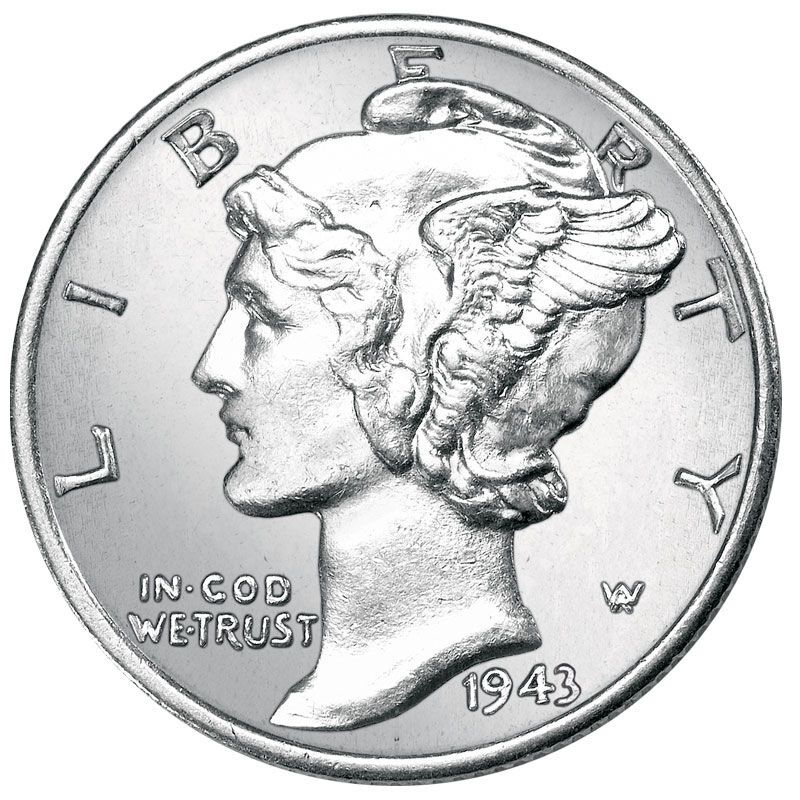
The obverse of the coin features a striking depiction of Liberty. She is shown in profile, facing left, with a Phrygian cap adorning her head. It is this cap, traditionally associated with freed slaves in ancient Rome and often worn by the Roman god Mercury, that led to the coin’s popular but ultimately inaccurate nickname: the “Mercury Dime.” The wings extending from her cap were intended by Weinman to symbolize liberty of thought, a concept deeply resonant during that period of global change. Surrounding Liberty are the inscriptions “LIBERTY” and “IN GOD WE TRUST,” along with the year of mintage.
The reverse side of the Mercury Dime is equally compelling, showcasing a fasces bound by an olive branch. The fasces, an ancient Roman symbol, consists of a bundle of rods tied around an axe, traditionally representing unity, strength, and authority. However, Weinman’s addition of the olive branch softened this military-political symbol, imbuing it with a message of peace and preparedness. This blend of strength and peace was particularly poignant given the impending global conflicts of the 20th century. The reverse also includes the inscription “UNITED STATES OF AMERICA,” “E PLURIBUS UNUM” (Out of Many, One), and “ONE DIME.”
Production and Mintage Years
The Mercury Dime was produced at three U.S. Mint facilities: Philadelphia (no mint mark), Denver (D), and San Francisco (S). Its 29-year run, from 1916 to 1945, saw billions of these dimes enter circulation. The final year of production, 1945, marked the end of the 90% silver dime, as it was replaced by the Roosevelt Dime in 1946, which maintained the same silver composition until 1964. This transition highlights the Mercury Dime’s historical significance as one of the last purely silver dimes to circulate widely before the move to clad coinage.
Beyond Face Value: Understanding its Monetary Significance
While a Mercury Dime’s face value is ten cents, its actual monetary worth far exceeds this paltry sum. Its value is derived from a confluence of its intrinsic metal content and its numismatic desirability, making it a multifaceted asset for collectors and investors.
Intrinsic Value: The Silver Content
Every Mercury Dime, regardless of its condition or rarity, possesses an inherent worth tied to its silver content. Each coin contains approximately 0.07234 troy ounces of pure silver (90% silver content in a coin weighing 2.5 grams, or 0.08037 troy ounces gross weight).
This means that the value of a Mercury Dime will always fluctuate with the global spot price of silver. When silver prices rise, the intrinsic value of these dimes increases accordingly. This characteristic makes them a popular choice for “junk silver” investors – individuals who acquire pre-1965 U.S. silver coinage primarily for its precious metal content rather than its numismatic appeal. For these investors, Mercury Dimes represent an accessible and relatively liquid way to hold physical silver, offering a hedge against inflation and economic uncertainty. The coins are easily recognizable, widely traded, and can be converted to cash relatively quickly based on their melt value.
Numismatic Value: Rarity and Condition
Beyond its silver weight, the true financial potential of a Mercury Dime lies in its numismatic value – its worth as a collectible coin. This value is determined by several critical factors:
- Rarity: Certain dates and mint marks are significantly scarcer than others. For instance, the 1916-D Mercury Dime (Denver mint) is famously rare due to a low mintage figure, making it a highly coveted and valuable coin, even in lower grades. Other key dates include the 1921 and 1921-D, as well as several issues from the 1930s with lower mintages.
- Varieties: Errors or variations in the die production can create unique and valuable “varieties.” A prime example is the 1942/41-D Overdate, where the “1” from 1941 is visible beneath the “2” of 1942. Another sought-after characteristic is the “Full Bands” (FB) designation. This refers to the completeness and sharpness of the horizontal bands on the fasces on the reverse side. Coins with sharply defined full bands are much rarer and command significantly higher premiums, as this detail was often lost due to striking deficiencies or wear.
- Condition (Grade): A coin’s state of preservation, or “grade,” is paramount to its numismatic value. The Sheldon Coin Grading Scale, ranging from Poor (P-1) to Mint State (MS-70), is used by professional grading services like PCGS (Professional Coin Grading Service) and NGC (Numismatic Guaranty Corporation). A coin with minimal wear (e.g., Uncirculated or AU – About Uncirculated) will be far more valuable than one that is heavily worn (e.g., Good or Fair). Factors like scratches, cleaning, environmental damage, and even attractive toning can significantly impact a coin’s grade and, consequently, its market value.
Understanding these nuances is crucial for any potential investor or collector, as a slight difference in grade or the presence of a specific variety can mean the difference between a coin worth a few dollars over melt and one worth thousands.
Market Dynamics: Supply and Demand
The market for Mercury Dimes, like any other collectible or commodity market, is driven by supply and demand. The supply of common dates in lower grades is abundant, keeping their prices close to their melt value. However, the supply of key dates, rare varieties, and high-grade specimens is inherently limited, leading to competitive bidding and higher prices.
Demand comes from various segments:
- Bullion Investors: Those seeking inexpensive silver, valuing the coins for their intrinsic metal.
- Type Set Collectors: Individuals who want one example of each major U.S. coin design, often opting for an affordable, attractive example.
- Date and Mint Mark Set Collectors: Those attempting to acquire every Mercury Dime ever minted, including all dates and mint marks, leading to high demand for key issues.
- Advanced Numismatists: Serious collectors who pursue high-grade examples, specific varieties, or specialize in Mercury Dimes, driving the market for premium pieces.
Economic factors also play a role. During periods of high inflation or economic uncertainty, demand for precious metals and tangible assets often increases, potentially boosting the value of silver coins like the Mercury Dime. Conversely, a robust stock market might draw investor attention away from alternative assets.
Investing in Mercury Dimes: A Collector’s Perspective
For many, Mercury Dimes represent more than just currency; they are tangible pieces of history that can also serve as an intriguing investment vehicle. Approaching their acquisition with strategy and knowledge is key to maximizing both the collecting experience and potential financial returns.
Why Collect Mercury Dimes?
The allure of collecting Mercury Dimes is multifaceted. Firstly, their historical appeal is undeniable. Holding a coin minted during the Great Depression or World War II provides a direct connection to those pivotal eras. Secondly, the aesthetic beauty of Weinman’s design is a significant draw; many consider it one of the most beautiful coins ever produced by the U.S. Mint.
From an investment standpoint, Mercury Dimes offer several advantages:
- Potential for Appreciation: While common dates may only track silver spot prices, rare dates and high-grade examples have shown significant appreciation over time, outperforming many other investments.
- Accessibility: Entry-level collecting is affordable, with many common dates available for just a few dollars over melt value, making it an excellent starting point for new numismatists.
- Challenge and Depth: For seasoned collectors, the pursuit of complete sets, scarce varieties, or “Full Band” examples offers a stimulating and rewarding challenge.
- Diversification: Adding tangible assets like silver coins to a portfolio can provide diversification, potentially hedging against market volatility in other asset classes.
Strategies for Acquisition
A thoughtful approach to acquiring Mercury Dimes is essential:
- Define Your Goals: Are you interested in a full date and mint mark set? Do you want one attractive example for a type set? Are you chasing specific key dates or high-grade specimens? Clearly defined goals will guide your purchasing decisions.
- Buy from Reputable Sources: This is paramount. Purchase from established coin dealers, well-known online auction houses, and reputable numismatic shows. Be wary of deals that seem too good to be true, as counterfeits and misrepresented coins do exist.
- Consider Raw vs. Slabbed Coins: “Raw” coins are ungraded. If buying raw, ensure you have sufficient knowledge to assess condition or purchase from a dealer you implicitly trust. “Slabbed” coins are professionally graded and encapsulated by services like PCGS or NGC, offering a guarantee of authenticity and grade, which is crucial for higher-value coins.
- Research, Research, Research: Before buying any coin, especially a key date or high-grade example, research its typical market value based on its grade. Consult pricing guides, auction archives, and reputable online resources.
Preservation and Storage
Proper care is vital for maintaining the value of your Mercury Dimes:
- Handle with Care: Always hold coins by their edges to avoid transferring oils from your skin, which can cause discoloration or damage over time. Cotton gloves are recommended.
- Appropriate Storage: Store coins in inert, archival-safe materials. This includes Mylar flips (never PVC), hard plastic holders (slabs), or coin albums specifically designed for long-term storage. Avoid direct exposure to extreme temperatures, humidity, or direct sunlight.
- Never Clean Coins: This is the golden rule of numismatics. Cleaning, even with seemingly gentle methods, will invariably damage the coin’s surface, destroy its original patina (toning), and significantly diminish its numismatic value. A professional conservator can sometimes stabilize a damaged coin, but amateur cleaning is almost always irreversible and detrimental.
Dispelling Myths and Common Misconceptions
The Mercury Dime, despite its popularity, is often surrounded by several misconceptions that can impact both enjoyment and investment potential.
The “Mercury” Misnomer
The most prevalent misconception is the coin’s name itself. As detailed earlier, the winged figure on the obverse is not the Roman god Mercury but an allegorical representation of Liberty wearing a Phrygian cap with wings. The association with Mercury arose from the similar appearance of the cap to the winged helmet (petasus) often depicted on the messenger god. Understanding this distinction enriches one’s appreciation of Weinman’s original intent, which was to symbolize freedom of thought rather than a mythological figure.
Common Date vs. Rare Date Realities
A common misunderstanding among new collectors is the belief that all old coins are valuable. While all Mercury Dimes have intrinsic silver value, many common dates, particularly those from the later years of production (e.g., 1940s Philadelphia mint issues), were minted in the hundreds of millions. These are readily available and typically trade close to their melt value unless they are in exceptionally high, uncirculated grades with “Full Bands.” The real numismatic value comes from the genuinely rare dates, mint marks, and varieties, which are a small fraction of the total mintage. It is crucial for collectors to differentiate between common and rare issues to avoid overpaying or having unrealistic expectations.
Cleaning Coins: A Costly Mistake
Perhaps the most damaging myth is the idea that cleaning an old, tarnished coin will restore its beauty and value. In reality, cleaning almost always destroys the numismatic value of a coin. The process, whether through abrasive polishing, chemical dips, or even ultrasonic cleaning, removes the coin’s natural patina (toning) and can leave microscopic scratches or an unnatural sheen. Collectors and professional graders can easily detect cleaned coins, and their value is drastically reduced, often to just their melt value, regardless of their original rarity or condition. The only exception is professional conservation by experts, which aims to stabilize a coin and remove harmful surface contaminants without altering its original integrity.
The Enduring Allure of the Mercury Dime
The Mercury Dime transcends its initial purpose as a ten-cent piece, evolving into a cherished artifact that resonates with historians, artists, and financial enthusiasts alike. Its journey from a circulating currency to a sought-after collectible reflects its profound impact and timeless appeal.
A Symbol of a Bygone Era
The Mercury Dime serves as a tangible link to a pivotal period in American history. Minted through both World Wars and the Great Depression, it was a constant companion to millions, witnessing the nation’s struggles and triumphs. Its elegant design, a product of the “Renaissance of American Coinage,” represents a golden age of artistic expression at the U.S. Mint, reflecting a national pride in craftsmanship and symbolism. For many, it evokes a nostalgic connection to an era characterized by resilience, innovation, and a distinct American identity. Its story is interwoven with the economic and social fabric of the 20th century, making it a compelling piece of living history.
A Smart Addition to a Diverse Portfolio?
For investors, the Mercury Dime offers an intriguing proposition within a diversified portfolio. Its dual nature—possessing both intrinsic silver value and potential numismatic value—provides a unique blend of security and speculative upside.
- Precious Metals Exposure: As an accessible form of physical silver, Mercury Dimes can act as a hedge against inflation and currency devaluation. Unlike paper assets, their value is tied to a tangible commodity, offering a degree of stability during economic uncertainty.
- Numismatic Appreciation: For key dates, rare varieties, and high-grade specimens, the potential for significant appreciation based on collector demand can far outstrip the gains from silver alone. This makes them more akin to art or other high-end collectibles.
- Diversification: Including numismatic items in an investment portfolio can provide diversification away from traditional stocks, bonds, and real estate, potentially reducing overall portfolio risk.
- Tangible Asset: Unlike digital assets or stocks, a Mercury Dime is a physical item you can hold, offering a sense of security and permanence.
However, it is crucial to approach Mercury Dimes as an investment with a long-term perspective. Liquidity for rare coins can be less immediate than for stocks or bullion, and specialized knowledge is required to accurately assess value. For those willing to educate themselves and invest patiently, Mercury Dimes offer a fascinating avenue for wealth preservation and growth, blending financial acumen with the romance of history.
In conclusion, the Mercury Dime is far more than a humble ten-cent piece. It is a masterpiece of American coinage, a historical artifact, and a nuanced financial instrument. Whether admired for its artistic beauty, collected for its historical significance, or acquired for its potential as a tangible asset, the Mercury Dime continues to captivate and educate, reminding us of the enduring value in both art and precious metals. Its legacy underscores the rich tapestry where history, art, and finance intertwine, offering a rewarding journey for anyone drawn to its timeless appeal.
aViewFromTheCave is a participant in the Amazon Services LLC Associates Program, an affiliate advertising program designed to provide a means for sites to earn advertising fees by advertising and linking to Amazon.com. Amazon, the Amazon logo, AmazonSupply, and the AmazonSupply logo are trademarks of Amazon.com, Inc. or its affiliates. As an Amazon Associate we earn affiliate commissions from qualifying purchases.