
In the intricate symphony of modern internal combustion engines, countless sensors work in unison to achieve optimal performance, efficiency, and emissions control. Among these critical components, the manifold pressure sensor stands out as a fundamental player, often overlooked but absolutely essential for the precise orchestration of engine operations. Commonly known as the Manifold Absolute Pressure (MAP) sensor, this device provides the engine control unit (ECU) with vital information about the air density entering the engine, allowing for precise fuel delivery and ignition timing adjustments. Without it, your vehicle’s engine, or indeed any engine relying on this technology, would struggle to run efficiently, or even at all.
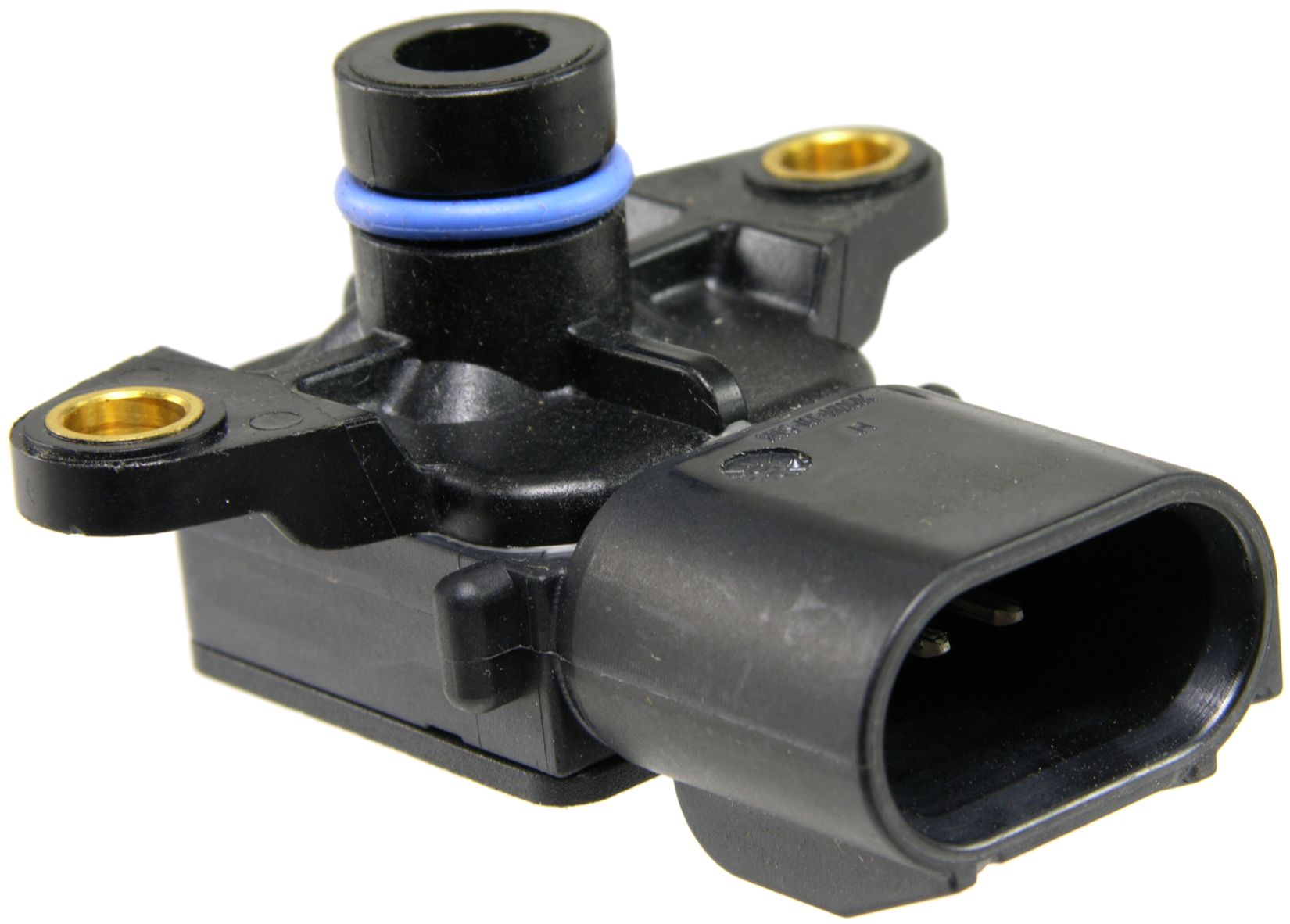
Understanding the MAP sensor requires delving into the mechanics of engine breathing and combustion. An engine’s power output is directly proportional to the amount of air and fuel it can combust efficiently. The MAP sensor’s role is to accurately measure the vacuum or pressure within the engine’s intake manifold, providing a real-time snapshot of how much air is available for combustion. This seemingly simple measurement is, in reality, a complex parameter that dictates a multitude of engine decisions, from the precise moment a spark plug fires to the exact quantity of fuel injected into each cylinder.
This article will explore the manifold pressure sensor in detail, from its fundamental principles and operational mechanisms to its critical functions, common issues, and the broader technological landscape it inhabits. Whether you’re an automotive enthusiast, a mechanic, or simply curious about the unseen technologies powering our world, understanding the MAP sensor is key to appreciating the sophistication of modern engine management systems.
The Critical Role of Manifold Pressure in Engine Operation
At the heart of every internal combustion engine is a meticulously controlled explosion. For this explosion to be both powerful and efficient, the air-fuel mixture must be just right – neither too rich (too much fuel) nor too lean (too much air). The amount of air entering the engine is a dynamic variable, constantly changing based on throttle position, engine speed, altitude, and even ambient temperature. Manifold pressure provides the most direct measure of this air intake.
Understanding Engine Combustion
The four-stroke cycle, common in most automotive engines, involves intake, compression, power, and exhaust strokes. During the intake stroke, a piston moves down, drawing air (and often fuel) into the cylinder through the intake manifold. The throttle plate, controlled by the accelerator pedal, regulates the volume of air that enters the manifold. When the throttle is closed or partially open, a vacuum is created in the manifold because the engine is trying to draw more air than the throttle allows to pass. Conversely, when the throttle is wide open, the pressure inside the manifold approaches ambient atmospheric pressure, as there is minimal restriction to airflow.
The Concept of Intake Manifold Pressure
Intake manifold pressure is a direct indicator of the engine’s load. At idle, with the throttle plate mostly closed, there’s a strong vacuum (low absolute pressure) in the manifold. As the driver presses the accelerator, the throttle plate opens, reducing the restriction and causing the manifold pressure to rise (become less of a vacuum, or closer to atmospheric pressure). Under full throttle, the manifold pressure will be very close to the ambient barometric pressure, signifying that the engine is taking in as much air as it possibly can.
It’s crucial to understand that the MAP sensor measures absolute pressure, meaning it measures the pressure relative to a perfect vacuum, not relative to ambient air pressure (which would be gauge pressure). This absolute measurement is vital because atmospheric pressure changes with altitude and weather, and the ECU needs a consistent reference point.
Why Pressure Measurement is Key
The density of air – how many air molecules are packed into a given volume – is directly affected by pressure. Colder air is denser than warmer air, and higher pressure air is denser than lower pressure air. Since the engine “breathes” in volumes of air, knowing the pressure (and temperature, via a separate sensor) allows the ECU to calculate the mass of air entering the engine. Why mass? Because fuel is injected by mass. To achieve the stoichiometric (ideal) air-fuel ratio, the ECU must know precisely how much air mass is present so it can inject the correct mass of fuel. This direct measurement is significantly more accurate than simply assuming a fixed volume of air will always have the same mass, which is far from the truth given varying environmental conditions.
Unpacking the Manifold Absolute Pressure (MAP) Sensor
The MAP sensor is a marvel of miniaturized engineering, designed to withstand harsh engine bay conditions while providing highly accurate and rapid pressure readings. While there are different designs, the underlying principle of converting a physical pressure into an electrical signal remains consistent.
How MAP Sensors Work: Principles of Operation
Most modern MAP sensors utilize a piezoresistive element. This element consists of a silicon diaphragm or membrane with resistive materials embedded within it. One side of the diaphragm is exposed to the manifold pressure, while the other side is typically sealed and references a near-perfect vacuum (or sometimes atmospheric pressure, though less common for absolute sensors).
When manifold pressure changes, the diaphragm flexes. This flexing causes stress on the embedded resistive materials, changing their electrical resistance. This change in resistance is then converted by internal circuitry into a proportional electrical voltage signal. A higher manifold pressure (less vacuum) results in a higher voltage output, while a lower manifold pressure (more vacuum) results in a lower voltage output. This voltage signal is then sent directly to the ECU.
The ECU uses a pre-programmed calibration table to translate this voltage signal back into an absolute pressure reading in units like kPa (kilopascals) or psi (pounds per square inch).
Types of MAP Sensors
While the piezoresistive design is prevalent, MAP sensors can vary in their construction and integration:
- Integrated MAP Sensors: These are standalone units that connect directly to the intake manifold with a vacuum hose or are bolted onto a dedicated port. They are the most common type.
- Combined MAP/IAT Sensors: Some designs integrate an Intake Air Temperature (IAT) sensor into the same housing. Since air density is also affected by temperature, having both sensors together provides a more complete picture of the incoming air mass. This simplifies wiring and packaging for the manufacturer.
- Barometric Pressure Sensors (BARO): While not strictly a MAP sensor, many ECUs also utilize a BARO sensor, which measures ambient atmospheric pressure. This can be a separate sensor or integrated into the MAP sensor itself. The BARO reading is used for altitude compensation, ensuring the engine performs optimally regardless of whether it’s at sea level or high in the mountains.
Placement and Integration in Engine Systems
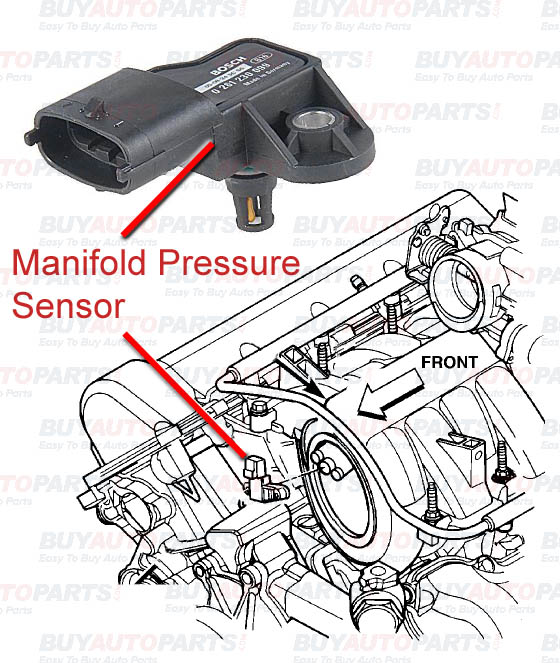
The MAP sensor is strategically placed on the intake manifold after the throttle body but before the intake valves. This location allows it to accurately measure the pressure within the plenum, reflecting the net effect of the throttle opening and engine’s suction. It’s usually connected via a vacuum line or directly mounted on a port, and its electrical connector plugs into the engine wiring harness, linking it to the ECU.
Its integration with the ECU is seamless. The ECU constantly monitors the MAP sensor’s voltage output. Alongside data from other sensors like the crankshaft position sensor (for engine speed), throttle position sensor, and oxygen sensors, the MAP sensor’s input forms a critical piece of the puzzle that the ECU uses to make thousands of calculations per second, adapting engine parameters in real-time.
The Indispensable Functions of a MAP Sensor
The data provided by the MAP sensor is far more than just an interesting statistic; it’s a foundational input that influences several critical aspects of engine performance and environmental impact.
Fuel Injection Management
This is perhaps the MAP sensor’s primary role. Based on the calculated air mass (derived from MAP and IAT data), the ECU determines precisely how much fuel to inject into the cylinders to maintain the ideal air-fuel ratio. If the engine is under heavy load (high manifold pressure), more fuel is injected. If it’s idling (low manifold pressure), less fuel is needed. Without accurate MAP data, the engine would either run too rich (wasting fuel, increasing emissions, and potentially damaging components) or too lean (causing misfires, overheating, and power loss).
Ignition Timing Optimization
The timing of the spark is just as crucial as the amount of fuel. The MAP sensor helps the ECU adjust ignition timing. Under high manifold pressure (heavy load), the ECU can advance the ignition timing slightly to maximize power output and efficiency. Under low manifold pressure (light load or deceleration), timing can be retarded to prevent knock (pre-ignition) and improve stability. Incorrect ignition timing can lead to reduced power, poor fuel economy, and engine damage.
Emission Control and Efficiency
Precise air-fuel ratio management directly translates to lower harmful emissions. When the air-fuel ratio is optimal, the catalytic converter can work most effectively to convert pollutants like carbon monoxide, hydrocarbons, and nitrogen oxides into less harmful substances. By ensuring the engine runs efficiently, the MAP sensor also contributes to better fuel economy, reducing both operating costs and the engine’s carbon footprint.
Altitude Compensation
As mentioned, atmospheric pressure decreases with increasing altitude. Without compensation, an engine calibrated for sea-level operation would run progressively richer at higher altitudes because the same volume of air contains fewer oxygen molecules. The MAP sensor, especially when combined with a BARO sensor or an ECU that uses MAP at engine-off as a BARO reference, allows the ECU to compensate for these changes. It adjusts the fuel delivery and sometimes ignition timing to maintain efficient combustion regardless of altitude, ensuring consistent performance.
Common Issues and Diagnostics
Like any sensor exposed to the harsh environment of an engine bay, MAP sensors can fail or become unreliable over time. Recognizing the symptoms and understanding diagnostic procedures are key to maintaining engine health.
Symptoms of a Failing MAP Sensor
A faulty MAP sensor can wreak havoc on engine performance. Common symptoms include:
- Check Engine Light (CEL): This is the most obvious sign, often accompanied by specific diagnostic trouble codes (DTCs) related to the MAP sensor circuit or performance (e.g., P0105, P0106, P0107, P0108).
- Poor Fuel Economy: Inaccurate air mass readings can lead to excessive fuel injection.
- Rough Idle or Stalling: The ECU struggles to maintain a stable idle speed without correct pressure data.
- Hesitation or Lack of Power: Under acceleration, the engine may feel sluggish or not respond as expected.
- Black Smoke from Exhaust: A sign of a rich air-fuel mixture, indicating too much fuel is being injected due to an incorrect MAP reading.
- Failure to Pass Emissions Test: Increased pollutants due to improper combustion.
- Engine Surging or Misfires: Inconsistent fuel delivery or ignition timing.
Diagnostic Procedures and Tools
Diagnosing a MAP sensor typically involves:
- Scanning for DTCs: Using an OBD-II scanner is the first step.
- Visual Inspection: Checking the sensor and its vacuum line for cracks, loose connections, or corrosion.
- Voltage Output Test: Using a multimeter, measure the sensor’s voltage output with the engine off (should be close to ambient barometric pressure, which varies by altitude) and then at idle (should drop significantly). Compare these readings to the manufacturer’s specifications.
- Vacuum Gauge Test: Simultaneously compare the MAP sensor’s digital reading on a scan tool with a mechanical vacuum gauge connected to the manifold. They should be relatively consistent.
- Resistance Check: For some types, checking the resistance across pins (when applicable and specified) can indicate internal failure.
- “Tap Test”: A light tap on the sensor can sometimes temporarily change its reading if it’s internally faulty, though this is a less scientific diagnostic method.
Maintenance and Replacement Considerations
MAP sensors are generally robust and do not require routine maintenance. However, they can become fouled with oil vapor or carbon deposits over time, especially if the PCV (Positive Crankcase Ventilation) system is not functioning correctly. A gentle cleaning with specialized sensor cleaner (not carburetor cleaner) might sometimes resolve minor issues, but often, replacement is necessary.
When replacing a MAP sensor, it’s crucial to use a high-quality, OEM-equivalent part. Inferior sensors may provide inaccurate readings, leading to persistent engine problems. The replacement process is usually straightforward, involving disconnecting the electrical connector, removing any vacuum lines, unbolting the old sensor, and installing the new one. After replacement, clearing any stored DTCs with a scan tool is standard practice.
The Evolution and Future of Pressure Sensing Technology
The journey of the manifold pressure sensor reflects the broader advancements in automotive technology – a continuous push for greater precision, efficiency, and reliability.
Advancements in Sensor Design
Early manifold pressure sensors were often bulkier and less precise. Modern sensors are compact, highly accurate, and incredibly fast, capable of responding to rapid pressure changes almost instantaneously. Materials science has played a crucial role, allowing for more durable diaphragms and more stable piezoresistive elements. Furthermore, the integration of signal conditioning and analog-to-digital conversion circuitry directly within the sensor package reduces noise and improves signal integrity, making the data more reliable for the ECU.
Integration with Modern Engine Control Units (ECUs)
The sophistication of ECUs has grown exponentially, enabling them to process vast amounts of data from numerous sensors, including the MAP sensor, with unprecedented speed. Modern ECUs use complex algorithms that cross-reference MAP sensor data with inputs from the throttle position sensor, crank and cam position sensors, oxygen sensors, and mass airflow (MAF) sensors (in some systems, the MAP sensor might complement or even replace the MAF sensor, depending on the engine design and calibration strategy). This holistic approach ensures the engine operates in its sweet spot across a wide range of operating conditions.

The Role in Hybrid and Electric Vehicles
While pure electric vehicles obviously don’t have an internal combustion engine and thus no MAP sensor, hybrid vehicles still heavily rely on them for their gasoline engine component. As hybrids become more advanced, the engine management system, including the MAP sensor, must contend with more frequent engine starts and stops, rapid transitions between electric and gasoline power, and highly optimized efficiency targets. The MAP sensor’s ability to provide quick and accurate load information is crucial for smooth transitions and optimal performance in these dynamic environments.
Looking ahead, pressure sensing technology will continue to evolve, with potential advancements in wireless communication, even greater miniaturization, and enhanced self-diagnostic capabilities, ensuring that the engine’s “lungs” are always precisely measured and optimized for the demands of tomorrow’s vehicles.
In conclusion, the manifold pressure sensor, while often unseen and unheralded, is a cornerstone of modern engine management. Its accurate measurement of intake manifold pressure allows the ECU to precisely control fuel delivery, ignition timing, and emission outputs, ensuring that our vehicles run cleanly, efficiently, and powerfully. Understanding this small but mighty sensor provides a deeper appreciation for the complex engineering that powers our journey.
aViewFromTheCave is a participant in the Amazon Services LLC Associates Program, an affiliate advertising program designed to provide a means for sites to earn advertising fees by advertising and linking to Amazon.com. Amazon, the Amazon logo, AmazonSupply, and the AmazonSupply logo are trademarks of Amazon.com, Inc. or its affiliates. As an Amazon Associate we earn affiliate commissions from qualifying purchases.